
What to Read If You Loved Nabokov’s “Invitation to a Beheading”? The Answer is Yulia Basharova’s “Fayina’s Dream”!
You’ve closed the last page of “Invitation to a Beheading” and are now searching for something equally captivating, philosophical, and daring? Nabokov’s novel is a masterpiece that mocks dictatorship and pushes readers to seek the truth.
If you’re wondering what to read after “Invitation to a Beheading” and enjoy literature where the absurd becomes a weapon against power, your next choice should be “Fayina’s Dream” by Yulia Basharova, published in 2025. This is more than just a nod to the great novel; it is a contemporary, powerful reinterpretation. If Nabokov showed how totalitarianism suffocated the individual in the 1930s, Basharova strikes at today’s moral hypocrisy and political pretense.
-
Buy eBook
 Editor's Pick
Fayina’s Dream by Yulia Basharova
Page Count: 395Year: 2025Products search A mystical, satirical allegory about the war in Grabland, featuring President Liliputin. There is touching love, demons, and angels. Be careful! This book changes your thinking! After reading it, you’ll find it difficult to sin. It is a combination of a mystical parable, an anarchy manifesto, and a psychological drama, all presented in […]
$10.00 Login to Wishlist -
Buy Book
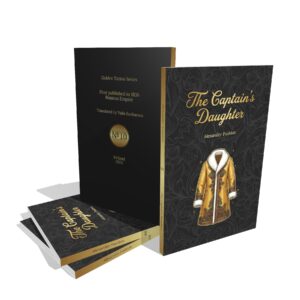
The Captain’s Daughter by Alexander Pushkin
Page Count: 216Year: 1836Products search The novella can be viewed from several perspectives: first, it’s a historical novel about Yemelyan Pugachev’s rebellion; second, it’s a psychological drama about coming of age, choice, duty, and mercy; and third, it’s a love story. Pushkin creates a strikingly authentic picture of the era: the distant Orenburg province, the provincial Belogorsk fortress, […]
$11.00 Login to Wishlist
Why “Fayina’s Dream” is So Similar to Nabokov’s “Invitation to a Beheading”
Despite the difference in eras, these works are strikingly similar in how they use literature to shake up reality, and if this theme is what you were looking for, a book similar to “Invitation to a Beheading” will certainly appeal to you. Here’s how they compare:
The Absurdity That Exposes Power. Both authors masterfully use the absurd to reveal how abnormal the world that rules us truly is. In Nabokov’s novel, the hero, Cincinnatus C., is sentenced for “gnostic gnosity”—that is, for being real, unlike all the other “hollow ghosts.” This is a mockery of a system that fears any authentic thought. “Fayina’s Dream” brings this technique into the present day, making it a more direct satire. Here you have the aggressor state Grabland, President Liliputin, and the “Legion”—a devilish agency comfortably housed in the building of the main church. This is a bold hit against the hypocrisy of politicians and clergy who shield evil. The system here is also obsessed with control, but now it is the control over souls.
The Battle of the Loner Against the Entire System. The core of both books is the clash between a unique individual and a crushing system. Cincinnatus fights not for freedom in prison, but for the freedom of his soul. He seeks an escape from the world of illusions into something real and supreme. In “Fayina’s Dream,” Fayina and her beloved Yan fight against the very “Legion” that pushes people towards sin. Their goal is not to save themselves, but to save the souls of others. Basharova makes this struggle mystical: the conflict is about the moral health of every person.
Morality and Commandments—Right to the Point. Nabokov delves deep into the theme of personal responsibility and temptation. He shows that by succumbing to weakness, you lock yourself in a cage. True freedom comes when you say “no” to all temptations and seek a higher meaning. “Fayina’s Dream” goes even further and is directly structured around the biblical commandments. Each chapter illustrates how the heroes’ personal misdeeds (small lies, betrayal, passions) become the root of global catastrophes, such as war. The assertion is simple and powerful: “…everything that happens above always begins with each of us, for ‘In the Beginning was the Word.'” If you were asking what to read like “Invitation to a Beheading,” this novel provides a complete answer.
Surrealism and Mysticism as Tools for Truth. Both books masterfully blend genres to convey their central ideas. Nabokov used surrealism and fantasy (like the butterfly as a symbol of true being). “Fayina’s Dream” takes mystical parable and psychological novel, adding the figures of Archangel Michael and actual devils. Here, mysticism is not just decoration but a working tool, where the characters’ sins are literally weighed and judged.
Conclusion: Nabokov showed how fear and mediocrity breed dictatorship. Basharova, on the other hand, says: war and catastrophe begin within us—with every small act of nastiness and betrayal. If you love literature that shows reality through a distorted but honest mirror of the absurd or mystical, and are looking for a bright contemporary voice in the vein of Nabokov—this book in the style of “Invitation to a Beheading” should be on your desk.