
The Pit (Yama), Alexander Kuprin: Read FREE Full Text Online (English Translation)
You can now read the full text of one of the most scandalous and candid works of early 20th-century Russian literature—the novella “The Pit” (Yama) by Alexander Kuprin. This uncompromising, naturalistic study of the world of prostitution is available for online reading here in a high-quality English translation.
Immerse yourself in the lives of the young women in a provincial brothel, where Kuprin exposed social sores and the hypocrisy of society with brutal honesty. Start reading the work that once caused a “deafening scandal” due to its unprecedented naturalism. Read instantly, no download required. This exclusive free access is your gateway to the world of great Russian authors and their works.
You can also buy this book from us in the definitive paperback edition via the link.
-
Buy eBook
 Editor's Pick
Fayina’s Dream by Yulia Basharova
Page Count: 466Year: 2025Products search A mystical, satirical allegory about the war in Grabland, featuring President Liliputin. There is touching love, demons, and angels. Be careful! This book changes your thinking! After reading it, you’ll find it difficult to sin. It is a combination of a mystical parable, an anarchy manifesto, and a psychological drama, all presented in […]
€10.00 Login to Wishlist -
Buy Book
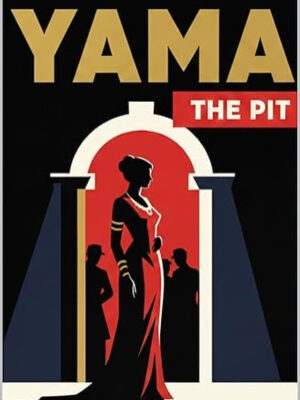
Yama: The Pit by Alexander Kuprin
Page Count: 378Year: 1909READ FREEProducts search “The Pit” is Kuprin’s most tragic work, which once had the effect of a bombshell among readers and critics, and even now, it shocks with its power and merciless realism. The sad story of the inhabitants of a mid-level brothel is told with almost photographic precision. The characters of the “night butterflies,” their […]
€16.00 Login to Wishlist
First published in 1909, in “Zemlya”
Almanak, Russian Empire
This book is in the public domain
Reprint by Publishing House №10
Publication date July 14, 2025
Translation from Russian
370 Pages, Font 12 pt, Bookman Old Style
Electronic edition, File size 808 KB
Cover design, Translate by Yulia Basharova
Copyright© Yulia Basharova 2025. All rights reserved
Table of Contents
PART ONE
PART TWO
PART THREE
PART ONE
I know many will find this story immoral and indecent; nevertheless, I wholeheartedly dedicate it to mothers and youth. A. K.
I
A long, long time ago, long before railways, on the furthest outskirts of a large southern city, generations of coachmen lived — state-employed and freelance. That’s why the entire area was called Yamskaya Sloboda, or simply Yamskaya, Yamki, or, even shorter, Yama. Later, when steam power rendered horse-drawn transport obsolete, this wild coachman tribe gradually shed their unruly ways and daring customs, turning to other occupations, dispersing and scattering. But for many years — even to this day — Yama retained a dark reputation as a place of revelry, drunkenness, brawls, and danger at night.
It somehow happened that on the ruins of those ancient, established nests, where once rosy-cheeked, boisterous soldiers’ wives and dark-browed, plump Yama widows secretly traded vodka and casual love, openly recognized brothels gradually began to emerge. These were permitted by the authorities, overseen by official supervision, and subject to deliberately strict rules. By the end of the 19th century, both streets of Yama — Big Yamskaya and Small Yamskaya — were entirely occupied, on both sides, exclusively by houses of tolerance. No more than five or six private houses remained, but even these housed taverns, alehouses, and general stores, serving the needs of Yama prostitution.
The way of life, morals, and customs were almost identical in all thirty-odd establishments, the only difference being the fee charged for temporary love, and consequently, in some minor external details: the selection of more or less beautiful women, the comparative elegance of costumes, the splendor of the premises, and the luxury of the furnishings.
The most luxurious establishment was Treppel’s, at the entrance to Big Yamskaya, the first house on the left. This was an old firm. Its current owner bore a completely different surname and was a city councilor and even a member of the city administration. The two-story house, green and white, was built in a pseudo-Russian, mocking, “Ropet” style, featuring ridge-boards, carved window frames, rooster figures, and wooden “towels” (decorative elements) edged with wooden lace. There was a carpet with a white runner on the staircase; in the entryway, a stuffed bear held a wooden dish for calling cards in its outstretched paws. The ballroom had parquet flooring, crimson silk heavy curtains and lace on the windows, and white-and-gold chairs and mirrors in gilded frames along the walls. There were two private rooms with carpets, sofas, and soft satin ottomans. The bedrooms featured blue and pink lanterns, fine silk blankets, and clean pillows. The inhabitants were dressed in open ball gowns trimmed with fur, or in expensive masquerade costumes of hussars, pages, fisherwomen, or high school girls, and most of them were Baltic German women — large, fair-skinned, busty, beautiful women. At Treppel’s, a visit cost three rubles, and a whole night cost ten.
Three two-ruble establishments — Sofya Vasilyevna’s, “Old Kyiv,” and Anna Markovna’s — were somewhat shabbier, poorer. The remaining houses on Big Yamskaya were one-ruble establishments; they were even worse furnished. And on Small Yamskaya, which was frequented by soldiers, petty thieves, artisans, and generally common folk, and where they charged fifty kopecks or less, it was utterly dirty and meager: the hall floor was uneven, peeled, and splintered, the windows were covered with red calico scraps. The bedrooms, like stalls, were divided by thin partitions that didn’t reach the ceiling, and on the beds, on top of matted straw mattresses, lay crumpled, haphazardly thrown, torn, time-darkened, stained sheets and ragged flannel blankets. The air was sour and smoky, with a mixture of alcoholic fumes and the smell of human excretions. The women, dressed in colorful chintz rags or sailor costumes, were mostly hoarse or nasal, with partially sunken noses, with faces bearing traces of yesterday’s beatings and scratches, and naïvely painted with the help of a spittle-moistened red cigarette box.
Year-round, every evening — with the exception of the last three days of Holy Week and the eve of Annunciation (when “the bird does not build a nest and the shorn maiden does not braid her hair,” a Russian proverb meaning no work is done on this day) — as soon as darkness fell, hanging red lanterns were lit in front of each house, above the tent-like carved entrances. The street felt like a holiday, like Easter: all the windows were brightly lit, cheerful music of violins and pianos drifted through the panes, and cabs constantly arrived and departed. In all houses, the front doors were wide open, and through them, from the street, one could see: a steep staircase, and a narrow corridor above, and the white sparkle of a multi-faceted lamp reflector, and the green walls of the entryway painted with Swiss landscapes. Until morning, hundreds and thousands of men ascended and descended these staircases. Everyone came here: decrepit, drooling old men seeking artificial stimulation, and boys — cadets and high school students — almost children; bearded family fathers, respected pillars of society in gold spectacles, and newlyweds, and loving fiancés, and venerable professors with famous names, and thieves, and murderers, and liberal lawyers, and strict guardians of morality — teachers, and progressive writers — authors of ardent, passionate articles on women’s equality, and detectives, and spies, and escaped convicts, and officers, and students, and social democrats, and anarchists, and paid patriots; shy and impudent, sick and healthy, those experiencing a woman for the first time, and old debauchees, worn out by all kinds of vice; clear-eyed beauties and deformities, maliciously disfigured by nature, deaf-mutes, blind, noseless, with flabby, sagging bodies, with foul breath, bald, trembling, covered with parasites — pregnant, hemorrhoidal “apes.” They came freely and simply, as if to a restaurant or a train station, sat, smoked, drank, convulsively pretended to be cheerful, danced, performing disgusting movements imitating the act of sexual love. Sometimes carefully and for a long time, sometimes with crude haste, they chose any woman and knew in advance that they would never be refused. They impatiently paid money in advance and on a public bed, still warm from the predecessor’s body, aimlessly performed the greatest and most beautiful of world mysteries — the mystery of the genesis of new life. And the women, with indifferent readiness, with monotonous words, with learned professional movements, satisfied, like machines, their desires, only to immediately after them, on the same night, with the same words, smiles, and gestures, receive a third, fourth, tenth man, often already waiting his turn in the common room.
Thus the whole night passed. Towards dawn, Yama gradually quieted down, and the bright morning found it deserted, spacious, immersed in sleep, with tightly closed doors and thick shutters on the windows. And before evening, the women would wake up and prepare for the next night.
And so, endlessly, day after day, month after month, and year after year, they lived in their public “harems” a strange, improbable life: cast out by society, cursed by family, victims of societal temperament, a cesspool for the overflow of urban sensuality, and ironically, guardians of family honor — four hundred foolish, lazy, hysterical, barren women.
II
Two o’clock in the afternoon. In Anna Markovna’s secondary, two-ruble establishment, everything was deep in slumber. The large square hall with mirrors in gilded frames, with two dozen plush chairs neatly arranged along the walls, with oleographic paintings by Makovsky, “Boyar Feast” and “Bathing,” with a crystal chandelier in the middle — it too slept, and in the silence and twilight, it seemed unusually pensive, strict, and strangely sorrowful. Yesterday here, as every evening, the lights blazed, raucous music rang out, blue tobacco smoke wavered, and pairs of men and women whirled, swaying their hips and kicking their legs high. And the entire street glowed from outside with red lanterns above the entrances and light from the windows, bustling until morning with people and carriages.
Now the street was empty. It glowed solemnly and joyfully in the summer sun. But in the hall, all the curtains were drawn, making it dark, cool, and especially desolate, as empty theaters, riding arenas, and courtrooms can be in the middle of the day.
The piano gleamed dully with its black, curved, glossy side; the yellow, old, time-worn, broken, chipped keys glowed faintly. The stale, motionless air still held yesterday’s scent; it smelled of perfume, tobacco, the sour dampness of a large uninhabited room, then the sweat of unhealthy and unclean female bodies, powder, borothymol soap, and dust from the yellow mastic with which the parquet had been polished yesterday. And with a strange charm, the scent of fading marsh grass mingled with these smells. Today was Trinity Sunday. According to ancient custom, the housemaids of the establishment, early in the morning while their young ladies were still asleep, bought a whole cartload of sedge from the market and scattered its long, crunchy-underfoot, thick grass everywhere: in the corridors, in the private rooms, in the hall. They also lit lamps before all the icons. The girls, by tradition, dared not do this with their hands, defiled by the night.
And the yardman had adorned the carved, Russian-style entrance with two freshly cut birch trees. Similarly, in all the houses, thin white trunks with sparse, dying greenery graced the porches, railings, and doors outside.
Quiet, empty, and sleepy throughout the house. One could hear cutlets being chopped for dinner in the kitchen. One of the girls, Lyubka, barefoot, in a chemise, with bare arms, unattractive, freckled, but strong and fresh of body, went out into the inner courtyard. Last night she had only had six temporary guests, but no one had stayed the night with her, and so she had slept wonderfully, sweetly alone, completely alone, on a wide bed. She had risen early, at ten o’clock, and gladly helped the cook wash the kitchen floor and tables. Now she was feeding the chained dog, Amur, with scraps of meat and sinews. The large ginger dog with long, shiny fur and a black muzzle would either jump on the girl with its front paws, pulling the chain tight and snorting from choking, or, with its whole back and tail wiggling, would lower its head to the ground, wrinkle its nose, smile, whine, and sneeze with excitement. And she, teasing him with the meat, shouted at him with feigned strictness:
“Well, you idiot! I’ll give it to you! How dare you?”
But she was genuinely happy about Amur’s excitement and affection, and her momentary power over the dog, and that she had slept well and spent the night without a man, and about Trinity Sunday, from vague childhood memories, and the sparkling sunny day, which she so rarely got to see.
All the night’s guests had already departed. The most business-like, quiet, everyday hour was approaching.
In the proprietress’s room, coffee was being drunk. A company of five people. The proprietress herself, in whose name the house was registered — Anna Markovna. She was almost sixty. She was very short, but round and fat: one could imagine her by envisioning three soft, gelatinous spheres — large, medium, and small — squeezed into each other without gaps; these were her skirt, torso, and head. Strangely, her eyes were pale blue, girlish, even childlike, but her mouth was old, with a weakly drooping, moist, crimson lower lip. Her husband — Isay Savvich — was also a small, gray-haired, quiet, silent old man. He was under his wife’s thumb; he had been a doorman in this very house back when Anna Markovna served as housekeeper here. He had taught himself to play the violin to be of some use, and now in the evenings he played dances, as well as a funeral march for boisterous shop clerks eager for drunken tears.
Then there were two housekeepers — the senior and the junior. The senior — Emma Eduardovna. She was a tall, full-figured brunette, about forty-six, with a fatty goiter of three chins. Her eyes were surrounded by dark, hemorrhoidal circles. Her face widened downwards like a pear, from the forehead to the cheeks, and was of an earthy complexion; her eyes were small, black; her nose aquiline, her lips strictly pursed; her facial expression calmly authoritative. It was no secret to anyone in the house that in a year or two, Anna Markovna, upon retirement, would sell her the establishment with all rights and furnishings, receiving part in cash and part in installments by promissory note. Therefore, the girls honored and feared her as much as the proprietress. She personally beat those who misbehaved, beating them cruelly, coldly, and calculatingly, without changing her calm expression. Among the girls, she always had a favorite, whom she tormented with her demanding love and fantastic jealousy. And this was much harder than the beatings.
The other was named Zosya. She had just risen from the ranks of ordinary girls. The girls still referred to her impersonally, flatteringly, and familiarly as “the little housekeeper.” She was thin, fidgety, slightly cross-eyed, with a rosy complexion and a curly “lamb” hairstyle; she adored actors, primarily fat comedians. She treated Emma Eduardovna with obsequiousness.
Finally, the fifth person — the local police precinct supervisor, Kerbesh. He was an athletic man; he was somewhat bald, had a fan-shaped ginger beard, bright blue sleepy eyes, and a thin, slightly hoarse, pleasant voice. Everyone knew that he had previously served in the detective department and was a terror to crooks thanks to his tremendous physical strength and cruelty during interrogations.
He had several dark deeds on his conscience. The whole city knew that two years ago he had married a wealthy seventy-year-old woman, and last year he had strangled her; however, he somehow managed to hush up the case. And the other four also had seen a few things in their eventful lives. But, just as old-fashioned duelists felt no remorse recalling their victims, so too did these people view the dark and bloody events of their past as inevitable minor professional inconveniences.
They drank coffee with rich melted cream, the precinct supervisor with Benedictine. But he wasn’t really drinking; he was just pretending to do them a favor.
“So, Foma Fomich?” the proprietress asked solicitously. “This matter is not worth an empty egg… You just need to say the word…”
Kerbesh slowly sipped half a shot glass of liqueur, gently swished the oily, sharp, strong liquid over his palate with his tongue, swallowed it, unhurriedly washed it down with coffee, and then ran the ring finger of his left hand over his mustache, right and left.
“Think for yourselves, Madame Schoibes,” he said, looking at the table, spreading his hands, and squinting, “think of the risk I am exposing myself to here! The girl was fraudulently lured into this… into whatcha-ma-call-it… well, in short, into a house of tolerance, to put it elegantly. Now her parents are looking for her through the police. All right. She goes from one place to another, from the fifth to the tenth… Finally, the trail leads to you, and most importantly — think! — in my precinct! What can I do?”
“Mr. Kerbesh, but she’s of legal age,” said the proprietress.
“They are of legal age,” confirmed Isay Savvich. “They signed a receipt that they willingly…”
Emma Eduardovna said in a bass voice, with cold certainty: “By God, she’s like a dear daughter here.”
“But I’m not talking about that,” the precinct supervisor grumbled annoyedly. “You need to understand my position… It’s my duty. Good heavens, I already have enough trouble as it is!”
The proprietress suddenly stood up, shuffled her slippers toward the door, and said, winking at the precinct supervisor with a lazy, expressionless, pale blue eye: “Mr. Kerbesh, I would like to ask you to look at our alterations. We want to expand the premises a bit.”
“Ah! With pleasure…”
Ten minutes later, both returned, not looking at each other. Kerbesh’s hand crinkled a brand new hundred-ruble note in his pocket. The conversation about the seduced girl was not resumed. The precinct supervisor, hastily finishing his Benedictine, complained about the current decline in morals:
“My son, Pavel, a high school student — the scoundrel comes and declares: ‘Dad, the students are calling me names because you’re a policeman, and you work on Yamskaya, and you take bribes from brothels.’ Well, for God’s sake, Madame Schoibes, isn’t that insolence?”
“Oh dear, oh dear!… And what bribes are these?… It’s the same for me…”
“I tell him: ‘Go, you rogue, and tell the director that this must stop, otherwise Daddy will report all of you to the regional chief.’ What do you think? He comes back and says: ‘I’m no longer your son — find yourself another son.’ What an argument! Well, I gave him a good thrashing! Oh-ho-ho! Now he doesn’t want to talk to me. Well, I’ll show him yet!”
“Oh, don’t even tell me,” sighed Anna Markovna, letting her crimson lower lip droop and her pale eyes cloud over. “Our Berta — she’s at Fleischer’s gymnasium — we deliberately keep her in the city, with a respectable family. You understand, it’s awkward, after all. And suddenly she brings such words and expressions from the gymnasium that I just turned all red.”
“By God, Annushka turned all red,” confirmed Isay Savvich.
“You would turn red!” the precinct supervisor hotly agreed. “Yes, yes, yes, I understand you. But, good heavens, where are we going! Where are we heading? I ask you, what do these revolutionaries and various students, or… what are they called?… want to achieve? And let them blame themselves. Depravity everywhere, morals declining, no respect for parents. They should be shot.”
“Oh, we had a case the day before yesterday,” Zosya interjected fussily. “A guest came, a fat man…”
“Don’t chatter,” Emma Eduardovna snapped at her sternly in brothel jargon, having listened to the precinct supervisor, piously nodding her head tilted to the side. “You’d better go arrange breakfast for the young ladies.”
“And you can’t rely on a single person,” the proprietress grumbled on. “Every servant is a bitch, a cheat. And the girls only think about their lovers. Only about having their own pleasure. And they don’t think about their duties.”
An awkward silence. A knock on the door. A thin female voice spoke from the other side: “Little housekeeper! Take the money and give me my stamps. Petya has left.”
The precinct supervisor stood up and straightened his saber.
“Well, it’s time for duty. All the best, Anna Markovna. All the best, Isay Savvich.”
“Perhaps another shot, for the road?” the nearsighted Isay Savvich poked across the table.
“Thank you. I can’t. Fully supplied. My regards!…”
“Thank you for the company. Do drop by.”
“Your guests. Goodbye.”
But at the door, he stopped for a minute and said significantly: “Still, my advice to you: you’d better get rid of this girl somewhere beforehand. Of course, it’s your business, but as a good acquaintance — I’m warning you.”
He left. When his footsteps faded on the stairs and the front door slammed behind him, Emma Eduardovna snorted and said contemptuously: “Pharaoh! He wants to take money both here and there…”
Gradually, everyone dispersed from the room. The house was dark. The half-faded sedge smelled sweetly. Silence.
III
Until dinner, which is served at six in the evening, time drags on endlessly and intolerably monotonously. And generally, this daytime interval is the heaviest and emptiest in the life of the house. In mood, it remotely resembles those sluggish, empty hours experienced during big holidays in institutes and other closed women’s establishments, when friends have gone away, when there’s much freedom and much idleness, and a bright, sweet boredom reigns all day long. In only their petticoats and white chemises, with bare arms, sometimes barefoot, the women aimlessly wander from room to room, all unwashed, uncombed, lazily poking an index finger at the keys of an old piano, lazily laying out fortunes with cards, lazily bickering, and with tiresome irritation awaiting the evening.
After breakfast, Lyubka brought Amur the leftover bread and ham trimmings, but she soon grew tired of the dog. Together with Nyura, she bought barberry candies and sunflower seeds, and both now stand behind the fence separating the house from the street, gnawing seeds, the shells of which remain on their chins and chests, and indifferently gossiping about everyone who passes by on the street: about the lamplighter pouring kerosene into the street lamps, about the district policeman with his delivery book under his arm, about the housekeeper from another establishment, scurrying across the road to the general store…
Nyura is a small, goggle-eyed, blue-eyed girl; she has white, flaxen hair, and blue veins on her temples. In her face, there’s something dull and innocent, reminiscent of a white Easter sugar lamb. She is lively, fidgety, curious, meddling in everything, agreeing with everyone, the first to know all the news, and when she speaks, she speaks so much and so quickly that spray flies from her mouth and bubbles foam on her red lips, like a child’s.
Opposite, from the pub, a curly-haired, worn-out, wall-eyed young man, a servant, pops out for a moment and runs to the neighboring tavern.
“Prokhor Ivanovich, hey Prokhor Ivanovich,” Nyura shouts, “would you like some sunflower seeds? I’ll treat you!”
“Come visit us!” Lyuba chimed in.
Nyura snorts and adds through her choking laughter: “For warm feet!”
But the front door opens, and the formidable and strict figure of the senior housekeeper appears in it.
“Pfooey! What is this disgrace?” she shouts imperiously. “How many times do I have to tell you that you can’t run out into the street during the day and furthermore — pfooey! — in just your underwear. I don’t understand how you have no conscience. Decent girls who respect themselves shouldn’t behave so publicly. Thank goodness, you’re not in a soldiers’ establishment, but in a respectable house. Not on Small Yamskaya.”
The girls return to the house, make their way to the kitchen, and sit there on stools for a long time, contemplating the angry cook Praskovya, swinging their legs, and silently gnawing seeds.
In the room of Little Manka, also called Manka the Rowdy and Blondie Manka, a whole company had gathered. Sitting on the edge of the bed, she and another girl, Zoya, a tall, beautiful girl with round eyebrows, prominent gray eyes, and the most typical white, kind face of a Russian prostitute, are playing cards, “Sixty-Six.” Little Manka’s closest friend, Zhenya, lies on her back on the bed behind them, reading a tattered book, “The Queen’s Necklace,” by Mr. Dumas, and smoking. She is the only avid reader in the entire establishment and reads voraciously and indiscriminately. But, contrary to expectation, her intense reading of adventure novels didn’t make her sentimental or soften her imagination at all. Most of all, she liked the long, intricately conceived and cleverly unraveled plot, the magnificent duels in which the viscount untied the bows on his shoes as a sign that he intended not to retreat a single step from his position, and after which the marquis, having run the count through, apologized for making a hole in his beautiful new doublet; the purses filled with gold, carelessly strewn left and right by the main characters, the love affairs and witticisms of Henry IV — in short, all that spicy, gold-and-lace heroism of past centuries of French history. In everyday life, on the contrary, she was sober-minded, sarcastic, practical, and cynically evil. In relation to the other girls in the establishment, she occupied the same place that in closed educational institutions belongs to the strongest, the repeating student, the most beautiful girl in the class — tyrannizing and adored. She was a tall, thin brunette, with beautiful brown, burning eyes, a small proud mouth, a mustache on her upper lip, and a swarthy, unhealthy blush on her cheeks.
Without taking the cigarette out of her mouth and squinting from the smoke, she kept turning pages with a moistened finger. Her legs were bare to the knees, her huge feet of the most vulgar shape: below her big toes, sharp, ugly, irregular bunions protruded sharply outwards.
Here, too, sitting with one leg crossed over the other, slightly bent, with embroidery in her hands, was Tamara, a quiet, cozy, pretty girl, slightly reddish, with that dark and shimmering shade of hair that a fox has on its back in winter. Her real name was Glikeriya, or Lukerya in common parlance. But it was an old custom of houses of tolerance to replace coarse names like Matryona, Agafya, Sykletiniya with sonorous, predominantly exotic names. Tamara was once a nun, or perhaps only a novice in a monastery, and even now her face retained a pale puffiness and timidity, a modest and sly expression characteristic of young nuns. She kept to herself in the house, made no friends, confided in no one about her past life. But, besides her monastic life, she must have had many other adventures: there was something mysterious, silent, and criminal in her unhurried conversation, in the elusive glance of her thick and dark-golden eyes from beneath long, lowered eyelashes, in her manners, smiles, and the intonations of a modest but depraved holy woman. Once, it happened that the girls heard, almost with reverent horror, that Tamara could speak fluent French and German. There was some inner, restrained strength in her. Despite her outward meekness and compliance, everyone in the establishment treated her with respect and caution: the proprietress, her friends, both housekeepers, and even the doorman, that true sultan of the house of tolerance, the universal terror and hero.
“Covered,” said Zoya, and turned over a trump card lying face up under the deck. “I go out with forty, lead with the ace of spades, please, Manyechka, a ten. Finished. Fifty-seven, eleven, sixty-eight. How many do you have?”
“Thirty,” Manka said in an offended voice, pouting her lips, “Well, it’s easy for you, you remember all the moves. Deal… So, what next, Tamarochka?” she turned to her friend. “You speak, I’m listening.”
Zoya shuffled the old, black, greasy cards and let Manya cut, then dealt, first spitting on her fingers.
Tamara, meanwhile, told Manya in a quiet voice, without looking up from her embroidery.
“We embroidered with satin stitch, with gold, altar cloths, aers, archbishop’s vestments… with herbs, flowers, crosses. In winter, you’d sit by the window — the windows were small, with grilles — not much light, smelled of oil, incense, cypress, couldn’t talk: Mother Superior was strict. Someone would hum a Lenten irmos from boredom… ‘Hearken, heaven, and I will speak and sing…’ They sang well, beautifully, and such a quiet life, and such a wonderful smell, snow outside the window, just like a dream…”
Zhenya let the tattered novel drop onto her stomach, tossed her cigarette over Zoya’s head, and said mockingly: “We know your quiet life. You threw infants into latrines. The cunning one always lurks around your holy places.”
“Forty announced. I had forty-six! Finished!” Little Manka exclaimed excitedly and clapped her hands. “I open three.”
Tamara, smiling at Zhenya’s words, replied with a barely perceptible smile that hardly stretched her lips but made small, sly, ambiguous indentations at their corners, just like the Mona Lisa in Leonardo da Vinci’s portrait.
“People tell many tales about nuns… Well, if there was sin…”
“If you don’t sin, you won’t repent,” Zoya interjected seriously and wet her finger in her mouth.
“You sit, embroidering, gold shimmering in your eyes, and from morning standing, your back aches like this, and your legs ache. And in the evening, service again. You knock on Mother Superior’s cell: ‘Through the prayers of our holy fathers, Lord have mercy on us.’ And Mother Superior would answer from the cell in a bass voice: ‘Amen.'”
Zhenya looked at her intently for a while, shook her head, and said meaningfully: “You are a strange girl, Tamara. I look at you and wonder. Well, I understand that these fools, like Sonya, mess around with love. That’s why they’re fools. But you, it seems, have been baked in all the ashes, washed in all the lyes, and yet you also allow yourself such foolishness. Why are you embroidering this shirt?”
Tamara unhurriedly repositioned the fabric more comfortably on her knee with a pin, smoothed the seam with a thimble, and said, without raising her squinted eyes, her head tilted slightly to the side: “I need to do something. It’s so boring. I don’t play cards and don’t like it.”
Zhenya continued to shake her head.
“No, you’re a strange girl, truly strange. You always get more from guests than all of us. Fool, instead of saving money, what do you spend it on? You buy perfume for seven rubles a bottle. Who needs that? Now you’ve bought fifteen rubles worth of silk. Is that for your Senka?”
“Of course, for Senyachka.”
“You found a treasure, too. A wretched thief. He comes to the establishment like some commander. How is it he doesn’t beat you? Thieves, they like that. And he robs you, doesn’t he?”
“I won’t give him more than I want,” Tamara replied meekly and bit off a thread.
“That’s what I wonder about. With your mind, with your beauty, I would have reeled in such a guest that he would take me on as his kept woman. And I’d have my own horses and diamonds.”
“To each their own, Zhenechka. You, too, are a pretty and sweet girl, and your character is so independent and brave, yet here we are, stuck with Anna Markovna.”
Zhenya flared up and replied with unfeigned bitterness: “Yes! Indeed! You’re lucky!… You get all the best guests. You do what you want with them, while all of mine are either old men or suckling infants. I’m unlucky. Some are snotty, others are greenhorns. Most of all, I don’t like the boys. The little bastard comes, he’s scared, rushes, trembles, and once he’s done his business, he doesn’t know where to put his eyes from shame. He’s contorted with disgust. I’d just want to punch him in the face. Before giving a ruble, he holds it in his fist in his pocket, the whole ruble is hot, even sweaty. Mama’s boy! His mother gives him a grivennik for a French bun with sausage, and he saved it for a girl. The other day I had a cadet. So I purposely, just to spite him, said: ‘Here, darling, here are some caramels for the road, you can suck on them on your way back to the corps.’ He was offended at first, but then he took them. I deliberately peeked from the porch afterwards: when he went out, he looked back, and immediately put the caramel in his mouth. Pig!”
“Well, old men are even worse,” Little Manka said in a tender voice and slyly glanced at Zoya, “What do you think, Zoyenka?”
Zoya, who had finished playing and was just about to yawn, now couldn’t manage to yawn. She wanted to either be angry or laugh. She had a regular guest, some high-ranking old man with perverted erotic habits. The entire establishment made fun of his visits to her.
Zoya finally managed to yawn.
“To hell with you all,” she said in a hoarse, post-yawn voice, “damn him, the old anathema!”
“But still, the worst of all,” Zhenya continued to muse, “worse than your director, Zoyenka, worse than my cadet, worst of all — are your lovers. What’s so joyful about it: he comes drunk, acts up, mocks, wants to portray something, but nothing comes of it. Please tell me: a little boy. A brute, dirty, beaten, smelly, his whole body covered in scars, only one thing to praise him for: the silk shirt Tamarochka will embroider for him. He swears, the son of a bitch, obscenely, tries to fight. Ptooey! No,” she suddenly exclaimed in a cheerful, defiant voice, “whom I truly and sincerely love, forever and ever, is my Manyechka, Blondie Manka, Little Manka, my Manka the Rowdy.”
And unexpectedly, embracing Manya by the shoulders and chest, she pulled her close, threw her onto the bed, and began to kiss her hair, eyes, and lips long and hard. Manka struggled to break free from her, her light, thin, fluffy hair disheveled, her face all rosy from the struggle, and her eyes downcast, wet with shame and laughter.
“Leave me, Zhenechka, leave me. Oh, really… Let go!”
Little Manya is the meekest and quietest girl in the entire establishment. She is kind, compliant, can never refuse anyone a request, and everyone instinctively treats her with great tenderness. She blushes at every trifle and at such times becomes especially attractive, as very delicate blondes with sensitive skin can be attractive. But let her drink three or four shots of Benedictine liqueur, which she loves very much, and she becomes unrecognizable and creates such scandals that the intervention of the housekeepers, the doorman, and sometimes even the police is always required. It costs her nothing to hit a guest in the face or throw a glass full of wine in his eyes, overturn a lamp, or insult the proprietress. Zhenya treats her with some strange, tender patronage and rough adoration.
“Young ladies, dinner! Dinner, young ladies!” shouted Zosya the housekeeper, running down the corridor. On the run, she opened the door to Manya’s room and hastily threw in:
“Dinner, dinner, young ladies!”
They went back to the kitchen, still in their underwear, all unwashed, in slippers and barefoot. They served delicious borscht with pork rind and tomatoes, cutlets, and a pastry: tubes with cream filling. But no one had much appetite due to their sedentary life and irregular sleep, and also because most of the girls, like institute girls on a holiday, had already sent to the shop during the day for halva, nuts, rahat-lukum, pickled cucumbers, and taffy, thus spoiling their appetites. Only Nina, a small, snub-nosed, nasal country girl, seduced by some traveling salesman only two months ago and then sold by him to the brothel, ate for four. She still retained the excessive, hoarding appetite of a commoner.
Zhenya, who had only daintily picked at a cutlet and eaten half a cream tube, said to her with a tone of feigned sympathy: “You should eat my cutlet too, Feklusha. Eat, dear, eat, don’t be shy, you need to gain weight. And you know what, girls,” she addressed her friends, “our Feklusha has a tapeworm, and when a person has a tapeworm, they always eat for two: half for themselves, half for the worm.”
Nina sniffed angrily and replied in a bass voice, unexpected for her size, and through her nose: “I don’t have any worms. You have worms, that’s why you’re so thin.”
And she calmly continued to eat, and after dinner felt sleepy as a boa constrictor, burped loudly, drank water, hiccupped, and secretly, if no one was looking, crossed her mouth out of old habit.
But now, in the corridors and rooms, Zosya’s clear voice was heard:
“Dress up, young ladies, dress up. No time to lounge around… To work…”
A few minutes later, all the rooms in the establishment smelled of burnt hair, borothymol soap, and cheap cologne. The girls were dressing for the evening.
IV
Late dusk set in, followed by a warm, dark night, but a thick crimson sunset still glowed long, until midnight. Semyon, the doorman of the establishment, lit all the lamps on the hall walls and the chandelier, as well as the red lantern above the porch. Semyon was a lean, stooping, silent and stern man, with broad, straight shoulders, a brunette, pockmarked, with eyebrows and a mustache thinned by smallpox, and with black, dull, insolent eyes. During the day he was free and slept, and at night he sat continuously in the entrance hall under the reflector to help guests with their coats and to be ready in case of any disturbance.
The pianist arrived — a tall, fair-haired, delicate young man with a walleye in his right eye. While there were no guests, he and Isay Savvich quietly rehearsed the “pas d’Espagne” — a dance that was beginning to come into fashion at the time. For each dance ordered by guests, they received thirty kopecks for a light dance and fifty kopecks for a quadrille. But half of this price was taken by the proprietress, Anna Markovna, and the other half the musicians divided equally. Thus, the pianist received only a quarter of the total earnings, which, of course, was unfair, because Isay Savvich was self-taught and had a wooden ear. The pianist constantly had to coach him on new melodies, correct him, and drown out his mistakes with loud chords. The girls told guests with some pride about the pianist, that he had been at the conservatory and was always the top student, but since he was Jewish and moreover suffered from an eye disease, he could not finish the course. They all treated him very carefully and attentively, with a sympathetic, somewhat cloying pity, which very much ties in with the internal, behind-the-scenes morals of houses of tolerance, where beneath the outward rudeness and the swagger of obscene words lives the same sugary, hysterical sentimentality as in girls’ boarding schools and, they say, in penal prisons.
Everyone was already dressed and ready to receive guests in Anna Markovna’s house and languished in idleness and anticipation. Despite the fact that most of the women felt complete, even somewhat squeamish indifference towards men, with the exception of their lovers, vague hopes still stirred and came alive in their souls before each evening: who would choose them, would something unusual, funny, or exciting happen, would a guest surprise them with their generosity, would there be some miracle that would turn their whole life upside down? In these premonitions and hopes there was something similar to the excitement experienced by a habitual gambler counting his cash before heading to the club. Furthermore, despite their lack of a sexual desire, they had still not lost the most important, instinctive desire of women — to please.
And indeed, sometimes quite bizarre individuals would come to the house and various tumultuous, motley events would occur. Suddenly, the police would appear with plainclothes detectives and arrest some respectable-looking, irreproachable gentlemen and lead them away, pushing them by the neck. Sometimes fights would break out between a drunk, rowdy company and the doormen from all the establishments, who would rush to help their fellow doorman — a fight during which windowpanes and piano soundboards would shatter, when the legs of plush chairs would be ripped off as weapons, blood would flood the parquet in the hall and the steps of the staircase, and people with punctured sides and broken heads would fall into the mud at the entrance, to the bestial, greedy delight of Zhenka, who, with glowing eyes and happy laughter, would plunge into the thick of the fray, slapping her thighs, swearing and inciting, while her friends shrieked in fear and hid under the beds.
It happened that some artel foreman or cashier would arrive with a retinue of hangers-on, long gone astray in multi-thousand ruble embezzlement, card games, and disgraceful carousing, and now, before suicide or the defendant’s bench, would squander his last money in a drunken, absurd stupor. Then the doors and windows of the house would be tightly locked, and for two days straight a nightmarish, boring, wild Russian orgy would ensue, with shouts and tears, with desecration of the female body; paradisiacal nights would be arranged, during which drunken, bow-legged, hairy, pot-bellied men and women with flabby, yellow, sagging, flimsy bodies would grotesquely contort naked to the music, drinking and devouring like pigs in beds and on the floor, amidst a stuffy, alcohol-soaked atmosphere, polluted by human breath and the effluvia of unclean skin.
Occasionally, a circus athlete would appear in the establishment, making a strangely cumbersome impression in the low-ceilinged rooms, like a horse brought into a room; a Chinese man in a blue jacket, white stockings and with a queue; a black man from a café-chantant in a tuxedo and plaid trousers, with a flower in his buttonhole and starched linen which, to the girls’ surprise, not only did not get dirty from his black skin, but seemed even more dazzlingly bright.
These rare individuals stirred the jaded imagination of the prostitutes, aroused their exhausted sensuality and professional curiosity, and all of them, almost in love, would follow them, jealous and snapping at each other.
There was a case when Semyon let some elderly man, dressed in a bourgeois manner, into the hall. There was nothing special about him: a stern, thin face with prominent, hard, malevolent cheekbones like knots, a low forehead, a wedge-shaped beard, thick eyebrows, one eye noticeably higher than the other. Upon entering, he raised his fingers, folded for a cross, to his forehead, but after searching the corners with his eyes and finding no icon, he was not at all embarrassed, lowered his hand, spat, and immediately approached the plumpest girl in the entire establishment — Katka — with a businesslike air.
“Let’s go!” he commanded curtly and decisively nodded his head towards the door.
But during his absence, the all-knowing Semyon, with a mysterious and even somewhat proud look, managed to inform his then-mistress Nyura, and she, in a whisper, with horror in her widened eyes, secretly told her friends that the bourgeois man’s surname was Dyadchenko and that last autumn, in the absence of an executioner, he had volunteered to carry out the execution of eleven rebels and personally hanged them in two mornings. And — monstrous as it may seem — at that hour there was not a single girl in the entire establishment who did not feel envy for the plump Katka and did not experience a creepy, tart, dizzying curiosity. When Dyadchenko left half an hour later with his dignified and stern demeanor, all the women silently, mouths agape, watched him to the exit door and then followed him from the windows as he walked down the street. Then they rushed into Katka’s room, where she was dressing, and showered her with questions. They looked with a new feeling, almost with astonishment, at her bare, red, plump hands, at the still crumpled bed, at the old, grimy paper ruble that Katka showed them, taking it out of her stocking. Katka couldn’t tell them anything — “a man like any man, like all men,” she said with calm perplexity — but when she found out who her guest had been, she suddenly burst into tears, not knowing why herself.
This man, out of all outcasts, who had fallen as low as human imagination can conceive, this voluntary executioner, treated her without rudeness, but with such an absence of even a hint of tenderness, with such contempt and wooden indifference, as one treats not a human being, not even a dog or a horse, and not even an umbrella, a coat, or a hat, but as some dirty object for which there is a momentary, unavoidable need, but which, once that need is past, becomes alien, useless, and disgusting. The plump Katka could not grasp the full horror of this thought with her turkey-fed brain and therefore cried — as it seemed even to her — unreasoningly and senselessly.
There were other occurrences that agitated the murky, dirty lives of these poor, sick, foolish, unfortunate women. There were cases of wild, unrestrained jealousy with revolver shots and poisoning; sometimes, very rarely, tender, ardent, and pure love blossomed on this manure; sometimes women even left the establishment with the help of a loved one, but almost always returned. Two or three times it happened that a woman from the brothel suddenly found herself pregnant, and this always appeared, outwardly, funny and shameful, but in the depths of the event — touching.
And no matter what, every evening brought with it such an irritating, tense, spicy anticipation of adventures that any other life, after the house of tolerance, seemed bland and boring to these lazy, spineless women.
V
The windows were thrown wide open to the fragrant darkness of the evening, and the tulle curtains swayed gently back and forth with the imperceptible movement of the air. It smelled of dewy grass from the stunted little front garden before the house, a little of lilac, and of wilting birch leaves from the Trinity trees at the entrance. Lyuba, in a blue velvet blouse with a low-cut neckline, and Nyura, dressed like a “bébé” in a loose pink sack dress to her knees, with her fair hair unbound and curls on her forehead, lay embracing on the windowsill and quietly sang a very well-known topical song among prostitutes about a hospital. Nyura sang the first voice thinly, through her nose, and Lyuba echoed her with a somewhat muffled alto:
Monday is coming,
It’s time for me to be discharged,
Doctor Krasov won’t let me go…
In all the houses, the open windows were brightly lit, and hanging lanterns burned before the entrances. Both girls could clearly see the interior of the hall in Sofya Vasilyevna’s establishment opposite: the shiny yellow parquet, the dark-cherry drapes on the doors, caught with cords, the end of a black grand piano, a pier glass in a gilded frame, and women’s figures in opulent dresses, now flashing in the windows, now disappearing, and their reflections in the mirrors. Treppel’s carved porch, to the right, was brightly illuminated by bluish electric light from a large frosted globe.
The evening was quiet and warm. Somewhere far, far away, beyond the railway line, beyond some black roofs and thin black tree trunks, low over the dark earth, which the eye could not see but seemed to feel the mighty green spring tone, a narrow, long strip of late twilight glowed crimson gold, cutting through the bluish haze. And in this vague distant light, in the gentle air, in the smells of the approaching night, there was a secret, sweet, conscious sadness, which is so tender on evenings between spring and summer. The vague hum of the city floated, the bored, nasal drone of an accordion was heard, the lowing of cows, someone’s soles scuffed dryly, and a iron-shod stick clacked loudly against the pavement slabs, lazily and erratically rattled the wheels of a cabriolet, rolling at a walk along the street, and all these sounds wove beautifully and softly into the thoughtful slumber of the evening. And the whistles of locomotives on the railway line, marked in the darkness by green and red lights, sounded with quiet, melodious caution.
Here comes the nurse,
Bringing a sugar bun…
Bringing a sugar bun,
Distributes it equally to everyone.
“Prokhor Ivanovich!” Nyura suddenly called out to the curly-haired servant from the pub, who was darting across the road like a light black silhouette. “Hey, Prokhor Ivanych!”
“Oh, you all!” he snapped hoarsely. “What now?”
“A friend of yours told me to say hello. I saw him today.”
“What friend?”
“Such a handsome one! A charming brunette… No, you’d better ask where I saw him?”
“Well, where?” Prokhor Ivanovich paused for a minute.
“Here’s where: on our nail, on the fifth shelf, where the dead wolves are.”
“Bah! You silly fool.”
Nyura shrieked with laughter across the entire area and collapsed onto the windowsill, kicking her legs in high black stockings. Then, stopping her laughter, she immediately made wide, surprised eyes and said in a whisper: “And you know, girl, he cut a woman the year before last, Prokhor did. I swear to God.”
“Really? To death?”
“No, not to death. She recovered,” Nyura said, as if with regret. “But she lay in Alexandrovskaya for two months. The doctors said that if it had been just a tiny bit higher,” — she indicated with her finger — “it would have been all over. Finis!”
“Why did he do it to her?”
“How should I know? Maybe she hid money from him or cheated. He was her lover — a beast.”
“And what happened to him for that?”
“Nothing. There was no evidence. There was a general brawl. About a hundred people were fighting. She also told the police she had no suspicions. But Prokhor himself later boasted: ‘That time I didn’t cut Dunka, but I’ll finish her off another time,’ he said. ‘She won’t escape my hands. It’ll be all over for her!'”
Lyuba shivered all over her back.
“They’re desperate, these beasts!” she said quietly, with horror in her voice.
“Terribly so! You know, I had an affair with our Semyon for a whole year. Such a brute, a scoundrel! There wasn’t a living spot on me, I walked around all bruised. And not for any reason, but just like that, he’d come into my room in the morning, lock himself in, and start tormenting me. He’d twist my arms, pinch my breasts, start choking me. Or he’d kiss and kiss, then bite my lips so hard that blood would even spurt… I’d cry, and all he needed was that. He’d lunge at me like an animal, even tremble. And he took all my money, every single kopeck. I couldn’t even buy ten cigarettes. He’s stingy, Semyon is, he puts everything in his savings book… He says that when he saves a thousand rubles, he’ll go to a monastery.”
“Really?”
“I swear to God. You can look in his room: all day long, day and night, a small lamp burns before the icons. He’s very devout… Only I think he’s like that because he has heavy sins on him. He’s a murderer.”
“What are you saying?”
“Oh, forget him, let’s stop talking about him, Lyubochka. Well, let’s continue:”
I’ll go to the pharmacy, I’ll buy poison,
I’ll poison myself —
Nyura sang in a thin voice.
Zhenya walked back and forth in the hall, hands on her hips, swaying as she moved and looking at herself in all the mirrors. She wore a short, orange satin dress with straight, deep folds on the skirt, which swayed rhythmically left and right with the movement of her hips. Little Manka, an ardent card player, ready to play from morning till morning without stopping, was pouting in “Sixty-Six” with Pasha, both women having left an empty chair between them for convenient dealing, and collecting their tricks in their skirts, spread out between their knees. Manka wore a brown, very modest dress, with a black apron and a pleated black bib; this costume suited her delicate blond head and small stature very well, making her look younger and resembling a penultimate-year gymnasium student.
Her partner Pasha was a very strange and unfortunate girl. She should have been not in a house of tolerance for a long time, but in a psychiatric hospital because of a tormenting nervous ailment that made her feverishly, with morbid greed, give herself to every man, even the most repulsive, who would choose her. Her friends mocked her and somewhat despised her for this vice, just as for some betrayal of corporate enmity towards men. Nyura imitated her sighs, moans, shouts, and passionate words very accurately, which she could never hold back in moments of ecstasy and which could be heard through two or three partitions in neighboring rooms. Rumor had it about Pasha that she had not entered the brothel out of need, or through seduction or deception, but had entered it herself, voluntarily, following her terrible insatiable instinct. But the mistress of the house and both housekeepers pampered Pasha in every way and encouraged her insane weakness, because thanks to it, Pasha was in great demand and earned four, five times more than any of the other girls — she earned so much that on busy holidays she was not brought out to “more ordinary” guests at all, or they were refused under the pretext of Pasha’s illness, because regular good guests would be offended if they were told that their familiar girl was busy with another. And Pasha had a multitude of such regular guests; many were completely sincerely, though brutishly, in love with her, and not so long ago two almost simultaneously invited her to be their kept woman: a Georgian — a clerk from a Kakhetian wine shop — and some railway agent, a very proud and very poor nobleman of tall stature, with terry cuffs, with an eye replaced by a black circle on an elastic band. Pasha, passive in everything except her impersonal voluptuousness, would, of course, have gone with anyone who called her, but the house administration zealously guarded its interests in her. Approaching madness already showed in her pretty face, in her half-closed eyes, always smiling with a kind of intoxicated, blissful, meek, shy, and indecent smile, in her languid, softened, wet lips that she constantly licked, in her short, quiet laughter — the laughter of an idiot. And at the same time, this true victim of public temperament was in everyday life very good-natured, compliant, a complete altruist, and was very ashamed of her excessive passion. She was tender with her friends, loved to kiss and hug them and sleep in the same bed, but everyone seemed to be a little squeamish of her.
“Manyechka, darling, my sweet,” Pasha said tenderly, touching Manya’s hand, “tell my fortune, my golden little one.”
“N-no,” Manya pouted her lips, like a child. “Let’s play more.”
“Manyechka, pretty one, lovely one, my treasure, my dear, my precious…”
Manya yielded and laid out the deck on her knees. A heart suit came up, a small monetary interest, and a meeting in a spade house with a club king.
Pasha clapped her hands joyfully: “Ah, it’s my Levanchik! Yes, he promised to come today. Of course, Levanchik.”
“Is that your Georgian?”
“Yes, yes, my little Georgian. Oh, how pleasant he is. I’d never let him go. You know what he told me last time? ‘If you live in a public house any longer, I will make myself die and you die too.’ And he flashed his eyes at me like that.”
Zhenya, who had stopped nearby, listened to her words and asked haughtily: “Who said that?”
“My Georgian Levanchik. Both you die and I die.”
“Fool. He’s not a Georgian, he’s just an Armenian. You crazy fool.”
“No, he’s Georgian. And it’s quite strange of you…”
“I tell you — Armenian. I know better. Fool!”
“Why are you swearing, Zhenya? I didn’t swear at you first.”
“As if you would swear first. Fool! Does it matter to you who he is? Are you in love with him, or what?”
“Yes, I am in love!”
“Well, then you’re a fool. And are you in love with that one, with the cockade, the cross-eyed one, too?”
“So what? I respect him very much. He’s very respectable.”
“And with Kolka the accountant? And with the contractor? And with Antoshka-potato? And with the fat actor? Ugh, shameless hussy!” Zhenya suddenly shrieked. “I can’t look at you without disgust. You bitch! If I were as wretched as you, I’d rather take my own life, hang myself with a corset lace. You snake!”
Pasha silently lowered her eyelashes over her tear-filled eyes. Manya tried to stand up for her.
“Why are you like this, Zhenechka… Why are you so hard on her…”
“Oh, you’re all alike!” Zhenya sharply cut her off. “No self-respect!… Some boor comes, buys you like a piece of beef, hires you like a cabman, by the meter, for an hour of love, and you just melt: ‘Oh, my lover! Oh, unearthly passion!’ Ptooey!”
She angrily turned her back on them and continued her diagonal stroll across the hall, swaying her hips and squinting at herself in every mirror.
At this time, Isaac Davidovich, the pianist, was still struggling with the unyielding violinist.
“Not like that, not like that, Isay Savvich. Put down the violin for a minute. Listen to me a little. Here’s the melody.”
He played with one finger and hummed in that terrible, goat-like voice that all Kapellmeisters, which he once prepared for, possess:
“Es-tam, es-tam, zs-ti-am-ti-am. Now repeat after me the first knee for the first time… Well… ein, zwei…”
Their rehearsal was being closely watched by: gray-eyed, round-faced, round-browed, ruthlessly plastered with cheap blush and powder Zoya, who leaned on the piano, and Vera, thin, with a worn face, in a jockey costume: in a round cap with a straight brim, in a silk striped, blue and white, jacket, in white, tightly fitted breeches and in patent leather boots with yellow cuffs. Vera indeed looked like a jockey, with her narrow face, on which very shiny blue eyes, beneath a dashing fringe pulled down onto her forehead, were set too close to her hooked, nervous, very beautiful nose. When, finally, after long efforts, the musicians got in sync, short Vera approached tall Zoya with that small, constrained gait, with her bottom sticking out and elbows held out, the way only women in men’s costumes walk, and gave her, spreading her arms wide downwards, a comical masculine bow. And they began to dash around the hall with great pleasure.
Nimble Nyura, always the first to announce all news, suddenly jumped from the windowsill and shouted, choking with excitement and haste:
“To Treppel’s… a cab… with electricity… Oh, girls… I could die on the spot… electricity on the shafts!”
All the girls, except for proud Zhenya, leaned out of the windows. Indeed, a cab was standing near Treppel’s entrance. Its brand-new, fancy cabriolet gleamed with fresh varnish, two tiny electric lanterns glowed yellow on the ends of the shafts, a tall white horse impatiently shook its beautiful head with a bare pink spot on its muzzle, pawed the ground, and pricked its thin ears; the bearded, stout coachman himself sat on the box, like a statue, his arms stretched straight along his knees.
“Oh, I wish I could ride!” Nyura shrieked. “Uncle cabman, hey uncle cabman,” she shouted, leaning over the windowsill, “give a poor little girl a ride… Give me a ride for love…”
But the cabman laughed, made a barely noticeable movement with his fingers, and the white horse immediately, as if it had been waiting for just that, started off at a good trot, turned beautifully back, and floated with measured speed into the darkness with the cabriolet and the coachman’s broad back.
“Phooey! Disgrace!” Emma Eduardovna’s indignant voice rang out in the room. “Well, where is it ever seen that respectable young ladies allow themselves to lean out of the window and shout across the entire street. Oh, scandal! And it’s always Nyura, and always that terrible Nyura!”
She was majestic in her black dress, with a yellow, flabby face, with dark bags under her eyes, with three dangling, trembling chins. The girls, like misbehaving boarding school students, primly seated themselves on chairs along the walls, except for Zhenya, who continued to contemplate herself in all the mirrors. Two more cabmen drove up opposite, to Sofya Vasilyevna’s house. The area began to liven up. Finally, another cabriolet rattled over the cobblestones, and its noise suddenly stopped at Anna Markovna’s entrance.
Semyon the doorman was helping someone get undressed in the anteroom. Zhenya peeked in, holding onto the doorframes with both hands, but immediately turned back and shrugged her shoulders on the go, shaking her head negatively.
“I don’t know, some complete stranger,” she said in a low voice. “Never been here before. Some old man, fat, in gold spectacles and in a uniform.”
Emma Eduardovna commanded in a voice that sounded like a cavalry bugle call:
“Young ladies, to the hall! To the hall, young ladies!”
One by one, with haughty gaits, they entered the hall: Tamara with bare white arms and a naked neck adorned with a string of artificial pearls, plump Katka with a fleshy, square face and a low forehead — she was also décolleté, but her skin was red and bumpy; the new girl Nina, snub-nosed and clumsy, in a parrot-green dress; another Manka — Big Manka or Manka the Crocodile, as she was called, and — lastly — Sonya the Rudder, a Jewish girl, with an ugly dark face and an extremely large nose, from which she got her nickname, but with such beautiful large eyes, simultaneously meek and sad, burning and moist, as are found among women throughout the world only among Jewish women.
VI
The elderly guest, in the uniform of a charitable institution, entered with slow, hesitant steps, leaning his body slightly forward with each step and rubbing his palms in circular motions, as if washing them. Since all the women remained solemnly silent, as if not noticing him, he crossed the hall and sat down on a chair next to Lyuba, who, according to etiquette, merely gathered her skirt slightly, maintaining the distracted and independent air of a girl from a respectable house.
“Hello, young lady,” he said.
“Hello,” Lyuba replied curtly.
“How are you?”
“Fine, thank you. Offer me a cigarette.”
“Excuse me — I don’t smoke.”
“Well, well. A man who doesn’t smoke. Then offer me some Lafite with lemonade. I terribly love Lafite with lemonade.”
He remained silent.
“Oh, what a stingy fellow, old man! Where do you work? Are you a civil servant?”
“No, I’m a teacher. I teach German.”
“But I’ve seen you somewhere, daddy. Your face is familiar. Where did I meet you?”
“Well, I really don’t know. On the street, perhaps.”
“Maybe on the street… At least offer me an orange. Can I ask for an orange?”
He again fell silent, looking around. His face glistened, and the pimples on his forehead turned red. He slowly assessed all the women, choosing a suitable one for himself, and at the same time feeling embarrassed by his silence. There was nothing to talk about; moreover, Lyuba’s indifferent importunity annoyed him. He liked plump Katya for her large, cow-like body, but, he decided in his mind, she must be very cold in love, like all full women, and besides, she was not beautiful in the face. Vera also aroused him with her boyish appearance and strong thighs, tightly embraced by white tights, and fair Manka, so similar to an innocent gymnasium student, and Zhenya with her energetic, dark-skinned, beautiful face. For a moment he almost settled on Zhenya, but he only twitched in his chair and did not dare: from her unconstrained, unapproachable, and careless demeanor, and from how she sincerely paid him no attention, he guessed that she was the most spoiled among all the girls in the establishment, accustomed to visitors spending more on her than on others. And the teacher was a calculating man, burdened by a large family and an exhausted, twisted wife, whose demands had worn her out and who suffered from many female ailments. Teaching in a girls’ gymnasium and institute, he constantly lived in a kind of secret voluptuous delirium, and only German restraint, stinginess, and cowardice helped him keep his eternally aroused lust in check. But two or three times a year, with incredible deprivation, he would carve out five or ten rubles from his beggarly budget, denying himself his favorite evening mug of beer and saving on horsecars, for which he had to walk long distances across the city on foot. He set aside this money for women and spent it slowly, with relish, trying to prolong and cheapen the pleasure as much as possible. And for his money he wanted a great deal, almost the impossible: his German sentimental soul vaguely yearned for innocence, shyness, poetry in the blonde image of Gretchen, but, as a man, he dreamed, wished, and demanded that his caresses bring the woman into ecstasy, and trembling, and sweet exhaustion.
However, all men sought the same — even the most wretched, ugly, crooked, and impotent among them — and ancient experience had long taught women to imitate the most fervent passion with voice and movements, maintaining complete composure during tumultuous moments.
“At least order the musicians to play a polka. Let the young ladies dance,” Lyuba grumbled.
This suited him well. To decide to get up and lead one of the girls out of the hall under the cover of music, amidst the bustle of dances, was much more convenient than doing it amidst general silence and stiff immobility.
“How much does that cost?” he asked cautiously.
“A quadrille is fifty kopecks, and dances like these are thirty kopecks. Is that alright?”
“Well then… please… I don’t mind…” he agreed, pretending to be generous. “Who should I tell here?”
“Over there, the musicians.”
“Of course… with pleasure… Mr. Musician, please, something from the lighter dances,” he said, placing silver on the piano.
“What do you wish?” Isay Savvich asked, pocketing the money. “A waltz, a polka, a polka-mazurka?”
“Well… something like that…”
“Waltz, waltz!” Vera, a great lover of dancing, shouted from her place.
“No, a polka!… A waltz!… A Hungarian dance!… A waltz!” others demanded.
“Let them play a polka,” Lyuba decided in a capricious tone. “Isay Savvich, please play a polka. This is my husband, and he’s ordering it for me,” she added, embracing the teacher’s neck. “Right, daddy?”
But he freed himself from her arm, drawing his head in like a turtle, and she, without any offense, went to dance with Nyura. Three more pairs were twirling. In their dances, all the girls tried to keep their waists as straight as possible and their heads as still as possible, with complete indifference on their faces, which was one of the conditions of good manners in the establishment. Under the commotion, the teacher approached Manka the Small.
“Shall we go?” he said, offering his arm in a loop.
“Let’s go,” she replied, laughing.
She led him to her room, furnished with all the coquetry of a mid-range brothel bedroom: a dresser covered with a knitted tablecloth, and on it a mirror, a bouquet of paper flowers, several empty bonbonnières, a powder compact, a faded photograph of a fair-haired young man with a proudly surprised face, several business cards; above the bed, covered with a pink piqué blanket, a rug depicting a Turkish sultan lounging in his harem with a hookah in his mouth was nailed along the wall; on the walls, several more photographs of dandyish men of the lackey and actor type; a pink lantern hanging on chains from the ceiling; a round table under a carpet tablecloth, three Viennese chairs, an enameled basin and a matching pitcher in the corner on a stool, behind the bed.
“Treat me, darling, to Lafite with lemonade,” Manka the Small asked, as was customary, unbuttoning her bodice.
“Later,” the teacher replied sternly. “That will depend on you. And besides: what kind of Lafite could you have here? Some kind of swill.”
“We have good Lafite,” the girl retorted, offended. “Two rubles a bottle. But if you’re so stingy, at least buy some beer. Alright?”
“Well, beer, that’s possible.”
“And lemonade and oranges for me. Yes?
“A bottle of lemonade — yes, but no oranges. Later, perhaps, I’ll even treat you to champagne, it will all depend on you. If you try hard.”
“So I’ll ask for four bottles of beer and two lemonades, daddy? Yes? And for me, at least a bar of chocolate. Alright? Yes?”
“Two bottles of beer, a bottle of lemonade, and nothing else. I don’t like to bargain. If it’s necessary, I’ll ask myself.”
“Can I invite a friend?”
“No, please, no friends.”
Manka leaned out the door into the corridor and shouted loudly: “Housekeeper! Two bottles of beer and a bottle of lemonade for me.”
Semyon arrived with a tray and began to uncork the bottles with his usual speed. The housekeeper Zosya followed him.
“Well, now, how nicely settled. With a legal marriage!” she congratulated.
“Daddy, treat the housekeeper to some beer,” Manka asked. “Have some, housekeeper.”
“Well, in that case, to your health, sir. Your face seems familiar to me?”
The German drank beer, sucking and licking his mustache, and impatiently waited for the housekeeper to leave. But she, having put down her glass and thanked him, said:
“Allow me, sir, to collect the money from you. For the beer, as it should be, and for the time. This is better for you and more convenient for us.”
The demand for money disconcerted the teacher, as it completely ruined the sentimental part of his intentions. He became angry:
“What is this, really, such boorishness! It seems I’m not planning to run away from here. And then don’t you know how to discern people? You see that a respectable person, in uniform, has come to you, not some vagrant. What sort of importunity is this!”
The housekeeper relented slightly.
“Don’t be offended, sir. Of course, for the visit you yourself will give the young lady. I think you won’t offend her, she’s a lovely girl of ours. But please pay for the beer and lemonade. I also have to report to the mistress. Two bottles of beer, fifty each — a ruble, and lemonade thirty — a ruble thirty.”
“Good heavens, a bottle of beer for fifty kopecks!” the German exclaimed indignantly. “Why, I can get it for twelve kopecks at any porter-house.”
“Well, then go to a porter-house if it’s cheaper there,” Zosya said, offended. “But if you’ve come to a decent establishment, then this is the official price — fifty kopecks. We don’t take anything extra. This is better. Twenty kopecks change for you?”
“Yes, definitely change,” the teacher firmly emphasized. “And I ask that no one else enter.”
“No, no, no, what are you saying,” Zosya fussed by the door. “Make yourselves comfortable, as you wish, to your full pleasure. Enjoy your stay.”
Manka locked the door behind her with the hook and sat on the German’s knee, embracing him with her bare arm.
“How long have you been here?” he asked, sipping his beer. He felt vaguely that the imitation of love that was about to happen required some spiritual closeness, a more intimate acquaintance, and so, despite his impatience, he began the usual conversation that almost all men have alone with prostitutes, and which makes them lie almost mechanically, lie without distress, enthusiasm, or malice, following a very old pattern.
“Not long, only the third month.”
“And how old are you?”
“Sixteen,” Manka the Small lied, taking five years off her age.
“Oh, so young!” the German said, surprised, and stooped and groaned as he took off his boots. “How did you end up here?”
“Well, an officer deprived me of my innocence there… back home. And my mother is terribly strict. If she found out, she’d strangle me with her own hands. So I ran away from home and came here…”
“And did you love the officer, the first one?”
“If I hadn’t loved him, I wouldn’t have gone with him. He, the scoundrel, promised to marry me, and then he got what he wanted and left.”
“Were you ashamed the first time?”
“Of course, I was ashamed… Do you, daddy, prefer with the light on or off? I’ll dim the lamp a little. Alright?”
“And what about you, don’t you get bored here? What’s your name?”
“Manya. Of course I get bored. What a life we have!”
The German kissed her firmly on the lips and again asked: “And do you like men? Are there men you find pleasant? Do they give you pleasure?”
“Of course there are,” Manka laughed. “I especially like ones like you, nice, plump ones.”
“You like them? Huh? Why do you like them?”
“Oh, I just like them. You’re nice too.”
The German thought for a few seconds, thoughtfully sipping his beer. Then he said what almost every man says to a prostitute in these moments preceding the casual possession of her body:
“You know, Marichen, I like you very much too. I’d gladly take you as my kept woman.”
“You’re married,” she countered, touching his ring.
“Yes, but, you see, I don’t live with my wife, she’s unwell, she can’t fulfill her marital duties.”
“Poor thing! If she found out where you go, daddy, she’d probably cry.”
“Let’s leave that. So, you know, Mari, I’m always looking for a girl like you, such a modest and pretty one. I’m a man of means, I’d find you an apartment with board, heating, lighting. And forty rubles a month for pin money. Would you go?”
“Why not go, I’d go.”
He kissed her passionately, but a secret fear quickly darted through his cowardly heart.
“Are you healthy?” he asked in a hostile, trembling voice.
“Yes, I’m healthy. We have a doctor’s examination every Saturday.”
Five minutes later, she left him, hiding the earned money in her stocking as she walked, money on which, as a first start, she had previously spat, according to superstitious custom. There was no more talk of being kept or of pleasantness. The German remained dissatisfied with Manka’s coldness and ordered the housekeeper to be called to him.
“Housekeeper, my husband wants you!” Manya said, entering the hall and fixing her hair in front of the mirror.
Zosya left, then returned and called Pasha into the corridor. Then she returned to the hall alone.
“What’s this, Manka the Small, you didn’t please your gentleman?” she asked with a laugh. “He’s complaining about you: ‘She’s not a woman, he says, but some wooden log, a piece of ice.'” I sent Pasha to him.
“Ugh, how disgusting!” Manka wrinkled her nose and spat. “He starts talking. Asks: do you feel anything when I kiss you? Do you feel a pleasant excitement? Old dog. He says he’ll take me as his kept woman.”
“They all say that,” Zoya remarked indifferently.
But Zhenya, who had been in a bad mood since morning, suddenly flared up.
“Oh, that boor, that miserable boor!” she exclaimed, blushing and energetically putting her hands on her hips. “I’d take him, the old scoundrel, by the ear, and lead him to the mirror and show him his vile mug. What? Good-looking? And how will you be even better when drool flows from your mouth, and your eyes cross, and you start to choke and wheeze, and snort right in a woman’s face. And you want for your cursed ruble for me to spread out like a pancake before you and for my eyes to pop out from your disgusting love? I’d hit him in the face, the scoundrel, in the face! Till he bled!”
“Oh, Zhenya! Stop it! Phooey!” Emma Eduardovna, who was fastidious and offended by her coarse tone, stopped her.
“I won’t stop!” she sharply cut her off. But she fell silent herself and angrily walked away, with flaring nostrils and fire in her darkened, beautiful eyes.
VII
The hall gradually filled up. Vanka-Vstanka, long familiar to everyone in the Yama — a tall, thin, red-nosed, gray-haired old man in a forest ranger’s uniform, high boots, and a wooden yardstick always sticking out of his side pocket — arrived. He spent whole days and evenings as a regular at the billiard room next to the tavern, perpetually half-drunk, spouting his jokes, rhymes, and sayings, being overly familiar with the doorman, the housekeepers, and the girls. In the houses, everyone — from the madam to the maids — treated him with a casual, slightly disdainful, but not malicious, mockery. Sometimes he wasn’t entirely useless: he’d deliver notes from the girls to their lovers, or run errands to the market or pharmacy. Often, thanks to his loose tongue and long-extinguished self-esteem, he’d worm his way into other people’s company and increase their expenses, and the money he borrowed he wouldn’t take elsewhere but would spend it right there on the women — perhaps only keeping some small change for cigarettes. And they tolerated him good-naturedly, out of habit.
“Here comes Vanka-Vstanka,” Nyurka announced when he, having already amicably shaken hands with Simeon the doorman, stopped in the doorway of the hall, long, in his uniform cap jauntily tilted. “Well, Vanka-Vstanka, let’s have it!”
“I have the honor to introduce myself,” Vanka-Vstanka immediately mimicked, saluting militarily, “secret honorary visitor of local pleasure establishments, Prince Butylkin, Count Nalivkin, Baron Tprutinkevich-Fyutinsky. To Mr. Beethoven! To Mr. Chopin!” he greeted the musicians. “Play me something from the opera ‘Brave and Glorious General Anisimov, or Mayhem in the Corridor.’ My respects to the political economist Zosya. Ah-ha! Only kiss on Easter? Noted. Ooh, my Tamalochka, my sweet little thing!”
Thus, with jokes and pinches, he went around to all the girls and finally sat down next to the plump Katya, who put her plump leg on his, rested her elbow on her knee, and her chin on her palm, and began to watch indifferently and intently as the surveyor rolled himself a cigarette.
“How do you not get tired of it, Vanka-Vstanka? You’re always rolling your ‘goat’s leg’ [a type of cigarette].”
Vanka-Vstanka immediately wiggled his eyebrows and scalp and began to speak in verse:
My cigarette, my secret friend,
How can I not love you?
Not by some random whim
Did everyone start smoking you.
“Vanka-Vstanka, you’ll die soon, you know,” Katka said indifferently.
“Very simply.”
“Vanka-Vstanka, say something funnier in verse,” Verka pleaded.
And he immediately, obediently, striking a comical pose, began to recite:
Many stars in the clear sky,
But they cannot be counted,
The wind whispers that they can,
But it’s utterly impossible.
Burdock flowers bloom,
Rooster birds sing.
Jesting in this manner, Vanka-Vstanka would spend whole evenings and nights in the establishment’s halls. And due to some strange emotional sympathy, the girls considered him almost one of their own; sometimes they would render him small temporary favors and even buy him beer and vodka at their own expense.
Some time after Vanka-Vstanka, a large company of barbers, who were off work that day, burst in. They were noisy, cheerful, but even here, in the brothel, they didn’t stop their petty squabbles and conversations about open and closed benefits, about their masters, about their masters’ wives. These were all sufficiently debauched people, liars, with great hopes for the future, such as, for example, becoming a kept man for some countess. They wanted to make the most of their rather hard-earned money and therefore decided to “inspect” positively all the houses in the Pit, only not daring to go to Treppel’s, as it was too fancy for them there. But at Anna Markovna’s, they immediately ordered a quadrille and danced it, especially the fifth figure, where the gentlemen perform solos, exactly like real Parisians, even tucking their thumbs into their waistcoat armholes. But they didn’t want to stay with the girls yet, promising to come back later when they finished their entire brothel inspection.
And still more officials came and went, curly-haired young men in patent leather boots, several students, several officers, who were terribly afraid of losing their dignity in the eyes of the proprietress and the guests of the brothel. Gradually, such a noisy, smoky atmosphere developed in the hall that no one felt awkward anymore. A regular guest arrived, the lover of Sonya Roul, who came almost daily and sat for hours near his beloved, gazing at her with languid oriental eyes, sighing, languishing, and making scenes about her living in a brothel, sinning against the Sabbath, eating non-kosher meat, and having strayed from her family and the great Jewish church.
As usual — and this happened often — the housekeeper Zosya would approach him on the sly and say, twisting her lips:
“Well, why are you just sitting there, sir? Warming your backside? You should go with the girl.”
Both of them, the Jew and the Jewess, were originally from Gomel and, must have been created by God himself for tender, passionate, mutual love, but many circumstances, such as the pogrom that occurred in their city, impoverishment, complete bewilderment, and fear, temporarily separated them. However, their love was so great that the pharmacist’s apprentice, Neiman, with great difficulty, effort, and humiliation, managed to find a place as an apprentice in one of the local pharmacies and found his beloved girl. He was a truly devout, almost fanatical Jew. He knew that Sonya had been sold to one of the traffickers of “live goods” by her own mother, he knew many humiliating, ugly details about how she was resold from hand to hand, and his pious, squeamish, truly Jewish soul writhed and shuddered at these thoughts, but nevertheless, love was above all. And every evening he appeared in Anna Markovna’s hall. If he managed, with great deprivation, to carve out a random ruble from his meager income, he would take Sonya to her room, but this was never a joy for either of them: after a momentary happiness — physical possession of each other — they would cry, reproach each other, quarrel with characteristic Jewish theatrical gestures, and always after these visits, Sonya Roul would return to the hall with swollen, reddened eyelids.
But most often he had no money, and he would sit by his beloved for whole evenings, patiently and jealously waiting for her when Sonya was occasionally taken by a guest. And when she returned and sat next to him, he would subtly, trying not to draw general attention and without turning his head towards her, constantly shower her with reproaches. And in her beautiful, moist, Jewish eyes, there was always a tortured but meek expression during these conversations.
A large company of Germans, employees of an optical shop, arrived, as did a party of clerks from Kereshkovsky’s fish and gourmet store. Two very well-known young men from Yamki arrived — both bald, with sparse, soft, delicate hair around their bald spots — Kolka the accountant and Mishka the singer, as they were called in the houses. They, like Karl Karlovich from the optical shop and Volodka from the fish shop, were greeted very warmly, with delight, shouts, and kisses, flattering their vanity. The quick Nyurka would dart into the anteroom and, inquiring who had arrived, would report excitedly, as was her custom:
“Zhenka, your husband’s here!”
or:
“Manka Malenkaya, your lover’s here!”
And Mishka the singer, who was not a singer at all but the owner of a pharmaceutical warehouse, immediately, upon entering, began to sing in a vibrating, halting, reedy voice: “They feel the truth! You are the dawn-aw-aw-aw-aw…” — which he did on every visit to Anna Markovna’s.
They played quadrille, waltz, and polka almost continuously and danced. Senka — Tamara’s lover — also arrived, but, contrary to custom, he wasn’t acting important, wasn’t “splurging,” wasn’t ordering a funeral march from Isai Savvich, and wasn’t treating the girls to chocolate… For some reason, he was gloomy, limped on his right leg, and tried to draw as little attention to himself as possible: his professional affairs must have been in a bad state at the time. With a single nod of his head, on the go, he called Tamara out of the hall and disappeared with her into her room. The actor Egmont-Lavretsky also arrived, clean-shaven, tall, resembling a court lackey with his vulgar and brazenly contemptuous face.
The clerks from the gourmet store danced with all the diligence of youth and all the decorum recommended by Herman Hoppe’s manual of good manners. In this sense, the girls also met their intentions. For both, it was considered especially proper and refined to dance as motionlessly as possible, holding their arms down and their heads up and tilted, with a somewhat proud and at the same time tired and relaxed look. In the intermissions, between figures, they had to fan themselves with handkerchiefs with a bored and nonchalant air… In short, they all pretended to belong to the most exquisite society, and if they danced, they did so only condescendingly, as a small friendly favor. But still, they danced so diligently that sweat streamed from Kereshkovsky’s clerks.
Two or three scandals had already occurred in various houses. Some man, all bloody, whose face, in the pale light of the crescent moon, appeared black from the blood, ran down the street, swearing and, paying no attention to his wounds, searched for a hat lost in a fight. On Small Yamskaya, staff clerks fought with a sailor’s crew. The tired pianists and musicians played as if in a delirium, half-asleep, out of mechanical habit. This was nearing the end of the night.
Completely unexpectedly, seven students, a private docent, and a local reporter entered Anna Markovna’s establishment.
VIII
All of them, except for the reporter, had spent the entire day together since morning, celebrating “Mayovka” (a May Day outing) with some female acquaintances. They rode boats on the Dnieper, cooked field porridge on the other side of the river in the thick, bitter-smelling willow thickets, swam — men and women alternately — in the swift warm water, drank homemade baked kvass, sang melodious Little Russian songs, and returned to the city late in the evening, when the dark, swift, wide river splashed eerily and merrily against the sides of their boats, playing with reflections of stars, shimmering silver paths from electric lights, and bowing beacon lights. And when they got to shore, everyone’s palms burned from the oars, the muscles in their arms and legs ached pleasantly, and their whole bodies felt a blissful, invigorating fatigue.
Then they escorted the young ladies home, and at the gates and entrances, they said long and heartfelt goodbyes, with laughter and such sweeping handshakes, as if they were operating a pump lever.
The whole day passed gaily and boisterously, even a little loud and slightly tiring, but youthfully chaste, not drunken, and, what rarely happens, without the slightest hint of mutual offense or jealousy, or unspoken grievances. Of course, this amiable mood was aided by the sun, the fresh river breeze, the sweet breaths of herbs and water, the joyful sensation of one’s own body’s strength and agility during swimming and rowing, and the restraining influence of intelligent, affectionate, pure, and beautiful girls from familiar families.
But, almost beyond their consciousness, their sensuality — not imagination, but a simple, healthy, instinctive sensuality of young, playful males — was ignited by accidental touches of their hands with female hands, and by comradely, helpful embraces when they had to help the young ladies get into the boat or jump out onto the bank, by the delicate scent of girls’ clothes warmed by the sun, by the women’s coquettishly frightened cries on the river, by the sight of female figures, carelessly half-reclining with naive immodesty in the green grass around the samovar, by all these innocent liberties so common and inevitable at picnics, country outings, and boat rides, when, in a person, in the infinite depths of their soul, secretly awakens from carefree contact with the earth, herbs, water, and sun, an ancient, beautiful, free, but disfigured and frightened beast.
And so, at two in the morning, as soon as the cozy student restaurant “Sparrows” closed and all eight of them, agitated by alcohol and abundant food, emerged from the smoky, stifling underground onto the street, into the sweet, anxious darkness of the night, with its alluring lights in the sky and on the earth, with its warm, intoxicating air that made nostrils greedily expand, with its aromas gliding from invisible gardens and flowerbeds, each of them had a burning head and a heart quietly and languidly melting from vague desires. It was joyful and proud to feel, after rest, new, fresh strength in all muscles, deep breathing in the lungs, red elastic blood in the veins, and the flexible obedience of all limbs. And — without words, without thoughts, without consciousness — they were drawn that night to run naked through the sleeping forest, to hastily sniff the traces of someone’s feet in the dewy grass, to loudly call a female to themselves.
But parting was now very difficult. The entire day spent together had welded them all into a familiar, tenacious herd. It seemed that if even one person left the company, some established balance would be disturbed, which would then be impossible to restore. And so they lingered and shuffled on the sidewalk, near the exit of the tavern’s underground, hindering the movement of the rare passers-by. They hypocritically discussed where else to go to finish off the night. Tivoli Garden turned out to be too far, plus there were entrance fees, and the prices at the buffet were outrageous, and the program had long since ended. Volodya Pavlov suggested going to his place: he had a dozen beers and some cognac at home. But everyone found it boring to go to a family apartment in the middle of the night, tiptoe up the stairs, and speak in whispers the whole time.
“Look, brothers… Let’s go to the girls instead, that’ll be more reliable,” old student Likhonin said decisively, a tall, stooping, gloomy, and bearded fellow. By conviction, he was a theoretical anarchist, and by calling — a passionate gambler at billiards, races, and cards — a gambler with a very broad, fatalistic scope. Just the day before, he had won about a thousand rubles at macao in the merchant’s club, and that money was still burning his hands.
“Why not? True enough,” someone supported him. “Let’s go, comrades?!”
“Is it worth it? It’s an all-night affair…” another replied with feigned prudence and insincere fatigue.
And a third said through a pretended yawn: “Let’s go home, gentlemen… ahh… time for bed… Enough for today.”
“You won’t sew a fur coat in your sleep,” Likhonin remarked scornfully. “Herr Professor, are you coming?”
But Privat-dozent Yarchenko dug in his heels and seemed genuinely angry, though perhaps he himself didn’t know what was hiding in some dark corner of his soul.
“Leave me alone, Likhonin. In my opinion, gentlemen, what you are about to do is outright and blatant swinishness. It seems we had such a wonderful, pleasant, and simple time, but no, you absolutely must, like drunken cattle, climb into a cesspool. I’m not going.”
“However, if my memory serves me right,” Likhonin said with calm sarcasm, “I recall that no later than last autumn, a future Mommsen and I poured punch with ice into a piano somewhere, pretended to be a Buryat god, danced a belly dance, and all that other stuff, didn’t we?”
Likhonin was telling the truth. In his student years and later, when he remained at the university, Yarchenko led the wildest and most frivolous life. All the taverns, cafés-chantants, and other places of entertainment knew his small, stout, round figure well, his rosy, puffy cheeks like a painted cupid, and his shiny, moist, kind eyes; they remembered his hurried, sputtering speech and squeaky laugh.
His comrades could never comprehend where he found time for his studies, but nevertheless, he passed all his exams and regular assignments with excellent marks and was noticed by professors from his first year. Now Yarchenko was gradually beginning to distance himself from his former comrades and drinking buddies. He had just established necessary connections with the professorial circle, he was offered lectures on Roman history for the coming year, and often in conversation, he already used the common expression among privat-dozents: “We, scholars!” Student familiarity, forced camaraderie, obligatory participation in all gatherings, protests, and demonstrations became unprofitable, difficult, and even simply boring for him. But he knew the value of popularity among young people and therefore did not dare to abruptly break with his old circle. Likhonin’s words, however, stung him.
“Oh, my God, what didn’t we do when we were boys? Stole sugar, dirtied our pants, tore off beetles’ wings,” Yarchenko began, getting heated and sputtering. “But everything has a limit and a measure. I, gentlemen, of course, do not presume to give you advice or teach you, but one must be consistent. We all agree that prostitution is one of humanity’s greatest misfortunes, and we also agree that it is not women who are to blame for this evil, but us, men, because demand creates supply. And, therefore, if, after drinking an extra glass of wine, I still, despite my convictions, go to prostitutes, then I am committing a triple baseness: before the unfortunate, foolish woman whom I subject to the most humiliating form of slavery for my vile ruble; before humanity, because by hiring a public woman for an hour or two for my foul lust, I thereby justify and support prostitution; and finally, it is a baseness before my own conscience and thought. And before logic.”
“Fyu-u!” Likhonin whistled protractedly and chanted in a dismal tone, nodding in time with his head tilted to the side. “Our philosopher has spouted his usual nonsense: a rope is a simple cord.”
“Of course, there is nothing easier than clowning around,” Yarchenko retorted dryly. “But in my opinion, there is no more lamentable phenomenon in sad Russian life than this slackness and corruption of thought. Today we will tell ourselves: ‘Eh! It doesn’t matter, whether I go to a brothel or not — one time won’t make things worse or better.’ And five years from now we will say: ‘Undoubtedly, bribery is a terrible nastiness, but, you know, children… family…’ And in exactly the same way, ten years from now, remaining prosperous Russian liberals, we will sigh about individual freedom and bow low to scoundrels we despise, and hang around in their anterooms. ‘Because, you know,’ we will say, giggling, ‘when in Rome, do as the Romans do.’ By God, it’s no wonder some minister called Russian students future table clerks!”
“Or professors,” Likhonin interjected.
“But the most important thing,” Yarchenko continued, ignoring the barb, “the most important thing is that I saw all of you today on the river and then there… on the other bank… with those lovely, glorious girls. How attentive, decent, and helpful you all were, but as soon as you said goodbye to them, you are already drawn to public women. Let each of you imagine for a moment that we were all guests at his sisters’ house and drove straight from there to the Pit… What? Is that a pleasant thought?”
“Yes, but surely there must be some valves for public passions?” Boris Sobashnikov remarked importantly, a tall, somewhat arrogant and affected young man, whose short jacket barely covering his ample rear, fashionable cavalry-style trousers, pince-nez on a wide black ribbon, and Prussian-style cap gave him a foppish appearance. “Is it really more decent to enjoy the favors of one’s maid or to carry on an affair with someone else’s wife around the corner? What can I do if I need a woman!”
“Oh, you really need one!” Yarchenko said vexedly and waved his hand weakly.
But then a student, who was called Ramses in their circle, intervened. He was a sallow, swarthy, hook-nosed man of short stature; his shaved face seemed triangular due to his wide forehead, which was starting to bald with two receding hairlines, sunken cheeks, and a sharp chin. He led a rather strange lifestyle for a student. While his colleagues alternated between politics, love, theatre, and a little science, Ramses immersed himself entirely in the study of all sorts of civil lawsuits and claims, in the legalistic subtleties of property, family, land, and other business processes, in memorizing and logically analyzing cassation decisions. Completely voluntarily, not at all in need of money, he served one year as a clerk for a notary, another as a secretary for a justice of the peace, and all last year, while in his final course, he kept the chronicle of the city administration in a local newspaper and performed the modest duty of assistant secretary in the sugar beet growers’ syndicate management. And when this very syndicate initiated the well-known lawsuit against one of its members, Colonel Baskakov, who had sold surplus sugar against the contract, Ramses, at the very beginning, predicted and very subtly motivated precisely the decision that the Senate later rendered in this case.
Despite his comparative youth, his opinions were listened to — though with a slight condescension — by quite well-known lawyers. None of those who knew Ramses closely doubted that he would make a brilliant career, and Ramses himself made no secret of his certainty that by the age of thirty-five he would amass a million solely through practice as a civil lawyer. His comrades often elected him chairman of meetings and class elder, but Ramses invariably declined this honor, citing a lack of time. However, he did not avoid participating in comradely arbitration courts, and his arguments — always irresistibly logical — had the surprising quality of settling cases peacefully, to the mutual satisfaction of the litigating parties. He, like Yarchenko, knew well the value of popularity among students, and even if he looked at people with some disdain, from above, he never, not with a single movement of his thin, intelligent, energetic lips, showed it.
“No one is dragging you, Gavrila Petrovich, to necessarily commit a sin,” Ramses said conciliatorily. “Why this pathos and melancholy, when the matter is quite simple? A company of young Russian gentlemen wants to modestly and amicably spend the rest of the night, have fun, sing, and consume several gallons of wine and beer. But everything is closed now, except for these very houses. Ergo!..”
“Therefore, we’ll go have fun with mercenary women? With prostitutes? To a brothel?” Yarchenko interrupted him mockingly and hostilely.
“Why not? A philosopher, wishing to be humiliated, was seated somewhere near the musicians at dinner. And he, sitting down, said: ‘This is a sure way to make the last place the first.’ And finally, I repeat: if your conscience does not allow you, as you put it, to buy a woman, then you can go there and leave, preserving your innocence in all its flourishing inviolability.”
“You’re twisting things, Ramses,” Yarchenko objected with displeasure. “You remind me of those philistines who gathered before dawn to gawk at an execution, and say: we have nothing to do with it, we are against capital punishment, it’s all the prosecutor and the executioner.”
“Grandly spoken and partly true, Gavrila Petrovich. But this comparison may not apply to us. You see, one cannot treat some serious illness remotely, without seeing the patient himself. And all of us, who are now standing here on the street and hindering passers-by, will someday in our activities have to confront the terrible question of prostitution, and what prostitution — Russian prostitution! Likhonin, I, Borya Sobashnikov, and Pavlov — as lawyers; Petrovsky and Tolpygin — as doctors. True, Veltman has a special specialty — mathematics. But he will be a teacher, a leader of youth, and, damn it, even a father! And if you’re going to scare someone with a boogeyman, it’s best to look at it yourself first. Finally, even you yourself, Gavrila Petrovich — a connoisseur of dead languages and a future luminary of grave-digging — is it not important and instructive for you to compare at least modern brothels with, say, some Pompeian lupanaria or with the institution of sacred prostitution in Thebes and Nineveh?…”
“Bravo, Ramses, magnificent!” Likhonin roared. “And what’s there to discuss at length, guys? Grab the professor by the gills and put him in a cab!”
The students, laughing and jostling, surrounded Yarchenko, grabbed him by the arms, and embraced him around the waist. All of them were equally drawn to women, but none, except Likhonin, had the courage to take the initiative. But now all this complex, unpleasant, and hypocritical affair happily boiled down to a simple, easy joke at the expense of an older comrade. Yarchenko resisted, and got angry, and laughed, trying to break free. But at this moment, a tall, black-mustachioed policeman approached the struggling students; he had been watching them keenly and unfriendlily for some time.
“Gentlemen students, please do not crowd. Impossible! Move along, wherever you were going.”
They moved forward in a group. Yarchenko gradually began to soften.
“Gentlemen, I suppose I’m ready to go with you… Don’t think, however, that I was convinced by the sophisms of the Egyptian pharaoh Ramses… No, I just feel bad breaking up the company… But I set one condition: we will drink there, talk nonsense, laugh, and all that… but nothing more, no dirt… It’s shameful and insulting to think that we, the flower and pride of the Russian intelligentsia, would become slack and drool at the sight of the first skirt we see.”
“I swear!” Likhonin said, raising his hand.
“I vouch for myself,” Ramses said.
“Me too! Me too! By God, gentlemen, let’s give our word… Yarchenko is right,” others chimed in.
They settled in pairs and threes into cabs, which had long been following them in a line, grinning and bickering, and drove off. Likhonin, for good measure, sat next to the privat-dozent, embracing his waist, and pulled little Tolpygin onto his own and his neighbor’s knees — a rosy, cute boy who, despite his twenty-three years, still had a soft, light, childlike down on his cheeks.
“Station at Doroshenko’s!” Likhonin shouted after the departing cab drivers. “Doroshenko’s is the stop,” he repeated, turning back.
At Doroshenko’s restaurant, they all stopped, entered the common hall, and crowded around the counter. Everyone was full, and no one wanted to drink or snack. But each of them still harbored a dark trace of the awareness that they were about to do something unnecessarily shameful, about to participate in some convulsive, artificial, and by no means fun merriment. And each had an urge to bring themselves, through intoxication, to that hazy and rosy state where everything is indifferent and where the head doesn’t know what the hands and feet are doing or what the tongue is babbling. And, most likely, not only the students, but all casual and regular visitors to the Pit felt, to a greater or lesser extent, the friction of this inner spiritual splinter, because Doroshenko traded exclusively late in the evening and at night, and no one lingered there, they only stopped by in passing, at a crossroads.
While the students drank cognac, beer, and vodka, Ramses kept glancing at the farthest corner of the restaurant hall, where two people sat: a shaggy, gray-haired, large old man, and opposite him, with his back to the counter, elbows spread across the table and chin resting on clasped fists, a stocky, closely shaven gentleman in a gray suit was hunched over. The old man plucked the strings of a gusli lying before him and quietly hummed in a hoarse but pleasant voice:
My valley, oh my little valley,
Wide open spac-e-e-e-e.
“Excuse me, but that’s our colleague,” Ramses said and went to greet the gentleman in the gray suit. A minute later, he led him to the counter and introduced him to his comrades.
“Gentlemen, allow me to introduce my comrade from the newspaper business. Sergei Ivanovich Platonov. The laziest and most talented of newspaper workers.”
Everyone made his acquaintance, muttering their names indistinctly.
“And so, let’s drink,” Likhonin said.
Yarchenko, with the refined courtesy that never left him, asked: “Excuse me, excuse me, but I am somewhat acquainted with you, though indirectly. Weren’t you at the university when Professor Priklonsky defended his doctoral dissertation?”
“I was,” replied the reporter.
“Ah, that’s very pleasant,” Yarchenko smiled kindly and, for some reason, shook Platonov’s hand firmly again. “I read your report afterwards: very accurate, detailed, and skillfully composed… Would you be so kind?… To your health!”
“Then allow me too,” Platonov said. “Onufry Zakharovich, pour us some more… one, two, three, four… nine shots of cognac…”
“No, that won’t do… you’re our guest, colleague,” Likhonin objected.
“Well, what kind of colleague am I?” the reporter laughed good-naturedly. “I was only in the first year, and only for half a year, as a non-credit student. Here, Onufry Zakharovich. Gentlemen, please…”
It ended with Likhonin and Yarchenko absolutely refusing to part with the reporter half an hour later and dragging him along to the Pit. He didn’t resist, however.
“If I’m not a burden, I’ll be very happy,” he said simply. “Especially since I have crazy money today. ‘Dneprovskoye Slovo’ paid me my fee, and that’s as much a miracle as winning two hundred thousand on a theater coat check ticket. Excuse me, I’ll be right back…”
He went over to the old man he had been sitting with earlier, slipped some money into his hand, and bid him an affectionate farewell.
“Where I’m going, grandfather, you can’t go; we’ll meet again tomorrow in the same place as today. Goodbye!”
Everyone left the restaurant. In the doorway, Borya Sobashnikov, always a bit foppish and unnecessarily arrogant, stopped Likhonin and pulled him aside.
“I’m surprised at you, Likhonin,” he said disdainfully. “We gathered as our close company, and you absolutely had to drag some vagrant along. The devil knows who he is!”
“Leave it, Borya,” Likhonin replied amicably. “He’s a good fellow.”
IX
“Well, this is just disgusting, gentlemen!” grumbled Yarchenko as they approached Anna Markovna’s establishment. “If we had to go, at least we should have gone to a decent place, not some slum. Really, gentlemen, let’s go next door to Treppel’s, at least it’s clean and bright there.”
“Come in, come in, sir,” Likhonin insisted, opening the door for the privat-dozent with courtly politeness, bowing and extending his hand forward. “Please come in.”
“But it’s vile… At Treppel’s, at least the women are prettier.”
Ramses, walking behind, laughed dryly. “Precisely, Gavrila Petrovich. Let’s continue in the same vein. We condemn the hungry little thief who stole a five-kopeck bun from a stall, but if a bank director squandered a million of someone else’s money on racehorses and cigars, we’ll lighten his fate.”
“Forgive me, I don’t understand that comparison,” Yarchenko replied stiffly. “Oh well; let’s go.”
“And besides,” Likhonin said, letting the privat-dozent go ahead, “besides, this house holds so many historical legends. Comrades! Dozens of student generations look down on us from the height of these coat racks, and, moreover, by common law, children and students here pay half price, like in a panopticon. Isn’t that right, citizen Simeon?”
Simeon disliked large companies; it always smelled of an impending scandal. As for students, he generally despised them for their incomprehensible language, their tendency towards frivolous jokes, their godlessness, and, most importantly, for constantly rebelling against authority and order. It was no coincidence that on the day Cossacks, meat-traders, flour-merchants, and fishmongers beat up students in Bessarabskaya Square, Simeon, as soon as he heard about it, jumped onto a passing cab and, standing like a police chief in the phaeton, rushed to the scene of the fight to participate. He respected solid, stout, and elderly men who came alone, secretly, peering cautiously from the anteroom into the hall, afraid of meeting acquaintances, and then left quickly and hastily, tipping generously. He always addressed such men as “Your Excellency.”
And so, as he took Yarchenko’s light gray coat, he snarled grimly and meaningfully at Likhonin’s joke: “I am not a citizen here, but a bouncer.”
“My congratulations,” Likhonin replied with a polite bow.
The hall was crowded. The clerks who had finished dancing sat by their ladies, red and damp, fanning themselves quickly with handkerchiefs; they smelled strongly of old goat’s wool. Mishka the singer and his friend the accountant, both bald, with soft, fluffy hair around their exposed skulls, both with murky, pearly, drunken eyes, sat opposite each other, leaning on a marble table, repeatedly trying to sing in unison with voices so shaky and jumpy, as if someone were constantly hitting them on the cervical vertebrae: “They fe-e-e-l the tru-u-u-th,” while Emma Eduardovna and Zosya did their best to persuade them not to misbehave. Vanka-Vstanka was peacefully dozing in a chair, his head hanging down, one long leg crossed over the other, and his sharp knee clasped by his intertwined hands.
The girls immediately recognized some of the students and ran to meet them.
“Tamarochka, your husband is here — Volodenka. And my husband too! Mishka!” Nyurka shrieked, throwing herself around the neck of the tall, long-nosed, serious Petrovsky. “Hello, Mishenka. Why did you stay away so long? I missed you.”
Yarchenko glanced around with a feeling of awkwardness.
“We’d like somehow… you know… a private cabinet,” he said delicately to Emma Eduardovna, who had approached. “And please, some red wine… Well, and coffee… You know.”
Yarchenko always inspired trust in servants and maitre d’s with his dapper clothes and polite, yet lordly demeanor. Emma Eduardovna nodded readily, like an old, fat circus horse. “Of course, of course… Gentlemen, come this way, to the drawing-room. Of course, of course… What kind of liqueur? We only have Benedictine. So Benedictine? Of course, of course… And will you allow the young ladies to enter?”
“If it’s absolutely necessary?” Yarchenko sighed, spreading his hands.
And immediately, one by one, the girls drifted into the small drawing-room with grey plush furniture and a blue lantern. They entered, extended their palms, unaccustomed to handshakes and unbending, to everyone in turn, quietly and briefly stating their names: Manya, Katya, Lyuba… They sat on someone’s lap, hugged their necks, and, as usual, began to beg:
“Student boy, you’re so handsome… Can I ask for oranges?”
“Volodenka, buy me candies! Okay?”
“And chocolate for me.”
“Fatty!” Vera, dressed as a jockey, fawned over the privat-dozent, clambering onto his lap, “I have a friend, but she’s sick and can’t come out to the hall. Can I bring her apples and chocolate? Will you allow it?”
“Oh, those are just made-up stories about a friend! And most importantly, don’t get too affectionate with me. Sit like smart children, right here, next to me on the armchair, just like that. And fold your hands!”
“Oh, when I can’t!” Vera wriggled flirtatiously, rolling her eyes upwards. “When you’re so charming.”
And Likhonin, at this professional begging, only nodded his head importantly and good-naturedly, like Emma Eduardovna, and repeated, mimicking her German accent: “Mochne, mochne, mochne…” (meaning ‘possible’ or ‘can be done’).
“So, shall I tell the waiter, sweetie, to bring my friend sweets and apples?” Vera persisted.
Such importunity was part of their unspoken duties. There was even some absurd, childish, strange competition among the girls in their ability to “milk a guest for money” — strange because they gained no profit from it, except perhaps some favor from the housekeeper or an approving word from the madam. But in their petty, monotonous, habitually idle life, there was generally a lot of half-childish, half-hysterical play.
Simeon brought a coffee pot, cups, a squat bottle of Benedictine, fruits, and candies in glass vases, and cheerfully and easily popped beer and wine corks.
“Why aren’t you drinking?” Yarchenko addressed the reporter Platonov. “Excuse me… I’m not mistaken, am I? Sergei Ivanovich, I believe?”
“That’s right.”
“Allow me to offer you, Sergei Ivanovich, a cup of coffee. It’s refreshing. Or perhaps we can drink some of this questionable Lafite together?”
“No, please allow me to decline. I have my own drink… Simeon, give me…”
“Cognac!” Nyura quickly shouted.
“And with a pear!” Blondie Manka quickly added.
“Coming, Sergei Ivanovich, right away,” Simeon replied unhurriedly but respectfully, and bending down and grunting, he loudly pulled the cork from the bottle’s neck.
“This is the first time I’ve heard they serve cognac in the Pit!” Likhonin exclaimed in surprise. “No matter how many times I’ve asked, I’ve always been refused.”
“Perhaps Sergei Ivanych knows some special ‘cock’s word’?” Ramses joked.
“Or is he in some special honorable position here?” Boris Sobashnikov interjected sharply, with emphasis.
The reporter lazily, without turning his head, glanced at Sobashnikov, at the lower row of buttons on his short foppish jacket, and replied with a drawl: “There’s nothing honorable in the fact that I can drink like a horse and never get drunk, but then again, I don’t quarrel with anyone and don’t pick fights. Apparently, these good sides of my character are well known here, and that’s why they trust me.”
“Ah, what a brave fellow!” Likhonin exclaimed joyfully, admiring some special, lazy, taciturn, yet self-confident carelessness in the reporter. “Will you share your cognac with me too?”
“Very, very gladly,” Platonov replied amiably and suddenly looked at Likhonin with a bright, almost childlike smile that brightened his unattractive, high-cheekboned face. “I liked you immediately too. And when I saw you there, at Doroshenko’s, I immediately thought that you weren’t as rough as you seemed.”
“Well, we’ve exchanged pleasantries,” Likhonin laughed. “But it’s surprising that we’ve never met here. Apparently, you come to Anna Markovna’s quite often?”
“Quite so.”
“Sergei Ivanych is our most important guest!” Nyura shrieked naively. “Sergei Ivanych is like a brother to us!”
“Idiot!” Tamara stopped her.
“This is strange to me,” Likhonin continued. “I’m also a regular. In any case, one can only envy the general sympathy for you.”
“Local elder!” Boris Sobashnikov said, twisting his lips downwards, but in such a low voice that Platonov, if he had wanted to, could have pretended not to hear anything. This reporter had long aroused some blind and prickly irritation in Boris. It was one thing that he wasn’t from their herd. But Boris, like many students (and also officers, cadets, and gymnasium students), was accustomed to outsiders, “civilians,” who happened to fall into a carousing student company, always acting somewhat dependent and obsequious, flattering the young students, marveling at their boldness, laughing at their jokes, admiring their self-admiration, recalling their own student years with a sigh of suppressed envy. But in Platonov, there was not only no accustomed fawning before the youth, but on the contrary, a kind of distracted, calm, and polite indifference.
Moreover, what angered Sobashnikov — and angered him with a petty, jealous vexation — was the simple yet attentive consideration that the reporter received from everyone in the establishment, from the doorman to the fleshy, silent Katya. This attention was evident in how they listened to him, in the solemn carefulness with which Tamara poured him a drink, and in how Manka Belyenkaya carefully peeled a pear for him, and in Zoe’s pleasure as she skillfully caught the cigarette case the reporter threw her across the table, while she had vainly asked two engrossed neighbors for a cigarette, and in the fact that none of the girls begged him for chocolate or fruit, and in their lively gratitude for his small services and treats. “Gigolo!” Sobashnikov spitefully decided to himself, but he didn’t even believe himself: the reporter was too unattractive and carelessly dressed, and moreover, carried himself with great dignity.
Platonov again pretended not to hear the student’s insolence. He only nervously crumpled a napkin in his fingers and lightly tossed it away. And again, his eyelids twitched in the direction of Boris Sobashnikov.
“Yes, I am, indeed, a local here,” he continued calmly, moving his glass in slow circles on the table. “Imagine: I had lunch in this very house day in and day out for exactly four months.”
“No? Seriously?” Yarchenko was surprised and laughed.
“Quite seriously. They feed you quite well here, by the way. Hearty and tasty, though a bit too greasy.”
“But how did you…?”
“Well, I was tutoring Anna Markovna’s daughter, the hostess of this hospitable house, for gymnasium. And I arranged for part of my monthly fee to be deducted for lunches.”
“What a strange whim!” Yarchenko said. “And you did this voluntarily? Or… Forgive me, I’m afraid of seeming indiscreet… perhaps at that time… extreme necessity?..”
“Not at all. Anna Markovna fleeced me about three times more than it would have cost in a student canteen. I simply wanted to live here closer, more intimately, so to speak, to enter this little world intimately.”
“Ah-ha! I think I’m starting to understand!” Yarchenko’s face lit up. “Our new friend,” he apologized for the slight familiarity, “is apparently gathering material on daily life? And perhaps, in a few years, we will have the pleasure of reading…”
“A trr-ragedy from a brothel!” Boris Sobashnikov loudly interjected, in an actorly manner.
While the reporter was answering Yarchenko, Tamara quietly rose from her seat, walked around the table, and, leaning over Sobashnikov, whispered in his ear: “Sweetheart, handsome, you’d better not provoke this gentleman. By God, it will be better for you.”
“Why not?” the student looked at her haughtily, adjusting his pince-nez with two spread fingers. “Is he your lover? A gigolo?”
“I swear to you, he has never in his life stayed with any of us. But, I repeat, don’t pick a fight with him.”
“Oh, sure! Of course!” Sobashnikov retorted, grimacing contemptuously. “He has such excellent protection, the whole brothel. And, no doubt, all the bouncers from Yamka are his close friends and pals.”
“No, not that,” Tamara objected in a gentle whisper. “But that he’ll grab you by the collar and throw you out the window like a puppy. I once saw such an aerial flight. God forbid anyone should experience it. It’s both shameful and dangerous to your health.”
“Get out, you scum!” Sobashnikov shouted, raising his elbow at her.
“Coming, sweetheart,” Tamara replied meekly and walked away with her light step.
Everyone turned to the student for a moment.
“Don’t cause trouble, Barberry!” Likhonin wagged a finger at him. “Now, now, speak,” he asked the reporter, “everything you’re saying is so interesting.”
“No, I’m not collecting anything,” the reporter continued calmly and seriously. “And the material here is indeed enormous, simply overwhelming, terrible… And what’s terrible are not the loud phrases about the trade in female flesh, about white slaves, about prostitution as a corrosive ulcer of big cities, and so on and so forth… an old, worn-out barrel organ! No, what’s terrible are the mundane, habitual trifles, these business-like, daily, commercial calculations, this thousand-year-old science of amorous conduct, this prosaic routine, established for centuries. In these imperceptible trifles, feelings like offense, humiliation, shame completely dissolve. All that remains is a dry profession, a contract, an agreement, almost an honest little trade, no worse, no better than some grocery business. Do you understand, gentlemen, that’s the whole horror — that there is no horror! Philistine everyday life — and nothing else. And a taste of a closed educational institution with its naivety, rudeness, sentimentality, and imitativeness.”
“That’s true,” Likhonin confirmed, and the reporter continued, looking thoughtfully into his glass:
“We read in journalism, in editorials, various wails of restless souls. And women doctors also try their hand at this, and they try quite disgustingly. ‘Oh, regulation! Oh, abolitionism! Oh, live goods! Serfdom! Madams, these greedy hetaerae! These vile degenerates of humanity, sucking the blood of prostitutes!…’ But you can’t scare or penetrate anyone with shouts. You know the saying: much squealing, little wool. More terrible than any terrible words, a hundred times more terrible, is some small, prosaic detail that suddenly shocks you, as if hitting you on the forehead. Take, for example, the local doorman, Simeon. You’d think, in your opinion, there’s nowhere lower to sink: a bouncer in a brothel, a beast, almost certainly a murderer, fleecing prostitutes, giving them the ‘black eye,’ as they say here, meaning simply beating them. And do you know what we found common ground on and became friends over? The lush details of an archpriest’s service, the canon of the venerable Andrew, the shepherd of Crete, the works of the most blessed John Damascene. Religious — extraordinarily so! I would start him off, and he would sing to me with tears in his eyes: ‘Come, let us give the last kiss, brethren, to the deceased…’ From the rite of burial of a layman. No, just think: such contradictions can only coexist in a Russian soul!”
“Yes. Such a person will pray and pray, then kill, then wash his hands and light a candle before an icon,” Ramses said.
“Precisely. I know nothing more eerie than this combination of utterly sincere piety with a natural inclination to crime. Shall I confess to you? When I talk one-on-one with Simeon — and we talk at length and unhurriedly, for hours — I sometimes experience real fear. Superstitious fear! It’s as if I’m standing in the twilight on a shaky plank, leaning over some dark, foul-smelling well, and can barely make out the reptiles writhing at the bottom. And yet he is truly devout and, I am sure, will one day become a monk and a great ascetic and prayer-maker, and, who the devil knows, what monstrous way genuine religious ecstasy will intertwine in his soul with blasphemy, with sacrilege, with some repulsive passion, with sadism, or something else like that?”
“However, you are not sparing the object of your observations,” Yarchenko said and cautiously gestured with his eyes towards the girls.
“Eh, it doesn’t matter. Our relationship with him is cool now.”
“Why so?” asked Volodya Pavlov, who had caught the end of the conversation.
“Oh, just… not worth telling…” the reporter smiled evasively. “Nothing… Give me your glass here, Mr. Yarchenko.”
But the hasty Nyura, who couldn’t keep anything in her mouth, suddenly blurted out in a rush: “Because Sergei Ivanych gave him a punch in the face… Because of Ninka. An old man came to Ninka… And stayed the night… And Ninka had a red flag… And the old man tormented her the whole time… And Ninka cried and ran away.”
“Stop it, Nyura, it’s boring,” Platonov said, grimacing.
“Odepne!” (Go away!) Tamara commanded sternly in the argot of the brothels.
But the runaway Nyura could not be stopped. “And Ninka says: I, she says, won’t stay with him for anything, even if you cut me into pieces… he covered me all over with drool, she says. Well, the old man, of course, complained to the doorman, and the doorman, of course, started beating Ninka. And Sergei Ivanych at that time was writing a letter to me at home, in the provinces, and as soon as he heard Ninka screaming…”
“Zoya, gag her!” Platonov said.
“Then he immediately jumped up and… ap!” And Nyura’s torrent was instantly cut short, muffled by Zoya’s palm.
Everyone laughed, only Boris Sobashnikov mumbled under his breath with a contemptuous look: “Oh, chevalier sans peur et sans reproche!”
He was already quite drunk, standing leaning against the wall in a defiant pose, hands in his trousers pockets, and nervously chewing on a cigarette.
“Which Ninka is that?” Ramses asked curiously. “Is she here?”
“No, she’s not here. A small, snub-nosed girl. Naive and very angry.” The reporter suddenly burst into a genuine, spontaneous laugh. “Excuse me… that’s just me… to my own thoughts,” he explained through his laughter. “I just vividly recalled that old man, how he ran in fear through the corridor, grabbing his outer clothes and shoes… Such a respectable elder, with the appearance of an apostle, I even know where he works. And you all know him. But the funniest thing was when he finally felt safe in the hall. You see: he’s sitting on a chair, putting on his trousers, can’t get his foot where it belongs, and yells at the whole house: ‘Disgrace! A vile den! I’ll expose you all!… Tomorrow in twenty-four hours!…’ You know, this combination of pathetic helplessness with menacing shouts was so hilarious that even the gloomy Simeon laughed… Well, speaking of Simeon, by the way… I’m saying that life is striking, it bewilders with its bizarre confusion and muddle. You can say a thousand loud words about pimps, but you could never invent a Simeon like this. Life is so diverse and colorful! Or take the madam here, Anna Markovna. This bloodsucker, hyena, harridan, and so on… is the most tender mother you can imagine. She has one daughter — Berta, she’s now in the fifth grade of the gymnasium. If you only saw how much cautious attention, how much tender care Anna Markovna expends so that her daughter doesn’t accidentally find out about her profession. And everything — for Bertochka, everything — for Bertochka’s sake. And she herself doesn’t even dare to speak in her presence, afraid of her madam’s and former prostitute’s lexicon, looks into her eyes, holds herself slavishly, like an old servant, like a foolish, devoted nanny, like an old, faithful, scabby poodle. It’s long past time for her to retire, because she has money, and her work here is hard and troublesome, and her years are already respectable. But no: she needs another thousand, and then more and more — all for Bertochka. And Bertochka has horses, Bertochka has an English governess, Bertochka is taken abroad every year, Bertochka has forty thousand worth of diamonds — who the devil knows whose diamonds they are? And I’m not only sure, but I firmly know that for the happiness of this very Bertochka, no, not even for happiness, but suppose Bertochka gets a hangnail on her finger — so, for that hangnail to heal — imagine for a second the possibility of such a state of affairs! — Anna Markovna, without blinking, would sell our sisters and daughters to depravity, infect all of us and our sons with syphilis. What? You’ll say — a monster? And I’ll say that she is driven by the same great, irrational, blind, egoistic love for which we all call our mothers holy women.”
“Easy on the turns!” Boris Sobashnikov remarked through clenched teeth.
“Excuse me: I wasn’t comparing people, but only generalizing the primary source of feeling. I could have given the example of the selfless love of animal mothers. But I see I’ve started a boring topic. Let’s drop it.”
“No, finish what you were saying,” Likhonin objected. “I feel you had a complete thought.”
“And a very simple one. Earlier, the professor asked me if I was observing life here with any literary aims. And I just wanted to say that I can see, but I just can’t observe. I gave you Simeon and the madam as examples. I don’t know why myself, but I feel that some terrible, insurmountable reality of life is hidden in them, but I cannot describe it or show it — it is not given to me. Here you need a great skill to take some trifle, an insignificant, discarded stroke, and a terrible truth will emerge, from which the reader will forget to close their mouth in fear. People look for the terrible in words, in shouts, in gestures. Well, for example, I read a description of some pogrom, or a beating in prison, or a pacification. Of course, policemen are described, these servants of arbitrary rule, these oprichniki of modernity, wading knee-deep in blood, or however else they write in such cases? Of course, it’s outrageous, and painful, and disgusting, but it’s all with the mind, not the heart. But then I walk down Lebyazhya Street in the morning, I see — a crowd has gathered, in the middle is a five-year-old girl — it turns out she got separated from her mother and got lost, or perhaps her mother abandoned her. And in front of the girl, squatting, is a policeman. He asks her name, where she’s from, what her dad’s name is, what her mom’s name is. He’s sweating, poor thing, from the effort, his cap is on the back of his head, his huge mustachioed face is so kind, and pitiful, and helpless, and his voice is so very gentle. Finally, what do you think? Since the girl was all worked up, and already hoarse from crying, and shying away from everyone — he, this very ‘on-duty policeman,’ extends his two black, calloused fingers, the index and little finger, and starts playing ‘goat’ with the girl! ‘I’ll butt with my horns, I’ll stomp with my feet!…’ And so, when I looked at this sweet scene and thought that in half an hour this same policeman would be in the precinct kicking a man in the face and chest whom he had never seen in his life and whose crime was completely unknown to him — then — do you understand! — I felt inexpressibly eerie and sad. Not with my mind, but with my heart. Such a hellish muddle this life is. Shall we drink, Likhonin, cognac?”
“Do you want to use informal ‘you’?” Likhonin suddenly offered.
“Good. But no kissing, right? To your health, my dear… Or here’s another example. I read how a French classic describes the thoughts and feelings of a man condemned to death. He describes it loudly, powerfully, brilliantly, and I read it and… well, no impression: no excitement, no indignation — just boredom. But the other day I came across a short news report about how a murderer was executed somewhere in France. The prosecutor, who was present at the criminal’s final toilette, sees him putting on shoes barefoot, and — the fool! — reminds him: ‘And your socks?’ And the man looked at him and said thoughtfully: ‘Is it worth it?’ You understand: those two short remarks hit me like a stone to the skull! Immediately, the whole horror and foolishness of violent death were revealed to me… Or another example about death. A friend of mine died, an infantry captain — a drunkard, a wanderer, and the most soulful man in the world. For some reason, we called him the electric captain. I was nearby, and I had to dress him for his last parade. I took his uniform and started putting on his epaulets. You know, a string is threaded through the eyelet of the epaulet buttons, and then the two ends of this string are passed through two holes under the collar and tied from the inside, from the lining. And so I went through this whole procedure, tying the string in a loop, and, you know, I just couldn’t get the loop right: either it was tied too loosely, or one end was too short. I was fussing over this nonsense, and suddenly the most amazingly simple thought came to my mind: it would be much simpler and quicker to tie a knot — after all, no one would be untying it anyway. And immediately, with my whole being, I felt death. Until then, I had seen the captain’s glazed eyes, felt his cold forehead, and somehow hadn’t grasped death, but when I thought of the knot — a simple and sad realization of the irreversible, inevitable demise of all our words, deeds, and sensations, of the demise of the entire visible world, permeated me and seemed to press me to the ground… And I could give a hundred such small but striking details… For example, what people experienced in war… But I want to bring my thought to one point. We all pass by these characteristic trifles indifferently, like the blind, as if not seeing that they are lying at our feet. But an artist will come, and he will discern, and he will pick them up. And suddenly he will so skillfully turn a tiny piece of life to the sun that we will all gasp. ‘Oh my God! But I myself — I myself! — personally saw this. Only it simply didn’t occur to me to pay close attention to it.’ But our Russian artists of the word — the most conscientious and most sincere artists in the whole world — for some reason have so far avoided prostitution and the brothel. Why? Frankly, it’s hard for me to answer that. Perhaps out of squeamishness, out of faint-heartedness, out of fear of being branded a pornographic writer, finally simply out of fear that our crony criticism will equate the artistic work of the writer with his personal life and go digging in his dirty laundry. Or perhaps they lack the time, or the self-sacrifice, or the self-control to immerse themselves headlong into this life and observe it very closely, without prejudice, without loud phrases, without sheepish pity, in all its monstrous simplicity and mundane practicality. Oh, what a colossal, shocking, and truthful book that would make.”
“They do write!” Ramses remarked reluctantly.
“They do,” Platonov repeated in a bored tone, matching his. “But it’s all either lies, or theatrical effects for young children, or clever symbolism understandable only to the wise men of the future. But no one has yet touched life itself. One great writer — a man with a crystal-clear soul and remarkable descriptive talent — once approached this topic, and everything that an external eye could grasp was reflected in his soul, as in a wonderful mirror. But he did not dare to lie or frighten people. He only looked at the doorman’s hair, stiff as a dog’s, and thought: ‘He must have had a mother too.’ He glided his intelligent, precise gaze over the faces of the prostitutes and imprinted them. But what he did not know, he did not dare to write. It is remarkable that this same writer, charming in his honesty and truthfulness, looked at the peasant more than once. But he felt that both the language, and the way of thinking, and the soul of the people were dark and incomprehensible to him… And with astonishing tact, he modestly bypassed the soul of the people, and refracted the entire stock of his beautiful observations through the eyes of city dwellers. I purposely mentioned this. You see, we write about detectives, about lawyers, about excise supervisors, about pedagogues, about prosecutors, about the police, about officers, about voluptuous ladies, about engineers, about baritones — and they write, by God, quite well — cleverly, subtly, and talentedly. But all these people are rubbish, and their lives are not life, but some contrived, ghostly, unnecessary delirium of world culture. But there are two strange realities — ancient, like humanity itself: the prostitute and the peasant. And we know nothing about them, except for some tawdry, gingerbread, mocking depictions in literature. I ask you: what has Russian literature squeezed out of the whole nightmare of prostitution? One Sonya Marmeladova. What has it given us about the peasant, besides vile, false populist pastorals? One, just one, but truly the greatest work in the world — a shocking tragedy, the truthfulness of which takes your breath away and makes your hair stand on end. You know what I’m talking about…”
“The little claw got stuck…” Likhonin quietly prompted.
“Yes,” the reporter replied and looked at the student gratefully, affectionately.
“Well, as for Sonya, that’s an abstract type, after all,” Yarchenko remarked confidently. “A psychological scheme, so to speak…”
Platonov, who until now had spoken as if reluctantly, with a drawl, suddenly became agitated: “I’ve heard that judgment a hundred times, a hundred times! And it’s not true at all. Beneath the coarse and vulgar profession, beneath the foul language, beneath the drunken, ugly appearance — Sonya Marmeladova is still alive! The fate of a Russian prostitute — oh, what a tragic, pathetic, bloody, funny, and foolish path! Everything is combined here: Russian God, Russian expansiveness and carelessness, Russian despair in falling, Russian lack of culture, Russian naivety, Russian patience, Russian shamelessness. After all, all of them, whom you take into the bedrooms — look, look closely at them — they are all children, they are all eleven years old. Fate pushed them into prostitution, and since then they live in some strange, fantastical, toy-like life, not developing, not enriching themselves with experience, naive, trusting, capricious, not knowing what they will say or do in half an hour — just like children. I saw this bright and funny childishness in the most degraded, the oldest whores, worn out and crippled like cab horses. And this helpless pity, this useless sympathy for human suffering, never dies in them… For example…”
Platonov swept a slow gaze over everyone sitting there and, suddenly waving his hand, said in a tired voice: “Oh, well… to hell with it! I’ve talked enough for ten years today… And it’s all for nothing.”
“But, truly, Sergei Ivanovich, why don’t you try to describe all this yourself?” Yarchenko asked. “Your attention is so vividly focused on this issue.”
“I tried!” Platonov replied with a joyless smile. “But nothing comes of it. I start writing and immediately get lost in various ‘what,’ ‘which,’ ‘was.’ The epithets come out vulgar. The words grow cold on the paper. Some kind of cud. You know, Terekhov once passed through here… That… the famous one… I went to him and started telling him many, many things about life here, things I’m not telling you for fear of boring you. I asked him to use my material. He listened to me with great attention, and this is what he literally said: ‘Don’t be offended, Platonov, if I tell you that there is almost no one I meet in life who doesn’t thrust themes for novels and stories at me or doesn’t teach me what to write about. The material you just gave me is simply immense in its meaning and weight. But what can I do with it? To write such a colossal book as you are thinking of, other people’s words, even the most precise, are not enough; even observations made with a notebook and pencil are not enough. One must live this life oneself, without cunning sophistry, without any hidden literary thoughts. Then a terrible book will emerge.’ His words discouraged and at the same time inspired me. From then on, I believe that not now, not soon, but in fifty years, a brilliant and truly Russian writer will come who will absorb all the hardships and all the vileness of this life and throw them out to us in the form of simple, subtle, and immortally burning images. And we will all say: ‘But we ourselves saw and knew all this, but we couldn’t even imagine that it was so terrible!’ I believe in this coming artist with all my heart.”
“Amen!” Likhonin said seriously. “Let’s drink to him.”
“Ah, by God,” Manka Malenkaya suddenly responded. “If only someone would write the truth about how we live here, we wretched b-words…”
A knock came at the door, and immediately Zhenya entered in her shining orange dress.
X
She greeted all the men casually, with the independent air of the house’s leading lady, and sat near Sergei Ivanovich, behind his chair. She had just freed herself from that very German in the charity society uniform who, earlier in the evening, had chosen Manya Belyenkaya, and then, on the housekeeper’s recommendation, switched to Pasha. But Zhenya’s spirited and confident beauty must have greatly wounded his lecherous heart, because after wandering for three hours through various beer halls and restaurants and gathering courage there, he returned to Anna Markovna’s house again, waited until Zhenya’s temporary guest — Karl Karlovich from the optical shop — left, and took her to her room.
To Tamara’s silent, questioning gaze, Zhenya grimaced with disgust, shivered, and nodded affirmatively. “Gone… Brrr!..”
Platonov watched Zhenya with extraordinary attention. He distinguished her from the other girls and almost respected her for her sharp, unyielding, and mockingly defiant character. And now, occasionally turning back, he sensed from her burning, beautiful eyes, the bright and uneven, unhealthy blush on her cheeks, and her bitten, dried lips that a great, long-simmering anger was heavily surging within her and suffocating her. And then he thought (and often recalled it later) that he had never seen Zhenya so strikingly beautiful as on this night. He also noticed that all the men in the cabinet, with the exception of Likhonin, were looking at her — some openly, others furtively and as if in passing — with curiosity and suppressed desire. The woman’s beauty, along with the thought of her momentary, easily available accessibility, stirred their imagination.
“Something’s going on with you, Zhenya,” Platonov said quietly.
She gently, slightly, ran her fingers over his hand. “Don’t pay attention. Just… our women’s stuff… You wouldn’t be interested.”
But immediately, turning to Tamara, she spoke passionately and quickly in a conventional jargon, a wild mixture of Yiddish, Romani, and Romanian languages, and thieves’ and horse-thieves’ slang.
“Don’t ring, little bell, lucky bell,” Tamara interrupted her and, with a smile, gestured with her eyes towards the reporter.
Platonov actually understood. Zhenya indignantly recounted how, thanks to the influx of cheap customers, poor Pasha had been taken to her room more than ten times that evening and night — and always by different men. Just now, she had had a hysterical fit that ended in fainting. And now, having barely brought Pasha back to consciousness and revived her with valerian drops in a shot of spirits, Emma Eduardovna had sent her back to the hall. Zhenya had tried to stand up for her friend, but the housekeeper cursed the defender and threatened her with punishment.
“What’s she talking about?” Yarchenko asked in bewilderment, raising his eyebrows high.
“Don’t worry… nothing special…” Zhenya replied in a still agitated voice. “Just… our little family squabble… Sergei Ivanych, may I have some of your wine?”
She poured herself half a glass and drank the cognac in one gulp, widely flaring her thin nostrils.
Platonov silently stood up and went to the door.
“Don’t bother, Sergei Ivanych. Leave it…” Zhenya stopped him.
“Why not?” the reporter countered. “I’ll do the simplest and most innocent thing, I’ll bring Pasha here, and if necessary, I’ll pay for her. Let her lie here on the sofa and at least rest a little… Nyura, quick, run and get a pillow!”
No sooner had the door closed behind his broad, clumsy figure in the gray suit than Boris Sobashnikov immediately spoke with contemptuous sharpness: “Why the hell, gentlemen, did we drag this street fruit into our company? It’s really unnecessary to associate with every kind of riff-raff. God knows who he is — maybe even a spy? Who can vouch for him? And you’re always like this, Likhonin.”
“What danger could a spy pose to you, Borya?” Likhonin good-naturedly countered.
“It wasn’t Likhonin, I introduced him to everyone,” Ramses said. “I know him to be a perfectly decent man and a good comrade.”
“Bah! Nonsense! A good comrade to drink at someone else’s expense. Don’t you see that he’s just a typical brothel regular, and most likely, he’s just a local gigolo who gets a percentage for the treats he entices customers to buy.”
“Stop it, Borya. That’s foolish,” Yarchenko remarked reproachfully.
But Borya couldn’t stop. He had an unfortunate peculiarity: intoxication didn’t affect his legs or his tongue, but it put him in a gloomy, easily offended mood and pushed him into arguments. And Platonov had long annoyed him with his casually sincere, confident, and serious tone, so ill-suited to a private room in a brothel. But even more, what angered Sobashnikov was the apparent indifference with which the reporter ignored his malicious interjections.
“And then, what tone he allows himself to use in our company!” Sobashnikov continued to fume. “Such an air of self-importance, condescension, a professorial tone… A lousy three-kopeck scribbler! A sandwich-eater!”
Zhenya, who had been intently watching the student the whole time, her shining dark eyes playing merrily and maliciously, suddenly clapped her hands. “That’s it! Bravo, student boy! Bravo, bravo, bravo!… That’s how to do it, properly!… Really, what kind of disgrace is this! He’ll come here — I’ll repeat all this to him.”
“Ple-ease! As much as you like!” Sobashnikov hissed theatrically, making arrogant, disdainful folds around his mouth. “I’ll repeat the same thing myself.”
“That’s a good fellow, that’s why I like it!” Zhenya exclaimed joyfully and maliciously, slamming her fist on the table. “You can tell a wise owl by its flight, and a good lad by his snot!”
Manya Belyenkaya and Tamara looked at Zhenya in surprise, but noticing the cunning sparks dancing in her eyes and her nervously twitching nostrils, both understood and smiled.
Manya Belyenkaya, laughing, shook her head reproachfully. Zhenya always had that expression when her turbulent soul sensed that a scandal, provoked by herself, was approaching.
“Don’t bristle, Borenka,” Likhonin said. “Everyone is equal here.”
Nyura came in with a pillow and placed it on the sofa.
“What’s that for?” Sobashnikov barked at her. “Get out, take it away right now. This isn’t a flophouse.”
“Oh, leave it, darling. What’s it to you?” Zhenya countered in a sweet voice and hid the pillow behind Tamara’s back. “Wait, sweetheart, I’ll sit with you instead.”
She walked around the table, made Boris sit on a chair, and then climbed onto his lap herself. Wrapping her arm around his neck, she pressed her lips to his mouth so long and so tightly that the student gasped for breath. Right up close to his eyes, he saw the woman’s eyes — strangely large, dark, shiny, indistinct, and motionless. For a quarter of a second, for an instant, it seemed to him that an expression of sharp, furious hatred was imprinted in those lifeless eyes; and a cold shiver of terror, some vague premonition of a formidable, inevitable disaster, swept through the student’s mind. With difficulty, he tore Zhenya’s flexible arms from himself and pushed her away, saying, laughing, blushing, and breathing heavily: “What a temperament. Oh, you Messalina Pafnutievna!… Your name is Zhenka, I believe? Naughty little thing.”
Platonov returned with Pasha. Pasha was pathetic and repulsive to look at. Her face was pale, with a bluish, puffy tinge, her cloudy, half-closed eyes smiled a weak, idiotic smile, her open lips looked like two disheveled, red, wet rags, and she walked with a timid, uncertain gait, as if taking one big step with one foot and a small step with the other. She obediently approached the sofa and obediently lay down with her head on the pillow, still smiling weakly and madly. From a distance, it was clear that she was cold.
“Excuse me, gentlemen, I’ll undress,” Likhonin said and, taking off his jacket, threw it over the prostitute’s shoulders. “Tamara, give her some chocolate and wine.”
Boris Sobashnikov again dramatically stood in the corner, leaning against the wall, one leg crossed over the other, head tilted back. Suddenly, in the midst of the general silence, he said in the most foppish tone, addressing Platonov directly: “Eh… listen… what’s your name?… This must be your lover? Eh?” And he pointed with the tip of his boot in the direction of Pasha, who was lying down.
“Wha-at?” Platonov asked drawn out, furrowing his brows.
“Or you’re her lover — it’s all the same… What’s that position called here with you? Well, those ones for whom women embroider shirts and with whom they share their honest earnings?… Eh?…”
Platonov looked at him with a heavy, strained gaze through narrowed eyelids. “Listen,” he said quietly, in a husky voice, slowly and weightily enunciating his words. “This isn’t the first time today you’ve tried to pick a fight with me. But, first, I see that despite your sober appearance, you are very, very drunk, and second, I am sparing you for the sake of your comrades. However, I warn you, if you dare to speak to me like that again, take off your glasses.”
“What nonsense?” Boris exclaimed and raised his shoulders and snorted through his nose. “What glasses? Why glasses?” But mechanically, with two extended fingers, he adjusted the bridge of his pince-nez on his nose.
“Because I will hit you, and the shards might get into your eye,” the reporter said indifferently.
Despite the unexpected turn of the argument, no one laughed. Only Manka Belyenkaya gasped in surprise and clapped her hands. Zhenya’s eyes darted from one to the other with eager impatience.
“Well, suppose! I’ll hit back so hard, you won’t be happy!” Sobashnikov shouted rudely, quite boyishly. “But it’s not worth dirtying one’s hands with just anyone…” he wanted to add a new curse, but didn’t dare, “with just anyone… And anyway, comrades, I don’t intend to stay here any longer. I am too well-bred to hobnob with such individuals.”
He walked quickly and proudly towards the door.
He had to pass almost directly by Platonov, who, out of the corner of his eye, like an animal, followed his every movement. For a moment, the student had a fleeting desire to suddenly, from the side, hit Platonov and jump back — his comrades would probably separate them and prevent a fight. But he immediately, almost without looking at the reporter, with some deep, unconscious instinct, saw and felt those broad hands, calmly resting on the table, that stubbornly bowed head with a broad forehead, and the entire awkwardly agile, strong body of his enemy, so carelessly hunched and relaxed in the chair, but ready every second for a quick and terrible push. And Sobashnikov exited into the corridor, loudly slamming the door behind him.
“A burden off the cart, easier for the mare,” Zhenya said mockingly and quickly after him. “Tamarochka, pour me some more cognac.”
But the tall student Petrovsky stood up from his seat and deemed it necessary to intercede for Sobashnikov. “However you want it, gentlemen, that’s your personal view, but I am leaving with Boris on principle. Even if he’s wrong and so on, we can express our disapproval to him in our private company, but since our comrade has been offended — I cannot stay here. I’m leaving.”
“Oh, my God!” And Likhonin annoyedly and nervously scratched his temple. “Boris has been behaving in an utterly vulgar, rude, and foolish manner the whole time. What kind of corporate honor is that, you think? A collective departure from editorial offices, from political meetings, from brothels. We are not officers to cover for every comrade’s foolishness.”
“It doesn’t matter, however you want, but I’m leaving out of solidarity!” Petrovsky said importantly and walked out.
“May the earth be light on you!” Zhenya sent after him.
But how convoluted and dark are the paths of the human soul! Both of them — Sobashnikov and Petrovsky — acted quite sincerely in their indignation, but the first only by half, and the second by only a quarter. In Sobashnikov’s mind, despite his intoxication and anger, the tempting thought still hammered that it would now be easier and more convenient for him to quietly summon Zhenya and be alone with her in front of his comrades. And Petrovsky, with exactly the same goal and with Zhenya in mind, followed Boris to borrow three rubles from him. In the general hall, they settled their differences, and ten minutes later, the housekeeper Zosya poked her slightly crossed, rosy, cunning face through the half-open door of the cabinet.
“Zhenechka,” she called, “come, your laundry has arrived, count it. And you, Nyura, the actor wants you to come to him for a moment, to drink champagne. He’s with Henrietta and Big Manya.”
Platonov’s quick and absurd quarrel with Boris long remained a topic of conversation. The reporter always felt shame, awkwardness, pity, and pangs of conscience in such cases. And despite the fact that everyone remaining was on his side, he spoke with boredom in his voice: “Gentlemen, by God, I’d better leave. Why should I upset your circle? We were both to blame. I’ll leave. Don’t worry about the bill, I’ve already paid Simeon everything when I went for Pasha.”
Likhonin suddenly ruffled his hair and stood up resolutely. “No, damn it, I’ll go and drag him back here. Honestly, they’re both good fellows — both Boris and Vaska. But they’re still young and barking at their own tails. I’m going after them and I guarantee that Boris will apologize.”
He left, but returned five minutes later.
“They’re resting,” he said gloomily and waved his hand hopelessly. “Both of them.”
XI
At that moment, Simeon entered the private room with a tray on which stood two glasses of sparkling golden wine and a large calling card. “May I inquire who among you is Mr. Gavrila Petrovich Yarchenko?” he said, looking around at those seated.
“I am!” Yarchenko responded.
“Here you are, sir. Mr. Actor sent this.”
Yarchenko took the calling card, adorned at the top with an enormous marquis’s crown, and read aloud:
YEVMENY POLUEKTOVICH
EGMONT-LAVRETSKY
DRAMATIC ARTIST OF METROPOLITAN THEATERS
“Remarkable,” said Volodya Pavlov, “that all Russian Garricks bear such strange names, like Khrizanfovs, Fetisovs, Mamantovs, and Yepimakhovs.”
“And furthermore, the most famous ones invariably either lisp, or stammer, or stutter,” added the reporter.
“Yes, but most remarkable of all is that I do not have the high honor of knowing this artist of metropolitan theaters at all. However, there’s something else written on the back. Judging by the handwriting, it was written by someone very drunk and poorly literate.”
“Pew” — not pyu as in drink, but pyu as in pew,” Yarchenko clarified. “‘Pew to the health of the luminary of Russian science, Gavrila Petrovich Yarchenko, whom I accidentally saw passing by in the corridor. Would like to clink glasses personally. If you don’t remember, recall the People’s Theater, Poverty is No Vice, and the humble artist who played Afrikan.'”
“Yes, that’s right,” Yarchenko said. “I was somehow coerced into organizing that charity performance at the People’s Theater. A vague, proud, shaved face flickers in my memory, but… What to do, gentlemen?”
Likhonin replied good-naturedly: “Drag him in here. Maybe he’s funny?”
“And you?” the privat-docent asked Platonov.
“I don’t care. I know him a little. First, he’ll shout: ‘Waiter, champagne!’, then he’ll cry about his wife, who is an angel, then he’ll give a patriotic speech, and finally, he’ll cause a scene about the bill, but not too loudly. Oh well, he’s amusing.”
“Let him come,” said Volodya Pavlov from behind Katya’s shoulder, who sat, legs dangling, on his knees.
“And you, Veltman?”
“What?” the student started. He was sitting on the sofa with his back to his comrades, near Pasha, leaning over her, and had long been stroking her, sometimes her shoulders, sometimes the hair on the back of her head, with the most friendly, sympathetic expression, and she was already smiling at him with her shy-shameless and senseless-passionate smile through her half-lowered and trembling eyelashes. “What? What’s the matter? Oh, yes, can the actor come in? I have nothing against it. Please…”
Yarchenko sent the invitation via Simeon, and the actor came and immediately began his usual theatrical performance. He stopped in the doorway, in his long frock coat with shining silk lapels, holding a gleaming top hat in his left hand before his chest, like an actor portraying an elderly socialite or a bank director on stage. He internally imagined himself as approximately these characters.
“May I be permitted, gentlemen, to intrude upon your intimate company?” he asked in a thick, gentle voice, with a half-bow slightly to the side.
They invited him, and he began to introduce himself. As he shook hands, he pushed his elbow forward and raised it so high that his hand was much lower. Now he was no longer a bank director, but a daring, dashing fellow, an athlete and carouser from the golden youth. But his face — with disheveled wild eyebrows and exposed, hairless eyelids — was the vulgar, stern, and base face of a typical alcoholic, debauchee, and petty cruel man. Two of his ladies came with him: Henrietta — the oldest maiden in Anna Markovna’s establishment, experienced, having seen everything and become hardened to everything, like an old horse on a threshing machine drive, possessing a thick bass voice, but still a beautiful woman — and Manka Bolshaya, or Manka Crocodile. Henrietta had not parted with the actor since the previous night, when he took her from the house to a hotel.
Sitting next to Yarchenko, he immediately began to play a new role — he became something like an old, kind landowner who had once been to university himself and now couldn’t look at students without quiet, fatherly tenderness. “Believe me, gentlemen, one’s soul rests among young people from all these worldly squabbles,” he said, giving his harsh and vicious face an theatrically exaggerated and improbable expression of emotion. “This faith in a holy ideal, these honest impulses!… What could be nobler and purer than our Russian students?… Waiter! Sham-pagne-e-e!” he suddenly roared deafeningly and slammed his fist on the table.
Likhonin and Yarchenko did not want to be outdone. A drinking bout began. God knows how, Mishka the singer and Kolka the accountant soon found themselves in the private room and immediately began to sing in their leaping voices:
They fe-e-eel the tru-u-uth,
Oh, dawn-n-n, soo-ooner…
Vanka-Vstanka, having woken up, also appeared. With his head tilted piously to one side and his wrinkled, old Don Quixote face making narrow, tearful, sweet eyes, he spoke in a convincingly pleading tone: “Gentlemen students… would you treat an old man… By God, I love education… Allow me!”
Likhonin was glad to see everyone, but Yarchenko, at first — until the champagne went to his head — only raised his short black eyebrows with a timid, surprised, and naive look. The room suddenly became crowded, smoky, noisy, and stuffy. Simeon noisily bolted the shutters from the outside. Women, having just finished a visit or in between dances, came into the room, sat on someone’s lap, smoked, sang in disarray, drank wine, kissed, and then left again, and came back again. The clerks from Kereshkovsky, offended that the girls paid more attention to the private room than to the hall, tried to start a scandal and attempted to engage the students in a spirited explanation, but Simeon quelled them in an instant with two or three authoritative words, thrown as if in passing.
Nyura returned from her room, and a little later, Petrovsky followed her. Petrovsky, with an extremely serious expression, declared that he had been walking the streets all this time, pondering the incident that had occurred, and finally came to the conclusion that comrade Boris was indeed wrong, but that there was also a mitigating circumstance — intoxication. Then Zhenya also came, but alone: Sobashnikov had fallen asleep in her room.
The actor turned out to have a multitude of talents. He very accurately imitated the buzzing of a fly that a drunk man catches on a windowpane, and the sounds of a saw; he amusingly portrayed, standing facing the corner, a nervous lady’s telephone conversation, imitated the singing of a gramophone record, and finally, showed an extremely lively Persian boy with a trained monkey. Holding an imaginary chain with his hand and at the same time baring his teeth, squatting like a monkey, blinking frequently, and scratching either his backside or the hair on his head, he sang in a nasal, monotonous, and mournful voice, distorting the words:
A young Cossack went to war,
A young lady lies by the fence,
Aina, aina, ay-na-na-na, ay-na na-na-na.
In conclusion, he picked up Manya Belyenkaya, wrapped her in the flaps of his frock coat, and, extending his hand and making a tearful face, nodded his head to one side, as do the dark-faced, dirty Oriental boys who wander all over Russia in long, old soldier’s overcoats, with bare, bronze-colored chests, holding a coughing, mangy monkey under their arm.
“Who are you?” asked the stout Katya sternly, who knew and loved this joke.
“Serbiyan, master-r-r,” the actor moaned plaintively through his nose. “Give something, master-r-r.”
“And what’s your monkey’s name?”
“Matryoshka-a-a… He, master, hungry-y-y… he wants to eat-t-t.”
“Do you have a passport?”
“We are Serbiyan-n-n. Give something, master-r-r…”
The actor turned out not to be superfluous at all. He immediately made a lot of noise and lifted the sagging mood. And every minute he shouted in a loud voice: “Waiter! Sham-pagne-e-e!” — although Simeon, accustomed to his manner, paid very little attention to these shouts.
A real Russian loud and incomprehensible commotion began. The rosy, blond, pretty Tolpygin played a seguidilla from “Carmen” on the piano, and Vanka-Vstanka danced a Kamarinsky peasant dance to it. Raising his narrow shoulders, completely hunched over, spreading the fingers of his lowered hands, he intricately shuffled his long, thin legs in place, then suddenly let out a piercing whoop, sprang up, and shouted in time with his wild dance:
Ugh! Dance, Matvei,
Don’t spare your bast shoes!..
“Eh, a quarter’s not enough for one antic!” he muttered, shaking his long, graying hair.
“They fe-e-eel the tru-u-uth!” roared the two friends, struggling to lift their heavy eyelids under their dull, sour eyes.
The actor began to tell obscene anecdotes, pouring them out as if from a sack, and the women shrieked with delight, bent in half with laughter, and leaned back in their chairs. Veltman, who had been whispering with Pasha for a long time, quietly, under the noise, slipped out of the private room, and a few minutes after him, Pasha also left, smiling her quiet, insane, and bashful smile.
And all the other students, except Likhonin, one after another, some quietly, some under some pretext, disappeared from the private room and did not return for a long time. Volodya Pavlov wanted to watch the dances, Tolpygin got a headache and asked Tamara to take him to wash up, Petrovsky, secretly having intercepted three rubles from Likhonin, went out into the corridor and from there sent the housekeeper Zosya for Manka Belyenkaya. Even the prudent and fastidious Ramses could not cope with the spicy feeling that Zhenya’s strange, bright, and sickly beauty of the day aroused in him. He had some important, urgent business for the current morning; he had to go home and sleep for at least two hours. But, after saying goodbye to his comrades, before leaving the private room, he quickly and meaningfully gestured with his eyes towards the door to Zhenya. She understood, slowly, almost imperceptibly, lowered her eyelashes in agreement, and when she raised them again, Platonov, who, almost without looking, saw this silent conversation, was struck by the expression of malice and threat in her eyes with which she followed the departing Ramses’ back. After waiting five minutes, she stood up, said, “Excuse me, I’ll be right back,” and walked out, swaying her orange short skirt.
“So? Now it’s your turn, Likhonin?” the reporter asked mockingly.
“No, brother, you’re mistaken!” Likhonin said and clicked his tongue. “And it’s not that I do it out of conviction or principle… No! I, as an anarchist, profess that the worse, the better… But, fortunately, I’m a gambler, and I spend all my temperament on gambling, so simple fastidiousness speaks much more strongly in me than that otherworldly feeling. But it’s amazing how our thoughts coincided. I was just about to ask you the same thing.”
“Me? No. Sometimes, if I’m very tired, I spend the night here. I take the key to Isay Savvich’s room and sleep on the sofa. But all the girls have long since gotten used to the fact that I am a third-gender being.”
“And never… never?”
“Never.”
“That’s certainly true!” exclaimed Nyura. “Sergei Ivanych is like a holy hermit.”
“Before, about five years ago, I experienced that too,” Platonov continued. “But, you know, it’s just too boring and disgusting. Like those flies that Mr. Artist was just imitating. They stuck together for a second on the windowsill, and then, in some idiotic surprise, scratched their backs with their hind legs and flew apart forever. And to foster love here?… Well, for that, I’m not the hero of their romance. I’m not handsome, I’m shy with women, awkward, and polite. But here they crave wild passions, bloody jealousy, tears, poisonings, beatings, sacrifices — in short, hysterical romanticism. And it’s understandable. A woman’s heart always wants love, and they’re told about love daily with various sour, slobbery words. Involuntarily, one wants some spice in love. One no longer wants words of passion, but tragically passionate actions. And therefore, their lovers will always be thieves, murderers, pimps, and other scum. And most importantly,” Platonov added, “it would immediately spoil all the friendly relations that have been so wonderfully established.”
“You’re joking!” Likhonin replied incredulously. “What keeps you here day and night? If you were a writer, that would be another matter. It would be easy to explain: well, you’re gathering types, or something… observing life… Like that German professor who lived with monkeys for three years to study their language and customs. But you yourself said you don’t dabble in writing?”
“It’s not that I don’t dabble, it’s just that I can’t, I’m unable.”
“Noted. Now let’s assume something else — that you come here as a preacher of a better, honest life, like a savior of perishing souls. You know, how at the dawn of Christianity some holy fathers, instead of standing on a pillar for thirty years or living in a forest cave, went to market places, to houses of merriment, to harlots and jesters. But you’re not like that, are you?”
“Not like that.”
“Then why the devil are you hanging around here? I see perfectly well that much of it is disgusting, difficult, and painful for you. For example, this idiotic quarrel with Boris, or that lackey beating a woman, and indeed, the constant contemplation of all sorts of filth, lust, savagery, vulgarity, drunkenness. Well, since you say it, I believe you that you don’t engage in fornication. But then your modus vivendi is even more incomprehensible to me, to use the style of leading articles.”
The reporter did not answer immediately.
“You see,” he began slowly, deliberately, as if for the first time listening to his own thoughts and weighing them. “You see, what attracts and interests me in this life is its… how to put it?… its terrible, naked truth. You see, all conventional coverings have been stripped from it, as it were. There is no lie, no hypocrisy, no sanctimony, no compromises with public opinion, or with the intrusive authority of ancestors, or with one’s conscience. No illusions, no embellishments! Here it is — I am here! A public woman, a public vessel, a cesspool for the excess of city lust. Come to me anyone who wants — you will not be refused, that is my service. But for a second of this hurried voluptuousness — you will pay with money, disgust, disease, and shame. And that’s it. There is no aspect of human life where the fundamental, main truth shines with such monstrous, ugly naked brightness, without any shadow of human lying and self-justification.”
“Well, suppose! These women lie like green horses. Go talk to her about her first fall. She’ll spin you such a yarn.”
“But don’t ask. What’s it to you? But if they do lie, they lie just like children. And you yourself know that children are the first, the sweetest little liars and at the same time the most sincere people on earth. And it’s remarkable that both of them, that is, both prostitutes and children, lie only to us — men — and to adults. Among themselves, they don’t lie — they just improvise with inspiration. But they lie to us because we ourselves demand it of them, because we intrude into their souls, which are completely alien to us, with our stupid methods and questions, and finally, because they secretly consider us big fools and clumsy pretenders. Well, do you want me to count on my fingers all the cases where a prostitute invariably lies, and you yourself will be convinced that a man prompts her to lie?”
“Well, well, let’s see.”
“First: she mercilessly puts on makeup, sometimes even to her own detriment. Why? Because every pimply junker, so burdened by his sexual maturity that he becomes foolish in spring, like a black grouse in a lek, and some pathetic petty official from the police department, husband of a pregnant wife and father of nine infants — both of them come here not at all with the prudent and simple aim of leaving an excess of passion here. The scoundrel came to enjoy himself; he — such an aesthete! — you see, needs beauty. And how do all these girls, these daughters of the simple, unpretentious great Russian people, look at aesthetics? ‘What is sweet is tasty, what is red is beautiful.’ And so, here you go, get your beauty from antimony, white lead, and rouge.
That’s one. The second is that this most beautiful gentleman, not only wants beauty, no — he also wants an imitation of love, so that from his caresses, that very ‘fire of mad-d-d-dnes-s-s!’ would ignite in the woman, about which they sing in idiotic romances. Ah! You want that? Here! And the woman lies to him with her face, her voice, her sighs, her moans, her gestures. And he himself, deep down, knows about this professional deception, but — go figure! — he is still seduced: ‘Oh, what a handsome man I am! Oh, how women love me! Oh, into what ecstasy I drive them!…’ You know, sometimes a person is flattered with the most desperate audacity, in the most improbable way, and he himself sees and knows it perfectly, but — damn it! — some sweet feeling still greases the soul. So it is here. The question is: whose initiative is it in the lie?”
“And here’s a third point for you, Likhonin. You yourself suggested it. Most of all, they lie when asked: ‘How did you come to such a life?’ But what right do you have to ask her about it, damn you?! She doesn’t pry into your intimate life, does she? She’s not interested in your first ‘holy’ love or the innocence of your sisters and your fiancée. Aha! You pay money? Wonderful! The madam, the bouncer, the police, the doctors, and the city council protect your interests. Excellent! You are guaranteed polite and decent behavior from the prostitute you hired for love, and your person is inviolable… even in the most direct sense, in the sense of a slap in the face, which you, of course, deserve for your aimless and perhaps even tormenting questions. But for your money, you wanted truth too? Well, you’ll never account for that or control it. You’ll be told exactly the kind of clichéd story that you — a clichéd and vulgar person yourself — will most easily digest. Because life itself is either too mundane and boring for you, or too improbable, as only life can be improbable. And so, here’s the eternal average story about an officer, a shop assistant, a child, and an elderly father who, back in the provinces, mourns his lost daughter and begs her to come home. But note, Likhonin, everything I say does not apply to you. In you, honestly, I feel a sincere and great soul… Shall we drink to your health?”
They drank.
“Shall I continue?” Platonov continued hesitantly. “Is it boring?”
“No, no, please, continue.”
“They also lie, and they lie especially innocently, to those who parade before them on political high horses. Here, they agree with whatever you want. Today I’ll tell her: ‘Down with the modern bourgeois system! Let’s destroy capitalists, landowners, and bureaucracy with bombs and daggers!’ She’ll enthusiastically agree with me. But tomorrow, the shopkeeper Nozdrunov will shout that all socialists should be hanged, all students beaten up, and all Jews receiving Christian communion massacred. And she will joyfully agree with him too. But if, in addition, you ignite her imagination, make her fall in love with you, then she will follow you wherever you want: to a pogrom, to a barricade, to theft, to murder. But children are just as pliable. And they are, by God, children, my dear Likhonin…”
“At fourteen, she was corrupted, and at sixteen, she became a licensed prostitute, with a yellow ticket and venereal disease. And so her entire life is encircled and separated from the universe by some whimsical, blind, and deaf wall. Pay attention to her everyday vocabulary — thirty or forty words, no more — just like a child or a savage: eat, drink, sleep, man, bed, mistress, ruble, lover, doctor, hospital, laundry, policeman — that’s all. Her mental development, her experience, her interests remain at a childish level until her death, just like a gray-haired and naive class lady who hasn’t crossed the threshold of the institute since she was ten, like a nun given to a monastery as a child. In short, imagine a tree of a truly large species, but grown under a glass dome, in a jam jar. And it is to this childish aspect of their existence that I attribute their forced lies — so innocent, aimless, and habitual… But then what a terrible, naked, unadorned, frank truth there is in this business transaction about the price of the night, in these ten men in an evening, in these printed rules, issued by the city fathers, about the use of boric acid solution and keeping oneself clean, in weekly doctor’s examinations, in nasty diseases that are viewed as easily and playfully, as simply and without suffering, as a cold, in the deep aversion of these women to men — so deep that all of them, without exception, compensate for it in a lesbian way and do not hide it at all. Here is their entire absurd life before me, as if in the palm of my hand, with all its cynicism, ugly and crude injustice, but there is no lie in it and no pretense before people and before themselves that entangles all humanity from top to bottom. Think, my dear Likhonin, how much tedious, prolonged, disgusting deception, how much hatred in any marital cohabitation in ninety-nine cases out of a hundred. How much blind, ruthless cruelty — not animal, but human, intelligent, farsighted, calculated cruelty — in the holy maternal feeling, and see with what tender flowers this feeling is adorned! And all these unnecessary, buffoonish professions, invented by cultured man to protect my nest, my piece of meat, my woman, my child, these various overseers, controllers, inspectors, judges, prosecutors, jailers, lawyers, bosses, officials, generals, soldiers, and hundreds and thousands more names. All of them serve human greed, cowardice, depravity, slavery, legalized voluptuousness, laziness — beggary! Yes, that’s it, the real word: human beggary! And what magnificent words! Altar of the fatherland, Christian compassion for one’s neighbor, progress, sacred duty, sacred property, holy love. Bah! I don’t believe a single beautiful word now, and I’m endlessly sick of these little liars, cowards, and gluttons! Beggars!… Man is born for great joy, for ceaseless creativity, in which he is a god, for broad, free, unconstrained love for everything: for a tree, for the sky, for a person, for a dog, for the sweet, gentle, beautiful earth, oh, especially for the earth with its blessed motherhood, with its mornings and nights, with its beautiful daily miracles. And man has so lied, so begged, and so debased himself!… Eh, Likhonin, how sad!”
“As an anarchist, I partly understand you,” Likhonin said thoughtfully. He seemed to be listening and not listening to the reporter. Some thought was heavily, for the first time, being born in his mind. “But there’s one thing I don’t grasp. If humanity has become so repugnant to you, then how do you endure, and for so long, all of this” — Likhonin gestured around the table with a sweeping motion of his hand — “the vilest thing humanity could devise?”
“I don’t know myself,” Platonov said simply. “You see, I am a wanderer and passionately love life. I’ve been a turner, a typesetter, I sowed and sold tobacco, silver-leaf tobacco, sailed as a stoker on the Sea of Azov, fished on the Black Sea — at the Dubininsky fisheries, loaded watermelons and bricks on the Dnieper, traveled with a circus, was an actor — I can’t even remember everything. And I was never driven by need. No, only an immeasurable greed for life and unbearable curiosity. By God, I would like to become a horse for a few days, a plant, or a fish, or be a woman and experience childbirth; I would like to live the inner life and see the world through the eyes of every person I meet. And so I carelessly wander through cities and villages, unattached, I know and love dozens of trades and joyfully sail wherever fate desires to direct my sail… That’s how I stumbled upon this brothel, and the more I look into it, the more anxiety, incomprehension, and great anger grow within me. But this too will soon end. When things turn to autumn — off I go again! I’ll join a rail rolling plant. I have a friend who’ll arrange it… Wait, wait, Likhonin… Listen to the actor… This is Act Three.”
Egmont-Lavretsky, who had until now very successfully imitated sometimes a piglet being put in a sack, sometimes a cat and dog fighting, gradually began to soften and decline. He was already entering his customary phase of self-reproach, during which he several times tried to kiss Yarchenko’s hand. His eyelids turned red, tearful wrinkles deepened around his shaved, bristly lips, and from his voice, it was clear that his nose and throat were already overflowing with tears.
“I serve in farce!” he said, pounding his chest with his fist. “I clown around in striped long johns for the amusement of the well-fed crowd! I extinguished my lamp, buried my talent in the earth like a lazy slave! But be-e-fore,” he bleated tragically, “be-e-fore-e-e! Ask in Novocherkassk, ask in Tver, in Ustyuzhna, in Zvenigorodka, in Kryzhopol. What a Zhadov and Belugin I was, how I played Max, what an image I created of Veltishchev — that was my crowning ro-o-ole. Nadin-Perekopsky started with me at Sumbekov’s! I served with Nikiforov-Pavlenko. Who made Legunov-Pochaynin’s name? I did! And now-w-w…”
He sniffled and tried to kiss the privat-docent. “Yes! Despise me, brand me, honest people. I play the buffoon, I drink… I sold and spilled the sacred oil! I sit in a den with sold goods. And my wife… my holy, pure, dove!… Oh, if she only knew, if she only knew! She works, she has a fashionable shop, her fingers — those angelic fingers — are pricked with needles, and I! Oh, holy woman! And I — a scoundrel! — for whom I am exchanging you! Oh, horror!” The actor grabbed his hair. “Professor, let me kiss your learned hand. You alone understand me. Let’s go, I’ll introduce you to her, you’ll see what an angel she is!… She’s waiting for me, she doesn’t sleep at night, she clasps the hands of my little ones and whispers with them: ‘Lord, save and preserve Papa.'”
“You’re lying, actor!” drunken Manka Belyenkaya suddenly said, looking at Egmont-Lavretsky with hatred. “She’s not whispering anything, she’s perfectly peacefully sleeping with a man in your bed.”
“Shut up, b-tch!” the actor screamed in a frenzy and, grabbing a bottle by the neck, raised it high above his head. “Hold me back, or I’ll smash this bitch’s head. Don’t you dare defile with your foul tongue…”
“My tongue isn’t foul, I receive communion,” the woman retorted boldly. “And you, fool, wear horns. You yourself chase after prostitutes, and you still want your wife not to cheat. And you found a place, idiot, to let your slobber run wild. Why did you drag the children into it, you unfortunate father! Don’t glare at me and don’t grind your teeth. You won’t scare me! You yourself are a b-tch!”
It took much effort and eloquence from Yarchenko to calm down the actor and Manka Belyenkaya, who always became quarrelsome after benedictine. The actor, in the end, cried profusely and unpleasantly, like an old man, and blew his nose, weakened, and Henrietta led him away to her room.
Everyone was already overcome with fatigue. The students returned from the bedrooms one by one, and separately from them, their casual lovers arrived with indifferent expressions. And indeed, both of them were like flies, males and females, who had just flown away from a windowpane. They yawned, stretched, and an involuntary expression of melancholy and disgust lingered on their pale, sleepless, unhealthily shiny faces for a long time. And when they said goodbye to each other before leaving, a hostile feeling flickered in their eyes, as if among accomplices in the same dirty and unnecessary crime.
“Where are you going now?” Likhonin asked the reporter in a low voice.
“Oh, honestly, I don’t know. I was going to spend the night in Isay Savvich’s room, but it’s a shame to lose such a wonderful morning. I’m thinking of bathing, and then I’ll take a steamboat to Lipsky Monastery to visit a drunken monk I know. Why?”
“I’ll ask you to stay a little longer and outlast the others. I need to tell you two very important words.”
“Agreed.”
Yarchenko was the last to leave. He complained of a headache and fatigue. But no sooner had he left the house than the reporter grabbed Likhonin’s hand and quickly pulled him into the glass vestibule of the entrance.
“Look!” he said, pointing to the street.
And through the orange glass of the colored window, Likhonin saw the privat-docent ringing at Treppel’s. A minute later, the door opened, and Yarchenko disappeared behind it.
“How did you know?” Likhonin asked in surprise.
“Trifles. I saw his face and I saw how his hands caressed Verka’s leotard. Others were less inhibited. But this one is shy.”
“Well, let’s go,” Likhonin said. “I won’t keep you long.”
XII
Only two girls remained in the private room: Zhenya, who had come in a nightgown, and Lyuba, who had long been sleeping through the conversation, curled up in a large plush armchair. Lyuba’s fresh, freckled face had taken on a meek, almost childlike expression, and her lips, having smiled in her sleep, retained a faint imprint of a bright, quiet, and tender smile. The room was blue and acrid with thick tobacco smoke; on the candles in the candelabras, melted, warty trickles had solidified; the table, stained with coffee and wine, littered with orange peels, looked hideous.
Zhenya sat with her legs on the sofa, clutching her knees with her hands. And again, Platonov was struck by the gloomy fire of her deep-set eyes, as if sunken beneath dark eyebrows, menacingly drawn down towards her nose.
“I’ll put out the candles,” Likhonin said.
The watery and sleepy morning twilight filled the room through the cracks in the shutters. Weak wisps of smoke curled from the extinguished candle wicks. Layered blue shrouds of tobacco smoke wavered, but a sunbeam, cutting through a heart-shaped cutout in the shutter, pierced the room diagonally with a cheerful, dusty, golden sword and splashed like liquid hot gold on the wallpaper.
“That’s better,” Likhonin said, sitting down. “The conversation will be short, but… God knows… how to approach it.” He looked absently at Zhenya.
“So I’ll leave?” she said indifferently.
“No, you stay,” the reporter answered for Likhonin. “She won’t interfere,” he said to the student and smiled slightly. “The conversation will be about prostitution, won’t it?”
“Well, yes… something like that…”
“Excellent. Listen to her. Her opinions are sometimes extraordinarily cynical, but sometimes of extreme weight.”
Likhonin rubbed and kneaded his face vigorously with his palms, then interlaced his fingers and cracked them nervously twice. It was clear that he was agitated and embarrassed by what he was about to say.
“Oh, what does it matter!” he suddenly exclaimed angrily. “You were talking about these women today… I listened… True, you didn’t tell me anything new. But — strangely — for some reason, as if for the first time in my entire wayward life, I looked at this question with open eyes… I ask you, what, finally, is prostitution? What is it? A foolish delusion of big cities, or is it an eternal historical phenomenon? Will it ever cease? Or will it die only with the death of all humanity? Who will answer me this?”
Platonov looked at him intently, slightly, habitually, squinting. He was interested in what main thought was so genuinely tormenting Likhonin.
“When it will cease — no one can tell you. Perhaps then, when the beautiful utopias of socialists and anarchists are realized, when the earth becomes common and no one’s, when love is absolutely free and subject only to its unlimited desires, and humanity merges into one happy family where the distinction between yours and mine disappears, and paradise comes to earth, and man again becomes naked, blissful, and sinless. Only then, perhaps…”
“And now? Now?” Likhonin asked with growing agitation. “Just sit idly by? My house is on the edge? Endure it as an inevitable evil? Reconcile, give up? Bless it?”
“This evil is not inevitable, but insurmountable. And does it matter to you?” Platonov asked with cold surprise. “You are an anarchist, aren’t you?”
“What kind of anarchist am I, for God’s sake? Well, yes, I’m an anarchist, because my reason, when I think about life, always logically leads me to the anarchic principle. And I myself think in theory: let people beat, deceive, and shear people like flocks of sheep — let them! — violence will sooner or later breed malice. Let them rape a child, let them trample creative thought, let there be slavery, let there be prostitution, let them steal, mock, shed blood… Let them! The worse, the better, the closer to the end. There is a great law, I think, the same for inanimate objects as for all enormous, multi-million-year-old human life: the force of action is equal to the force of reaction. The worse, the better. Let evil and revenge accumulate in humanity, let them grow and ripen, like a monstrous abscess — an abscess the size of the entire globe. After all, it will burst someday! And let there be horror and unbearable pain. Let pus flood the whole world. But humanity will either drown in it and perish, or, having suffered through it, will be reborn to a new, beautiful life.”
Likhonin eagerly drank a cup of cold black coffee and continued ardently: “Yes. That’s exactly how I and many others theorize, sitting in our rooms over tea with a bun and boiled sausage, while the value of each individual human life is just an infinitely small number in a mathematical formula. But when I see a child being hurt, red blood rushes to my head from rage. And when I look, look at the labor of a peasant or a worker, I’m thrown into hysterics from shame for my algebraic calculations. There is — damn it! — there is something absurd in man, completely illogical, but which this time is stronger than human reason. Even today… Why do I feel as if I have robbed a sleeping person, or deceived a three-year-old child, or struck someone who is bound? And why does it seem to me today that I myself am to blame for the evil of prostitution — to blame by my silence, my indifference, my indirect connivance? What should I do, Platonov?” the student exclaimed with sorrow in his voice.
Platonov remained silent, narrowing his eyes at him. But Zhenya unexpectedly said in a sarcastic tone: “You should do what one Englishwoman did… A red-haired old hag came to us here. Must have been very important, because she came with a whole retinue… all sorts of officials… And before her, the assistant police chief came with the precinct officer Kerbesh. The assistant warned us directly: ‘If you, bitches, do this and that, or say even one rude word, I’ll leave no stone unturned in your establishment, and I’ll flog all the girls at the station and rot them in prison!’ Well, and this old hag arrived. She jabbered something foreign, kept pointing to the sky with her hand, and then handed out five-kopeck gospels to all of us and left. You should do the same, my dear.”
Platonov laughed loudly. But seeing Likhonin’s naive and sad face, who seemed not to understand and even not suspect the mockery, he restrained his laughter and said seriously: “You can do nothing, Likhonin. As long as there is property, there will be poverty. As long as marriage exists, prostitution will not die. Do you know who will always support and nourish prostitution? These are the so-called respectable people, noble fathers of families, irreproachable husbands, loving brothers. They will always find a respectable reason to legalize, regulate, and package paid debauchery, because they know perfectly well that otherwise it will flood into their bedrooms and nurseries. Prostitution for them is a diversion of someone else’s lust from their personal, legitimate alcove. And the respectable father of the family himself is not averse to secretly indulging in a love debauch. It really does get boring, always the same thing: wife, maid, and mistress on the side. Man is essentially a polygamous, even extremely polygamous, animal. And his rooster-like amorous instincts will always sweetly unfold in such a lush hotbed, like Treppel’s or Anna Markovna’s. Oh, of course, a balanced spouse or a happy father of six adult daughters will always scream about the horror of prostitution. He will even organize, with the help of a lottery and an amateur performance, a society for the salvation of fallen women or a shelter in the name of Saint Magdalene. But he will bless and support the existence of prostitution.”
“Magdalene asylums!” Zhenya repeated with a quiet laugh, full of old, unhealed hatred.
“Yes, I know that all these false measures are nonsense and sheer mockery,” Likhonin interrupted. “But let me be ridiculous and foolish — and I don’t want to remain a sympathetic spectator who sits on a bench, looks at a fire, and mutters: ‘Oh, dear me, it’s burning… by God, it’s burning! Perhaps people are burning too!’, while he himself only laments and slaps his thighs.”
“Well, yes,” Platonov said severely, “you’ll take a child’s enema syringe and go put out the fire with it?”
“No!” Likhonin exclaimed hotly. “Perhaps — who knows? Perhaps I can save at least one living soul… That’s what I wanted to ask you, Platonov, and you must help me… Only I beg you, no mockery, no discouragement…”
“You want to take a girl from here? To save her?” Platonov asked, looking at him intently. He now understood what this whole conversation was leading to.
“Yes… I don’t know… I’ll try,” Likhonin answered uncertainly.
“She’ll come back,” Platonov said.
“She’ll come back,” Zhenya repeated convincedly.
Likhonin approached her, took her hands, and spoke in a trembling whisper: “Zhenechka… perhaps you… Eh? I’m not asking you to be my lover… as a friend… It’s nothing, half a year of rest… and then we’ll learn some trade… we’ll read…”
Zhenya snatched her hands from his with annoyance. “Oh, go to hell!” she almost shouted. “I know you people! To darn your stockings? To cook on a kerosene stove? To not sleep at night because of you, while you’re babbling nonsense with your short-haired women? And when you become a doctor, or a lawyer, or an official, you’ll kick me in the back: ‘Go, public whore, you’ve ruined my young life.’ You want to marry a decent, pure, innocent woman…”
“I’m like a brother… I won’t do that…” Likhonin stammered, embarrassed.
“I know these brothers. Until the first night… Stop it and don’t talk nonsense to me! It’s boring to listen.”
“Wait, Likhonin,” the reporter began seriously. “You’ll be taking on an impossible burden. I knew idealist populists who, on principle, married simple peasant girls. They thought: nature, black earth, untapped strength… But this black earth, after a year, turned into a fat woman who lay on the bed all day chewing gingerbread or adorned her fingers with cheap rings, spread them out, and admired them. Or she’d sit in the kitchen, drinking sweet liqueur with the coachman and having a full-blown romance with him. Look, it’ll be worse here!”
All three fell silent. Likhonin was pale and wiped his wet forehead with a handkerchief.
“No, damn it!” he suddenly cried stubbornly. “I don’t believe you! I don’t want to believe you! Lyuba!” he called loudly to the sleeping girl. “Lyubochka!”
The girl woke up, ran her palm across her lips from one side to the other, yawned, and smiled amusingly, childishly. “I wasn’t sleeping, I heard everything,” she said. “I just dozed off for the tiniest bit.”
“Lyuba, do you want to leave here with me?” Likhonin asked and took her hand. “But completely, forever, never to return to the brothel or the street again?”
Lyuba looked at Zhenya questioningly, with bewilderment, as if silently seeking an explanation for this joke from her.
“Come on,” she said cunningly. “You’re still studying yourself. How can you take a girl to support?”
“Not to support, Lyuba… I just want to help you… It’s not sweet for you here, in the brothel, is it?”
“Of course, it’s not sugar! If I were as proud as Zhenechka, or as captivating as Pasha… but I’ll never get used to it here…”
“Well then, come, come with me!…” Likhonin persuaded. “You probably know some needlework, don’t you? Like sewing something, embroidering, mending?”
“I don’t know anything!” Lyuba answered shyly, and laughed, and blushed, and covered her mouth with the elbow of her free arm. “What’s needed in the village, I know, but nothing else. I can cook a little… I lived with a priest — I cooked.”
“And wonderful! And excellent!” Likhonin rejoiced. “I’ll help you, you’ll open a canteen… You understand, a cheap canteen… I’ll advertise for you… Students will come! Splendid!..”
“He’s going to laugh!” Lyuba retorted a little offendedly and again looked askance at Zhenya with a questioning gaze.
“He’s not joking,” Zhenya replied, her voice strangely trembling. “He’s serious, truly.”
“Here’s my honest word, I’m serious! By God!” the student eagerly picked up, and for some reason even crossed himself towards an empty corner.
“Indeed,” Zhenya said, “take Lyubka. She’s not like me. I’m like an old dragoon mare with a temper. You won’t change me with hay or with a whip. But Lyubka is a simple and kind girl. And she hasn’t gotten used to our life yet. What are you staring at me for, you fool? Answer when you’re asked. Well? Do you want to or not?”
“What then? If they’re not joking, but serious… And what do you advise me, Zhenechka?..”
“Oh, what a blockhead!” Zhenya got angry. “What do you think is better: to rot on straw with a sunken nose? To die under a fence like a dog? Or to become honest? Fool! You should kiss his hand, and you’re being stubborn.”
Naive Lyuba indeed reached out her lips to Likhonin’s hand, and this gesture made everyone laugh and was slightly touching.
“And it’s wonderful! And magical!” the overjoyed Likhonin fussed. “Go and immediately tell the hostess that you are leaving here forever. And take only the most necessary things. Now it’s not like before, now a girl, when she wants, can leave a brothel.”
“No, you can’t do it like that,” Zhenya stopped him, “that she can leave — that’s true, but you’ll get a lot of trouble and shouting. You do this, student. You don’t mind ten rubles?”
“Of course, of course… Please.”
“Let Lyuba tell the housekeeper that you’re taking her to your apartment for tonight. That’s the rate — ten rubles. And then, well, tomorrow, come for her ticket and her things. It’s fine, we’ll arrange it smoothly. And then you should go to the police with her ticket and declare that this Lyubka has hired herself out to you as a maid and that you wish to change her blank to a real passport. Well, Lyubka, quick! Take the money and march. Oh, and mind you, be clever with the housekeeper, otherwise she, the bitch, will read it in your eyes. And don’t forget,” she shouted after Lyuba, “wipe the rouge off your face. Otherwise, the cabbies will point fingers.”
Half an hour later, Lyuba and Likhonin were getting into a cab at the entrance. Zhenya and the reporter stood on the sidewalk.
“You’re doing a great foolish thing, Likhonin,” Platonov said lazily, “but I honor and respect the glorious impulse in you. Here’s a thought — here’s an action. You’re a brave and wonderful fellow.”
“With the introduction!” Zhenya laughed. “Look, don’t forget to invite us to the christening.”
“You won’t live to see it!” Likhonin laughed, waving his cap.
They drove off. The reporter looked at Zhenya and was surprised to see tears in her softened eyes.
“God grant, God grant,” she whispered.
“What’s wrong with you today, Zhenya?” he asked gently. “What? Is it hard for you? Can I help you with anything?”
She turned her back to him and leaned over the carved railing of the porch. “How should I write to you, if I need to?” she asked dully.
“Simply. To the editorial office of ‘Echoes’. To so-and-so. They’ll pass it on to me quickly.”
“I… I… I…” Zhenya began, but suddenly burst into loud, passionate sobs and covered her face with her hands, “I’ll write to you…”
And, without removing her hands from her face, her shoulders trembling, she ran up the porch and disappeared into the house, loudly slamming the door behind her.
PART TWO
I
Even now, ten years later, the former inhabitants of Yamki still recall that year, so abundant in unfortunate, dirty, and bloody events, which began with a series of trivial small scandals and ended with the administration one fine day completely destroying the old, settled, and self-created nest of legalized prostitution, scattering its remnants across hospitals, prisons, and the streets of the big city. Even now, the few surviving, utterly decrepit former madams and the fat, hoarse, like aged pugs, former housekeepers remember this general demise with sorrow, horror, and foolish bewilderment.
Like potatoes from a sack, fights, robberies, diseases, murders, and suicides poured forth, and it seemed no one was to blame. Simply put, all misfortunes began to multiply by themselves, pile up one upon another, expand and grow, just as a small snowball, pushed by children’s feet, by itself, from the melting snow sticking to it, becomes bigger and bigger, grows taller than a human, and finally, with one last small effort, tumbles into a ravine and rolls down as a huge avalanche. The old madams and housekeepers, of course, had never heard of fate, but inwardly, with their souls, they felt its mysterious presence in the inevitable troubles of that terrible year.
And indeed, everywhere in life, where people are bound by common interests, blood, origin, or professional advantages into close, isolated groups, this mysterious law of sudden accumulation, of events piling up, their epidemic nature, their strange continuity and coherence, their incomprehensible duration, is invariably observed. This happens, as folk wisdom has long noted, in individual families, where illness or death suddenly attacks loved ones in an inevitable, mysterious sequence. “Misfortune never comes alone.” “When trouble comes, open the gates.” This is also observed in monasteries, banks, departments, regiments, educational institutions, and other public institutions, where, for a long time, sometimes for decades, life flows smoothly, like a marshy river, and suddenly, after some insignificant event, transfers, displacements, dismissals from service, losses, and illnesses begin. Members of society, as if by agreement, die, go mad, embezzle, shoot themselves, or hang themselves; vacancy after vacancy opens up, promotions follow promotions, new elements flow in, and, you look, after two years, none of the former people are left, everything is new, unless the institution has completely disintegrated, fallen apart. And is not the same astonishing fate befalling huge public, global organizations — cities, states, peoples, countries, and, who knows, perhaps even entire planetary worlds?
Something similar to this incomprehensible fate swept over Yamskaya Sloboda, leading it to a swift and scandalous demise. Now, instead of the boisterous Yamki, there remains a peaceful, everyday outskirt, inhabited by gardeners, cat-keepers, Tatars, pig-breeders, and butchers from nearby slaughterhouses. At the request of these respectable people, even the very name of Yamskaya Sloboda, as shaming its inhabitants with its past, was renamed Golubeveka, in honor of the merchant Golubev, owner of a colonial and gourmet shop, and churchwarden of the local church.
The first tremors of this catastrophe began in the height of summer, during the annual summer fair, which this year was fabulously brilliant. Its extraordinary success, its crowds, and the enormous volume of transactions concluded there were due to many circumstances: the construction of three new sugar factories in the vicinity and an unusually abundant harvest of grain and especially beet; the commencement of work on an electric tram and sewerage system; the construction of a new road seven hundred and fifty versts long; and most importantly — the construction fever that gripped the entire city, all banks and other financial institutions, and all homeowners. Brick factories grew on the outskirts of the city like mushrooms. A grandiose agricultural exhibition opened. Two new shipping companies emerged, and they, along with the old, existing ones, fiercely competed with each other, transporting cargo and pilgrims. In their competition, they went so far as to lower prices for third-class voyages from seventy-five kopecks to five, three, two, and even one kopeck. Finally, exhausted in the impossible struggle, one of the shipping companies offered free passage to all third-class passengers. Then its competitor immediately added half a loaf of white bread to the free passage. But the biggest and most significant enterprise of that year was the equipping of a vast river port, which attracted hundreds of thousands of workers and cost God knows how much money.
It should also be added that the city at this time was celebrating the millennium of its famous lavra, the most revered and wealthiest among the known monasteries of Russia. From all corners of Russia, from Siberia, from the shores of the Arctic Ocean, from the far south, from the coasts of the Black and Caspian Seas, countless pilgrims gathered there to worship the local shrines, the lavra’s saints, resting deep underground in limestone caves. Suffice it to say that the monastery provided shelter and some food to forty thousand people daily, and those who lacked space lay at night in heaps, like firewood, in the vast courtyards and streets of the lavra.
It was some kind of fairytale summer. The city’s population nearly tripled with all sorts of transient people. Masons, carpenters, painters, engineers, technicians, foreigners, farmers, brokers, shady dealers, river sailors, idle loafers, tourists, thieves, swindlers — all of them overcrowded the city, and not a single room was available in any, even the dirtiest, most dubious hotel. Apartments commanded exorbitant prices. The stock exchange played broadly, as never before or after that summer. Millions of rubles flowed like streams from one hand to another, and from these to a third. Colossal fortunes were created in an hour, but many former firms burst, and yesterday’s rich became paupers. The simplest workers bathed and warmed themselves in this golden stream. Port stevedores, draymen, drovers, porters, brick carriers, and excavators still remember what daily wages they earned in that crazy summer. Any barefoot laborer unloading barges with watermelons received no less than four or five rubles a day. And all this noisy foreign gang, intoxicated by easy money, drunk with the sensual beauty of the ancient, charming city, enchanted by the sweet warmth of southern nights filled with the insidious aroma of white acacia — these hundreds of thousands of insatiable, dissolute beasts in the guise of men, with all their collective will, cried out: “A woman!”
In one month, several dozen new entertainment establishments sprang up in the city — chic Tivolis, Châteaux des Fleurs, Olympias, Alcazars, and so on, with choruses and operettas, many restaurants and porterhouses with summer gardens, and simple taverns — near the newly built port. At every intersection, “violet establishments” opened daily — small wooden shacks, in each of which, under the guise of selling kvass, two or three old girls sold themselves, right next door behind a partition of boards, and many mothers and fathers remember that summer painfully for the humiliating diseases of their sons, high school students and cadets. For visiting, casual guests, servants were needed, and thousands of peasant girls flocked to the city from the surrounding villages. Inevitably, the demand for prostitution became extraordinarily high. And so, from Warsaw, Lodz, Odessa, Moscow, and even from Petersburg, even from abroad, countless foreigners, Russian-made cocottes, ordinary common prostitutes, and chic French and Viennese women arrived. The corrupting influence of hundreds of millions of wild money powerfully manifested itself. This waterfall of gold seemed to engulf, swirl, and drown the entire city. The number of thefts and murders increased with astonishing speed. The police, reinforced in numbers, were lost and overwhelmed. But later, gorging themselves on abundant bribes, they began to resemble a sated boa constrictor, involuntarily sleepy and lazy. People were killed for no reason at all, just like that. It happened that someone would simply walk up to a person in broad daylight somewhere on a deserted street and ask: “What’s your surname?” “Fedorov.” “Aha, Fedorov? Then take this!” — and they would slit his stomach with a knife. That’s how these pranksters were nicknamed “stabbers” in the city, and there were names among them that seemed to be proud of the city’s chronicle: Polishchuks, two brothers (Mitka and Dundas), Volodka Greek, Fyodor Miller, Captain Dmitriev, Sivokho, Dobrovolsky, Shpachek, and many others.
Day and night, on the main streets of the bewildered city, a crowd stood, moved, and roared, as if at a fire. It was almost impossible to describe what was happening in Yamki then. Despite the fact that the madams more than doubled the number of their patients and tripled their prices, their poor, frantic girls could not keep up with the demands of the drunken, wild public, who threw money around like chips. It happened that in the crowded hall, where it was as cramped as in a bazaar, each girl was awaited by seven, eight, sometimes even ten people. It was truly a mad, drunken, epileptic time!
It was from this that all the misfortunes of Yamki began, leading to their demise. And along with Yamki, our familiar house of the stout old pale-eyed Anna Markovna also perished.
II
The passenger train cheerfully sped from south to north, crossing golden grain fields and beautiful oak groves, thundering over iron bridges above bright rivers, leaving swirling plumes of smoke behind.
In the second-class compartment, even with the window open, it was terribly stuffy and hot. The smell of sulfur smoke irritated the throat. The swaying and heat completely exhausted the passengers, except for one cheerful, energetic, agile Jew, beautifully dressed, obliging, sociable, and talkative. He was traveling with a young woman, and it was immediately obvious, especially from her, that they were newlyweds: her face so often flushed with unexpected color at every, even the slightest, tenderness from her husband. And when she lifted her eyelashes to look at him, her eyes shone like stars and became moist. And her face was as beautiful as only the faces of young, in-love Jewish girls can be — all tenderly pink, with pink lips, exquisitely and innocently outlined, and with eyes so black that one could not distinguish the pupil from the iris.
Without embarrassment at the presence of three strangers, he constantly lavished caresses, and, it must be said, rather crude ones, on his companion. With the impertinence of an owner, with that peculiar selfishness of a lover that seems to say to the whole world: “Look how happy we are — it makes you happy too, doesn’t it?” — he would either stroke her leg, which stood out firmly and sculpturally beneath her dress, or pinch her cheek, or tickle her neck with his stiff, black, upward-curled mustache… But although he sparkled with delight, something predatory, wary, and restless flickered in his frequently blinking eyes, in the twitching of his upper lip, and in the hard outline of his shaved, protruding square chin, with a barely noticeable dimple in the middle.
Opposite this loving couple sat three passengers: a retired general, a dry, neat old man, pomaded, with sideburns combed forward; a stout landowner, who had removed his starched collar and was still suffocating from the heat and constantly wiping his wet face with a wet handkerchief; and a young infantry officer. The endless talkativeness of Semyon Yakovlevich (the young man had already managed to inform his neighbors that his name was Semyon Yakovlevich Gorizont) somewhat tired and annoyed the passengers, like the buzzing of a fly that, on a hot summer day, rhythmically beats against the windowpane of a closed, stuffy room. But he still knew how to lift their spirits: he showed tricks, told Jewish anecdotes full of subtle, peculiar humor. When his wife went to the platform to refresh herself, he told such things that the general dissolved into a blissful smile, the landowner roared, his black-earth belly shaking, and the second lieutenant, a beardless boy only a year out of military school, barely restraining his laughter and curiosity, turned away so that his neighbors wouldn’t see him blush.
His wife looked after Gorizont with touching, naive attention: she wiped his face with a handkerchief, fanned him, and constantly adjusted his tie. And his face at these moments became comically arrogant and foolishly self-satisfied.
“And allow me to ask,” the dry general said, coughing politely. “Allow me to ask, my dear sir, what is your occupation?”
“Oh, my God!” Semyon Yakovlevich replied with charming frankness. “Well, what can a poor Jew do nowadays? I’m a bit of a traveling salesman and commission agent. Currently, I’m away from business. You, heh! heh! heh! understand, gentlemen. A honeymoon,” — “don’t blush, Sarochka” — “this doesn’t happen three times a year. But then I’ll have to travel and work a lot. We’ll arrive in the city with Sarochka, visit her relatives, and then hit the road again. For the first trip, I’m thinking of taking my wife with me. You know, like a wedding trip. I represent Sidris and two English firms. Would you care to look? Here are my samples…”
He quickly took several long, cardboard, folding booklets from a small, beautiful, yellow leather suitcase and, with the dexterity of a tailor, began to unfold them, holding them by one end, causing their flaps to quickly fall down with a light rustle.
“Look, what beautiful samples: they are in no way inferior to foreign ones. Pay attention. For example, here’s Russian, and here’s English tricot, or here’s kangas and cheviot. Compare, feel, and you’ll be convinced that Russian samples are almost as good as foreign ones. And this speaks of progress, of cultural growth. So it’s completely in vain that Europe considers us, Russians, such barbarians.
“So, we’ll make our family visits, see the fair, spend a little time at the Château des Fleurs, walk around, stroll, and then to the Volga, down to Tsaritsyn, to the Black Sea, to all the resorts, and then back to our homeland, to Odessa.”
“A wonderful journey,” the modest second lieutenant said.
“No doubt, wonderful,” Semyon Yakovlevich agreed, “but there’s no rose without thorns. A traveling salesman’s job is extremely difficult and requires a lot of knowledge, not so much knowledge of the business, as knowledge of, how to say… the human soul. Another person doesn’t want to place an order, but you have to persuade him, like an elephant, and you keep persuading him until he feels the clarity and justice of your words. Because I only take on absolutely clean deals, in which there are no doubts. I won’t take a false or bad deal, even if they offer me millions for it. Ask anywhere, in any store that sells cloth or Gloire suspenders — I also represent that firm — or Helios buttons — just ask who Semyon Yakovlevich Gorizont is — and everyone will answer: ‘Semyon Yakovlevich is not a man, but gold, he is a selfless man, a man of brilliant honesty.'” And Gorizont was already unfolding long boxes with patented suspenders and showing shiny cardboard sheets studded with regular rows of multicolored buttons.
“There are great unpleasantries when a place is overused, when many travelers have been there before you. You can’t do anything here: they don’t even listen to you at all, they just wave their hands. But that’s only for others. I am Gorizont! I’ll manage to persuade him, like a camel from Mr. Falzfein of Nova Askania. But it’s even more unpleasant when two competitors for the same business meet in one city. And it’s even worse when some good-for-nothing can’t do anything himself and also ruins your business. Here you resort to all sorts of tricks: you get him drunk or send him somewhere on a false trail. It’s not an easy craft! Besides, I also have another representation — that’s artificial eyes and teeth. But it’s an unprofitable business. I want to quit it. And I’m thinking of leaving all this work. I understand, it’s good for a young man, in the prime of his life, to flutter like a butterfly, but once you have a wife, and perhaps a whole family…” He playfully patted the woman’s leg, which made her crimson and unusually beautiful. “After all, we Jews, the Lord has endowed us with fertility for all our misfortunes… so one wants to have one’s own business, one wants, you understand, to settle down, to have one’s own house, and one’s own furniture, and one’s own bedroom, and a kitchen. Isn’t that right, Your Excellency?”
“Yes… yes… er… Yes, of course, of course,” the general responded condescendingly.
“And so I got a small dowry with Sarochka. What does a small dowry mean?! Such money that Rothschild wouldn’t even deign to look at, in my hands it’s already a whole capital. But I must say that I also have some savings. Familiar firms will give me credit. If the Lord wills, we will eat a piece of bread with butter and on Saturdays delicious fish.
“Excellent fish: Jewish pike!” said the gasping landowner.
“We will open a firm called ‘Gorizont and Son.’ Isn’t that right, Sarochka, ‘and Son’?” And I hope, gentlemen, you will honor me with your respected orders? When you see the sign ‘Gorizont and Son,’ you will immediately remember that you once rode in a train car with a young man who was hellishly stupid from love and happiness.”
“Absolutely!” said the landowner.
And Semyon Yakovlevich immediately turned to him: “But I also engage in commission work. To sell an estate, to buy an estate, to arrange a second mortgage — you won’t find a better specialist than me, and moreover, the cheapest. I can serve you, if needed,” and he bowed and handed the landowner his business card, and incidentally gave a card to his two neighbors as well.
The landowner reached into his side pocket and also pulled out a card. “Iosif Ivanovich Vengrzhenovsky,” Semyon Yakovlevich read aloud. “Very, very pleasant! So, if you need me…”
“Why not? Perhaps…” said the landowner thoughtfully. “Yes, perhaps, indeed, a favorable opportunity has brought us together! I am just going to K. about selling a forest dacha. So, perhaps, you should drop by. I always stay at the Grand Hotel. Maybe we can arrange something.”
“Oh! I’m almost certain, dearest Iosif Ivanovich,” exclaimed the joyful Gorizont and gently patted Vengrzhenovsky’s knee with his fingertips. “You can rest assured: if Gorizont takes something on, you will thank him like a dear father, no more, no less!”
Half an hour later, Semyon Yakovlevich and the beardless second lieutenant stood on the train platform and smoked.
“Do you often visit K., Mr. Lieutenant?” Gorizont asked.
“Imagine, it’s my first time. Our regiment is stationed in Chernobob. I myself am from Moscow.”
“Ay, ay, ay! How did you end up so far away?”
“Well, it just happened that way. There were no other vacancies upon graduation.”
“But Chernobob is a hole! The nastiest little town in all of Podolia.”
“True, but that’s how it turned out.”
“So, now the young officer is going to K. to have a little fun?”
“Yes. I plan to stay there for two or three days. I’m actually going to Moscow. I got two months’ leave, but it would be interesting to see the city on the way. They say it’s very beautiful.”
“Oh! What are you talking about? A remarkable city! Well, a completely European city. If only you knew what streets, electricity, trams, theaters! And if only you knew what cafés-chantants! You’ll lick your fingers. I absolutely, absolutely advise you, young man, go to the Château des Fleurs, to Tivoli, and also go to the island. It’s something special. What women, w-w-what women!”
The lieutenant blushed, averted his eyes, and asked in a trembling voice: “Yes, I’ve heard. Are they really so beautiful?”
“Oh! God strike me dead! Believe me, there are no beautiful women there at all.”
“What do you mean?”
“This: there are only beauties there. You understand what a happy combination of bloods: Polish, Little Russian, and Jewish. How I envy you, young man, that you are free and single. In my time, I would have shown myself there! And the most remarkable thing is that they are unusually passionate women. Just like fire! And you know what else?” he suddenly asked in a significant whisper.
“What?!” the second lieutenant asked, startled.
“The remarkable thing is that nowhere — neither in Paris, nor in London — believe me, people who have seen the whole wide world told me this — nowhere will you ever encounter such refined ways of love as in this city. It’s something special, as our little Jews say. They invent tricks that no imagination can conceive. It can drive you mad!”
“Really?” the second lieutenant whispered, his breath catching.
“God strike me dead! But wait, young man! You understand. I was a bachelor, and, of course, you understand, every man is sinful… Now, of course, it’s not the same. I’ve become an invalid. But from my former days, I have a remarkable collection. Wait, I’ll show it to you now. Just please, look carefully.”
Gorizont cautiously looked left and right and took a narrow, long morocco leather box from his pocket, like those usually used for playing cards, and handed it to the second lieutenant. “Here, take a look. But please be careful.”
The second lieutenant began to shuffle through the cards one by one, both simple photographs and colored ones, which depicted, in all sorts of animalistic forms, in the most improbable positions, that external side of love that sometimes makes a person immeasurably lower and viler than a baboon. Gorizont peered over his shoulder, nudged him with his elbow, and whispered: “Tell me, isn’t this chic? This is real Parisian and Viennese chic!”
The second lieutenant went through the entire collection from beginning to end. When he returned the box, his hand was trembling, his temples and forehead were damp, his eyes were clouded, and a marbled, mottled blush spread across his cheeks.
“And you know what?” Gorizont suddenly exclaimed cheerfully. “It doesn’t matter to me: I’m a man in shackles. I, as they used to say, burned my ships… burned everything I worshipped. I’ve been looking for an opportunity to sell these cards to someone for a long time. I’m not particularly chasing the price. I’ll only take half of what they cost me. Would you like to acquire them, Mr. Officer?”
“Well… I mean… Why not? Perhaps…”
“Excellent! On the occasion of such a pleasant acquaintance, I’ll take fifty kopecks apiece. What, expensive? Well, God bless you! I see you’re a traveler, I don’t want to rob you: so be it, thirty. What? Not cheap either?! Well, agreed. Twenty-five kopecks apiece! Oh! How unyielding you are! Twenty! You’ll thank me later! And then you know what?” Gorizont leaned in close to the officer’s ear, squinted one eye, and said in a cunning whisper, “You know, many ladies adore these cards. After all, you’re a young, handsome man: how many romances you’ll still have!”
Having received the money and carefully counted it, Gorizont even had the audacity to extend and shake the second lieutenant’s hand, who dared not meet his gaze, and, leaving him on the platform as if nothing had happened, returned to the train corridor.
He was an uncommonly sociable man. On his way to his compartment, he stopped near a lovely little three-year-old girl, with whom he had been playfully interacting from a distance for some time, making all sorts of funny faces. He crouched down in front of her, made a “goat” sign with his fingers, and asked in a lisping voice: “And where is the little girl going? Oh, oh, oh! So big! Going alone, without mommy? Bought her own ticket and going alone? Ay! What a naughty girl. And where is mommy?”
At that moment, a tall, beautiful, self-assured woman appeared from the compartment and said calmly: “Leave the child alone. What a disgusting thing to bother other people’s children!”
Gorizont jumped to his feet and fussed: “Madam! I couldn’t resist… Such a wonderful, such a luxurious and chic child! A true cupid! Understand, madam, I am a father myself, I have children of my own… I couldn’t resist my delight!..”
But the lady turned her back to him, took the girl by the hand, and went with her into the compartment, leaving Gorizont to bow and mutter compliments and apologies.
Several times throughout the day, Gorizont visited the third class, two carriages separated by almost the entire train. In one carriage sat three beautiful women in the company of a black-bearded, silent, gloomy man. With him, Gorizont exchanged strange phrases in some special jargon. The women looked at him anxiously, as if wanting to ask something but not daring. Only once, around noon, did one of them timidly venture: “So it’s true? What you said about the place?… You understand: my heart is somehow troubled!”
“Ah! What are you saying, Margarita Ivanovna! Once I’ve said it, it’s as true as in the state bank. Listen, Lazer,” he said to the bearded man, “the station will be here soon. Buy the young ladies whatever sandwiches they want. The train stops for twenty-five minutes.”
“I’d like some broth,” a small blonde woman said hesitantly, with hair like ripe rye and eyes like cornflowers.
“My dear Bela, anything you wish! At the station, I’ll go and arrange for them to bring you broth with meat and even pies. Don’t worry, Lazer, I’ll do it all myself.”
In another carriage, he had a whole breeding ground of women, about twelve or fifteen, led by an old, fat woman with enormous, intimidating, black eyebrows. She spoke in a bass voice, and her fat chins, breasts, and belly swayed under her wide housecoat in rhythm with the shaking of the carriage, like apple jelly. Neither the old woman nor the young women left the slightest doubt as to their profession.
The women sprawled on the benches, smoked, played cards, played “sixty-six,” and drank beer. Often the male passengers of the carriage provoked them, and they retorted with impudent language, in hoarse voices. The young men treated them to cigarettes and wine.
Gorizont was completely unrecognizable here: he was majestically negligent and condescendingly playful. Yet, in every word his clients addressed to him, there was obsequious fawning. He, having inspected all of them — this strange mixture of Romanians, Jews, Poles, and Russians — and having ascertained that everything was in order, gave instructions about the sandwiches and majestically departed. In these moments, he greatly resembled a drover transporting slaughter cattle by rail, stopping at stations to check on them and feed them. After this, he would return to his compartment and again begin to fuss over his wife, and Jewish anecdotes, like peas, poured from his mouth.
At long stops, he would go to the buffet merely to give instructions regarding his clients. He himself would tell his neighbors: “You know, it doesn’t matter to me whether it’s treif or kosher. I recognize no difference. But what can I do with my stomach! At these stations, God knows what kind of nasty stuff they sometimes serve. You pay three or four rubles, and then you spend a hundred rubles on doctors. Here, perhaps, Sarochka,” he addressed his wife, “perhaps you’ll go to the station to eat something? Or shall I send it to you here?”
Sarochka, happy with his attention, blushed, radiated grateful eyes at him, and refused. “You’re very kind, Senya, but I just don’t feel like it. I’m full.”
Then Gorizont would take out a chicken, boiled meat, cucumbers, and a bottle of Palestinian wine from his travel basket, unhurriedly, with appetite, he would snack, treating his wife, who ate very primly, with her beautiful white hands with their pinkies extended, then carefully wrap the leftovers in paper and unhurriedly and neatly put them back into the basket.
In the distance, far ahead of the locomotive, the golden domes of the bell towers had already begun to gleam. A conductor passed the compartment and gave Gorizont some subtle signal. The latter immediately followed the conductor onto the platform.
“The inspector will be coming soon,” the conductor said, “so please be so kind as to stand here with your wife on the third-class platform.”
“Well, well, well!” Gorizont agreed.
“And now, please, the money, as agreed.”
“How much do you want?”
“As agreed: half the extra payment, two rubles eighty kopecks.”
“What?!” Gorizont suddenly flared up. “Two rubles eighty kopecks?! Am I crazy to give you that much? Here’s a ruble, and thank God for that!”
“Excuse me, sir! That’s completely unreasonable: didn’t we agree?”
“We agreed, we agreed!… Here’s another fifty kopecks and nothing more. What impudence! And I’ll tell the inspector that you’re transporting fare-dodgers. Don’t think, brother! You’ve picked on the wrong one!”
The conductor’s eyes suddenly widened, filling with blood. “Ugh! Yid!” he roared. “I should take you, you scoundrel, and throw you under the train!”
But Gorizont immediately flew at him like a rooster: “What?! Under the train?! And do you know what happens for words like that?! Threat of action! I’ll go right now and shout ‘Help!’ and turn the signal handle,” — and he grabbed the door handle with such a determined look that the conductor merely waved his hand and spat.
“Choke on my money, you lousy kike!”
Gorizont called his wife from the compartment: “Sarochka! Let’s go look at the platform: it’s clearer there. Oh, it’s so beautiful — just like a painting!”
Sarah obediently followed him, awkwardly supporting her new, likely first-worn dress, bending and seemingly afraid to touch the door or the wall.
In the distance, in the rosy festive mist of the evening glow, golden domes and crosses shone. High on the mountain, white slender churches seemed to float in this colorful, magical haze. Curly forests and shrubs ran down from above and encroached over the very ravine. And the sheer white cliff, bathing its base in the blue river, was entirely furrowed, as if with green veins and warts, by sporadic growths. The fabulously beautiful ancient city seemed to be approaching the train itself.
When the train stopped, Gorizont instructed the porters to take the luggage to the first class and told his wife to follow him. He himself lingered in the exit doors to let both his parties pass. To the old woman overseeing a dozen women, he briefly tossed on the go: “So remember, Madam Berman! ‘America’ Hotel, Ivanyukovskaya, twenty-two!”
And to the black-bearded man, he said: “Don’t forget, Lazer, feed the girls dinner and take them somewhere to the cinema. Expect me around eleven in the evening. I’ll come to talk. And if anyone calls me urgently, you know my address: ‘Hermitage.’ Call there. If for some reason I’m not there, then stop by Reiman’s cafe or opposite, at the Jewish canteen. I’ll be eating Jewish fish there. Well, happy journey!”
III
All of Gorizont’s stories about his commis-voyageur work were simply brazen and lively lies. All those samples of tailor’s materials, Gloire suspenders and Helios buttons, artificial teeth, and false eyes served only as a shield, covering his real activity, namely, the trade in women’s bodies. True, once, about ten years ago, he did travel around Russia as a representative of dubious wines for some unknown firm, and this activity gave his tongue that unrestrained ease which commis-voyageurs generally possess. This former activity also led him to his true profession. One day, while traveling to Rostov-on-Don, he managed to make a young seamstress fall in love with him. This girl had not yet made it onto the official police lists, but she looked upon love and her own body without any lofty prejudices. Gorizont, then still a completely green youth, amorous and frivolous, dragged the seamstress with him on his wanderings, full of adventures and surprises. Six months later, she became terribly tiresome to him. She hung around this man of energy, movement, and drive like a heavy burden, like a millstone around his neck. Besides, there were the eternal scenes of jealousy, distrust, constant control, and tears… the inevitable consequences of a long cohabitation… Then he began to subtly beat his companion. The first time she was astonished, but from the second time, she quieted down, became submissive. It is known that “women of love” never know moderation in love affairs. They are either hysterical liars, deceivers, pretenders, with cold-depraved minds and convoluted dark souls, or else boundlessly self-sacrificing, blindly devoted, stupid, naive animals who know no measure in concessions or in the loss of personal dignity. The seamstress belonged to the second category, and soon Gorizont managed, without much difficulty, to persuade her to go out into the street to sell herself. And from that very evening, when his mistress submitted to him and brought home the first five rubles she earned, Gorizont felt an boundless aversion to her. It is remarkable that, no matter how many women Gorizont met after that — and several hundred passed through his hands — this feeling of aversion and masculine contempt for them never left him. He ridiculed the poor woman in every way and tormented her morally, seeking out her sorest spots. She only remained silent, sighed, cried, and, kneeling before him, kissed his hands. And this wordless submission irritated Gorizont even more. He drove her away from him. She would not leave. He pushed her out onto the street, and an hour or two later she would return, shivering from the cold, in a soaked hat, in the turned-up brim of which, as in gutters, rainwater splashed. Finally, some shady acquaintance gave Semyon Yakovlevich a harsh and cunning piece of advice, which left its mark on all the rest of his life’s activities — to sell his mistress to a brothel.
To tell the truth, as he embarked on this venture, Gorizont almost disbelieved in its success. But, contrary to expectations, the business turned out perfectly. The madam of the establishment (this was in Kharkov) eagerly met his proposal. She had known Semyon Yakovlevich well for a long time; he played the piano amusingly, danced beautifully, and made the whole hall laugh with his antics, and most importantly, he knew how to “extract coins” from any reveling company with extraordinary shameless dexterity. All that remained was to persuade his life partner, and this proved to be the most difficult part. She absolutely refused to detach herself from her beloved, threatened suicide, swore she would burn his eyes out with sulfuric acid, and promised to go and complain to the police chief — and she indeed knew of several dirty little affairs of Semyon Yakovlevich’s that smacked of criminality. Then Gorizont changed tactics. He suddenly became a tender, attentive friend, an indefatigable lover. Then, abruptly, he fell into a black melancholy. To the woman’s anxious inquiries, he only kept silent, let slip something accidentally at first, hinted casually at some life mistake, and then began to lie desperately and inspiredly. He spoke of being followed by the police, that he wouldn’t escape prison, and perhaps even hard labor and the gallows, that he needed to hide abroad for several months. And most importantly, what he particularly emphasized, was some huge, fantastic deal in which he was to earn several hundred thousand rubles. The seamstress believed him and became anxious with that selfless, feminine, almost holy anxiety, in which every woman has so much that is maternal. Now it was very easy to convince her that traveling with her posed a great danger for Gorizont and that it was better for her to stay here and wait until her lover’s affairs turned out favorably. After that, persuading her to hide, as in the most reliable refuge, in a brothel, where she could live in complete safety from the police and detectives, was a trifle. One morning, Gorizont told her to dress better, curl her hair, powder herself, put a little rouge on her cheeks, and took her to the den, to his acquaintance. The girl made a favorable impression there, and on the same day, her passport was exchanged at the police station for a so-called “yellow ticket.” After parting with her after long embraces and tears, Gorizont went into the madam’s room and received his payment — fifty rubles (although he had asked for two hundred). But he was not particularly disheartened by the small price; the main thing was that he had finally found himself, his calling, and laid the cornerstone for his future prosperity.
Of course, the woman he sold remained forever in the clutches of the brothel. Gorizont so thoroughly forgot her that a year later he could not even recall her face. But who knows… perhaps he was only pretending to himself?
Now he was one of the foremost speculators in women’s bodies throughout Southern Russia. He conducted business with Constantinople and Argentina, transporting entire parties of girls from Odessa brothels to Kiev, transferring Kiev girls to Kharkov, and Kharkov girls to Odessa. He also distributed goods, rejected or too familiar in big cities, to various secondary provincial towns and to the richer district towns. He had developed an enormous clientele, and among his consumers, Gorizont could count not a few people of distinguished social standing: vice-governors, gendarme colonels, prominent lawyers, famous doctors, wealthy landowners, and reveling merchants. The entire dark world: madams of brothels, independent courtesans, procuresses, keepers of assignation houses, pimps, and out-of-work actresses and chorus girls — all were as familiar to him as the starry sky to an astronomer. His astonishing memory, which allowed him to prudently avoid notebooks, kept thousands of names, surnames, nicknames, addresses, and characteristics in mind. He perfectly knew the tastes of all his high-ranking consumers: some of them preferred extraordinarily whimsical debauchery, others paid exorbitant amounts for innocent girls, and still others needed underage girls to be sought out. He had to satisfy both the sadistic and masochistic inclinations of his clients, and sometimes even cater to completely unnatural sexual perversions, although, it must be said, he rarely undertook the latter, only when it promised large, certain profits. Two or three times he had to serve time in prison, but these incarcerations benefited him: he not only did not lose his predatory assertiveness and resilient energy in business, but with each passing year, he became bolder, more inventive, and more enterprising. Over the years, his audacious impetuosity was joined by immense worldly business wisdom.
About fifteen times during this period, he managed to marry, always contriving to obtain a decent dowry. Having gained possession of his wife’s money, he would one day suddenly disappear without a trace, and if possible, he would profitably sell his wife to a secret house of ill repute or to a luxurious public establishment. It happened that the parents of a deceived victim would search for him through the police. But at the time when inquiries about him were being made everywhere as Sperling, he was already traveling from city to city under the surname Rosenblum. During his activity, despite his enviable memory, he changed so many surnames that he not only forgot in which year he was Natanaelzon and in which Bakalyar, but even his own surname began to seem like one of his pseudonyms.
It is remarkable that he found nothing criminal or reprehensible in his profession. He treated it as if he were selling herring, lime, flour, beef, or timber. In his own way, he was devout. If time permitted, he diligently attended the synagogue on Fridays. The Day of Atonement, Passover, and Sukkot were invariably and reverently observed by him wherever fate cast him. In Odessa, he had an elderly mother and a hunchbacked sister, and he unfailingly sent them, sometimes large, sometimes small, sums of money, not regularly, but quite often, from almost all cities: from Kursk to Odessa and from Warsaw to Samara. He had already accumulated substantial monetary savings in the Crédit Lyonnais, and he gradually increased them, never touching the interest. But he was almost entirely devoid of greed or stinginess. He was more drawn to the sharpness, risk, and professional pride of the business. He was completely indifferent to women, although he understood them and knew how to appreciate them, and in this respect, he resembled a good cook who, despite a fine understanding of his craft, suffers from a chronic lack of appetite. To persuade, charm a woman, to make her do whatever he wanted, required no effort from him: they themselves came at his call and became unquestioning, obedient, and pliable in his hands. In his dealings with them, a firm, unshakable, self-confident aplomb had developed, to which they submitted as instinctively as a stubborn horse submits to the voice, gaze, and caress of an experienced rider.
He drank very moderately, and not at all without company. He was completely indifferent to food. But, of course, like every person, he had his little weakness: he terribly loved to dress up and spent considerable money on his wardrobe. Fashionable collars of all styles, ties, diamond cufflinks, watch fobs, elegant underwear, and chic shoes constituted his main passions.
From the station, he went directly to the “Hermitage.” The hotel porters, in blue blouses and uniform caps, carried his luggage into the lobby. He followed them, arm in arm with his wife, both elegantly dressed, and he, indeed, simply magnificent, in his wide, bell-shaped English coat, in a new wide-brimmed Panama hat, casually holding a cane with a silver knob in the shape of a naked woman.
“Not permitted without residence rights,” said the huge, stout doorman, looking down at him, maintaining a sleepy and immovably cold expression on his face.
“Ah, Zakhar! ‘Not permitted’ again!” Gorizont exclaimed cheerfully and patted the giant on the shoulder. “What does ‘not permitted’ mean? Every time you shove this ‘not permitted’ of yours at me. I’m only here for three days. I’ll just conclude the lease agreement with Count Ipatyev and leave immediately. God bless you! Live alone in all the rooms if you like. But just look, Zakhar, what a toy I brought you from Odessa! You’ll be pleased!”
With a cautious, deft, habitual movement, he slipped a gold coin into the doorman’s hand, which was already held behind his back, prepared and folded like a small boat.
The first thing Gorizont did after settling into the large, spacious room with an alcove was to place six pairs of magnificent boots outside the door in the corridor, telling the bellhop who came at his call: “Clean all of them immediately! Make them shine like a mirror! You’re Timofey, I think? You should know me: my hard work never goes unrewarded. Make them shine like a mirror!”
IV
Gorizont stayed at the Hermitage Hotel for no more than three days, and during that time he managed to meet with three hundred people. His arrival seemed to enliven the big, cheerful port city. Proprietors of employment agencies for servants, madams, and old, experienced, gray-haired procuresses, seasoned in the trade of women, came to him. Not so much out of greed, as out of professional pride, Gorizont tried by all means to bargain for as high a percentage as possible and buy women as cheaply as possible. Of course, he didn’t care about getting ten or fifteen rubles more, but the mere thought that his competitor, Yampolsky, would earn more from a sale than he did, enraged him.
The day after his arrival, he went to the photographer Mezer, taking with him the “straw girl” Bela, and had various poses taken with her. For each negative, he received three rubles, and he gave the woman one ruble. There were twenty such photographs. After that, he went to Barsukova’s.
This woman, or rather, a retired whore, of a kind found only in southern Russia, either Polish or Little Russian, was old and rich enough to afford the luxury of keeping a husband (and with him, a cabaret), a handsome and affectionate Polish man. Gorizont and Barsukova met like old acquaintances. It seemed they had no fear, no shame, and no conscience when they spoke to each other.
“Madam Barsukova! I can offer you something special! Three women: one tall, a brunette, very modest; another small, a blonde, but who, you understand, is ready for anything; the third — a mysterious woman who only smiles and says nothing, but promises much — and a beauty!”
Madam Barsukova looked at him and shook her head distrustfully. “Mr. Gorizont! Are you trying to fool me? Do you want to do the same thing to me as last time?”
“May God let me live as I wish to deceive you! But that’s not the main thing. I’m also offering you a completely intelligent woman. Do what you want with her. You’ll probably find a client for her.”
Barsukova smiled subtly and asked, “Your wife again?”
“No. But a noblewoman.”
“So, more trouble with the police?”
“Oh! My God! I’m not asking much money from you: for all four, just a lousy thousand rubles.”
“Well, let’s be frank: five hundred. I don’t want to buy a pig in a poke.”
“It seems, Madam Barsukova, this isn’t our first time doing business. I won’t deceive you, and I’ll bring her here right away. Just please don’t forget that you are my aunt, and please work in that direction. I won’t be in town for more than three days.”
Madam Barsukova, with all her breasts, bellies, and chins, swayed cheerfully. “We won’t haggle over trifles. Especially since neither you nor I are deceiving each other. There’s a high demand for women now. What would you say, Mr. Gorizont, if I offered you some red wine?”
“Thank you, Madam Barsukova, with pleasure.”
“Let’s talk like old friends. Tell me, how much do you earn a year?”
“Ah, madam, how to say? Twelve, twenty thousand, approximately. But think of the enormous expenses constantly on trips.”
“Do you put a little aside?”
“Well, that’s trivial: some two or three thousand a year.”
“I thought ten, twenty…”
Gorizont grew wary. He felt he was being sounded out and asked insinuatingly, “And why does that interest you?”
Anna Mikhailovna pressed the electric bell and ordered the elegantly dressed maid to bring coffee with melted cream and a bottle of Chambertin. She knew Gorizont’s tastes. Then she asked, “Do you know Mr. Shepsherovich?”
Gorizont actually cried out: “My God! Who doesn’t know Shepsherovich! He is a god, he is a genius!”
And, animated, forgetting that he was being drawn into a trap, he spoke enthusiastically: “Imagine what Shepsherovich did last year! He took thirty women from Kovno, Vilna, Zhitomir to Argentina. He sold each of them for a thousand rubles, in total, madam, count it — thirty thousand! Do you think Shepsherovich rested on that? With that money, to cover his steamship expenses, he bought several Negresses and distributed them to Moscow, Petersburg, Kiev, Odessa, and Kharkov. But you know, madam, he’s not a man, he’s an eagle. That’s someone who knows how to do business!”
Barsukova gently placed her hand on his knee. She had been waiting for this moment and said amicably: “So, I’m offering you, sir… incidentally, I don’t know what your name is now…”
“Let’s say, Gorizont…”
“So, I offer you, Mr. Gorizont,” she continued, “could you perhaps find some innocent girls? There’s enormous demand for them now. I’m playing fair with you. We won’t stand on ceremony when it comes to money. It’s in fashion now. Note, Gorizont, your clients will be returned to you in exactly the same condition they were in. This, you understand, is a little debauchery that I can’t quite fathom…”
Gorizont cast down his eyes, rubbed his head, and said, “You see, I have a wife… You almost guessed.”
“Yes. But why ‘almost’?”
“I’m ashamed to admit that she, how to say… she’s my fiancée…”
Barsukova laughed merrily. “You know, Gorizont, I never would have expected you to be such a scoundrel! Give me your wife, anyway. Did you really hold back?”
“A thousand?” Gorizont asked seriously.
“Oh! What trifles: let’s say a thousand. But tell me, will I be able to handle her?”
“Trifles!” Gorizont said confidently. “Suppose, again, you’re my aunt, and I’m leaving my wife with you. Imagine, Madam Barsukova, that this woman is in love with me like a cat. And if you tell her that for my well-being she needs to do this and that — then no arguments!”
It seemed they had nothing more to discuss. Madam Barsukova produced a promissory note, on which she painstakingly wrote her first name, patronymic, and surname. The promissory note, of course, was fantastic, but there was a connection, a bond, a convict’s conscience. In such matters, there is no deception. Otherwise, death threatens. It doesn’t matter where: in prison, on the street, or in a brothel.
Then, immediately, as if a ghost from a hatch, her intimate friend appeared, the young Polish man with his highly curled mustache, the owner of the café-chantant. They drank wine, talked about the fair, about the exhibition, complained a little about bad business. Then Gorizont telephoned his hotel and called for his wife. He introduced her to his aunt and his aunt’s cousin and said that mysterious political affairs were calling him out of town. He tenderly embraced Sara, shed a tear, and left.
V
With Gorizont’s arrival (though God knows what he was truly called: Gogolevich, Gidalevich, Okunev, Rozmitalsky), in short, with the arrival of this man, everything changed on Yamskaya Street. Massive reshuffles began. Girls were transferred from Treppel’s to Anna Markovna’s, from Anna Markovna’s to the ruble establishment, and from the ruble establishment to the fifty-kopeck one. There were no promotions; only demotions. With each transfer, Gorizont earned from five to a hundred rubles. Truly, he had an energy roughly equivalent to the Imatra waterfall! Sitting by Anna Markovna during the day, he would say, squinting from cigarette smoke and swinging one leg over the other:
“The question is… what do you need this Sonya for? She doesn’t belong in a decent establishment. If we get rid of her, you’ll earn a hundred rubles, I’ll get twenty-five. Tell me frankly, isn’t she in demand?”
“Oh, Mr. Shatsky! You always manage to persuade! But imagine, I feel sorry for her. Such a delicate girl…”
Gorizont pondered for a moment. He searched for a suitable quote and then blurted out: “Kick the fallen! And I’m sure, Madam Shaibes, that there’s no demand for her.”
Isai Savvich, a small, sickly, hypochondriac old man, but very decisive when needed, supported Gorizont: “It’s simple. There’s really no demand for her. Imagine, Anechka, her junk is worth fifty rubles, Mr. Shatsky will get twenty-five rubles, and we’ll have fifty rubles left. And thank God we’re rid of her! At least she won’t compromise our establishment.”
Thus, Sonya Rul, bypassing the ruble establishment, was transferred to the fifty-kopeck one, where all sorts of riff-raff, all night long, tormented the girls as they pleased. It required enormous health and great nervous strength there. Sonya once trembled with horror at night when Fekla, a hefty woman weighing about six poods, dashed out into the yard for a natural need and shouted to the housekeeper passing by: “Housekeeper! Listen: the thirty-sixth person!… Don’t forget.”
Fortunately, Sonya was bothered little: even in that establishment, she was too unattractive. No one paid attention to her lovely eyes, and she was only taken when no one else was available. The pharmacist sought her out and came to her every evening. But whether it was cowardice, or a special Jewish fastidiousness, or perhaps even physical revulsion, he could not bring himself to take this girl away from the house. He would sit with her all night and, as before, patiently waited for her to return from a casual guest, made scenes of jealousy, and still loved her, and while sticking in his pharmacy behind the counter during the day and rolling some stinky pills, he tirelessly thought of her and yearned.
VI
Immediately upon entering the suburban café-chantant, an artificial flowerbed gleamed with multicolored lights, electric bulbs replacing flowers, and from it, a similar fiery avenue of wide, semicircular arches, narrowing at the end, stretched deep into the garden. Further on was a wide, yellow-sanded clearing: to the left – an open stage, a theater, and a shooting gallery; straight ahead – a bandstand for military musicians (shaped like a shell) and booths with flowers and beer; to the right – a long restaurant terrace. The clearing was brightly, palely, and deathly lit by electric spheres on tall masts. Swarms of night moths beat against their frosted glass, covered with wire netting, their shadows – vague and large – fluttering below on the ground. Back and forth, hungry women walked in pairs with an already tired, dragging gait, too lightly, elegantly, and extravagantly dressed, maintaining expressions of carefree gaiety or haughty, offended impregnability.
All the tables in the restaurant were occupied, and above them floated a continuous clatter of knives on plates and a motley, undulating murmur of voices. The air smelled of rich and acrid kitchen fumes. In the middle of the restaurant, on the stage, Romanians in red tailcoats played, all dark-skinned, white-toothed, with faces like mustachioed, pomaded, and slicked-down monkeys. The orchestra conductor, leaning forward and swaying affectedly, played the violin and cast obscenely sweet glances at the audience – the eyes of a male prostitute. And all together – this abundance of insistent electric lights, the exaggeratedly bright attire of the ladies, the scents of fashionable spicy perfumes, this ringing music, with arbitrary tempo changes, with voluptuous pauses in transitions, with surges in turbulent parts – all combined to form a general picture of insane and foolish luxury, an ambiance of simulated cheerful, indecent revelry.
Above, circling the entire hall, ran open galleries, onto which, like balconies, opened the doors of individual private rooms. In one such room sat four people – two ladies and two gentlemen: the famous Russian singer Rovinskaya, a tall, beautiful woman with long, green Egyptian eyes and a long, red, sensual mouth whose corners turned down predatorily; Baroness Tefting, small, elegant, pale – seen everywhere with the artist; the renowned lawyer Ryazanov; and Volodya Chaplinsky, a wealthy social young man, an amateur composer, author of several small romances and many topical witticisms circulating in the city.
The walls of the private room were red with a golden pattern. On the table, between lit candelabras, two white, resin-covered bottle necks protruded from a cold, sweating German silver vase, and the light played in liquid, trembling gold in the flat wine glasses. Outside the door, afootman leaned against the wall, on duty, while a stout, tall, important maître d’hôtel, on whose perpetually cocked little finger of his right hand glittered an enormous diamond, frequently stopped at these doors and listened intently with one ear to what was happening inside the room.
The Baroness, with a bored, pale face, gazed languidly through her lorgnette down at the buzzing, chewing, stirring crowd. Amidst the red, white, blue, and fawn-colored women’s dresses, the uniform figures of men resembled large, squat black beetles. Rovinskaya casually but at the same time intently looked down at the stage and the audience, her face expressing tiredness, boredom, and perhaps that satiety with all spectacles so characteristic of celebrities. Her beautiful, long, thin fingers of her left hand rested on the crimson velvet of the box. Emeralds of rare beauty were so carelessly held on them that they seemed about to fall off, and suddenly she laughed.
“Look,” she said, “what a funny figure, or rather, what a funny profession. Look at that one, playing the ‘seven-piped syrinx.'”
Everyone looked in the direction of her hand. And indeed, the picture was quite amusing. Behind the Romanian orchestra sat a fat, mustachioed man, probably a father, or perhaps even a grandfather, of a large family, whistling with all his might into seven wooden whistles glued together. As it was probably difficult for him to move this instrument between his lips, he turned his head with extraordinary speed, now to the left, now to the right.
“A surprising occupation,” Rovinskaya said. “Come on, Chaplinsky, try shaking your head like that.”
Volodya Chaplinsky, secretly and hopelessly in love with the artist, immediately obediently and diligently tried to do so, but after half a minute gave up. “It’s impossible,” he said, “this requires either long training or perhaps hereditary abilities. My head gets dizzy.”
The Baroness at this time was plucking petals from her rose and dropping them into her glass, then, stifling a yawn with difficulty, she said, grimacing slightly: “But, my God, how boring your entertainments are in K.! Look: no laughter, no singing, no dancing. Just like some herd that was driven in to amuse itself deliberately!”
Ryazanov lazily picked up his glass, took a sip, and replied indifferently in his charming voice: “Well, and in Paris or Nice, is it any more fun? One must admit: joy, youth, and laughter have forever disappeared from human life, and it’s unlikely they’ll ever return. It seems to me that one should be more patient with people. Who knows, perhaps for everyone sitting below, tonight is a rest, a holiday?”
“A defense speech,” Chaplinsky interjected in his calm manner.
But Rovinskaya quickly turned to the men, and her long emerald eyes narrowed. This was a sign of anger in her, which sometimes led even crowned heads to folly. However, she immediately restrained herself and continued listlessly: “I don’t understand what you are talking about. I don’t even understand why we came here. After all, there are no spectacles left in the world. For example, I have seen bullfights in Seville, Madrid, and Marseille — a spectacle that evokes nothing but disgust. I have seen boxing and wrestling — disgusting and crude. I also had to participate in a tiger hunt, where I sat under a canopy on the back of a large, intelligent white elephant… in short, you know all this well yourself. And from all my big, motley, noisy life, from which I have aged…”
“Oh, what are you saying, Elena Viktorovna!” Chaplinsky said with a gentle reproach.
“Stop it, Volodya, with the compliments! I know myself that I am still young and beautiful in body, but, truly, sometimes I feel ninety years old. My soul is so worn out. I continue. I say that in my entire life, only three strong impressions have etched themselves into my soul. The first was when I was a girl and saw a cat stalking a sparrow, and I watched its movements and the bird’s keen gaze with horror and interest. To this day, I myself don’t know what I sympathized with more: the cat’s cunning, or the sparrow’s agility. The sparrow proved to be quicker. It instantly flew up into a tree and began to shower the cat with such sparrow curses from there that I would have blushed with shame if I had understood a single word. And the cat, offended, raised its tail like a pipe and tried to pretend to itself that nothing special had happened. Another time, I had to sing a duet in an opera with a great artist…”
“With whom?” the Baroness quickly asked.
“Does it matter? What’s in a name? And so, when we sang together, I felt myself completely in the power of genius. How wonderfully, into what marvelous harmony our voices merged! Ah! It’s impossible to convey that impression. Probably, it only happens once in a lifetime. In the role, I had to cry, and I cried sincere, real tears. And when after the curtain he came up to me and stroked my hair with his large, warm hand and with his charming, bright smile said: ‘Beautiful! The first time in my life I’ve sung like that’… and then I, – and I am a very proud person, – I kissed his hand. And I still had tears in my eyes…”
“And the third?” asked the Baroness, and her eyes lit up with wicked sparks of jealousy.
“Ah, the third,” the artist replied sadly, “the third is as simple as can be. Last season I lived in Nice and saw ‘Carmen’ on an open stage in Fréjus, with the participation of Cécile Ketten, who now,” — the artist sincerely crossed herself, — “is dead… I don’t know, truly, whether it’s for her good or ill fortune?”
Suddenly, instantly, her lovely eyes filled with tears and shone with such magical green light as the evening star shines on warm summer evenings. She turned her face to the stage, and for a while her long, nervous fingers convulsively gripped the upholstery of the box barrier. But when she turned back to her friends, her eyes were dry, and a relaxed smile gleamed on her enigmatic, wicked, and imperious lips.
Then Ryazanov politely asked her, in a gentle but deliberately calm tone: “But, Elena Viktorovna, your immense fame, your admirers, the roar of the crowd, the flowers, the luxury… Finally, the ecstasy you deliver to your audience. Does even that not excite your nerves?”
“No, Ryazanov,” she answered in a tired voice, “you know as well as I do what it costs. The arrogant interviewer who needs complimentary tickets for his acquaintances, and incidentally, twenty-five rubles in an envelope. High school boys and girls, students, who beg you for autographed cards. Some old fool in a general’s uniform who loudly sings along with my aria. The eternal whispers behind you when you pass by: ‘There she is, the famous one!’ Anonymous letters, the impudence of backstage regulars… and you can’t list it all! After all, surely you yourself are often besieged by legal psychopaths?”
“Yes,” Ryazanov said firmly.
“That’s all. And add to that the most terrible thing: that every time I feel real inspiration, I immediately painfully realize that I am pretending and acting foolishly in front of people… And the fear of a rival’s success? And the eternal fear of losing my voice, straining it, or catching a cold? The eternal tormenting fuss with vocal cords? No, truly, it’s hard to bear fame on one’s shoulders.”
“But artistic fame?” the lawyer countered. “The power of genius! That is true moral power, higher than any royal power in the world!”
“Yes, yes, of course, you’re right, my dear. But fame, celebrity are sweet only from afar, when one only dreams of them. But once attained, one feels only their thorns. And how agonizingly one feels every bit of their loss. And I forgot to mention something else. We, artists, endure hard labor. In the morning, exercises; in the afternoon, rehearsals; and then barely enough time for dinner before it’s time for the performance. You miraculously snatch an hour to read or amuse yourself, like we are now. And even then… the amusement is quite ordinary…”
She casually and wearily waved her fingers slightly, the hand resting on the barrier.
Volodya Chaplinsky, stirred by this conversation, suddenly asked: “Well, tell me, Elena Viktorovna, what would you like, what would amuse your imagination and boredom?”
She looked at him with her mysterious eyes and quietly, as if even a little shyly, replied: “In former times, people lived more cheerfully and knew no prejudices. Then, I think, I would have been in my element and would have lived life to the fullest. Oh, ancient Rome!”
No one understood her except Ryazanov, who, without looking at her, slowly uttered in his velvety actor’s voice the classical, well-known Latin phrase: “Ave, Caesar, morituri te salutant!”
“Precisely! I love you very much, Ryazanov, for being so clever. You always grasp an idea on the fly, though I must say that’s not a particularly high intellectual quality. And indeed, two people meet, yesterday’s friends, interlocutors, table companions, and today one of them must perish. You understand, leave life forever. But they have neither malice nor fear. That is the truly beautiful spectacle I can imagine!”
“How much cruelty there is in you,” the Baroness said thoughtfully.
“Yes, there’s nothing to be done! My ancestors were horsemen and robbers. However, gentlemen, shouldn’t we leave?”
They all left the garden. Volodya Chaplinsky ordered his car to be called. Elena Viktorovna leaned on his arm. And suddenly she asked: “Tell me, Volodya, where do you usually go when you say goodbye to so-called respectable women?”
Volodya hesitated. However, he knew firmly that lying to Rovinskaya was impossible. “M-m-m… I’m afraid to offend your ears. M-m-m… To the gypsies, for example… to night cabarets…”
“And something else? Worse?”
“Truly, you put me in an awkward position. Ever since I’ve been so madly in love with you…”
“Leave the romance!”
“Well, how to say…” Volodya stammered, feeling that he was blushing not only in his face but his body, his back, “Well, of course, to women. Now, personally with me, of course, that doesn’t happen…”
Rovinskaya maliciously pressed Chaplinsky’s elbow to herself. “To a brothel?”
Volodya did not reply. Then she said: “So, right now you will drive us there in the car and introduce us to this life, which is alien to me. But remember that I rely on your protection.”
The other two probably agreed reluctantly, but there was no resisting Elena Viktorovna. She always did what she wanted. And besides, they all had heard and knew that in St. Petersburg, high-society ladies and even girls allowed themselves far worse escapades out of fashionable snobbery than what Rovinskaya proposed.
VII
On the way to Yamskaya Street, Rovinskaya said to Volodya: “You will take me first to the most luxurious establishment, then to a medium one, and then to the dirtiest.”
“My dear Elena Viktorovna,” Chaplinsky hotly objected, “I am ready to do anything for you. I say this without false boasting, that I will give my life at your command, ruin my career and position at your single sign… But I dare not take you to these houses. Russian customs are crude, or simply inhuman. I fear you will be offended by a harsh, indecent word or a casual visitor will make some absurd gesture in your presence…”
“Oh, my God,” Rovinskaya interrupted impatiently, “when I sang in London, many courted me, and I did not hesitate to visit the dirtiest dens of Whitechapel in chosen company. I will say that I was treated very carefully and considerately there. I will also say that at that time I had two English aristocrats with me, lords, both sportsmen, both extraordinarily strong physically and morally, who, of course, would never have allowed a woman to be offended. Perhaps, Volodya, you are of the timid kind…?”
Chaplinsky flushed: “Oh no, no, Elena Viktorovna. I warned you only out of love for you. But if you command, I am ready to go wherever you wish. Not only to this dubious enterprise, but even to my death.”
At this point, they had already arrived at the most luxurious establishment on Yamki Street — Treppel’s. The lawyer Ryazanov said, with his usual ironic smile: “So, the zoo tour begins.”
They were led into a private room with crimson wallpaper, and on the wallpaper, in the “Empire” style, a golden pattern of small laurel wreaths was repeated. And immediately, Rovinskaya, with her keen artistic memory, recognized that the wallpaper was exactly the same as in the private room where the four of them had just been sitting.
Four Baltic German women came out. All were plump, full-breasted blondes, powdered, very dignified, and respectful. The conversation didn’t start at first. The girls sat motionless, like stone statues, trying their best to pretend to be respectable ladies. Even the champagne that Ryazanov ordered did not improve the mood. Rovinskaya was the first to come to the aid of the company, addressing the plumpest, fairest, bun-like German woman. She asked politely in German: “Tell me, where are you from? Probably Germany?”
“No, gnädige Frau [gracious lady], I am from Riga.”
“What compels you to serve here? I hope it’s not need?”
“Of course not, gnädige Frau. But, you see, my fiancé Hans works as a waiter in an automated restaurant, and we are too poor to marry now. I take my savings to the bank, and he does the same. When we accumulate the ten thousand rubles we need, we will open our own beer hall, and, God willing, then we will allow ourselves the luxury of having children. Two children. A boy and a girl.”
“But listen, meine Fräulein [my dear young lady],” Rovinskaya exclaimed in surprise. “You are young, beautiful, you know two languages…”
“Three, madam,” the German woman proudly interjected. “I also know Estonian. I finished city school and three grades of gymnasium.”
“Well, you see, you see…” Rovinskaya grew animated. “With such an education, you could always find a live-in position for thirty rubles. Well, say, as a housekeeper, a governess, a senior saleswoman in a good shop, a cashier… And if your future fiancé… Fritz…”
“Hans, madam…”
“If Hans turned out to be hardworking and thrifty, it wouldn’t be difficult for you to get on your feet completely in three or four years. What do you think?”
“Ah, madam, you are a little mistaken. You overlook that in the very best position, even denying myself everything, I wouldn’t be able to save more than fifteen to twenty rubles a month, but here, with sensible economy, I gain up to a hundred rubles and immediately deposit them into a savings account. And besides, imagine, gnädige Frau, what a humiliating position it is to be a servant in a house! Always dependent on the whims or moods of the masters! And the master always bothers you with stupidities. Phew!… And the mistress is jealous, nitpicks, and scolds.”
“No… I don’t understand…” Rovinskaya drawled thoughtfully, not looking the German woman in the face, but with her eyes cast down to the floor. “I have heard much about your life here, in these… what is it called?… in these houses. They tell terrible things. That you are forced to love the most disgusting, old, and ugly men, that you are robbed and exploited in the cruelest way…”
“Oh, never, madam… Each of us has her own account book, where my income and expenses are neatly recorded. Last month I earned a little over five hundred rubles. As always, two-thirds to the madam for table, lodging, heating, lighting, laundry… I’m left with more than one hundred and fifty, aren’t I? I spend fifty on costumes and various trifles. I save a hundred… What kind of exploitation is that, madam, I ask you? And if I don’t like a man at all — it’s true, some are too vile — I can always claim to be sick, and one of the new girls will go instead…”
“But… forgive me, I don’t know your name…”
“Elsa.”
“They say, Elsa, that you are treated very roughly… sometimes beaten… forced to do things you don’t want to and find repulsive?”
“Never, madam!” Elsa dropped haughtily. “We all live here like a friendly family. We are all compatriots or relatives, and God grant that many should live as well in their native families as we do here. True, on Yamskaya Street there are various scandals, and fights, and misunderstandings. But that’s there… in those… in the ruble establishments. Russian girls drink a lot and always have one lover. And they don’t think about their future at all.”
“You are prudent, Elsa,” Rovinskaya said in a heavy tone. “All this is well. But what about accidental illness? Infection? That’s death! And how can one tell?”
“And again — no, madam. I will not let a man into my bed before I give him a thorough medical examination… I am guaranteed at least seventy-five percent.”
“Damn!” Rovinskaya suddenly exclaimed hotly, striking the table with her fist. “But your Albert…”
“Hans…” the German woman meekly corrected.
“Forgive me… Your Hans is probably not very happy that you live here and that you cheat on him every day?”
Elsa looked at her with genuine, vivid astonishment. “But, gnädige Frau… I have never cheated on him! It’s other fallen girls, especially Russian ones, who have lovers on whom they spend their hard-earned money. But that I would ever allow myself to do that? Phew!”
“I couldn’t imagine a greater fall!” Rovinskaya said disgustedly and loudly, standing up. “Pay, gentlemen, and let’s go from here.”
When they went out into the street, Volodya took her arm and said in an imploring voice: “For God’s sake, isn’t one experience enough for you?”
“Oh, how vulgar! How vulgar!”
“That’s why I’m saying, let’s abandon this experiment.”
“No, in any case, I’m going to the end. Show me something average, simpler.”
Volodya Chaplinsky, who had been tormenting himself all along for Elena Viktorovna, suggested the most suitable option — to go to Anna Markovna’s establishment, which was only ten steps away.
But here, powerful impressions awaited them. At first, Semyon refused to let them in, and only a few rubles that Ryazanov gave him softened him. They occupied a private room, almost identical to the one at Treppel’s, only a little more shabby and faded. At Emma Eduardovna’s command, the girls were herded into the room. But it was like mixing soda and acid. And the main mistake was letting Zhenka in — malicious, irritated, with defiant fires in her eyes. The last to enter was the modest, quiet Tamara, with her shy and depraved Mona Lisa smile. The room eventually gathered almost the entire staff of the establishment. Rovinskaya no longer risked asking — “how did you come to such a life?” But it must be said that the inhabitants of the house greeted her with outward hospitality. Elena Viktorovna asked them to sing their usual canonical songs, and they eagerly sang:
Monday is coming,
I have to go for my discharge,
Doctor Krasov won’t let me go, —
Well, then, damn him.
And further:
Poor, poor, poor me —
The state treasury is closed,
My head aches…
A pimp’s love
Is hot, hot,
And a prostitute,
Is cold as ice…
Ha-ha-ha.
They came together,
All hand-picked:
She — a prostitute,
He — a pickpocket…
Ha-ha-ha!
Here comes the morning,
He’s busy with the theft,
She, the prostitute,
Lies on the bed and laughs…
Ha-ha-ha!
In the morning, the boy
Is taken to the detective,
And her, the prostitute,
Her comrades await… Ha-ha-ha!
And further, a convict’s song:
I am lost, a young lad,
Lost forever,
And years pass by —
Summers go by.
And further:
Don’t cry, Marusya,
You will be mine,
When I finish my service,
I’ll marry you.
But then, to everyone’s surprise, the stout, usually silent Katka burst out laughing. She was from Odessa. “Allow me to sing a song too. It’s sung in our Moldavanka and Peresyp by thieves and prostitutes in taverns.”
And in a terrible bass, a rusty and unyielding voice, she began to sing, making the most ridiculous gestures, but obviously imitating a third-rate chansonnette singer she had once seen:
Oh, I’ll go to the “duke’s,”
I’ll sit at the table,
Throw off my hat,
Throw it under the table.
I ask my dear,
What will you drink?
And she answers me:
My head hurts.
I’m not asking you,
What hurts you.
But I’m asking you,
What will you drink?
Either beer, or wine,
Or violet, or nothing?
And all would have been well, if Blondie Manka had not suddenly burst into the room in just her chemise and white lace panties. She had been carousing with some merchant who had arranged a heavenly night the day before, and the ill-fated Benedictine, which always acted on the girl with the speed of dynamite, had brought her to her usual scandalous state. She was no longer “Manka Little” or “Manka White,” but “Manka the Scandalmonger.” Rushing into the room, she immediately fell to the floor from surprise and, lying on her back, laughed so sincerely that everyone else laughed too. Yes. But this laughter was short-lived… Manka suddenly sat up on the floor and shouted:
“Hooray, new girls have arrived for us!”
This was completely unexpected. The Baroness committed an even greater tactless act. She said: “I am a patroness of a monastery for fallen girls, and therefore, by virtue of my duty, I must collect information about you.”
But then Zhenka instantly flared up: “Get out of here immediately, you old fool! Rag! Floor mop!… Your Magdalen asylums are worse than prison. Your secretaries use us like dogs use carrion. Your fathers, husbands, and brothers come to us, and we infect them with all sorts of diseases… On purpose!… And they, in turn, infect you. Your wardens live with coachmen, janitors, and policemen, while we are put in solitary confinement for laughing or joking among ourselves. And if you came here as if to a theater, then you must hear the truth straight to your face.”
But Tamara calmly stopped her: “Stop it, Zhenya, I’ll do it myself… Do you really think, Baroness, that we are worse than so-called respectable women? A man comes to me, pays me two rubles for a visit or five rubles for a night, and I don’t hide this from anyone in the world… And tell me, Baroness, do you know even one married lady who would not secretly give herself either for passion — to a young man — or for money — to an old man? I know perfectly well that fifty percent of you are supported by lovers, and the other fifty percent, those who are older, support young boys. I also know that many — oh, so many! — of you live with your fathers, brothers, and even sons, but you hide these secrets in some secret little chest. And that is the only difference between us. We are fallen, but we do not lie or pretend, and you all fall and lie at the same time. Now think for yourselves — in whose favor is this difference?”
“Bravo, Tamarochka, hit them like that!” shouted Manka, without getting up from the floor, disheveled, fair-haired, curly, looking like a thirteen-year-old girl now.
“Well, well!” Zhenka also urged, her eyes burning with fire.
“Why, Zhenechka! I’ll go further. Barely one in a thousand of us had an abortion. But all of you, several times. What? Or is that not true? And those of you who did it, did it not out of despair or cruel poverty, but you are simply afraid of spoiling your figure and beauty — that single capital of yours. Or did you seek only bestial lust, and pregnancy and feeding prevented you from indulging in it!”
Rovinskaya was embarrassed and quickly whispered: “Faites attention, baronne, que dans sa position cette demoiselle est instruite. [Be careful, Baroness, that in her position this young lady is educated.]”
“Figurez-vous, que moi, j’ai aussi remarqué cet étrange visage. Comme si je l’ai déjà vu… est-ce en rêve?.. en demi-délire? ou dans sa petite enfance?” [Imagine, I too have noticed this strange face. As if I’ve seen it before… in a dream?… in a half-delirium? or in her early childhood?]
“Ne vous donnez pas la peine de chercher dans vos souvenires, baronne, [Don’t bother searching your memories, Baroness,]” Tamara suddenly boldly interrupted their conversation. “Je puis de suite vous venir en aide. Rappelez-vous seulement Kharkoffe, et la chambre d’hôtel de Koniakine, l’entrepreneur Solovieitschik, et le ténor di grazzia… A ce moment vous n’étiez pas encore m-me la baronne de…” [I can immediately help you. Just remember Kharkov, and Konyakin’s hotel room, the entrepreneur Solovieichik, and the tenor di grazzia… At that moment you were not yet Madame the Baroness of…] “However, let’s drop French… You were just a chorus girl and served with me.”
“Mais dites moi, au nom de dieu, comment vous trouvez vous ici, mademoiselle Marguerite?” [But tell me, in God’s name, how do you find yourself here, Mademoiselle Marguerite?]
“Oh, we are asked about that daily. I just came and found myself here…”
And with indescribable cynicism she asked: “I hope you’ll pay for the time we spent with you?”
“No, damn you!” Blondie Manka suddenly shrieked, quickly rising from the carpet.
And suddenly, pulling two gold coins from behind her stocking, she threw them onto the table. “Here!… This is for your cab. Leave immediately, otherwise I’ll smash all the mirrors and bottles here…”
Rovinskaya stood up and said with sincere, warm tears in her eyes: “Of course, we will leave, and mademoiselle Marguerite’s lesson will be beneficial to us. Your time will be paid for — take care of it, Volodya. However, you have sung so much for us, so allow me to sing for you too.”
Rovinskaya approached the piano, struck a few chords, and suddenly began to sing Dargomyzhsky’s lovely romance:
We parted proudly, neither with a sigh, nor with words
Of jealous reproach did I give you…
We parted forever, but if I could meet you
Ah, if only I could meet you!
Without tears, without complaints, I bowed before fate…
I don’t know, having done so much evil to me in life,
Did you love me? But if I could meet you!
Ah, if only I could meet you!
This tender and passionate romance, performed by the great artist, suddenly reminded all these women of first love, of the first fall, of a late farewell at spring dawn, in the cool morning, when the grass is gray with dew, and the red sky paints the tops of the birches pink, of the last embraces, so tightly intertwined, and of how the unerringly sensitive heart sadly whispers: “No, this will not be repeated, will not be repeated!” And their lips were cold and dry then, and the morning damp mist lay on their hair.
Tamara fell silent, Manka the Scandalmonger fell silent, and suddenly Zhenka, the most indomitable of all the girls, ran up to the artist, fell to her knees, and sobbed at her feet.
And Rovinskaya, herself moved, embraced her head and said: “My sister, let me kiss you!”
Zhenka whispered something in her ear.
“Oh, that’s nonsense,” Rovinskaya said, “a few months of treatment, and it will all pass.”
“No, no, no… I want to make them all sick. Let them all rot and die.”
“Ah, my dear,” Rovinskaya said, “I wouldn’t do that if I were you.”
And then Zhenka, this proud Zhenka, began to kiss the artist’s knees and hands and said: “Why did people hurt me so much?… Why did they hurt me so much? Why? Why? Why?”
Such is the power of genius! The only power that takes into its beautiful hands not the base intellect, but the warm soul of a human being! The proud Zhenka hid her face in Rovinskaya’s dress, Blondie Manka sat modestly on a chair, covering her face with a handkerchief, Tamara, leaning her elbow on her knee and resting her head on her palm, gazed intently downwards, and the doorman Simeon, who was peeking at the door just in case, stared in amazement.
Rovinskaya quietly whispered into Zhenka’s ear: “Never despair. Sometimes everything goes so badly, you want to hang yourself, but — look — tomorrow life has completely changed. My dear, my sister, I am now a world celebrity. But if you knew through what seas of humiliation and baseness I had to pass! Be well, my dear, and believe in your star.”
She leaned down to Zhenka and kissed her on the forehead. And never afterwards could Volodya Chaplinsky, who had watched this scene with a dreadful tension, forget the warm and beautiful rays that at that moment ignited in the artist’s green, long, Egyptian eyes.
The company left uncheerfully, but Ryazanov lingered for a moment.
He approached Tamara, respectfully and tenderly kissed her hand, and said: “If possible, forgive our escapade… This, of course, will not be repeated. But if you ever need me, remember that I am always at your service. Here is my business card. Don’t display it on your dressers, but remember that from this evening, I am your friend.”
And he, kissing Tamara’s hand once more, was the last to descend the stairs.
VIII
On Thursday, from early morning, a continuous drizzle began, and immediately the washed leaves of chestnuts, acacias, and poplars turned green. And suddenly, it became somehow dreamily quiet and slowly, boringly monotonous. Thoughtful and uniform.
At this time, all the girls gathered, as usual, in Zhenka’s room. But something strange was happening to her. She wasn’t cracking jokes, wasn’t laughing, wasn’t reading her usual pulp novel, which now lay aimlessly on her chest or stomach. Instead, she was angry, deeply sad, and a yellow fire burned in her eyes, speaking of hatred. In vain, Blondie Manka, Manka the Scandalmonger, who adored her, tried to attract her attention — Zhenka seemed not to notice her, and the conversation simply didn’t flow. It was dreary. Or perhaps, the persistent August drizzle, which had been falling for several weeks straight, was affecting all of them.
Tamara sat down on the bed next to Zhenka, gently embraced her, and, bringing her mouth close to her ear, whispered: “What’s wrong, Zhenechka? I’ve seen for a long time that something strange is happening to you. And Manka feels it too. Look how she’s pined without your affection. Tell me. Maybe I can help you with something?”
Zhenka closed her eyes and shook her head negatively. Tamara moved a little away from her but continued to gently stroke her shoulder. “It’s your business, Zhenechka. I don’t dare pry into your soul. I only asked because you are the only person who…”
Zhenka suddenly sprang decisively from the bed, grabbed Tamara’s hand, and said curtly and commandingly: “All right! Let’s step out for a minute. I’ll tell you everything. Girls, wait for us a bit.”
In the bright corridor, Zhenka placed her hands on her friend’s shoulders and, with a distorted, suddenly pale face, said: “Well, listen: someone infected me with syphilis.”
“Oh, my dear, poor thing. Long ago?”
“Long ago. Do you remember when we had the students? And they started a scandal with Platonov? That’s when I first found out. I found out during the day.”
“You know,” Tamara quietly remarked, “I almost guessed it, especially when you knelt before the singer and spoke softly with her about something. But still, dear Zhenechka, you should get treated.”
Zhenka stamped her foot angrily and tore in half the batiste handkerchief she had been nervously crumpling in her hands. “No! Never! I won’t infect any of you. You yourself could notice that in recent weeks I haven’t eaten at the common table and that I wash and wipe the dishes myself. That’s why I try to keep Manka away from me, whom, as you know, I truly and sincerely love. But these two-legged scoundrels, I deliberately infect them, about ten or fifteen men every night. Let them rot, let them transmit syphilis to their wives, mistresses, mothers — yes, yes, to mothers, and fathers, and governesses, and even great-grandmothers. Let them all perish, those honest scoundrels!”
Tamara gently and tenderly stroked Zhenka’s head. “Will you go through with it, Zhenechka?”
“Yes. And without any mercy. You, however, have nothing to fear from me. I choose the men myself. The stupidest, the most handsome, the richest, and the most important, but I won’t let them near any of you afterwards. Oh! I act out such passions in front of them that you would burst out laughing if you saw it. I bite them, scratch them, scream and tremble like a madwoman. They, the fools, believe it.”
“Your business, your business, Zhenechka,” Tamara said thoughtfully, looking down, “perhaps you are right. Who knows? But tell me, how did you avoid the doctor?”
Zhenka suddenly turned away from her, pressed her face against the corner of the window frame, and suddenly burst into bitter, burning tears — tears of malice and revenge — and at the same time, she spoke, gasping and trembling: “Because… because… Because God sent me special happiness: it hurts me where, perhaps, no doctor can see. And ours, besides, is old and stupid…”
And suddenly, with some extraordinary effort of will, Zhenka stopped crying as unexpectedly as she had started. “Come to my room, Tamarochka,” she said. “Of course, you won’t blab too much?”
“Of course not.”
And they returned to Zhenka’s room, both calm and composed.
Semyon entered the room. Despite his natural impudence, he always treated Zhenka with a hint of respect. Semyon said: “So, Zhenechka, their Excellency has arrived for Wanda. Please allow them to leave for ten minutes.”
Wanda, a blue-eyed, fair blonde, with a large red mouth, and the typical face of a Lithuanian woman, looked at Zhenka imploringly. If Zhenka had said: “No,” she would have stayed in the room, but Zhenka said nothing and even deliberately closed her eyes. Wanda obediently left the room.
This general came regularly twice a month, every two weeks (just as another honored guest, nicknamed “the director” in the house, came daily for another girl, Zoya).
Zhenka suddenly threw an old, tattered book across the room. Her brown eyes flared with true golden fire. “You’re wrong to be squeamish about this general,” she said. “I’ve known worse than Ethiopians. I had one guest — a real blockhead. He couldn’t love me any other way… any other way… well, let’s just say, he pricked my chest with needles… And in Vilna, a priest used to visit me. He’d dress me all in white, make me powder myself, put me to bed. He’d light three candles around me. And then, when I seemed completely dead to him, he’d throw himself on me.”
Blondie Manka suddenly exclaimed: “You’re telling the truth, Zhenka! I had a ‘yolod’ too. He always made me pretend to be innocent, so that I would cry and scream. But you, Zhenechka, are the smartest of us, and yet you won’t guess who he was…”
“The prison warden?”
“The fire chief.”
Suddenly, Katya laughed in a deep bass voice: “And then I had a teacher. He taught some arithmetic, I don’t remember what. He always made me pretend that I was a man and he was a woman, and that I should… forcibly… And what a fool! Imagine, girls, he kept shouting: ‘I’m yours! I’m all yours! Take me! Take me!'”
“Crazy!” said the blue-eyed, quick-witted Verka in a decisive and unexpectedly low contralto, “Crazy.”
“No, why not?” gentle and modest Tamara suddenly objected. “Not crazy at all, but simply, like all men, a debaucher. He’s bored at home, and here he can get whatever pleasure he wants for his money. Seems clear, doesn’t it?”
Zhenya, who had been silent until now, suddenly sat up on the bed with a quick movement. “You are all fools!” she shouted. “Why do you forgive them all this? I myself used to be stupid, but now I make them crawl before me on all fours, I make them kiss my heels, and they do it with pleasure… All of you, girls, know that I don’t love money, but I fleece men as much as I can. They, the scoundrels, give me portraits of their wives, fiancées, mothers, daughters… By the way, you seem to have seen the photographs in our outhouse? But think about it, my children… A woman loves once, but forever, and a man, like a greyhound dog… It doesn’t matter that he cheats, but he never even has a simple feeling of gratitude for either an old or a new mistress. They say, I’ve heard, that there are many pure boys among the youth now. I believe this, although I haven’t seen them myself, haven’t met them. And everyone I have seen, all are scoundrels, villains, and scoundrels. Not long ago I read some novel about our unfortunate life. It was almost the same as what I am saying now.”
Wanda returned. She slowly, carefully sat down on the edge of Zhenya’s bed, where the shadow of the lamp shade fell. Out of that deep, though ugly, emotional delicacy characteristic of people condemned to death, of convicts and prostitutes, no one dared to ask her how she had spent those hour and a half. Suddenly, she threw twenty-five rubles on the table and said: “Bring me white wine and a watermelon.”
And, burying her face in her hands that rested on the table, she sobbed silently. And again, no one allowed themselves to ask her any questions. Only Zhenka paled with anger and bit her lower lip so hard that a row of white spots remained on it afterwards.
“Yes,” she said, “now I understand Tamara. Do you hear, Tamara, I apologize to you. I often laughed at you being in love with your thief Senka. But now I’ll say that of all men, the most decent is a thief or a murderer. He doesn’t hide that he loves a girl, and if necessary, he’ll commit a crime for her — theft or murder. But these others! All lies, deceit, petty cunning, secret debauchery. The scoundrel has three families, a wife and five children. A governess and two children abroad. An elder daughter from his wife’s first marriage, and a child from her. And all this, everyone in the city knows, except for his small children. And even they, perhaps, guess and whisper. And, imagine, he is a respectable person, respected by the whole world… My children, it seems we never had a chance to be frank with each other, but I will tell you that when I was ten and a half years old, my own mother sold me in the city of Zhitomir to Doctor Tarabukin. I kissed his hands, begged him to spare me, I cried to him: ‘I’m small!’ And he replied: ‘Nothing, nothing: you’ll grow.’ Well, of course, pain, disgust, abomination… And then he spread it around as a common anecdote. The desperate cry of my soul.”
“Well, if we’re going to talk, let’s talk all the way,” Zoya suddenly said calmly and smiled casually and sadly. “I was deflowered by the ministerial school teacher Ivan Petrovich Sus. He simply invited me to his apartment, and his wife at that time went to the market for a piglet — it was Christmas. He treated me to candies, and then he said that it was one of two: either I had to obey him in everything, or he would immediately expel me from school for bad behavior. And you know yourselves, girls, how afraid we are of teachers. Here they are not terrible to us, because we do whatever we want with them, but then! Then he seemed to us more than a tsar and a god.”
“And me, a student. He taught the young masters at the place where I worked…”
“No, but I…” Nyura exclaimed, but suddenly turning back to the door, she remained with her mouth open. Looking in the direction of her gaze, Zhenka clapped her hands. Lyubka stood in the doorway, emaciated, with dark circles under her eyes, and, like a somnambulist, her hand sought the doorknob as a point of support.
“Lyubka, you fool, what’s wrong with you?!” Zhenka cried loudly. “What?!”
“Well, of course, what: he just took and kicked me out.”
No one said a word. Zhenka covered her eyes with her hands and breathed rapidly, and it was visible how the strained muscles of her cheekbones moved quickly under her skin.
“Zhenechka, you’re our only hope,” Lyubka said with a deep expression of melancholy helplessness. “Everyone respects you so much. Talk, darling, to Anna Markovna or Semyon… Let them take me back.”
Zhenka straightened up on the bed, her dry, burning, but seemingly tearful eyes fixed on Lyubka, and asked curtly: “Have you eaten anything today?”
“No. Neither yesterday nor today. Nothing.”
“Listen, Zhenechka,” Wanda quietly asked, “what if I give her white wine? And Verka can run to the kitchen for some meat. Huh?”
“Do as you see fit. Of course, that’s good. But look, girls, she’s all wet. Oh, what a fool! Well! Quickly! Get undressed! Blondie Manka or you, Tamarochka, give her dry panties, warm stockings, and slippers. Now,” she turned to Lyubka, “tell me, you idiot, everything that happened to you!”
IX
On that early morning, when Likhonin so suddenly, and perhaps unexpectedly even to himself, took Lyubka away from Anna Markovna’s cheerful establishment, it was the turning point of summer. The trees were still green, but in the scent of the air, leaves, and grass, one could already faintly detect, as if from afar, the delicate, melancholic, and at the same time charming smell of approaching autumn. The student gazed in wonder at the trees, so clean, innocent, and quiet, as if God, unnoticed by humans, had planted them there overnight, and the trees themselves gazed around in wonder at the calm blue water, as if still slumbering in puddles and ditches and under the wooden bridge stretched across the shallow river, gazed at the high, as if newly washed sky, which had just awakened and, in the dawn, half-asleep, smiled a pink, lazy, happy smile to meet the rising sun.
The student’s heart swelled and trembled: from the beauty of this blessed morning, and from the joy of existence, and from the sweet air, refreshing his lungs after a sleepless night spent in a cramped and smoky room. But even more touching to him was the beauty and nobility of his own action.
“Yes, he acted like a human being, like a true human being, in the highest sense of the word! And even now he doesn’t regret what he did. It’s easy for ‘them’ (who ‘they’ were, Likhonin himself didn’t quite understand) to talk about the horrors of prostitution, to talk while sitting over tea with rolls and sausage, in the presence of pure and developed girls. But has any of his colleagues taken any real step towards freeing women from ruin? Well? And then there are those who will go to this very Sonyechka Marmeladova, tell her tall tales, describe all sorts of horrors, worm their way into her soul until they bring her to tears, and then immediately burst into tears themselves and start comforting, embracing, stroking her head, kissing her first on the cheek, then on the lips, well, and you know what! Bah! But he, Likhonin, his words and deeds never diverge.”
He put his arm around Lyubka’s waist and looked at her with gentle, almost loving eyes, though he immediately thought to himself that he was looking at her like a father or brother.
Lyubka was terribly sleepy, her eyes kept closing, and she strained to keep them open so as not to fall asleep. The same naive, childish, tired smile that Likhonin had noticed back in the private room lay on her lips. And a little saliva trickled from one corner of her mouth.
“Lyuba, my dear! My sweet, much-suffering woman! Look how beautiful it is all around! Lord! It’s been five years since I’ve properly seen a sunrise. Either card games, or drunkenness, or having to rush to the university. Look, darling, over there the dawn has blossomed. The sun is close! This is your dawn, Lyubochka! This is the beginning of your new life. You will bravely lean on my strong arm. I will lead you to the path of honest labor, to the path of brave, face-to-face struggle with life!”
Lyubka glanced at him sideways. “He’s still a bit drunk,” she thought kindly. “But it’s nothing — he’s good and kind. Just a little bit unattractive.” And, smiling a half-asleep smile, she said in a tone of whimsical reproach:
“Yeah! You’ll probably cheat, won’t you? All you men are like that. You just want to get what you want first, get your pleasure, and then zero attention!”
“I?! Oh! That I would?!” Likhonin exclaimed hotly, even striking his chest with his free hand. “You know me poorly! I am too honest a man to deceive a defenseless girl. No! I will put all my strength and all my soul into educating your mind, broadening your horizons, making your poor, suffering heart forget all the wounds and insults that life has inflicted upon it! I will be a father and a brother to you! I will guard your every step! And if you love someone with a truly pure, holy love, then I will bless that day and hour when I tore you from this Dantean hell!”
During this impassioned tirade, the old cabman laughed meaningfully, though silently, and his back shook from this soundless laughter. Old cabmen hear a great deal, because everything is perfectly audible to the cabman sitting in front, which the talking passengers never suspect, and old cabmen know much of what goes on between people. Who knows, perhaps he had heard more than once even more rambling, more elevated speeches?
For some reason, Lyubka thought that Likhonin was angry with her or was already jealous of an imaginary rival. He was declaiming too loudly and excitedly. She woke up completely, turned her face to Likhonin, with wide-open, bewildered yet submissive eyes, and lightly touched his right hand, which rested on her waist, with her fingers.
“Don’t be angry, my dear. I will never exchange you for another. Here, by God, my honest word! My honest word, never! Don’t I feel that you want to provide for me? Do you think I don’t understand? You’re so nice, pretty, young! Now if you were old and ugly…”
“Ah! You’re missing the point!” Likhonin cried out and again began to speak to her in a lofty tone about women’s equality, the sanctity of labor, human justice, freedom, and the fight against prevailing evil.
Of all his words, Lyubka understood absolutely none. She still felt somehow guilty, and she sort of cowered, grew sad, lowered her head, and fell silent. A little more, and she probably would have burst into tears in the middle of the street, but, fortunately, at that moment they arrived at the house where Likhonin lodged.
“Well, here we are home,” the student said. “Stop, cabman!”
And when he paid, he couldn’t resist saying dramatically, with a hand theatrically stretched forward, directly in front of him:
And into my home boldly and calmly
Enter as its full mistress!
And again, an incomprehensible prophetic smile crinkled the old cabman’s brown face.
X
The room in which Likhonin lived was located on the fifth and a half floor. “Half” because there are such five, six, and seven-story tenement houses, packed to the gills and cheap, on top of which are built miserable shacks of roofing iron, something like attics, or rather, birdhouses, which are terribly cold in winter and hot in summer, like in the tropics. Lyubka struggled to climb up. It seemed to her that in just two more steps, she would collapse right onto the stairwell and fall into a deep sleep. Meanwhile, Likhonin was saying:
“My dear! I see you are tired. But it’s nothing. Lean on me. We are going up! Higher and higher! Is this not the symbol of all human aspirations? My friend, my sister, lean on my arm!”
At this, poor Lyubka felt even worse. She was already barely climbing by herself, and now she had to drag Likhonin, who had become too heavy. And even if he was heavy, his verbosity was slowly beginning to irritate her. Just as the incessant, boring, toothache-like crying of a baby, the piercing squeal of a canary, or someone continuously and falsely whistling in the next room can sometimes be irritating.
Finally, they reached Likhonin’s room. There was no key in the door. It was usually never locked anyway. Likhonin pushed the door open, and they entered. The room was dark because the curtains were drawn. It smelled of mice, kerosene, yesterday’s borscht, worn bedding, and stale tobacco smoke. In the gloom, someone, unseen, was snoring loudly and in various tones.
Likhonin lifted the curtain. The usual setting of a poor, single student: a sagging, unmade bed with a crumpled blanket, a limping table with a candelabra without a candle, a few books on the floor and on the table, cigarette butts everywhere, and opposite the bed, along the other wall — a very old sofa, on which some dark-haired and dark-mustached young man was currently sleeping and snoring, with his mouth wide open. The collar of his shirt was unbuttoned, and through its opening, one could see his chest and black hair, so thick and curly, like only Karachay lambs have.
“Nizheradze! Hey, Nizheradze, get up!” Likhonin shouted and nudged the sleeper in the side. “Prince!”
“M-m-m…”
“Get up, I tell you, you Caucasian donkey, Ossetian idiot!”
“M-m-m…”
“May your lineage be cursed in the person of ancestors and descendants! May they be banished from the heights of the beautiful Caucasus! May they never see blessed Georgia! Get up, you scoundrel! Get up, Arabian dromedary! Kintoshka!…”
But suddenly, quite unexpectedly for Likhonin, Lyubka intervened. She took his hand and said timidly: “My dear, why torment him? Perhaps he wants to sleep, perhaps he is tired? Let him sleep. I’d better go home. Will you give me fifty kopecks for a cab? You’ll come to me again tomorrow. Right, darling?”
Likhonin was embarrassed. The intervention of this silent, seemingly sleepy girl seemed so strange to him. Of course, he didn’t realize that it was her instinctive, unconscious pity for someone who hadn’t slept enough, or perhaps a professional respect for another’s sleep, that was speaking in her. But the surprise was only momentary. For some reason, he felt offended. He lifted the lying man’s arm, which hung to the floor, with a still-unlit cigarette between its fingers, and, shaking it hard, said in a serious, almost stern voice:
“Listen, Nizheradze, I’m finally seriously asking you. Understand, damn you, that I’m not alone, but with a woman. Pig!”
It was like a miracle: the lying man suddenly jumped up, as if a spring of extraordinary power had instantly unwound beneath him. He sat up on the sofa, quickly rubbed his eyes, forehead, and temples with his palms, saw the woman, immediately became embarrassed, and mumbled, hastily buttoning his kosovorotka: “Is that you, Likhonin? I was waiting for you here, waited and fell asleep. Ask the unfamiliar comrade to turn away for a minute.”
He hastily pulled on his gray student jacket and ruffled his luxurious black curls with both hands. Lyubka, with the coquetry inherent in all women, regardless of age or position, went to the mirror shard hanging on the wall to fix her hair. Nizheradze looked at her askance, questioningly, with a single movement of his eyes, indicating her to Likhonin.
“It’s nothing. Don’t pay attention,” the latter replied aloud. “But anyway, let’s go out. I’ll tell you everything right now. Excuse me, Lyubochka, I’ll only be a minute. I’ll be right back, get you settled, and then vanish like smoke.”
“But don’t bother yourself,” Lyubka objected, “I’ll be fine here on the sofa. And you make yourself comfortable on the bed.”
“No, that’s not the point, my angel! I have a colleague here. I’ll go and spend the night at his place. I’ll be back in a minute.”
Both students went out into the corridor.
“What does this dream mean?” asked Nizheradze, opening his wide, slightly sheep-like Eastern eyes. “Where did this charming child, this comrade in a skirt, come from?”
Likhonin meaningfully shook his head and winced. Now that the journey, the fresh air, the morning, and the businesslike, everyday, familiar surroundings had almost completely sobered him, he began to feel a vague sense of awkwardness and the pointlessness of his sudden action, and at the same time, something like an unconscious irritation both towards himself and towards the woman he had brought with him. He already foresaw the burden of cohabitation, a multitude of troubles, annoyances, and expenses, ambiguous smiles, or even simply impertinent questions from comrades, and finally a serious hindrance during his state exams. But no sooner had he begun to speak with Nizheradze than he immediately felt ashamed of his faint-heartedness and, having started slowly, by the end he was again prancing on his heroic steed.
“You see, Prince,” he said, in embarrassment turning a button on his comrade’s jacket and not looking him in the eyes, “you are mistaken. This is not a comrade in a skirt at all, but it’s… simply I was just with colleagues, was… that is, not was, but just stopped by for a minute with comrades on Yamki, at Anna Markovna’s.”
“With whom?” Nizheradze asked, becoming livelier.
“Well, does it matter to you, Prince? Tolpygin was there, Ramses, one privat-docent — Yarchenko, Borya Sobashnikov, and others… I don’t remember. We boated all evening, then dove into a pub, and then, like pigs, to Yamki. You know, I’m a very abstemious person. I just sat there soaking up cognac like a sponge with an acquaintance, a reporter. Well, and the rest all succumbed to sin. And then in the morning, for some reason, I completely softened up. I became so sad and sorry to look at these unfortunate women. I also thought that our sisters enjoy our attention, love, protection, our mothers are surrounded by reverent adoration. Let anyone dare to say a rude word to them, to push, to offend — we’re ready to tear anyone’s throat out! Aren’t we?”
“M-m…?” the Georgian mumbled, either questioningly or expectantly, and squinted his eyes to the side.
“Well, that’s what I thought: any scoundrel, any boy, any decrepit old man can take any of these women for a minute or a night, as a fleeting whim, and indifferently, for the thousandth and first time, desecrate and defile in her what is most precious in a person — love… You understand, violate, trample underfoot, pay for a visit, and leave calmly, hands in pockets, whistling. And the most terrible thing is that it has all become a habit for them: she doesn’t care, and he doesn’t care. Feelings are dulled, the soul has faded. Right? And yet in each of them a beautiful sister and a holy mother perishes. Eh? Isn’t that true?”
“N-na…?” Nizheradze grumbled and again looked away.
“And I thought: what’s the point of words and superfluous exclamations? To hell with hypocritical speeches at congresses. To hell with abolitionism, regulation (the reporter’s recent words suddenly came to his mind involuntarily) and all these distributions of sacred books in establishments and Magdalen asylums! I will take and act like a truly honest person, pull a girl out of the mire, root her in firm ground, calm her, encourage her, caress her.”
“Hmm!” Nizheradze grunted, smirking.
“Oh, Prince! You always have smut on your mind. You understand that I’m not talking about a woman, but about a person, not about flesh, but about the soul.”
“Fine, fine, my soul, go on!”
“And what followed is that I did exactly what I planned. I took her from Anna Markovna today and brought her to my place for now. And then, whatever God wills. First, I’ll teach her to read and write, then I’ll open a small cookshop or, say, a grocery store for her. I think my comrades won’t refuse to help me. A human heart, my brother, Prince, every heart needs warmth, needs heat. And look: in a year or two, I will return to society a good, hardworking, worthy member, with a virginal soul, open to all great possibilities… For she gave only her body, but her soul is pure and innocent.”
“Tse, tse, tse,” the Prince clicked his tongue.
“What does that mean, you Tiflis donkey?”
“Will you buy her a sewing machine?”
“Why a sewing machine specifically? I don’t understand.”
“Always, my soul, it’s like that in novels. As soon as the hero saves a poor but fallen creature, he immediately gets her a sewing machine.”
“Stop talking nonsense,” Likhonin angrily waved him off. “Clown!”
The Georgian suddenly became agitated, his black eyes flashing, and his voice immediately took on Caucasian intonations. “No, not nonsense, my soul! Here it’s one of two, and all with the same result. Either you’ll get together with her and throw her out onto the street in five months, and she’ll return to the brothel again or go on the panel. That’s a fact! Or you won’t get together with her, but you’ll start forcing manual or intellectual labor on her and try to develop her ignorant, dark mind, and she’ll run away from you out of boredom and end up either on the panel or in a brothel again. That’s also a fact! However, there’s also a third combination. You’ll take care of her like a brother, like Sir Lancelot, and she’ll secretly fall in love with another. My soul, believe me, a woman, as long as she is a woman, she is a woman. And she cannot live without love. Then she’ll run away from you to another. And the other will play with her body for a bit, and in three months will throw her out onto the street or into a brothel.”
Likhonin sighed deeply. Somewhere deep down, not in his mind, but in the innermost, almost imperceptible recesses of his consciousness, something flashed that resembled the thought that Nizheradze was right. But he quickly regained control of himself, shook his head, and, extending his hand to the prince, pronounced solemnly:
“I promise you that in six months you will take back your words, and as a sign of apology, you Erivan churchkhela, Armavir badrijan, you will treat me to a dozen of Kakhetian wine.”
“Va! Deal!” The Prince slapped Likhonin’s hand with a swing of his palm. “With pleasure. And if it’s my way, then — you.”
“Then I. However, goodbye, Prince. Where are you spending the night?”
“I’m right here, down this corridor, at Solovyov’s. And you, of course, like a medieval knight, will place a double-edged sword between yourself and the beautiful Rosamund? Yes?”
“Nonsense. I myself wanted to spend the night at Solovyov’s. But now I’ll go wander the streets and drop in on someone: Zaitsevich or Shtrump. Farewell, Prince!”
“Wait, wait!” Nizheradze called him back when he had walked a few steps away. “I forgot to tell you the most important thing: Partsan failed!”
“Oh really?” Likhonin was surprised and immediately yawned long, deeply, and sweetly.
“Yes. But there’s nothing terrible: only possession of pamphlets. He won’t serve more than a year.”
“It’s nothing, he’s a tough guy, he won’t get disheartened.”
“Tough,” the prince confirmed.
“Farewell!”
“Goodbye, Knight Grünwaldus.”
“Goodbye, Kabardian stallion.”
XI
Likhonin was left alone. In the dimly lit corridor, there was the kerosene odor of a dying tin lamp and the stale smell of bad tobacco. Daylight only dimly penetrated from above, through two small glass panes in the roof over the corridor.
Likhonin was in that simultaneously relaxed and elevated mood so familiar to anyone who has been deprived of sleep for a long time. It was as if he had stepped outside the bounds of ordinary human life; this life became distant and indifferent to him, but at the same time, his thoughts and feelings acquired a calm clarity and indifferent sharpness, and there was a dull and languid charm in this crystal nirvana.
He stood by his room, leaning against the wall, and seemed to feel, see, and hear dozens of people sleeping around and below him, sleeping their last deep morning sleep, with open mouths, with rhythmic deep breathing, with a languid paleness on their sleep-glossy faces. And an old thought, familiar since childhood, flashed through his mind: how terrifying sleeping people are — much more terrifying than corpses.
Then he remembered Lyubka. His basement, underground, mysterious “I” quickly whispered that he should go into the room and see if the girl was comfortable, and also make some arrangements for morning tea. But he pretended to himself that he hadn’t even thought about it and went out onto the street.
He walked, looking at everything his eyes met with a new, lazy, and keen curiosity, and every feature seemed to him so clearly defined that it was as if he were touching it with his fingers… A woman passed by. She had a yoke over her shoulder, and at both ends of the yoke were large buckets of milk; her face was not young, with a network of wrinkles on her temples and two deep furrows from her nostrils to the corners of her mouth, but her cheeks were rosy and, probably, firm to the touch, and her brown eyes radiated a lively Ukrainian smirk. From the movement of the heavy yoke and her smooth gait, her hips swayed rhythmically left and right, and in their undulating movements, there was a crude, sensual beauty.
“A feisty woman, and she’s lived a colorful life,” Likhonin thought. And suddenly, unexpectedly even to himself, he felt and irresistibly desired this completely unfamiliar woman, unattractive and not young, probably dirty and vulgar, but still resembling, as it seemed to him, a large Antonovka fallen apple, slightly worm-eaten, a little overripe, but still retaining its bright color and fragrant, wine-like aroma.
An empty black funeral hearse, drawn by two horses with two more tied to the rear columns, sped past him. The torchbearers and undertakers, already drunk since morning, with red beast-like faces, with rusty top hats on their heads, sat in a disordered heap on their uniform liveries, on the horses’ netted blankets, on the mourning lanterns, and with rusty, hoarse voices, they yelled some disjointed song. “They must be rushing to the burial, or perhaps they’ve already finished,” Likhonin thought, “merry fellows!” On the boulevard, he stopped and sat down on a low wooden bench painted green. Two rows of mighty century-old chestnuts stretched into the distance, merging somewhere far away into a single straight green arrow. Thorny, large nuts already hung on the trees. Likhonin suddenly remembered that at the very beginning of spring, he had sat on this very boulevard and in this very spot. Then it was a quiet, tender, purple-smoky evening, silently falling asleep, like a smiling tired girl. Then the mighty chestnuts, with broad foliage below and narrow above, were entirely covered with clusters of flowers, growing as bright, pink, thin cones straight to the sky, as if someone had mistakenly taken and attached pink Christmas tree candles to all the chestnuts, like chandeliers. And suddenly, with extraordinary sharpness, Likhonin felt — every person inevitably, sooner or later, goes through this period of inner feeling — that now the nuts were ripening, and then there were pink blossoming candles, and that there would be many more springs and many more flowers, but what had passed, no one and nothing could return to him. Sadly gazing into the depths of the receding thick alley, he suddenly noticed that sentimental tears stung his eyes.
He stood up and walked on, observing everything he encountered with tireless, sharpened, yet calm attention, as if he were looking at God’s created world for the first time. A team of masons passed him on the pavement, and all of them were exaggeratedly bright and colorful, as if on the frosted glass of a camera obscura, reflected in his inner vision. And the senior worker, with a red beard matted to one side and stern blue eyes; and the huge fellow whose left eye was swollen shut and a black-bluish spot spread from his forehead to his cheekbone and from his nose to his temple; and the boy with a naive, rural face, with an open mouth like a chick’s, weak-willed, wet; and the old man who, having lingered, ran after the team with a funny, goat-like trot; and their clothes, stained with lime, their aprons, and their chisels — all of this flashed before him in an inanimate procession — a colorful, motley, but dead film strip.
He had to cross the Novy-Kishinevsky Bazaar. Suddenly, a delicious, greasy smell of something fried made him flare his nostrils. Likhonin remembered that he hadn’t eaten anything since midday yesterday, and immediately felt hungry. He turned right, deeper into the bazaar.
During periods of hunger — and he had experienced them repeatedly — he would come here to the bazaar and with meager, hard-earned kopecks, buy bread and fried sausage. This usually happened in winter. A saleswoman, wrapped in many clothes, usually sat for warmth on a pot of coals, and in front of her, on an iron baking sheet, thick homemade sausage, cut into quarter-arshin-long pieces, abundantly seasoned with garlic, sizzled and crackled. A piece of sausage usually cost ten kopecks, bread — two kopecks.
Today, there were many people at the bazaar. Even from a distance, pushing his way to his familiar favorite stall, Likhonin heard the sounds of music. Breaking through the crowd that surrounded one of the stalls in a solid ring, he saw a naive and charming spectacle, such as can only be seen in the blessed south of Russia. Ten or fifteen saleswomen, usually foul-mouthed gossips and unrestrained, inexhaustible in verbal variety of curses, but now flattering and affectionate friends, had obviously been reveling since last evening, carousing all night, and now brought their noisy merriment to the bazaar. Hired musicians — two violins, first and second, and a tambourine — were playing a monotonous but lively, audacious, and cunning tune. Some women clinked glasses and kissed, pouring vodka on each other, others poured it into shot glasses and onto tables, while others, clapping their hands in time with the music, hooted, shrieked, and squatted in place. And in the middle of the circle, on the cobblestones, a stout woman of forty-five, but still beautiful, with red fleshy lips, with moist, drunken, as if oiled eyes, shining merrily under the high arches of black, perfectly shaped Little Russian eyebrows, twirled and stamped her feet rhythmically. All the charm and art of her dance lay in how she would tilt her head down and peek defiantly from under her brows, then suddenly throw it back and lower her eyelashes and spread her arms to the sides, and also in how her enormous breasts swayed and trembled under her red calico blouse in time with the dance. While dancing, she sang, alternating between heels and toes of her kid leather shoes:
On the street, the fiddle plays,
The bass drones, enunciates.
My mother won’t let me out,
But my beloved awaits.
This was the familiar Baba Gripa, the very one from whom, in hard times, he had not only been a client but had even taken credit. She suddenly recognized Likhonin, rushed to him, embraced him, pressed him to her chest, and kissed him directly on the lips with her wet, hot, thick lips. Then she spread her arms, clapped her hands together, intertwined her fingers, and cooed sweetly, as only Podolian women can:
“My young master, my silver darling, my beloved! You forgive me, a drunken old woman. Well, what then? I went on a spree!” She then rushed to kiss his hand. “But I know you are not proud, like other masters. Well, let me, my little fish, let me kiss your hand! No, no, no! I beg, I beg you!…”
“Oh, nonsense, Aunt Gripa!” Likhonin interrupted her, suddenly coming alive. “Let’s just kiss like this. Your lips are so sweet!”
“Oh, my heart’s delight! My brightest sun, my heavenly apple,” Gripa murmured, melting, “give me your kisses! Give me your little kisses!…”
She pressed him hotly against her colossal chest and again slobbered him with her moist, hot, Hottentot lips. Then she grabbed his sleeve, led him to the center of the circle, and began to walk around him with a smooth, mincing gait, coquettishly arching her body and wailing:
Oh! Who’s going to whom, I’m going to Paraska,
Because I have a devil in my pants,
And she has an apron!
And then, suddenly, supported by the musicians, she transitioned into a cheerful Little Russian hopak:
Oh, chuk and I don’t care,
I’ve soiled my apron so much.
And you, Pryska, don’t worry,
As long as it’s wet, wipe it off!
Tralala, tralala…
Khima sleeps and doesn’t hear,
That a Cossack spends the night with her.
You lie, Khima, you hear everything,
You just wander around like that.
Tai, tai, tralalalai…
Likhonin, completely cheered up, unexpectedly for himself, suddenly started capering like a goat around her, like a satellite around a rushing planet, long-legged, long-armed, stooped, and completely awkward. His entrance was greeted with general, but rather friendly neighing. He was seated at a table, plied with vodka and sausage. He, for his part, sent a familiar vagabond for beer and, with a glass in hand, delivered three absurd speeches: one about the independence of Ukraine, another about the dignity of Little Russian sausage in connection with the beauty and family values of Little Russian women, and a third — for some reason — about trade and industry in the south of Russia. Sitting next to Gripa, he kept trying to put his arm around her waist, and she did not resist. But even his long arms could not encircle her amazing waist. However, she squeezed his hand firmly, painfully, under the table with her enormous, fire-hot, soft hand.
At this time, among the saleswomen, who until now had been affectionately kissing, some old, unpaid quarrels and grievances suddenly flashed. Two women, leaning towards each other like roosters ready for a fight, with their hands on their hips, showered each other with the most vulgar marketplace curses.
“Fool, bitch, dog’s daughter!” one shouted, “you’re not worthy to kiss me from here.” And, turning her back to her opponent, she loudly slapped herself below her back. “From here! See!”
And the other shrieked furiously in response: “You lie, whore, because you are worthy, worthy!”
Likhonin seized the moment. As if remembering something, he hastily jumped up from the bench and shouted: “Wait for me, Aunt Gripa, I’ll be back in three minutes!” — and plunged through the living ring of spectators.
“Young master! Young master!” his neighbor cried after him, “you come back quickly! I have a word to tell you.”
Rounding the corner, he painfully tried for some time to remember what he absolutely had to do right now, this very minute. And again, in the depths of his soul, he knew what needed to be done, but he hesitated to admit it to himself. It was already a bright, clear day, around nine or ten o’clock. Janitors were watering the streets from rubber hoses. Flower sellers sat in squares and at the gates of boulevards, with roses, stock, and narcissuses. The bright, southern, cheerful, wealthy city was coming alive. An iron cage filled with dogs of all possible breeds, colors, and ages rattled along the pavement. On the box sat two dogcatchers — or, as they respectfully called themselves, “royal dogcatchers” — returning home with their morning catch.
“She must be awake by now,” Likhonin finally articulated his secret thought, “and if not, I’ll quietly lie down on the sofa and sleep.”
In the corridor, the dying kerosene lamp still cast a dim, smoky light, and watery-dirty semi-darkness barely penetrated the narrow, long box. The room door remained unlocked. Likhonin opened it soundlessly and entered.
A faint blue semi-light streamed through the gaps between the curtains and the window. Likhonin stopped in the middle of the room and, with sharpened eagerness, heard Lyubka’s quiet, sleepy breathing. His lips became so hot and dry that he had to keep licking them. His knees trembled.
“Ask if she needs anything,” a thought suddenly flashed in his head.
Like a drunk man, breathing heavily, with his mouth open, swaying on trembling legs, he approached the bed.
Lyuba was sleeping on her back, one bare arm stretched along her body, the other placed on her chest. Likhonin leaned closer to her, to her very face. She was breathing evenly and deeply. This breathing of a young, healthy body was, despite sleep, clean and almost fragrant. He carefully ran his fingers over her bare arm and stroked her chest a little below her collarbones. “What am I doing?!” reason suddenly cried out in him in horror, but someone else answered for Likhonin: “I’m doing nothing. I just want to ask if she slept comfortably and if she wants tea.”
But Lyubka suddenly woke up, opened her eyes, squeezed them shut for a minute, and opened them again. She stretched out long, long, and with an affectionate, not yet fully comprehending smile, she circled Likhonin’s neck with her warm, strong arm.
“Dusya! My dear,” the woman said affectionately in a cooing, slightly hoarse voice from sleep, “I was waiting for you, waiting, and even got angry. And then I fell asleep and saw you in my dream all night. Come to me, my chick, my darling!” She pulled him to her, chest to chest.
Likhonin hardly resisted; he was trembling all over, as if from a chill, and senselessly repeated in a jumping whisper, chattering his teeth: “No, Lyuba, don’t… Really, don’t, Lyuba, like that… Oh, let’s leave it, Lyuba… Don’t torment me. I can’t answer for myself… Leave me, Lyuba, for God’s sake!…”
“My silly little one!” she exclaimed in a laughing, cheerful voice. “Come to me, my joy!” — and, overcoming his last, utterly insignificant resistance, she pressed his mouth to hers and kissed him hard and hot, kissed him sincerely, perhaps for the first and last time in her life.
“Oh, scoundrel! What am I doing?” someone honest, sensible, and false declaimed within Likhonin.
“Well? Feeling better?” Lyubka asked gently, kissing Likhonin’s lips one last time. “Oh, my little student!…”
XII
With mental pain, with anger and self-disgust, and disgust towards Lyubka, and it seemed, towards the whole world, Likhonin threw himself, without undressing, onto the wooden, lopsided, worn-out sofa, and from burning shame, even gnashed his teeth. Sleep would not come to him, and his thoughts kept revolving around this idiotic, as he himself called it, act of taking Lyubka away, in which a nasty vaudeville was so unpleasantly intertwined with deep drama. “No matter,” he stubbornly told himself, “since I promised, I will see this through. And, of course, what just happened will never, ever be repeated! My God, who hasn’t fallen, succumbing to a momentary laxity of nerves? Some philosopher expressed a profound, remarkable truth when he asserted that the value of the human soul can be known by the depth of its fall and the height of its ascents. But still, damn this whole idiotic day, and that ambiguous reasoner-reporter Platonov, and his own, Likhonin’s, ridiculous knightly impulse! Truly, it was all not from real life, but from the novel ‘What Is To Be Done?’ by the writer Chernyshevsky. And how, damn it, will I look at her tomorrow?”
His head was burning, his eyelids stung, his lips were dry. He nervously smoked cigarette after cigarette and often rose from the sofa to take the water carafe from the table and greedily, straight from the neck, drink several large gulps. Then, by some accidental effort of will, he managed to tear his thoughts away from the past night, and immediately a heavy sleep, without any visions or images, seemed to envelop him in black cotton wool.
He woke up long past noon, around two or three o’clock, and at first could not regain his senses for a long time, smacking his mouth and looking around the room with cloudy, heavy eyes. Everything that had happened during the night seemed to have flown out of his memory. But when he saw Lyubka, who was sitting quietly and motionless on the bed, with her head down and her hands folded in her lap, he groaned and grumbled with annoyance and embarrassment. Now he remembered everything. And at that moment, he himself experienced how difficult it is to clearly see in the morning the results of foolishness committed the night before.
“Are you awake, sweetheart?” Lyubka asked gently.
She got up from the bed, approached the sofa, sat at Likhonin’s feet, and gently stroked his leg over the blanket. “I woke up a long time ago and just sat there: I was afraid to wake you. You were sleeping very soundly.”
She reached for him and kissed his cheek. Likhonin winced and gently pushed her away. “Wait, Lyubochka! Wait, that’s not necessary. You understand, absolutely, never necessary. What happened yesterday, well, that was an accident. Let’s say, my weakness. Even more: perhaps momentary baseness. But, by God, believe me, I never intended to make you my mistress. I wanted to see you as a friend, a sister, a comrade… No, no, it’s nothing: everything will work out, we’ll endure it. Just don’t lose heart. And for now, my dear, come and look out the window for a bit: I’ll just get myself in order.”
Lyubka pouted slightly and walked to the window, turning her back to Likhonin. She couldn’t comprehend all those words about friendship, brotherhood, and camaraderie with her bird-brain and simple peasant soul. Her imagination was much more flattered by the fact that the student — after all, not just anyone, but an educated man who could become a doctor, or a lawyer, or a judge — had taken her in… But now it turned out that he had merely satisfied his whim, gotten what he needed, and was already backing out. All men are like that!
Likhonin hurriedly got up, splashed several handfuls of water on his face, and wiped himself with an old napkin. Then he raised the blinds and flung open both shutters. Golden sunlight, a azure sky, the roar of the city, the green of thick lime trees and chestnuts, the ringing of horse-drawn trams, the dry smell of the hot dusty street — all this immediately invaded the small attic room. Likhonin approached Lyubka and patted her shoulder in a friendly way.
“It’s nothing, my joy… What’s done cannot be undone, but it’s a lesson for the future. Haven’t you asked for tea yet, Lyubochka?”
“No, I was waiting for you. And I didn’t know whom to ask. And you’re good too. I heard you, after you left with your comrade, came back and stood by the door. And you didn’t even say goodbye to me. Is that right?”
“The first family quarrel,” Likhonin thought, but he thought it good-naturedly, jokingly.
The washing, the charm of the golden and blue southern sky, and Lyubka’s naive, partly submissive, partly discontented face, and the realization that he was, after all, a man and that he, not she, had to answer for the mess he had stirred up — all this together agitated his nerves and forced him to pull himself together. He opened the door and bellowed into the darkness of the smelly corridor:
“Alex-an-dra! Samovar! Two rolls, butter, and sausage! And a small bottle of vodka!”
The shuffling of slippers was heard in the corridor, and an old voice mumbled from afar: “Why are you yelling? Why are you yelling? Ho-ho-ho! Ho-ho-ho! Like a stallion standing by. Surely you’re not a child: you’re already spoiled, and you act like a street urchin! Well, what do you want?”
A small old woman entered the room, with red-rimmed eyes, narrow as slits, and an amazingly parchment-like face, on which a long, sharp nose protruded grimly and ominously downwards. This was Alexandra, a longtime servant of the student birdhouses, a friend and creditor of all students, a woman of about sixty-five, a reasoner and a grumbler.
Likhonin repeated his order and gave her a ruble note. But the old woman didn’t leave, she fidgeted in place, sniffed, chewed her lips, and looked unfriendly at the girl, who was sitting with her back to the light.
“What’s wrong, Alexandra, have you stiffened up?” Likhonin asked, laughing. “Or are you admiring her? Well, know this: this is my cousin, that is, my first cousin, Lyubov…” He paused for just a second, but then immediately blurted out, “Lyubov Vasilievna, but for me, just Lyubochka. I knew her like this,” he indicated about a quarter of an arshin from the table. “And I used to pull her ears and spank her for whims on the place where legs grow. And there… I caught different bugs for her… Well, anyway… anyway, go, go, Egyptian mummy, relic of ancient times! One foot there, the other here!”
But the old woman lingered. Shuffling around, she slowly turned towards the door, not taking her sharp, sarcastic, sideways glance off Lyubka. And at the same time, she mumbled with her sunken mouth: “Cousin! We know these cousins! Many of them walk on Chestnut Street. Oh, you insatiable scoundrels!”
“Now, you old barge! Quickly, and no grumbling!” Likhonin snapped at her. “Otherwise, like your friend, student Tryasov, I’ll take you and lock you in the toilet for twenty-four hours!”
Alexandra left, and for a long time, her elderly shuffling steps and inarticulate muttering could be heard in the corridor. In her stern, grumpy kindness, she was inclined to forgive many things in the student youth she had served for about forty years. She forgave drunkenness, card games, scandals, loud singing, debts, but, alas, she was a virgin, and her chaste soul could not tolerate only one thing: debauchery.
XIII
“Well, that’s wonderful… And good, and nice,” Likhonin said, fussing around the lame table and needlessly rearranging the tea things. “It’s been a long time since I, old crocodile, had proper tea, Christian-style, in a family setting. Sit down, Lyuba, sit down, dear, right here on the sofa, and make yourself at home. You probably don’t drink vodka in the mornings, but I, with your permission, will have some… It immediately perks up the nerves. For me, please, strong, with a slice of lemon. Ah, what could be more delicious than a glass of hot tea poured by dear female hands?”
Lyubka listened to his chatter, a little too noisy to seem entirely natural, and her initially distrustful, wary smile softened and brightened. But she wasn’t particularly good with the tea. At home, in the remote village where this drink was still considered almost a rarity, a delicious luxury for prosperous families, and brewed only for honored guests and on major holidays — there, the eldest man of the family officiated over the pouring of tea. Later, when Lyubka served “for everything” in a small district town, first for a priest, and then for an insurance agent, who was the first to push her onto the path of prostitution — there, the thin, bilious, sarcastic priest’s wife, or the agent’s wife, a fat, old, flabby, evil, greasy, jealous, and stingy hag, would usually leave her weak, stale, slightly lukewarm tea with a gnawed piece of sugar. Therefore, now the simple act of making tea was as difficult for her as for all of us in childhood the ability to distinguish left from right or to tie a knot. The fussy Likhonin only hindered and embarrassed her.
“My dear, the art of brewing tea is a great art. One must learn it in Moscow. First, the dry teapot is slightly warmed. Then tea is poured into it and quickly scalded with boiling water. The first liquid must be immediately poured into a rinsing cup — this makes the tea cleaner and more aromatic, and, by the way, it is known that the Chinese are pagans and prepare their herb very dirtily. Then, the teapot must be refilled to a quarter of its volume, left on a tray, covered with a towel, and kept like that for three and a half minutes. After that, fill it almost to the top with boiling water, cover it again, let it steep for a little while — and you, my dear, will have a divine drink, fragrant, refreshing, and invigorating.”
Lyubka’s unattractive but pretty face, all mottled with freckles like a cuckoo’s egg, lengthened slightly and paled. “Please, for God’s sake, don’t be angry with me… You are Vasily Vasilich, aren’t you?… Don’t be angry, dear Vasily Vasilich… I, truly, will learn quickly, I am quick. And why do you keep saying ‘you’ to me? Aren’t we not strangers now?”
She looked at him affectionately. And indeed, this morning, for the first time in her short but distorted life, she had given her body to a man — though not with pleasure, but more out of gratitude and pity, yet voluntarily, not for money, not under duress, not under threat of dismissal or scandal. And her feminine heart, always unfading, always reaching for love like a sunflower to the light, was now pure and tender.
But Likhonin suddenly felt a prickly, shy awkwardness and something hostile towards this woman, unknown to him yesterday, now his casual mistress. “The charms of domestic bliss have begun,” he thought involuntarily, yet he rose from his chair, approached Lyubka, and taking her hand, pulled her towards him and stroked her head.
“My dear, my sweet sister,” he said touchingly and falsely, “what happened today must never happen again. Only I am to blame for everything, and if you wish, I am ready to kneel and ask for your forgiveness. Understand, understand that all this happened against my will, somehow spontaneously, suddenly, unexpectedly. I myself did not expect it to be like this! You see, it’s been a very long time… since I was close to a woman… A beast awoke in me, a disgusting, unrestrained beast… and… I could not resist. But, my God, is my guilt really so great? Holy people, hermits, recluses, schemamonks, stylites, desert dwellers, martyrs — no match for me in strength of spirit — and they fell in the struggle with the temptation of the devil’s flesh. But I swear by anything you want that this will not happen again… Right?”
Lyubka stubbornly pulled her hand away from his. Her lips pouted slightly, and her lowered eyelids blinked frequently. “Yes-s,” she drawled, like a child stubbornly refusing to make up, “I see that you don’t like me. So what then — you’d better tell me directly and give me a little for a cab, and then, as much as you want… The money for the night is paid anyway, and I just need to get… there.”
Likhonin clutched his hair, paced around the room, and declaimed: “Oh, not that, not that, not that! Understand me, Lyuba! To continue what happened in the morning — that’s… that’s swinishness, brutishness, and unworthy of a self-respecting person. Love! Love is a complete fusion of minds, thoughts, souls, interests, not just bodies. Love is a tremendous, great feeling, mighty as the world, and by no means just rolling around in bed. There is no such love between us, Lyubochka. If it comes, it will be wonderful happiness for both you and me. But for now — I am your friend, a faithful comrade on life’s path. And enough, and basta… Although I am not alien to human weaknesses, I consider myself an honest man.”
Lyubka seemed to wilt. “He thinks I want him to marry me. And I don’t need that at all,” she thought sadly. “One can live like this. Others live on maintenance. And, they say, much better than circling around the analogion. What’s wrong with that? Peacefully, quietly, nobly… I would darn his stockings, wash floors, cook… something simple. Of course, someday he’ll have to marry a rich woman. Well, surely he won’t just throw me out into the street, naked as the day I was born. Even if he’s a bit foolish and talks a lot, he seems like a decent man. He’ll still provide something. Or maybe he’ll really get used to me, get accustomed? I’m a simple, modest girl and would never agree to infidelity. After all, they say it happens… I just need not to show him anything. And that he’ll come to my bed again, and come this very evening — that’s as true as God is holy.”
And Likhonin also became thoughtful, fell silent, and grew bored; he already felt the burden of the impossible feat he had undertaken. Therefore, he was even glad when there was a knock at the door, and at his shout “Come in,” two students entered: Solovyov and Nizheradze, who had spent the night with him.
Solovyov, tall and already somewhat stout, with a broad, rosy Volga face and a light, small, curly beard, belonged to those kind, cheerful, and simple fellows who are plentiful in any university. He divided his leisure time — and he had twenty-four hours a day of leisure — between the pub and wandering the boulevards, between billiards, bridge, theater, reading newspapers and novels, and circus wrestling shows; the short intervals he used for eating, sleeping, mending his clothes at home with the help of thread, cardboard, pins, and ink, and for a shortened, most practical love with a casual woman from the kitchen, hallway, or street. Like all young people of his circle, he considered himself a revolutionary, although he was burdened by political disputes, disagreements, and mutual barbs, and, unable to read revolutionary pamphlets and journals, was almost completely ignorant in the matter. Therefore, he did not even achieve the slightest party initiation, although sometimes he was given some not entirely safe assignments, the meaning of which was not explained to him. And it was not in vain that they relied on his firm conscience: he performed everything quickly, accurately, with a bold faith in the global importance of the matter, with a carefree smile, and with broad contempt for possible ruin. He sheltered illegal comrades, stored forbidden literature and fonts, transferred passports and money. He had much physical strength, chernozem good nature, and elemental simplicity. He often received quite large sums of money for a student from home, from somewhere in the depths of the Simbirsk or Ufa provinces, but in two days he would scatter and distribute them everywhere with the carelessness of a 17th-century French nobleman, and he himself would remain in winter in only a tunic, with boots restored by his own means.
Besides all these naive, touching, funny, sublime, and disorganized qualities of the old Russian student, who is disappearing — and God knows if for good? — into the realm of historical memories, he possessed another amazing ability — to invent money and arrange credit in small restaurants and cookshops. All employees of pawnshops and loan offices, secret and open usurers, ragpickers were in the closest acquaintance with him.
If, for some reason, they could not be resorted to, Solovyov remained at the height of his resourcefulness. Leading a handful of impoverished friends and burdened by his usual business responsibility, he would sometimes instantly be illuminated by inner inspiration, make a mysterious sign from afar, across the street, to a Tatar passing with his bundle over his shoulder, and disappear with him for a few seconds into the nearest gate. He would quickly return without a tunic, in just a shirt worn loose, belted with a string, or in winter without a coat, in a light suit, or instead of a new, just-bought cap — in a tiny jockey’s cap miraculously clinging to the crown of his head.
Everyone loved him: comrades, servants, women, children. And everyone was familiar with him. He enjoyed special favor from his Tatar kunaks, who, it seemed, considered him blessed. Sometimes in summer, they would bring him strong, intoxicating koumiss in large quarter-gallon bottles as a gift, and on Bayram, they would invite him to eat milk-fed foal. Incredible as it may seem, Solovyov, in critical moments, would entrust some books and brochures to the Tatars for safekeeping. He would say with the most simple and significant air: “What I am giving you is a Great Book. It says that Allah is Great and Muhammad is His prophet, that there is much evil and poverty on earth, and that people should be merciful and just to each other.”
He also had two other peculiarities: he read aloud very well and played chess astonishingly, masterfully, truly brilliantly, effortlessly defeating first-class players. His attack was always swift and cruel, his defense wise and cautious, primarily in an oblique direction, his concessions to the opponent filled with subtle, far-sighted calculation and murderous cunning. At the same time, he made his moves as if under the influence of some inner instinct or inspiration, not pondering for more than four or five seconds and resolutely despising venerable traditions.
They played with him reluctantly, considering his style of play savage, but still sometimes played for large sums of money, which Solovyov, invariably winning, willingly laid on the altar of comrades’ needs. But he constantly refused to participate in competitions that could have made him a star in the chess world: “I have no love for this nonsense in my nature, nor respect,” he would say, “I simply possess some mechanical ability of mind, some psychic deformity. Well, like left-handers. And therefore I have neither professional vanity, nor pride in victory, nor bitterness in defeat.”
Such was the seasoned student Solovyov. And Nizheradze was his closest comrade, which, however, did not prevent both of them from bickering, arguing, and cursing at each other from morning till night. God knows how the Georgian prince existed. He himself said that he had the ability of a camel to feed for several weeks in advance, and then eat nothing for a month. From home, from his blessed Georgia, he received very little, and that mostly in provisions. For Christmas, Easter, or on his name day (in August), they would send him — and always through visiting compatriots — whole treasures of baskets with lamb, grapes, churchkhela, sausages, dried medlars, rahat-loukoum, badrijani, and very tasty flatbreads, as well as wineskins with excellent homemade wine, strong and aromatic, but with a slight hint of sheepskin. Then the prince would gather all his close friends and compatriots at one of his comrades’ places (he never had his own apartment) and arrange such a lavish feast — a Caucasian “toy” — at which the gifts of fertile Georgia were utterly consumed, at which Georgian songs were sung, and, of course, first and foremost “Mravl-jamier” and “Every guest sent by God, no matter what country he is from,” they danced the Lezginka tirelessly, wildly waving table knives in the air, and the tulumbash (or, it seems, he is called tamada?) delivered his improvisations; mostly Nizheradze himself spoke.
He was a great master of speaking and, when heated, could utter about three hundred words a minute. His style was distinguished by its ardor, pomp, and imagery, and his speech was not only not hindered but even strangely, uniquely adorned by his Caucasian accent with its characteristic clicking and guttural sounds, resembling sometimes the snort of a woodcock, sometimes the screech of an eagle. And no matter what he spoke about, he always brought the monologue back to the most beautiful, most fertile, most advanced, most chivalrous, and at the same time most wronged country — Georgia. And he invariably quoted lines from “The Knight in the Panther’s Skin” by the Georgian poet Rustaveli, assuring that this poem was a thousand times superior to all of Shakespeare multiplied by Homer.
Although he was quick-tempered, he was also quick to forgive and in his manner was femininely soft, affectionate, and considerate, without losing his natural pride… One thing about him displeased his comrades — a certain exaggerated, exotic philandering. He was unshakably, to the point of holiness or foolishness, convinced that he was irresistibly handsome, that all men envied him, all women were in love with him, and husbands were jealous… This boastful, intrusive womanizing, it seemed, never left him for a minute, not even in his sleep. Walking down the street, he would constantly nudge Likhonin, Solovyov, or another companion in the side and say, smacking his lips and nodding back at a woman who had just passed by: “Tse, tse, tse… vai-vai! A won-der-ful woman! How she looked at me. If I want her — she’ll be mine!…”
They knew about this funny flaw of his, ridiculed this trait good-naturedly and unceremoniously, but readily forgave it for the sake of that independent comradely helpfulness and faithfulness to a word given to a man (oaths to women didn’t count), which he possessed so naturally. However, it must be said that he indeed enjoyed great success with women. Seamstresses, milliners, choir girls, confectionery and telephone girls melted from the intense gaze of his heavy, sweet, and languid black-blue eyes…
“To this house and all who dwell in it righteously, peacefully, and blamelessly…” Solovyov began to intone in a protodeacon’s voice and suddenly stopped. “Holy Fathers,” he mumbled in surprise, trying to continue the failed joke. “But this is… This is… oh, devil… this is Sonya, no, excuse me, Nadya… Oh yes! Lyuba from Anna Markovna…”
Lyubka blushed hotly, to tears, and covered her face with her hands. Likhonin noticed this, understood, felt the girl’s confused soul, and came to her aid. He sternly, almost rudely, stopped Solovyov.
“Quite right, Solovyov. Like in a directory. Lyuba from Yamki. Formerly a prostitute. Even more, even yesterday — a prostitute. And today — my friend, my sister. So let everyone who respects me at least a little look at her that way. Otherwise…”
The heavy Solovyov hurriedly, sincerely, and firmly embraced and squeezed Likhonin. “Well, dear, well, enough… I made a foolish mistake in a hurry. It won’t happen again. Hello, my pale-faced sister.” He widely extended his hand across the table to Lyubka and squeezed her weak, small, short fingers with bitten tiny nails. “It’s wonderful that you’ve come to our humble wigwam. This will refresh us and instill quiet and decent manners in our midst.” “Alexandra! Beer!” he shouted loudly. “We’ve become wild, coarse, bogged down in foul language, drunkenness, laziness, and other vices. And all because we were deprived of the beneficial, calming influence of female society. I shake your hand again. A sweet, small hand. Beer!”
“Coming,” Alexandra’s displeased voice was heard from behind the door. “I’m coming. Why are you shouting? How much?”
Solovyov went into the corridor to explain. Likhonin smiled gratefully after him, and the Georgian good-naturedly slapped him on the back between the shoulder blades as he passed. Both understood and appreciated Solovyov’s belated, somewhat rough delicacy.
“Now,” Solovyov said, returning to the room and carefully sitting on the ancient chair, “now let’s proceed to the order of the day. Can I be of any use to you? If you give me half an hour, I’ll run to the coffee shop for a minute and clean out the best chess player there. In short — dispose of me.”
“How funny you are!” Lyubka said, embarrassed and laughing. She didn’t understand the student’s playful and unusual language, but something drew her simple heart to him.
“That’s not necessary at all,” Likhonin interjected. “I’m still beastly rich for now. I think we’ll all go to a tavern somewhere. I’ll need to consult with you about something. After all — you are the closest people to me and, of course, not as foolish and inexperienced as you seem at first glance. Then I’ll go try to arrange her… Lyuba’s passport. You’ll wait for me. It won’t take long… In short, you understand what this whole matter is about, and you won’t waste unnecessary jokes. I,” his voice trembled sentimentally and falsely, “I want you to take on part of my concern. Agreed?”
“Va! Idiot!” exclaimed the prince (it came out as “idiot”) and for some reason looked significantly at Lyubka and twirled his mustache. Likhonin glanced at him. And Solovyov said simply:
“And so it is. You’ve undertaken something great and beautiful, Likhonin. The prince told me last night. Well, that’s what youth is for, to do holy foolishness. Give me the bottle, Alexandra, I’ll open it myself, otherwise you’ll strain yourself and a vein will burst. To a new life, Lyubochka, I apologize… Lyubov… Lyubov…”
“Nikonovna. Just call me as it was said… Lyuba.”
“Yes, Lyuba. Prince, allaverdy!”
“Yakhshi-ol,” Nizheradze replied and clinked beer glasses with him.
“And I’ll also say that I’m very happy for you, my friend Likhonin,” Solovyov continued, setting down his glass and licking his mustache. “Happy and I bow to you. Only you are capable of such true Russian heroism, expressed simply, modestly, without unnecessary words.”
“Stop… What heroism,” Likhonin winced.
“Indeed,” Nizheradze confirmed. “You keep reproaching me for talking too much, but you yourself have started such nonsense.”
“No matter!” Solovyov retorted. “Perhaps it’s flowery, but no matter! As the elder of our attic commune, I declare Lyuba an equal and honored member!”
He rose, spread his arm wide, and pathetically declared:
And into our house boldly and freely, enter, dear mistress!
Likhonin vividly remembered that he had said the exact same phrase in an actor-like manner at dawn today, and even squeezed his eyes shut in shame.
“Enough clowning. Let’s go, gentlemen. Get dressed, Lyuba.”
XIV
The “Sparrows” restaurant was not far, about two hundred steps away. On the way, Lyubka subtly took Likhonin’s arm and tugged him closer. This way, they lagged a few steps behind Solovyov and Nizheradze, who were walking ahead.
“So, are you serious, Vasily Vasilich, my dear?” she asked, looking up at him with her affectionate dark eyes. “You’re not joking with me?”
“What jokes, Lyubochka! I would be the lowest of men if I allowed myself such jokes. I repeat, I am more than a friend to you, I am your brother, a comrade. And we won’t talk about it anymore. As for what happened this morning, rest assured, it won’t happen again. And today I’ll rent a separate room for you.”
Lyubka sighed. It wasn’t that Likhonin’s chaste decision, which, to be honest, she barely believed, offended her, but somehow her narrow, dark mind couldn’t even theoretically imagine any other relationship between a man and a woman except a sensual one. Besides, there was the old, deeply ingrained habit from Anna Markovna’s house, in the form of boastful rivalry, and now a muffled but sincere and angry dissatisfaction of a preferred or rejected female. And for some reason, she trusted Likhonin rather poorly, unconsciously catching much that was feigned, not entirely sincere, in his words. Solovyov, though he spoke incomprehensibly, like most of the students she knew when they joked among themselves or with girls in the common room (privately, in a room, all men without exception, every single one, said and did the same thing), still, she would have believed Solovyov sooner and more readily. A kind of simplicity shone from his widely set, cheerful, sparkling gray eyes.
Likhonin was respected at “Sparrows” for his solidity, good nature, and financial punctuality. Therefore, he was immediately given a small private cabinet — an honor that very few students could boast of. Gas burned in this room all day, because light only penetrated from the narrow lower part of the window, cut off by the ceiling, from which one could only see the boots, shoes, umbrellas, and walking sticks of people passing on the sidewalk.
Another student, Simanovsky, whom they ran into at the coat rack, had to join the company. “Why, it’s as if he’s showing me off,” Lyubka thought, “it looks like he’s boasting to them.” And, seizing a free moment, she whispered to Likhonin, who bent over her: “My dear, why so many people? I’m so shy. I can’t keep up with company at all.”
“It’s nothing, nothing, dear Lyubochka,” Likhonin whispered quickly, lingering at the cabinet door, “nothing, my sister, these are all our own people, good, kind comrades. They will help you, help both of us. Don’t mind that they sometimes joke and talk nonsense. Their hearts are golden.”
“But I feel very awkward, ashamed. Everyone already knows where you picked me up.”
“Nothing, nothing!” Likhonin warmly objected. “Why be ashamed of your past, keep silent about it? In a year, you will look boldly and directly into everyone’s eyes and say: ‘He who has not fallen has not risen.’ Come on, come on, Lyubochka!”
While the simple appetizers were being served and the food ordered, everyone, except Simanovsky, felt awkward and constrained. Partly, this was due to Simanovsky himself, a clean-shaven man in pince-nez, with long hair, a proudly thrown-back head, and a contemptuous expression on his narrow lips, turned down at the corners. He had no close, intimate friends among his comrades, but his opinions and judgments held significant authority among them. Where this influence came from, hardly anyone could explain: whether from his self-confident demeanor, from his ability to grasp and express in general terms the fragmented and unclear thoughts that the majority vaguely sought and desired, or because he always reserved his conclusions for the most opportune moment. In any society, there are many such people: some influence their environment with sophistry, others with a stony, unyielding firmness of conviction, others with a loud voice, others with malicious mockery, others simply with silence that implies profound thought, others with a crackling external verbal erudition, others with a sharp derision of everything that is said… many use the terrible Russian word “nonsense!” “Nonsense!” they say contemptuously to a fervent, sincere, perhaps truthful, but crumpled word. “Why nonsense?” “Because it’s rubbish, drivel,” they reply, shrugging their shoulders, and they hit a person as if with a stone to the head. There are many more types of such people who dominate over the timid, shy, nobly modest, and often even over great minds, and Simanovsky belonged to their number.
However, by the middle of dinner, everyone’s tongues were loosened, except for Lyubka, who remained silent, answered “yes” and “no,” and barely touched her food. Likhonin, Solovyov, and Nizheradze spoke the most. The first — resolutely and businesslike, trying to hide something real, internal, prickly, and uncomfortable under caring words. Solovyov — with boyish enthusiasm, with sweeping gestures, pounding his fist on the table. Nizheradze — with slight doubt and unspoken hints, as if he knew what needed to be said but concealed it. Everyone, however, seemed captivated and interested by the girl’s strange fate, and each, expressing his opinion, inevitably turned to Simanovsky for some reason. He, however, mostly kept silent and looked at everyone from under his pince-nez glasses, raising his head high to do so.
“So, so, so,” he finally said, drumming his fingers on the table. “What Likhonin did is excellent and bold. And it’s also very good that the prince and Solovyov are meeting him halfway. I, for my part, am ready to assist your endeavors in any way I can. But wouldn’t it be better if we guided our acquaintance along the path, so to speak, of her natural inclinations and abilities. Tell me, my dear,” he turned to Lyubka, “what do you know, what can you do? Well, some kind of work or something. Like sewing, knitting, embroidering.”
“I don’t know anything,” Lyubka replied in a whisper, her eyes lowered, all red, clasping her fingers under the table. “I don’t understand anything here.”
“And indeed,” Likhonin interjected, “we started this matter from the wrong end. By talking about her in her presence, we only put her in an awkward position. Well, look, her tongue won’t even move from embarrassment. Come on, Lyuba, I’ll take you home for a minute and be back in ten minutes. And in the meantime, we’ll think about what and how without you. All right?”
“It’s up to me, I don’t care,” Lyubka replied barely audibly. “Whatever you wish, Vasily Vasilich. Only I wouldn’t want to go home.”
“Why so?”
“It’s uncomfortable for me alone there. I’d rather wait for you on the boulevard, at the very beginning, on the bench.”
“Ah, yes!” Likhonin remembered, “Alexandra put such fear into her. I’ll give that old lizard a piece of my mind! Well, come on, Lyubochka.”
She timidly, somewhat awkwardly, extended her hand to each of them, like a small spade, and left accompanied by Likhonin.
A few minutes later, he returned and sat in his place. He felt that something had been said about him in his absence, and he anxiously scanned his comrades with his eyes. Then, placing his hands on the table, he began: “I know all of you, gentlemen, as good, close friends,” he glanced quickly and askance at Simanovsky, “and responsive people. I sincerely ask you to come to my aid. The deed was done in a hurry,” he had to admit, “but it was done from a sincere, pure impulse of the heart.”
“And that’s the main thing,” Solovyov interjected.
“I absolutely don’t care what acquaintances and strangers will say about me, and I will not abandon my intention to save — excuse the foolish word that slipped out — my intention to encourage, to support this girl. Of course, I am able to rent her a cheap room, give her something to live on for the first time, but what to do next, that’s what troubles me. The matter, of course, is not about money, which I would always find for her, but to make her eat, drink, and at the same time allow her to do nothing — that means to condemn her to laziness, indifference, apathy, and then, as you know, what the end is. Therefore, we need to think of some occupation for her. This is the side we need to brainstorm. Exert yourselves, gentlemen, advise something.”
“We need to know what she’s capable of,” said Simanovsky. “She must have done something before entering the house.”
Likhonin spread his hands with an air of hopelessness. “Almost nothing. A little sewing, like any peasant girl. After all, she wasn’t even fifteen when some official seduced her. Sweep a room, do laundry, well, perhaps also cook cabbage soup and porridge. Nothing else, it seems.”
“Too little,” Simanovsky said and clicked his tongue.
“And besides, she’s illiterate.”
“That’s not important!” Solovyov hotly intervened. “If we were dealing with an intelligent girl, or even worse, a semi-intelligent one, everything we’re about to do would turn into nonsense, a soap bubble. But here before us is virgin soil, unturned virgin land.”
“Heh-heh!” Nizheradze neighed ambiguously.
Solovyov, now no longer joking, but with genuine anger, jumped on him: “Listen, Prince! Every holy thought, every good deed can be sullied and defiled. There is nothing intelligent or worthy in that. If you’re going to act like a colt about what we’re about to do, then there’s God for you, and there’s the door. Leave us!”
“But you yourself just now in the room…” the prince retorted, embarrassed.
“Yes, and I…” Solovyov immediately softened and dimmed, “I blurted out something foolish and I regret it. And now I readily admit that Likhonin is a fine fellow and an excellent person, and I am ready to do everything on my part. And I repeat, literacy is a secondary matter. It can be easily mastered as a joke. For such an untouched mind to learn to read, write, count, and especially without school, for pleasure, that’s like cracking a nut. And as for some manual craft that one can live and earn a living from, there are hundreds of crafts that can be easily learned in two weeks.”
“For example?” asked the Prince.
“Well, for example… for example… well, for example, making artificial flowers. Yes, or even better, work in a flower shop as a florist. A lovely thing, clean and beautiful.”
“It requires taste,” Simanovsky dropped carelessly.
“There are no innate tastes, just as there are no innate abilities. Otherwise, talents would only arise among sophisticated, highly educated society, and artists would only be born of artists, and singers of singers, but we do not see this. However, I will not argue. Well, if not a florist, then something else. For example, I recently saw a young lady sitting in a shop window on the street, and in front of her was some kind of foot-operated machine.”
“V-va! A machine again!” said the prince, smiling and glancing at Likhonin.
“Stop it, Nizheradze,” Likhonin said quietly but sternly. “It’s shameful.”
“Idiot!” Solovyov threw at him and continued: “So, the machine moves back and forth, and on it, on a square frame, a thin canvas is stretched, and I, truly, don’t know how it’s arranged there, I didn’t understand, but the young lady just moves some metal thing across the screen, and she gets a wonderful design with multicolored silks. Imagine a lake, all overgrown with water lilies with their white corollas and yellow stamens, and all around large green leaves. And two white swans swim towards each other on the water, and behind them a dark park with an alley, and all of it subtle, clear, like watercolor painting. I was so interested that I purposely went in to ask how much it cost. It turns out it’s just a little more expensive than an ordinary sewing machine and is sold on installment. And anyone who can sew a little on a simple machine can learn this art in an hour. And there are many lovely originals. And the main thing is that such work is very readily taken for screens, albums, lampshades, curtains, and other trifles, and they pay decent money.”
“Well, that’s an option too,” Likhonin agreed and thoughtfully stroked his beard. “And I, to be honest, wanted this: I wanted to open for her… to open a small cookshop or dining room, at first, of course, a tiny one, but where everything would be prepared very cheaply, cleanly, and deliciously. After all, for many students, it really doesn’t matter where they eat or what. There are almost never enough places in the student cafeteria. So, maybe we can somehow lure all our acquaintances and friends.”
“That’s true,” the prince agreed, “but it’s also impractical: we’d start dining on credit. And you know what punctual payers we are. Such a business needs a practical person, a sharp one, and if it’s a woman, then with pike’s teeth, and even then, a man must certainly be behind her. Indeed, Likhonin himself won’t be standing at the cash register and watching lest someone eats, drinks, and slips away.”
Likhonin looked at him directly and defiantly, but only clenched his jaw and remained silent.
Simanovsky began in his measured, unquestioning tone, playing with the lenses of his pince-nez: “Your intention is excellent, gentlemen, no argument there. But have you paid attention to one, so to speak, shadow side? To open a dining room, to start some kind of craft — all this first requires money, help — so to speak, someone else’s back. Money is not a pity — that’s true, I agree with Likhonin — but does such a beginning of working life, where every step is guaranteed beforehand, not lead to inevitable dissoluteness and negligence, and in the end, to indifferent disregard for the work? After all, a child won’t learn to walk until he falls fifty times. No, if you really want to help this poor girl, then give her the opportunity to stand on her own two feet immediately, as a working person, not as a drone. True, there is a great temptation here, the burden of work, temporary need, but if she overcomes all this, then she will overcome the rest.”
“So, in your opinion, should she go as a dish-washer?” Solovyov asked with disbelief.
“Well, yes,” Simanovsky calmly rejoined, “as a dish-washer, as a laundress, as a cook. All labor elevates a person.”
Likhonin shook his head. “Golden words. Wisdom itself speaks through your mouth, Simanovsky. A dish-washer, a cook, a maid, a housekeeper… but, firstly, it’s doubtful if she’s capable of that, secondly, she’s already been a maid and tasted all the charms of master’s shouting in front of everyone and master’s pinching behind doors, in the corridor. Tell me, don’t you know that ninety percent of prostitution is recruited from female servants? And, therefore, poor Lyuba, at the first injustice, at the first failure, will more easily and willingly go back to where I rescued her from, if not worse, because for her it’s not so frightening and familiar, and perhaps even from the master’s treatment it will seem appealing. And besides, is it worth it for me, that is, I mean, is it worth it for all of us, to bother so much, to try so hard, to worry so much, only to free a person from one slavery and cast them into another?”
“True,” Solovyov confirmed.
“As you wish,” Simanovsky drawled with a contemptuous look.
“As for me,” the prince remarked, “I am ready, as your friend and as an inquisitive person, to be present at this experiment and participate in it. But I warned you this morning that such experiments have happened and always ended in disgraceful failure, at least those we know personally, and those we only know by hearsay are doubtful in terms of reliability. But you started the business, Likhonin — so do it. We are your helpers.”
Likhonin slammed his palm on the table. “No!” he exclaimed stubbornly. “Simanovsky is partly right that it’s a great danger for a person to be led on a leash. But I see no other way out. At first, I’ll help her with a room and board… I’ll find easy work, buy her the necessary supplies. Come what may! And we’ll do everything to educate her mind at least a little, and I’m sure her heart and soul are beautiful. I have no reason to believe it, but I’m confident, almost certain. Nizheradze! Stop clowning!” he cried sharply, paling. “I’ve held back many times at your foolish antics. I’ve always considered you a person with a conscience and feeling. One more inappropriate witticism, and I will change my opinion of you, and know that it will be forever.”
“But I didn’t do anything… I, truly… Why get so worked up, my soul? You don’t like that I’m a cheerful person, well, I’ll shut up. Give me your hand, Likhonin, let’s drink!”
“Alright, leave me alone. To your health! Just don’t act like a boy, you Ossetian lamb. Well, then, gentlemen, I’ll continue. If we don’t find anything that satisfies Simanovsky’s fair opinion about the dignity of independent, unsupported labor, then I still stick to my system: teach Lyuba what’s possible, take her to the theater, to exhibitions, to popular lectures, to museums, read aloud, give her the opportunity to listen to music, understandable music, of course. Alone, obviously, I can’t handle all this. I expect help from you, and then whatever God wills.”
“Well,” Simanovsky said, “it’s a new, untried matter, and who knows what one doesn’t know — perhaps you, Likhonin, will become a true spiritual father to a good person. I also offer my services.”
“And I! And I!” the other two supported him, and immediately, without leaving the table, the four students developed a very broad and very peculiar program for Lyubka’s education and enlightenment.
Solovyov undertook to teach the girl grammar and writing. To avoid tiring her with boring lessons and as a reward for her successes, he would read aloud accessible artistic fiction to her, both Russian and foreign. Likhonin reserved for himself the teaching of arithmetic, geography, and history.
The prince, however, said ingenuously, without his usual playfulness this time: “My children, I know nothing, and what I do know, I know very poorly. But I will read her the remarkable work of the great Georgian poet Rustaveli and translate line by line. I confess to you that I am no teacher: I tried to be a tutor, but I was politely dismissed after the second lesson. However, no one can teach her to play the guitar, mandolin, and zurna better than I.”
Nizheradze spoke completely seriously, and so Likhonin and Solovyov laughed good-naturedly, but quite unexpectedly, to everyone’s surprise, Simanovsky supported him.
“The prince speaks sense. The ability to play an instrument, in any case, enhances aesthetic taste, and sometimes it’s also a help in life. As for me, gentlemen… I propose reading ‘Das Kapital’ by Marx and the history of human culture with the young lady. And besides, going through physics and chemistry with her.”
If it weren’t for Simanovsky’s usual authority and the seriousness with which he spoke, the other three would have burst out laughing in his face. They only looked at him with bulging eyes.
“Well, yes,” Simanovsky continued calmly, “I will show her a whole series of possible chemical and physical experiments to conduct at home, which are always entertaining and useful for the mind and eradicate prejudices. Incidentally, I will explain to her something about the structure of the world, about the properties of matter. As for Karl Marx, remember that great books are equally accessible to the understanding of both the scholar and the illiterate peasant, provided they are clearly explained. And every great idea is simple.”
Likhonin found Lyubka at the agreed place, on the boulevard bench. She was very reluctant to go home with him. As Likhonin had supposed, she, long unaccustomed to the ordinary, harsh, and unpleasant reality, was afraid of meeting the grumbling Alexandra, and besides, she was depressed by the fact that Likhonin did not want to hide her past. But she, having long ago lost her will in Anna Markovna’s establishment, depersonalized, ready to follow any unfamiliar call, did not say a word to him and followed him.
The cunning Alexandra had already managed to run to the house manager to complain that, apparently, Likhonin had arrived with some girl, spent the night with her in the room, and Alexandra didn’t know who she was, that Likhonin claimed she was his cousin, but hadn’t presented a passport. Likhonin had to explain himself at great length, verbosely and tiresomely, to the manager, a crude and insolent man who treated all the tenants of the house like residents of a conquered city, and only slightly feared the students, who sometimes gave him a harsh rebuff. Likhonin only appeased him by immediately renting another room for Lyubka a few rooms away from his own, directly under the slope of the roof, so that it was inside a steeply truncated, low, four-sided pyramid with one small window.
“But you must present the passport, Mr. Likhonin, tomorrow without fail,” the manager said insistently as they parted. “Since you are a respectable, hardworking man, and we have known each other for a long time, and you also pay regularly, I am doing this only for you. You yourself know how difficult these times are. Someone will report it, and I might not only be fined but also expelled from the city. It’s strict now.”
In the evening, Likhonin and Lyubka walked in the Prince’s Garden, listened to the music playing in the Noble Assembly, and returned home early. He accompanied Lyubka to the door of her room and immediately said goodbye to her, though he kissed her gently, paternally, on the forehead. But ten minutes later, when he was already in bed undressed and reading state law, suddenly Lyubka, like a cat, scratching at the door, entered his room.
“My dear, my darling! Excuse me for disturbing you. Do you have a needle and thread? And don’t be angry with me: I’ll leave right away.”
“Lyuba! I’m asking you not to leave now, but this very second. Finally, I demand it!”
“My little dove, my pretty one,” Lyubka sang amusingly and plaintively, “why do you always shout at me?” — and, instantly blowing out the candle, she pressed herself against him in the darkness, laughing and crying.
“No, this won’t do, Lyuba! This can’t go on,” Likhonin said ten minutes later, standing by the door, wrapped in a blanket like a Spanish hidalgo in a cloak. “Tomorrow I’ll rent you a room in another house. And in general, this shouldn’t happen! Go with God, good night! Still, you must give your honest word that our relationship will only be friendly.”
“I promise, my dear, I promise, I promise, I promise!” she babbled, smiling, and quickly pecked him first on the lips, then on the hand.
The latter was done completely instinctively and, perhaps, unexpectedly even for Lyubka herself. Never before in her life had she kissed a man’s hand, except for the priest’s. Perhaps she wanted to express her gratitude to Likhonin and her reverence for him as a higher being.
XV
Among Russian intellectuals, as many have already noted, there is a good number of peculiar people, true children of Russian land and culture, who can heroically, without a single muscle twitch, look death straight in the face, who are capable of patiently enduring unimaginable deprivations and sufferings, equal to torture, for the sake of an idea, but these same people are flustered by a doorman’s arrogance, shrink from a laundress’s shout, and enter a police station with a lingering and timid anguish. Likhonin was precisely such a person. The next day (yesterday it was impossible due to the holiday and late hour), waking up very early and remembering that he needed to go fuss over Lyubka’s passport, he felt as bad as in the old days, when as a high school student he went to an exam, knowing that he would surely fail. His head ached, and his arms and legs seemed alien, unnecessary, and moreover, it had been raining a fine, almost dirty rain since morning. “Whenever some unpleasantness is ahead, it always rains,” Likhonin thought, slowly getting dressed.
It wasn’t particularly far to Yamskaya Street, no more than a verst. He often visited these places in general, but he had never had to go there during the day, and on the way, it seemed to him that every passerby, every cab driver and policeman looked at him with curiosity, reproach, or disdain, as if guessing the purpose of his journey. As is always the case on a gloomy, murky morning, all the faces he encountered seemed pale, ugly, with their flaws hideously emphasized. Dozens of times he imagined everything he would say first at the house, and then at the police station, and each time it came out differently. Angry at himself for this premature rehearsal, he sometimes stopped himself: “Oh! No need to think, no need to anticipate what you’ll say. It always turns out much better when it’s done spontaneously…”
And immediately, imaginary dialogues would begin in his head again: “You have no right to hold the girl against her will.” “Yes, but let her declare her departure herself.” “I am acting on her behalf.” “Good, but how can you prove it?” — And again, he mentally cut himself off.
The city common began, where cows grazed, a plank sidewalk along the fence, shaky bridges over streams and ditches. Then he turned onto Yamskaya. In Anna Markovna’s house, all the windows were closed with shutters with heart-shaped cutouts in the middle. All the other houses on the deserted street, empty as if after a plague, were also closed. With a heavy heart, Likhonin pulled the doorbell handle.
The door was opened by a maid, barefoot, with her skirt tucked up, a wet rag in her hand, her face streaked with dirt — she had just been washing the floor. “I need Zhenka,” Likhonin asked hesitantly.
“Miss Zhenya is busy with a guest. She hasn’t woken up yet.”
“Well, Tamara then.”
The maid looked at him distrustfully. “Miss Tamara — I don’t know… She seems to be busy too. Are you visiting or what?”
“Oh, does it matter? Well, let’s say, visiting.”
“I don’t know. I’ll go check. Wait.”
She left, leaving Likhonin in the semi-dark hall. Blue, dusty shafts of light, coming from the holes in the shutters, pierced the heavy gloom straight and askance. The painted furniture and sugary oleographs on the walls stood out in ugly splotches from the gray murk. It smelled of yesterday’s tobacco, dampness, sourness, and something else, special, undefined, uninhabited, which premises that are only temporarily lived in always smell of in the mornings: empty theaters, dance halls, auditoriums. Far away in the city, cabs rattled intermittently. A wall clock ticked monotonously behind the wall. In strange agitation, Likhonin walked back and forth across the hall, rubbing and kneading his trembling hands, and for some reason, he stooped and felt cold.
“I shouldn’t have started this whole false comedy,” he thought irritably. “There’s no point even talking about how I’ve now become the shameful tale of the entire university. The devil got me! And even yesterday afternoon it wasn’t too late, when she said she was ready to go back. If I had just given her some money for a cab and a few pins, she would have left, and everything would have been fine, and I would be independent, free, and wouldn’t be experiencing this agonizing and shameful state of mind. But now it’s too late to retreat. Tomorrow will be even later, and the day after tomorrow — even later. After committing one foolishness, you must stop it immediately, and if you don’t do it in time, it leads to two others, and those to twenty new ones. Or perhaps it’s not too late even now? After all, she is stupid, undeveloped, and probably, like most of them, hysterical. She is an animal, only fit for food and for bed! Oh! Devil!” Likhonin squeezed his cheeks and forehead tightly with his hands and closed his eyes. “If only I had resisted simple, crude physical temptation! See, it has already happened twice, and then it will go on and on…”
But alongside these thoughts ran others, contradictory ones: “But I am a man! I am master of my word. What drove me to this act was beautiful, noble, and sublime. I vividly remember the ecstasy that seized me when my thought turned into action! It was a pure, immense feeling. Or was it simply a whim of the mind, spurred on by alcohol, a consequence of a sleepless night, smoking, and long, abstract conversations?”
And immediately Lyubka appeared to him, appearing from afar, as if from the misty depths of time, awkward, timid, with her unattractive and sweet face, which suddenly seemed infinitely kindred, long accustomed, and at the same time unfairly, without reason, unpleasant.
“Am I a coward and a wimp?!” Likhonin cried internally, wringing his fingers. “What am I afraid of, whom am I shy of? Haven’t I always prided myself on being the sole master of my life? Let’s even assume that a fantasy, a whim, came into my head to conduct a psychological experiment on a human soul, a rare experiment, ninety-nine chances out of a hundred unsuccessful. Must I report this to anyone or fear anyone’s opinion? Likhonin! Look down on humanity!”
Zhenya entered the room, disheveled, sleepy, in a white night jacket over a white underskirt. “Ah!” she yawned, extending her hand to Likhonin. “Hello, dear student! How is your Lyubochka feeling in her new place? Invite me over sometime. Or are you quietly celebrating your honeymoon? Without outside witnesses?”
“Stop talking nonsense, Zhenechka. I came about the passport.”
“So. About the passport,” Zhenka mused. “That is, not a passport, but you need to get a form from the housekeeper. You see, our usual prostitute’s form, and they’ll exchange it for a real booklet at the police station. Only, you see, my dear, I’ll be of little help to you in this matter. They’ll probably beat me up if I go to the housekeeper with the doorman. But you do this. Better send the maid for the housekeeper, tell her to say that a guest has arrived, a regular one, on business, and that it’s very important to see her personally. And you’ll have to excuse me — I’m backing out, and please don’t be angry. You know yourself: charity begins at home. Why are you wandering around alone in the dark here? Better go to the study. If you want, I’ll send you some beer there. Or perhaps you’d like coffee? Or,” and her eyes twinkled slyly, “or perhaps a girl? Tamara is busy, so maybe Nyura or Verka?”
“Stop it, Zhenya! I came on a serious and important matter, and you…”
“Now, now, I won’t, I won’t! I was just kidding. I see you’re being faithful. That’s very noble of you. So, let’s go.”
She led him to the study and, opening the inner bolt of the shutter, flung it open. Daylight spilled softly and dully across the red and gold walls, over the candelabra, over the soft red velvet furniture.
“This is where it began,” Likhonin thought with aching regret.
“I’m leaving,” Zhenka said. “Don’t be too timid with her, or with Semyon either. Snap at them all you want. It’s daytime now, and they won’t dare do anything to you. If anything happens, just tell them directly that you’ll go to the governor right now and report them. Tell them they’ll be shut down and evicted from the city within twenty-four hours. They turn to silk when they’re shouted at. Well, I wish you success!”
She left. Ten minutes later, the housekeeper Emma Eduardovna floated into the study in a satin blue peignoir, plump, with an important face that broadened from her forehead down to her cheeks, like an ugly pumpkin, with all her massive chins and breasts, with small, sharp, black, lashless eyes, with thin, evil, pursed lips. Likhonin, rising, shook the plump, ring-laden hand she extended to him, and suddenly thought disgustedly: “Damn it! If this viper had a soul, if that soul could be read, how many direct and indirect murders lie hidden within it!”
It must be said that, going to Yamki, Likhonin, besides money, had also taken a revolver with him, and often on the way, as he walked, he would reach into his pocket and feel the cold touch of the metal. He expected insult, violence, and prepared to meet them appropriately. But, to his surprise, everything he had supposed and feared turned out to be a cowardly, fantastic fabrication. The matter was much simpler, duller, more prosaic, and at the same time more unpleasant.
“Ja, mein Herr,” said the housekeeper indifferently and somewhat condescendingly, settling into a low armchair and lighting a cigarette. “You paid for one night and instead took the girl for another day and another night. Also, you owe twenty-five rubles more. When we let a girl go for the night, we charge ten rubles, and for a full day, twenty-five. That’s the tariff. Would you care to smoke, young man?” She extended her cigarette case to him, and Likhonin somehow inadvertently took a cigarette.
“I wanted to talk to you about something completely different.”
“Oh! Don’t bother to speak: I understand everything perfectly. Probably the young man wants to take this girl, this Lyubka, to live with him completely, or to — how is it called in Russian? — to save her? Yes, yes, yes, it happens. I have lived in a public house for twenty-two years, always in the best, most decent public house, and I know that this happens with very foolish young people. But I assure you that nothing will come of it.”
“Whether it comes or not is my business,” Likhonin replied dully, looking down at his fingers, which trembled on his knees.
“Oh, of course, your business, young student,” and Emma Eduardovna’s flabby cheeks and majestic chins jiggled with silent laughter. “I sincerely wish you love and friendship, but please take the trouble to tell that wretch, that Lyubka, that she dare not show her face here when you throw her out into the street like a little dog. Let her starve to death under a fence or go to a fifty-kopeck establishment for soldiers!”
“Believe me, she won’t return. I just ask you to give me her certificate immediately.”
“A certificate? Oh, please! This very minute. Only, please, first pay for everything she took on credit here. Look, here is her account book. I purposely brought it with me. I already knew how our conversation would end.” She pulled a small black-bound book with the title: “Account of maiden Irina Voshchenkova in the house of tolerance, maintained by Anna Markovna Shaibes, on Yamskaya Street, house No. such-and-such,” from the slit of her peignoir, showing Likhonin her fat, yellow, enormous breast for a moment, and extended it to him across the table. Likhonin turned the first page and read three or four paragraphs of printed rules. It stated dryly and briefly that the account book existed in two copies, one kept by the madam and the other by the prostitute, that all income and expenses were entered into both books, that by agreement the prostitute received board, lodging, heating, lighting, bedding, baths, and so on, and for this paid the madam no more than two-thirds of her earnings, and from the remaining money she was obliged to dress cleanly and decently, having at least two going-out dresses. It further mentioned that payments were made with stamps, which the madam issued to the prostitute upon receipt of money from her, and the account was closed at the end of each month. And finally, that the prostitute could leave the house of tolerance at any time, even if she still had a debt, which, however, she undertook to repay based on general civil laws.
Likhonin poked his finger at the last point and, turning the book over to face the housekeeper, said triumphantly. “Aha! See: she has the right to leave the house at any time. Consequently, she can leave your disgusting den, your cursed nest of violence, baseness, and depravity, in which you…” Likhonin began to drum, but the housekeeper calmly cut him off:
“Oh! I don’t doubt it. Let her leave. Only let her pay the money.”
“And the promissory notes? She can give promissory notes.”
“Pfft! Promissory notes! Firstly, she’s illiterate, and secondly, what are her promissory notes worth? Pish! And nothing more! Let her find a guarantor who is trustworthy, and then I have no objections.”
“But the rules say nothing about guarantors.”
“What’s not said! The rules also don’t say that you can take a girl from the house without warning the owners.”
“But in any case, you will have to give me her form.”
“I’ll never do such a foolish thing! Come here with some respectable person and with the police, and let the police certify that this acquaintance of yours is a wealthy person, and let this person vouch for you, and let, in addition, the police certify that you are not taking the girl to traffic her or resell her to another establishment — then, by all means! With open arms!”
“Damn it!” Likhonin exclaimed. “But if that guarantor is me, myself! If I sign promissory notes for you right now…”
“Young man! I don’t know what they teach you in your various universities, but do you really take me for such a complete fool? God grant that you have, besides these pants you’re wearing, any other pants! God grant that you have at least scraps of sausage from the butcher’s for dinner every other day, and you talk about promissory notes! Why are you trying to fool me?”
Likhonin finally lost his temper. He pulled out his wallet and slapped it on the table. “In that case, I’ll pay personally and immediately!”
“Ah, well, that’s another matter,” the housekeeper sang sweetly, but still with disbelief. “Please turn the page and see how much your beloved’s bill is.”
“Shut up, you bitch!” Likhonin yelled at her.
“I’m silent, fool,” the housekeeper calmly retorted.
On the ruled sheets, the income was shown on the left side, and the expenses on the right. “Received in stamps on February 15th,” Likhonin read, “10 rubles, 16th — 4 rubles, 17th — 12 rubles, 18th sick, 19th sick, 20th — 6 rubles, 21st — 24 rubles.”
“My God!” Likhonin thought with disgust and horror, “Twelve people! In one night!”
At the end of the month, it read: “Total 330 rubles.”
“Lord! This is some kind of delusion! One hundred sixty-five visits,” Likhonin thought, having calculated mechanically, and kept turning the pages. Then he moved to the right columns. “Red silk dress with lace made 84 rubles. Seamstress Eldokimova. Lace matinee 35 rubles. Seamstress Eldokimova. Silk stockings 6 pairs 36 rubles,” etc. etc. “Given for cab, given for sweets, perfumes bought,” etc. etc. “Total 205 rubles.” Then 220 rubles, the proprietress’s share for board, was deducted from 330 rubles. The figure was 110 rubles. The end of the monthly calculation read: “Total, after paying the seamstress and for other items of one hundred ten rubles, Irina Voshchenkova owes ninety-five (95) rubles, and with the four hundred eighteen rubles remaining from last year — five hundred thirteen (513) rubles.”
Likhonin lost heart. At first, he tried to protest the high prices of the supplied materials, but the housekeeper coldly retorted that it was none of her business, that the establishment only required the girl to dress decently, as befitted a maiden from a respectable, noble house, and that he had no business with the rest. The establishment only extended her credit, paying her expenses.
“But this is a harridan, a spider in human form — this seamstress of yours!” Likhonin cried hysterically. “She’s in league with you, you bloodsucking leech, you vile turtle! You cuttlefish! Where is your conscience?!”
The more agitated he became, the calmer and more mocking Emma Eduardovna grew. “Again, I repeat: it’s not my business. And you, young man, do not express yourself that way, because I will call the doorman, and he will throw you out the door.”
Likhonin had to haggle with the cruel woman for a long time, furiously, until his throat was hoarse, before she finally agreed to take two hundred and fifty rubles in cash and two hundred rubles in promissory notes. And even then, only after Likhonin proved to her with his semester certificate that he was graduating that year and becoming a lawyer…
The housekeeper went to get the certificate, and Likhonin began pacing back and forth in the study. He had already re-examined all the pictures on the walls: Leda with the swan, bathing on the seashore, an odalisque in a harem, and a satyr carrying a naked nymph in his arms, but suddenly his attention was drawn to a small printed poster, half-hidden by a curtain, in a frame and under glass. It was a code of rules and regulations concerning the daily life of public houses. This was the first time Likhonin had seen it, and the student read these lines, written in the dead, official language of police stations, with surprise and disgust. There, with shameful businesslike coldness, it spoke of all sorts of measures and precautions against infections, of intimate female hygiene, of weekly medical examinations and all the provisions for them. Likhonin also read that the establishment should not be located closer than a hundred steps from churches, educational institutions, and court buildings, that only female persons could operate a house of tolerance, that only her relatives, exclusively female and not older than seven years, could reside with the proprietress, and that both the girls and the owners of the house and the staff should observe politeness, quietness, courtesy, and propriety in their relations with each other and with guests, by no means allowing drunkenness, swearing, or fighting. And also that a prostitute should not allow herself amorous caresses while drunk or with a drunk man, and also during certain excretions. It was also strictly forbidden for prostitutes to induce artificial miscarriages. “What a serious and moral view of things!” Likhonin thought with malicious mockery.
Finally, the business with Emma Eduardovna was settled. Taking the money and writing a receipt, she handed it and the form to Likhonin, who then handed her the money. During this transaction, both watched each other’s eyes and hands intently and cautiously. It was evident that neither felt a particularly great mutual trust. Likhonin put the documents in his wallet and was about to leave. The housekeeper saw him to the very porch, and when the student was already on the street, she, remaining on the stairs, leaned out and called out:
“Student! Hey! Student!”
He stopped and turned around. “What else?”
“And this. Now I must tell you that your Lyubka is a slut, a thief, and she has syphilis! None of our good guests wanted to take her, and if you hadn’t taken her, we would have thrown her out tomorrow! I’ll also tell you that she was involved with the doorman, with the policemen, with the janitors, and with petty thieves. Congratulations on your legal marriage!”
“Ugh! You viper!” Likhonin growled at her.
“Green fool!” the housekeeper yelled and slammed the door.
Likhonin took a cab to the police station. On the way, he remembered that he hadn’t had a chance to properly look at the form, this notorious “yellow ticket” he had heard so much about. It was an ordinary white sheet, no larger than a postal envelope. On one side, in the corresponding column, Lyubka’s full name and her profession — “prostitute” — were written, and on the other side, brief excerpts from the paragraphs of the poster he had just read — shameful, hypocritical rules about decent behavior and external and internal purity. “Every visitor,” he read, “has the right to demand from the prostitute a written certificate from the doctor who last examined her.” And again, sentimental pity seized Likhonin’s heart.
“Poor women!” he thought with sorrow. “What isn’t done to you, how you aren’t mocked, until you get used to everything, like blind horses on a threshing drive!”
At the station, he was received by the district inspector Kerbesh. He had spent the night on duty, hadn’t slept well, and was angry. His magnificent, fan-shaped red beard was rumpled. The right half of his ruddy face was still crimson from long lying on an uncomfortable oilcloth pillow. But his astonishingly bright blue eyes, cold and clear, gazed plainly and harshly, like blue porcelain. After finishing questioning, rewriting, and scolding a bunch of ragged men, arrested overnight for sobering up and now being sent to their respective districts, he leaned back in the sofa, clasped his hands behind his neck, and stretched his enormous, heroic figure so hard that all his ligaments and joints cracked. He looked at Likhonin as if at an object, and asked: “And what do you want, Mr. Student?”
Likhonin briefly outlined his case. “And so I want,” he concluded, “to take her to live with me… how is that supposed to be done here?… as a servant or, if you like, a relative, in short… how is it done?…”
“Well, let’s say, as a kept woman or a wife,” Kerbesh replied indifferently, twirling a silver cigarette case with monograms and figures in his hands. “I absolutely cannot do anything for you… at least not now. If you wish to marry her, present the corresponding permission from your university authorities. If you are taking her as a kept woman, then think, what logic is there in that? You are taking a girl from a house of debauchery in order to live with her in a debauched cohabitation.”
“As a servant, then,” Likhonin interjected.
“Yes, as a servant too. Please present a certificate from your landlord — for I hope you are not a homeowner yourself?… So, a certificate stating that you are capable of employing a servant, and furthermore, all documents proving that you are the person you claim to be, for example, a certificate from your district and from the university, and all that sort of thing. For I hope you are registered? Or, perhaps?… An illegal?”
“No, I am registered!” Likhonin retorted, beginning to lose patience.
“And wonderful. And the young lady you’re fussing over?”
“No, she’s not registered yet. But I have her form, which I hope you’ll exchange for her real passport, and then I’ll register her immediately.”
Kerbesh spread his hands, then again played with his cigarette case. “I can’t do anything for you, Mr. Student, absolutely nothing, until you present all the required papers. As for the young lady, as she has no residence, she will be immediately sent to the police and detained there, unless she personally wishes to go back to where you took her from. I have the honor to bow.”
Likhonin sharply clapped his hat on and headed for the door. But suddenly a clever thought flashed through his mind, which, however, disgusted him. And, feeling nauseous under his stomach, with wet, cold hands, experiencing an unpleasant pinching in his toes, he again approached the table and said, as if carelessly, but with a breaking voice:
“Excuse me, Mr. Precinct Officer. I forgot the most important thing: a mutual acquaintance of ours asked me to give you his small debt.”
“Hmm! An acquaintance?” Kerbesh asked, opening his beautiful azure eyes wide. “Who would that be?”
“Bar… Barbasov.”
“Ah, Barbasov? So, so, so! I remember, I remember!”
“So, would you care to accept these ten rubles?”
Kerbesh shook his head, but did not take the paper. “Well, what a pig that… that is, our Barbasov is. He owes me not ten rubles at all, but a quarter. What a scoundrel! Twenty-five rubles, and some small change besides. Well, I certainly don’t count the small change for him. God bless him! This, you see, is a billiard debt. I must say that he, the rogue, plays unfairly… So, young man, cough up another fifteen.”
“Well, you’re quite a sharp one, Mr. Precinct Officer!” Likhonin said, taking out the money.
“Have mercy!” Kerbesh replied, now completely good-naturedly. “Wife, children… Our salary, you know what it’s like… Here’s your passport, young man. Sign for receipt. I wish…”
What a strange thing! The realization that the passport was finally in his pocket somehow suddenly calmed and again invigorated Likhonin’s nerves, lifting his spirits.
“Well then!” he thought, walking quickly down the street, “the beginning has been made, the hardest part is done. Hold on tight now, Likhonin, and don’t lose heart! What you have done is beautiful and sublime. Even if I become a victim of this act — it doesn’t matter! It’s shameful, when doing a good deed, to immediately expect a reward for it. I am not a circus dog, nor a trained camel, nor the first student of a finishing school for noble maidens. I only foolishly blabbed yesterday to these bearers of enlightenment. It turned out stupid, tactless, and in any case, premature. But everything in life can be corrected. You endure the hardest, the most shameful things, and with time, you will remember them as trifles…”
To his surprise, Lyubka was not particularly surprised and not at all overjoyed when he triumphantly showed her the passport. She was only glad to see Likhonin again. It seemed that this primitive, naive soul had already managed to attach herself to her patron. She rushed to throw her arms around his neck, but he stopped her and quietly, almost in a whisper, asked:
“Lyuba, tell me… don’t be afraid to tell the truth, no matter what… I was just told there, in the house, that you are sick with a certain illness… you know, the one called a bad illness. If you believe me even a little, tell me, my dear, tell me, is it true or not?”
She blushed, covered her face with her hands, fell onto the sofa, and burst into tears. “My dear! Vasily Vasilich! Vasenka! By God! Truly, by God, never anything like it! I was always so careful. I was terribly afraid of that. I love you so much! I would certainly have told you.” She caught his hands, pressed them to her wet face, and continued to assure him with the amusing and touching sincerity of an unjustly accused child.
And he immediately believed her in his heart. “I believe you, my child,” he said softly, stroking her hair. “Don’t worry, don’t cry. Only let’s not give in to our weaknesses again. Well, it happened — let it happen, and we won’t repeat it.”
“As you wish,” the girl babbled, kissing his hands, then the cloth of his frock coat. “If you don’t like me that way, then, of course, as you wish.”
However, that very evening, the temptation repeated itself again, and continued to repeat itself until the moments of transgression ceased to arouse burning shame in Likhonin and turned into a habit, absorbing and extinguishing his remorse.
XVI
One must give Likhonin his due: he did everything to ensure Lyubka a quiet and comfortable existence. Since he knew they would have to leave their attic, that “starling’s nest” perched above the city — not so much because of its cramped inconvenience as because of the character of old Alexandra, who became fiercer, more nitpicky, and more abusive by the day — he decided to rent a small two-room apartment with a kitchen on the outskirts of the city, in Borshchagovka. The apartment was inexpensive, nine rubles a month, without firewood. True, Likhonin had a very long commute from there for his lessons, but he firmly relied on his endurance and health, often saying, “I have my own legs. No need to spare them.” And indeed, he was a great walker. Once, for a joke, putting a pedometer in his waistcoat pocket, he counted twenty versts by evening, which, considering the extraordinary length of his legs, amounted to twenty-five versts. And he had to walk quite a lot, because the fuss over Lyubka’s passport and setting up some household junk had eaten up all his accidental card winnings. He tried to start playing again, initially for small stakes, but soon realized that his card luck had entered a streak of fatal misfortune.
For none of his comrades, of course, was the true nature of his relationship with Lyubka a secret, but he still continued to play-act a comedy of friendly and fraternal relations with the girl in their presence. For some reason, he could not or would not realize that it would be much smarter and more advantageous for him not to lie, not to be false, and not to pretend. Or, perhaps, even if he knew this, he couldn’t change the established tone? And in intimate relationships, he inevitably played a secondary, passive role. The initiative, in the form of tenderness, affection, always came from Lyubka (she remained Lyubka, and Likhonin somehow completely forgot that he himself had read her real name — Irina — in her passport). She, who only recently had indifferently or, conversely, with an imitation of passionate ardor, given her body to dozens of people a day, hundreds a month, became attached to Likhonin with her entire female being, loving and jealous, clinging to him with her body, feelings, and thoughts. The Prince found her amusing and interesting; the sprawling Solovyov was spiritually close and interestingly funny; she felt superstitious awe for Simanovsky’s overwhelming authority; but Likhonin was for her simultaneously a master and a deity, and, most horribly of all, her property and her physical joy.
It has long been observed that a worn-out, jaded man, gnawed and chewed by the jaws of amorous passions, will never again love with a strong and singular love, simultaneously selfless, pure, and passionate. But for a woman, in this regard, there are no laws, no limits. This observation was especially confirmed with Lyubka. She was ready to crawl before Likhonin with pleasure, to serve him like a slave, but at the same time, she wanted him to belong to her more than a table, more than a little dog, more than a nightgown. And he always turned out to be unstable, always falling under the onslaught of this sudden love, which so quickly transformed from a modest stream into a river and overflowed its banks. And often, he thought to himself with bitterness and mockery:
“Every evening I play the role of the beautiful Joseph, but at least he broke free, leaving his underwear in the hands of the fervent lady, but when will I finally free myself from my yoke?”
And a secret hostility towards Lyubka already gnawed at him. More and more often, various insidious plans for liberation came to his mind. And some of them were so dishonest that a few hours later or the next day, remembering them, Likhonin inwardly writhed with shame.
“I am falling morally and mentally!” he sometimes thought with horror. “It’s not for nothing that I read somewhere or heard from someone that the connection of a cultured man with a less intelligent woman will never raise her to the man’s level, but on the contrary, will bend and lower him to the woman’s mental and moral horizon.”
And after two weeks, she completely ceased to stir his imagination. He yielded, as if to violence, to her prolonged caresses, pleas, and often, out of pity.
Meanwhile, rested and feeling solid ground beneath her feet, Lyubka began to blossom with extraordinary speed, just as a flower bud, almost dying yesterday, suddenly unfurls after a plentiful and warm rain. The freckles vanished from her delicate face, and the perplexed, bewildered expression, like that of a young jackdaw, disappeared from her dark eyes, and they freshened and sparkled. Her body became stronger and fuller, and her lips reddened. But Likhonin, seeing Lyubka daily, did not notice this and did not believe the compliments his friends showered upon her. “Foolish jokes,” he thought, frowning. “The boys are teasing.”
As a housekeeper, Lyubka proved to be less than mediocre. True, she knew how to cook greasy cabbage soup, so thick that a spoon could stand upright in it, prepare huge, clumsy, shapeless cutlets, and quite quickly, under Likhonin’s guidance, mastered the great art of brewing tea (at seventy-five kopecks a pound), but she went no further than that, because, probably, every art and for every person there are extreme limits that cannot be overstepped. But she loved to wash floors and performed this task so often and with such zeal that the apartment soon became damp and woodlice appeared.
Once tempted by a newspaper advertisement, Likhonin acquired a stocking-knitting machine for her on installments. The art of operating this instrument, which promised, according to the advertisement, three rubles a day in net profit to its owner, turned out to be so simple that Likhonin, Solovyov, and Nizheradze easily mastered it in a few hours, and Likhonin even managed to knit an entire stocking of extraordinary strength and such dimensions that it would have been too large even for the feet of Minin and Pozharsky, in Moscow, on Red Square. Only Lyubka could not grasp this craft. With every mistake or confusion, she had to resort to the help of the men. But she learned to make artificial flowers quite quickly and, contrary to Simanovsky’s opinion, made them very elegantly and with great taste, so that within a month, hat and specialized shops began to buy her work. And what was most surprising, she took only two lessons from a specialist, and learned the rest from a self-instruction book, guided only by the accompanying drawings. She did not manage to produce flowers for more than a ruble a week, but even this money was her pride, and with the very first fifty-kopeck piece she earned, she bought Likhonin a cigarette holder.
Several years later, Likhonin himself confessed with remorse and quiet melancholy that this period was the quietest, most peaceful, and coziest in his entire university and legal life. This clumsy, awkward, perhaps even foolish Lyubka possessed some instinctive domesticity, some imperceptible ability to create a bright, calm, and light tranquility around her. It was she who achieved that Likhonin’s apartment very soon became a sweet, quiet center where all of Likhonin’s comrades, who, like most students of that time, had to endure a fierce struggle with harsh living conditions, felt somehow simply, like family, and rested their souls after heavy ordeals, want, and starvation. Likhonin recalled with grateful sadness her friendly helpfulness, her modest and attentive silence during those evenings by the samovar, when so much was said, argued, and dreamed of.
Learning was a slow and difficult process. All these self-proclaimed developers, together and separately, spoke of the idea that the education of the human mind and the upbringing of the human soul should stem from individual motives. However, in reality, they crammed Lyubka with precisely what they themselves deemed necessary and essential, and tried to overcome with her the very scientific obstacles that could have been safely left aside without any detriment.
For instance, Likhonin absolutely refused to compromise when teaching her arithmetic, with her strange, barbaric, savage, or rather, childlike, original way of counting. She counted exclusively in ones, twos, threes, and fives. For example, twelve for her was two times two threes, nineteen was three fives and two twos, and it must be said that, using her system, she could operate almost up to a hundred with the speed of counting beads. She dared not go further, and besides, there was no practical need for it. Likhonin tried in vain to switch her to the decimal system. Nothing came of it except that he lost his temper, shouted at Lyubka, and she would look at him silently, with wide-open, astonished, and guilty eyes, her eyelashes stuck together by tears like long black arrows. Similarly, due to her capricious mind, she relatively easily began to master addition and multiplication, but subtraction and division were an impenetrable wall for her. However, with astonishing speed, ease, and wit, she could solve all sorts of oral humorous puzzle-riddles, and she remembered many of them herself from centuries of village life. She was completely obtuse to geography. True, she was hundreds of times better than Likhonin at orienting herself by the cardinal directions on the street, in the garden, and in the room — an ancient peasant instinct manifested in her — but she stubbornly rejected the sphericity of the earth and did not recognize the horizon, and when she was told that the earth moved in space, she would only snort. Geographical maps were always an incomprehensible smear of several colors to her, but she remembered individual figures accurately and quickly. “Where is Italy?” Likhonin would ask her. “Here it is. The boot,” Lyubka would say, triumphantly pointing to the Apennine Peninsula. “Sweden and Norway?” — “That’s a dog jumping off a roof.” — “Baltic Sea?” — “A widow kneeling.” — “Black Sea?” — “A shoe.” — “Spain?” — “A fat man in a cap. Here he is…” and so on. With history, things were no better. Likhonin did not consider that with her childlike soul, eager for fiction, she would easily have become familiar with historical events through various funny and heroically touching anecdotes, but he, accustomed to cramming for exams and tutoring fourth or fifth-grade gymnasium students, bored her with names and dates. Moreover, he was very impatient, unrestrained, quick-tempered, easily tired, and a secret, usually hidden, but ever-increasing hatred for this girl, who had so suddenly and absurdly twisted his whole life, broke out more and more often and unfairly during these lessons.
Nizheradze, as a teacher, was much more successful. His guitar and mandolin always hung in the dining room, attached by ribbons to nails. Lyubka was more attracted by the soft, warm sounds of the guitar than by the irritating metallic bleating of the mandolin. When Nizheradze visited them (three or four times a week, in the evening), she would take the guitar from the wall herself, carefully wipe it with a handkerchief, and hand it to him. He, after fiddling with the tuning for a while, would clear his throat, cross one leg over the other, lean back casually in the chair, and begin in a guttural, slightly hoarse, but pleasant and true tenor:
The farewell sound of a kiss
Resounded in the nocturnal silence,
Enrapturing a burning heart,
Bringing delight to the loving couple.
For a moment of farewell…
And with this, he would pretend to swoon from his own singing, close his eyes, shake his head passionately in intense parts, or during pauses, suddenly freeze for a second, tearing his right hand from the strings, and pierce Lyubka’s eyes with languid, moist, sheepish eyes. He knew an infinite number of romances, songs, and old humorous ditties. Most of all, Lyubka liked the well-known Armenian couplets about Karapet:
Karapet has a buffet,
On the buffet there are candies,
On the candy there is a portrait —
This very Karapet.
The Prince knew an endless number of these couplets (they are called “kintouri” in the Caucasus — peddlers’ songs), but the absurd chorus was always the same:
Bravo, bravo, Katyenka,
Katerin Petrovna,
Don’t kiss me on the cheek,
Kiss me on the back of the head.
Nizheradze always sang these couplets in a hushed voice, maintaining an expression of serious surprise towards Karapet on his face, and Lyubka laughed until it hurt, until tears came, until nervous spasms. Once, carried away, she couldn’t resist and began to join in, and their singing came out very harmonious. Little by little, as she gradually stopped being shy around the Prince, they sang together more and more often. Lyubka had a very soft and low, though small, contralto, which showed no trace of her past life with colds, drinking, and professional excesses. And the main thing — which was an accidental, curious gift from God — was that she possessed an instinctive, innate ability to lead a second voice very accurately, beautifully, and always originally. The time came, towards the end of their acquaintance, when it was not Lyubka who begged the Prince, but, on the contrary, the Prince who begged her to sing one of the many folk songs she knew. And so, resting her elbow on the table and propping her head in her palm like a peasant woman, she would begin with a careful, meticulous, quiet accompaniment:
Oh, I am tired of the nights, and bored,
Of being separated from my dear friend!
Oh, wasn’t it I, a woman, who did a foolish thing,
And angered my friend:
Called him a bitter drunkard!…
“A bitter drunkard!” the Prince repeated the last words with her and shook his curly head sadly tilted to the side, and both of them tried to finish the song so that the barely perceptible tremor of the guitar strings and voices gradually faded and it was impossible to notice when the sound ended and when silence began.
However, with “The Knight in the Panther’s Skin,” a work by the famous Georgian poet Rustaveli, Prince Nizheradze completely failed. The charm of the poem, of course, lay for him in how it sounded in his native language, but as soon as he began to read his guttural, clucking, hawking phrases in a sing-song voice — Lyubka would first shake for a long time with irresistible laughter, until, finally, she burst out laughing throughout the room and erupted in long peals of laughter. Then Nizheradze would angrily slam shut the volume of his adored writer and scold Lyubka, calling her a donkey and a camel. However, they soon made up.
There were occasions when Nizheradze would have fits of goatish, mischievous gaiety. He would pretend to want to embrace Lyubka, roll his eyes at her with exaggerated passion, and in a theatrical, languid whisper, utter:
“My soul! The finest rose in Allah’s garden! Honey and milk on your lips, and your breath is better than the aroma of shashlik. Let me drink the bliss of nirvana from the cup of your lips, oh, my best Tiflis churchkhela!”
And she would laugh, get angry, hit his hands, and threaten to complain to Likhonin.
“Pshaw!” the Prince would spread his hands. “What is Likhonin? Likhonin is my friend, my brother, and kumak. But does he know what love is? Do you, northern people, understand love? We, Georgians, are created for love. Look, Lyuba! I will show you now what love is!” He would clench his fists, lean his body forward, and begin to roll his eyes so savagely, gnash his teeth so fiercely, and growl with a lion’s voice, that Lyubka, despite knowing it was a joke, would be seized by a childlike fear, and she would run into another room.
However, it must be said that for this young man, generally very unrestrained in casual romances, there existed special, firm moral prohibitions, absorbed with his Georgian mother’s milk, sacred adats regarding a friend’s wife. And, he must have understood — and it must be said that these Eastern people, despite their seeming naivety, or perhaps because of it, possess a subtle emotional intuition when they wish to — he understood that by making Lyubka his mistress for even just one minute, he would forever lose that sweet, quiet, family evening comfort to which he had become so accustomed. And he, who was on “thou” terms with almost the entire university, nevertheless felt so lonely in a foreign city and a country still alien to him!
These lessons brought Solovyov the most pleasure. This large, strong, and careless man somehow involuntarily, imperceptibly to himself, began to submit to that hidden, elusive, graceful charm of femininity, which often lurks beneath the coarsest shell, in the harshest, most gnarled environment. The pupil commanded, the teacher obeyed. By the nature of her primitive, yet fresh, deep, and original soul, Lyubka was inclined not to follow another’s method, but to seek out her own peculiar, strange techniques. Thus, for example, she, like many children, by the way, learned to write before she learned to read. It was not she herself, meek and compliant by nature, but some peculiar quality of her mind that stubbornly refused to attach a vowel to a consonant or vice versa when reading; in writing, however, it worked for her. She showed a great inclination for neat handwriting on slanted lines, contrary to the general custom of students: she would write, leaning low over the paper, sigh heavily, blow on the paper from effort, as if blowing away imaginary dust, lick her lips, and prop up one cheek or the other from the inside with her tongue. Solovyov did not contradict her and followed the paths her instinct laid out. And it must be said that in those month and a half, he had managed to attach his entire huge, sprawling, powerful soul to this accidental, weak, temporary being. It was a careful, funny, magnanimous, slightly surprised love and the careful concern of a kind elephant for a fragile, helpless, yellow-fluffed chick.
Reading was a treat for both of them, and again, the selection of works was guided by Lyubka’s taste, with Solovyov simply following its flow and curves. For example, Lyubka couldn’t get through Don Quixote; she grew tired and finally, turning away from it, happily listened to Robinson Crusoe and particularly wept profusely over the scene of reunion with relatives. She liked Dickens and easily grasped his bright humor, but the everyday English traits were alien and incomprehensible to her. They also read Chekhov more than once, and Lyubka freely, without difficulty, delved into the beauty of his portrayal, his smile, and his sadness. His children’s stories touched her, moving her to such an extent that it was funny and joyful to watch her. One day, Solovyov read her Chekhov’s story “A Nervous Breakdown,” in which, as is known, a student first enters a public house and then, the next day, struggles, as if in a fit, in spasms of acute mental suffering and a sense of shared guilt. Solovyov himself did not expect the enormous impression this story would make on her. She cried, swore, clasped her hands, and kept exclaiming:
“Lord! Where does he get all this from and how cleverly! It’s just like us!”
One day, he brought a book titled, “The History of Manon Lescaut and Chevalier des Grieux, written by Abbé Prévost.” It must be said that Solovyov himself was reading this remarkable book for the first time. But Lyubka, surprisingly, appreciated it much more deeply and subtly. The lack of a clear plot, the naiveté of the narrative, the excess of sentimentality, the old-fashioned writing style — all of these combined to cool Solovyov’s interest. Lyubka, however, absorbed not only with her ears but as if with her eyes and her entire naively open heart, the joyful, sorrowful, touching, and frivolous details of this whimsical, immortal novel.
“Our intention to marry was forgotten in Saint-Denis,” Solovyov read, his shaggy, golden head, illuminated by the lampshade, bowed low over the book, “we violated the laws of the church and, without thinking about it, became spouses.”
“What are they doing? Going AWOL, so to speak? Without a priest? Is that it?” Lyubka asked anxiously, looking up from her artificial flowers.
“Of course. So what? Free love, nothing more. Just like you and Likhonin.”
“Me! That’s a completely different matter. He took me, you yourself know from where. But she is an innocent and noble young lady. It’s despicable of him to do that. And believe me, Solovyov, he will certainly abandon her later. Oh, poor girl! Now, now, now, read on.”
But within a few pages, all of Lyubka’s sympathies and pity shifted from Manon to the deceived chevalier.
“However, the stealthy visits and departures of Monsieur de B. embarrassed me. I also remembered Manon’s small purchases, which exceeded our means. All of this hinted at the generosity of a new lover. But no, no! — I repeated, — it’s impossible for Manon to have betrayed me! She knows that I live only for her, she knows perfectly well that I adore her.”
“Oh, you fool, you fool!” Lyubka exclaimed. “Can’t you see right away that she’s being kept by that rich man? Oh, what a wretch she is!”
And the further the novel unfolded, the more vivid and passionate interest Lyubka took in it. She had no objection to Manon swindling her successive patrons with the help of her lover and brother, nor to des Grieux engaging in card sharping in dens, but each new betrayal of Manon drove Lyubka into a frenzy, and the chevalier’s sufferings brought tears to her eyes. One day she asked:
“Solovyov, my dear, who was this writer?”
“He was a French priest.”
“He wasn’t Russian?”
“No, I tell you, French. You see, everything about him: French cities and people with French names.”
“So you say he was a priest? How did he know all this?”
“Well, he just knew. Before, he was an ordinary layman, a nobleman, and then he became a monk. He saw a lot in his life. Then he left the monastic order again. Well, anyway, it’s all written in detail about him at the beginning of the book.”
He read her the biography of Abbé Prévost. Lyubka listened attentively, shook her head meaningfully, asked again about some parts she didn’t understand, and when he finished, she thoughtfully drawled:
“So that’s what he was like! He wrote terribly well. But why is she so vile? He loves her so much, for life, and she constantly betrays him.”
“What can you do, Lyubochka? She loved him too. But she’s just an empty, frivolous girl. All she wants are clothes, and her own horses, and diamonds.”
Lyubka flushed and clenched her fist tightly. “I would crush her, the vile woman! And that’s what you call love! If you love a person, everything about them should be dear to you. He goes to prison, and you go to prison with him. He becomes a thief, and you help him. He’s a beggar, and you’re still with him. What’s so special about a crust of black bread when there’s love? She’s vile, and vile she is! And if I were him, I would have abandoned her or, instead of crying, given her such a beating that she’d walk around with bruises for a whole month, that viper!”
She couldn’t bear to listen to the end of the story for a long time and kept bursting into such sincere, hot tears that they had to interrupt the reading, and they only managed to get through the last chapter in four sittings. And the reader himself shed tears more than once.
The lovers’ misfortunes and tribulations in prison, Manon’s forced deportation to America, and des Grieux’s self-sacrificing decision to follow her, so captivated Lyubka’s imagination and shook her soul that she forgot to make her remarks. Listening to the account of Manon’s quiet, beautiful death in the midst of the desolate plain, she sat motionless, her hands clasped to her chest, gazing at the lamp flame, and tears often, frequently, streamed from her open eyes and fell like rain onto the table. But when Chevalier des Grieux, who had lain for two days beside the corpse of his beloved Manon, his lips unmoving from her hands and face, finally began to dig a grave with a broken sword — Lyubka burst into such sobs that Solovyov was frightened and rushed to get water. But even after calming down a little, she still sobbed for a long time with trembling, swollen lips and stammered:
“Oh! What a miserable life they had! What a bitter fate! And now I don’t know who to feel sorrier for: him or her. And is it always like this, dear Solovyov, that as soon as a man and a woman fall in love like that, God will surely punish them? My dear, why is that? Why?”
XVII
However, if the Georgian and the good-natured Solovyov served as a softening influence against the sharp thorns of worldly wisdom in Lyubka’s curious education of mind and soul, and if Lyubka forgave Likhonin’s pedantry for the sake of her first sincere and boundless love for him — forgiving him as readily as she would have forgiven his scolding, beatings, or a serious crime — then Simanovsky’s lessons were a genuine torment and a constant, prolonged burden for her. And it must be said that, as if deliberately, he was much more punctual and precise in his lessons than any teacher working off their weekly hourly rates.
With the irrefutability of his opinions, the certainty of his tone, and the didacticism of his presentation, he deprived poor Lyubka of her will and paralyzed her soul, just as he sometimes influenced the timid and shy minds of freshmen during university meetings or mass gatherings. He was an orator at student assemblies, a prominent member in organizing student cafeterias, he participated in the transcription, lithography, and publication of lectures, he was elected class elder, and finally, he took a very active part in the student welfare fund. He was one of those people who, after leaving university lecture halls, become party leaders, absolute masters of pure and selfless conscience, serve their political apprenticeship somewhere in Chukhloma, drawing the keen attention of all Russia to their heroically distressing situation, and then, relying splendidly on their past, make a career for themselves through solid legal practice, parliamentary deputyship, or marriage, combined with a good plot of chernozem land and zemstvo activities. Imperceptibly to themselves, and completely imperceptibly to outsiders, they cautiously shift to the right, or rather, they shed their skin until they grow bellies, acquire gout and liver disease. Then they grumble at the whole world, saying that they were misunderstood, that their time was a time of sacred ideals. And in the family, they are despots and often lend money at interest.
The path to educating Lyubka’s mind and soul was clear to him, just as everything he conceived was clear and irrefutable; he wanted to first interest Lyubka with experiments in chemistry and physics.
“A virginally feminine mind,” he mused, “will be astonished; then I will capture her attention, and from trifles, from tricks, I will move on to what will introduce her to the center of universal knowledge, where there is neither superstition nor prejudice, where there is only a wide field for the testing of nature.”
It must be said that he was inconsistent in his lessons. To Lyubka’s astonishment, he dragged in everything he could lay his hands on. Once, he brought her a large homemade firecracker — a long cardboard tube filled with gunpowder, folded like an accordion and tightly tied crosswise with a string. He lit it, and the firecracker crackled and jumped around the dining room and bedroom for a long time, filling the room with smoke and stench. Lyubka was hardly surprised and said that it was just fireworks, and that she had already seen them, and that he wouldn’t surprise her with that. However, she asked permission to open the window. Then he brought a large flask, lead paper, rosin, and a cat’s tail, and thus set up a Leyden jar. A discharge, though weak, still occurred.
“Get out, you unclean devil, Satan!” Lyubka cried, feeling a dry snap in her little finger.
Then, from heated manganese peroxide mixed with sand, oxygen was extracted using a pharmacy bottle, the guttapercha end of an enema bag, a basin filled with water, and a jam jar. The lit cork, charcoal, and wire burned so dazzlingly in the jar that it hurt the eyes. Lyubka clapped her hands and shrieked with delight:
“Mr. Professor, more! Please, more, more!..”
But when, combining hydrogen with oxygen in an empty champagne bottle he had brought, and wrapping the bottle with a towel for caution, Simanovsky told Lyubka to point the neck at a burning candle, and when an explosion occurred, as if four cannons had fired at once — an explosion that caused plaster to fall from the ceiling — Lyubka became frightened and, only with difficulty recovering, said with trembling lips, but with dignity:
“You must forgive me, please, but since I have my own apartment and now I am not a girl at all, but a respectable woman, I ask you not to misbehave in my presence anymore. I thought that you, as a smart and educated person, would be all proper and noble, but you are only engaged in foolishness. For this, you can even be put in prison.”
Later, much, much later, she would recount that she had known a student who made dynamite in her presence.
Ultimately, Simanovsky, that enigmatic figure so influential in his youthful circles where he dealt more with theory, and so inept when faced with practical experience involving a living soul, must have been simply foolish, but he skillfully managed to conceal this one truly genuine quality he possessed.
Having failed in the applied sciences, he immediately turned to metaphysics. One day, with great self-confidence and in a tone that allowed no objections, he declared to Lyubka that God did not exist and that he would prove it in five minutes. Lyubka then jumped up and firmly told him that although she was a former prostitute, she believed in God and would not allow him to be offended in her presence, and that if he continued such foolishness, she would complain to Vasily Vasilyevich.
“I’ll also tell him,” she added in a tearful voice, “that instead of teaching me, you just babble all sorts of nonsense and similar filth, and all the while you keep your hand on my knees. And that’s not noble at all.” And for the first time in all their acquaintance, she, who had previously been timid and shy, sharply moved away from her teacher.
However, Simanovsky, after several failures, stubbornly continued to influence Lyubka’s mind and imagination. He tried to explain to her the theory of the origin of species, starting from the amoeba and ending with Napoleon. Lyubka listened to him attentively, with a pleading expression in her eyes: “When will you stop, finally?” She yawned into her handkerchief and then guiltily explained: “Excuse me, it’s my nerves.” Marx also had no success: commodity, surplus value, manufacturer, and worker, transformed into algebraic formulas, were merely empty sounds, shaking the air, for Lyubka, and she, very sincere at heart, always happily jumped up when she heard that, apparently, the borscht had boiled or the samovar was about to boil over.
It cannot be said that Simanovsky was unsuccessful with women. His aplomb and his weighty, decisive tone always affected simple souls, especially fresh, naively trusting souls. He always easily got rid of long-term relationships: either he had a great responsible calling before which family love relationships were nothing, or he pretended to be a superman to whom everything was allowed (oh, Nietzsche, so long ago and so shamefully misinterpreted for gymnasium students!). Lyubka’s passive, almost imperceptible, but firmly evasive resistance irritated and excited him. It especially provoked him that she, formerly so accessible to everyone, ready to give her love to several people in a row in one day, two rubles each, and suddenly now she was playing at some pure and disinterested infatuation!
“Nonsense,” he thought. “This cannot be. She’s putting on an act, and I’m probably not finding the right approach with her.”
And with each passing day, he became more demanding, more nitpicky, and sterner. He hardly consciously, but rather out of habit, relied on his usual influence, intimidating thought and suppressing will, which rarely failed him.
One day, Lyubka complained about him to Likhonin.
“He’s too strict with me, Vasily Vasilyevich, and I don’t understand anything he says, and I don’t want to study with him anymore.”
Likhonin somehow managed to calm her down, but he still explained himself to Simanovsky. The latter replied coldly:
“As you wish, my dear, if you or Lyuba don’t like my method, I am ready to decline. My task is simply to introduce a true element of discipline into her education. If she doesn’t understand something, I make her memorize it. This will stop in time. It is inevitable. Remember, Likhonin, how difficult the transition from arithmetic to algebra was for us, when they made us replace simple numbers with letters, and we didn’t know why it was being done. Or why they taught us grammar, instead of simply recommending that we write stories and poems ourselves?”
And the very next day, bending low under the hanging lampshade over Lyubka’s body, sniffing her chest and armpits, he said to her:
“Draw a triangle… Yes, just like this and like that. At the top, I write ‘Love.’ Just write the letter L, and at the bottom, M and W. This will be: love of woman and man.”
With the air of a priest, unshakeable and severe, he uttered all sorts of erotic nonsense and almost unexpectedly concluded:
“So, look, Lyuba. The desire to love is the same as the desire to eat, drink, and breathe air.” He tightly squeezed her thigh much higher than her knee, and she again, embarrassed and not wishing to offend him, tried barely noticeably, gradually, to move her leg away.
“Tell me, would it be offensive to your sister, mother, or husband if you accidentally didn’t have dinner at home, but went to a restaurant or a cook-shop and satisfied your hunger there? So it is with love. No more, no less. Physiological pleasure. Perhaps stronger, more acute than any other, but nothing more. For example, right now: I want you as a woman. And you…”
“Oh, stop it, sir,” Lyubka interrupted him annoyingly. “Why always the same thing? The magpie keeps harping on Jacob. I told you: no, and no. Don’t I see what you’re getting at? But I will never agree to betrayal, because Vasily Vasilyevich is my benefactor and I adore him with all my soul… And you are quite repulsive to me with your foolishness.”
One day he caused Lyubka, all because of his theoretical principles, great and scandalous distress. Since it had long been rumored at the university that Likhonin had saved a girl from a certain house and was now engaged in her moral rehabilitation, this rumor naturally reached the female students who frequented student circles. And it was none other than Simanovsky who one day brought two medical students, a history student, and a budding poetess (who, by the way, was already writing critical articles) to Lyubka. He introduced them in the most serious and most foolish manner.
“Here,” he said, extending his hands alternately towards the guests and towards Lyubka, “here, comrades, meet each other. You, Lyuba, will see in them true friends who will help you on your bright path, and you, — comrades Liza, Nadya, Sasha, and Rakhil, — you should treat her as older sisters to a person who has just emerged from that terrible darkness into which the social system places modern women.”
He may not have spoken exactly like that, but in any case, approximately in that vein. Lyubka blushed, extended her clumsily folded hand, all fingers together, to the young ladies in colorful blouses and leather sashes, plied them with tea and jam, hastily offered them cigarettes, but despite all invitations, absolutely refused to sit down. She said: “Yes, ma’am, no, ma’am, as you please.” And when one of the young ladies dropped her handkerchief on the floor, she rushed to pick it up.
One of the girls, red-faced, stout, and deep-voiced, whose face consisted merely of a pair of red cheeks from which a hint of a turned-up nose comically peeked out and a pair of black raisin-like eyes gleamed from the depths, kept scrutinizing Lyubka from head to toe, as if through an imaginary lorgnette, with a blank but contemptuous gaze. “But I didn’t steal anyone from her,” Lyubka thought guiltily. But another was so tactless that — perhaps for her, for the first time, but for Lyubka, for the hundredth time — she began a conversation about how Lyubka had ended up in prostitution. This was a fidgety, pale, very pretty, ethereal young lady, all in light curls, with the air of a spoiled kitten and even a pink cat’s bow on her neck.
“But tell me, who was this scoundrel… who first… well, you understand?..”
In Lyubka’s mind, images of her former friends — Zhenka and Tamara, so proud, brave, and resourceful — oh, much smarter than these girls — flashed quickly, and almost unexpectedly, she suddenly said sharply:
“There were many of them. I’ve forgotten already. Kolka, Mitka, Volodka, Seryozhka, Zhorzhik, Troshka, Petka, and also Kuzka and Guska with their company. And why are you interested?”
“Well… no… that is, I, as a person who fully sympathizes with you.”
“And do you have a lover?”
“Excuse me, I don’t understand what you’re saying. Gentlemen, it’s time for us to go.”
“What do you mean, you don’t understand? Have you ever slept with a man?”
“Comrade Simanovsky, I did not expect you to bring us to such a person. Thank you. Extremely kind of you!”
It was only difficult for Lyubka to overcome the first step. She was one of those natures who endure for a long time but break quickly, and she, usually so timid, was unrecognizable at that moment.
“And I know!” she cried in exasperation. “I know that you are the same as I am! But you have a father, a mother, you are provided for, and if you need to, you’ll even abort a child — many do that. But if you were in my place — when there’s nothing to eat, and a girl doesn’t understand anything yet because she’s illiterate, and men are crawling all around like dogs — then you would also be in a public house! It’s shameful to mock a poor girl like that — that’s what!”
Simanovsky, in distress, uttered a few general comforting words in the judicious bass of noble fathers in old comedies, and led his ladies away.
But he was destined to play yet another, very shameful, difficult, and final role in Lyubka’s free life.
She had long complained to Likhonin about Simanovsky’s burdensome presence, but Likhonin paid no attention to “women’s trifles”: the empty, fabricated, phrasemongering hypnosis of this man of commands held strong over him. There are influences that are difficult, almost impossible, to escape. On the other hand, he had long been burdened by his cohabitation with Lyubka. Often he would think to himself: “She is eating away at my life, I am becoming vulgar, stupider, I have dissolved into foolish virtue; it will end with me marrying her, joining the excise office, or the orphan’s court, or becoming a teacher, taking bribes, gossiping, and becoming a nasty provincial curmudgeon. And where are my dreams of the power of the mind, the beauty of life, universal love, and feats?” — he sometimes even said aloud, tugging at his hair. And so, instead of carefully understanding Lyubka’s complaints, he would lose his temper, shout, stamp his feet, and patient, gentle Lyubka would fall silent and retreat to the kitchen to cry there.
Now, more and more often, after family quarrels, in moments of reconciliation, he would say to Lyubka:
“Dear Lyuba, we are not suited for each other, understand this. Look: here are a hundred rubles for you, go home. Your relatives will accept you as their own. Live there, look around. I will come for you in six months; you will rest, and, of course, all the dirty, nasty things that the city has instilled in you will go away, will die off. And you will begin a new life independently, without any support, alone and proud!”
But how can you do anything with a woman who has fallen in love for the first time and, of course, as it seems to her, for the last time? How can you convince her of the necessity of separation? Does logic exist for her?
Always revering the firmness of Simanovsky’s words and decisions, Likhonin, however, guessed and instinctively understood his true attitude towards Lyubka, and in his desire to free himself, to shake off this accidental and unbearable burden, he caught himself on a nasty thought: “Simanovsky likes her, and does she even care: him, or me, or a third? I’ll be frank with him and give Lyubka to him as a comrade. But the fool won’t go along. She’ll raise a fuss.”
“Or at least catch them together somehow,” he thought further, “in some decisive pose… raise a shout, cause a scandal… A noble gesture… a little money and… run away.”
He now often didn’t return home for several days, and then, upon coming back, he would endure agonizing hours of female interrogations, scenes, tears, even hysterical fits. Lyubka sometimes secretly followed him when he left home, stopped opposite the entrance he entered, and waited for hours for his return to reproach him and cry in the street. Unable to read, she intercepted his letters and, not daring to seek the help of the prince or Solovyov, hoarded them in her cupboard along with sugar, tea, lemons, and all sorts of other junk. She had even reached the point where, in angry moments, she threatened him with sulfuric acid.
“The devil take her,” Likhonin mused in moments of “insidious plans.” “Anyway, even if there’s nothing between them. Still, I’ll go and make a terrible scene for him and for her.”
And he declaimed to himself:
“Ah, so!.. I warmed you at my breast, and what do I see? You repay me with black ingratitude… And you, my best comrade, you have encroached upon my only happiness!.. Oh no, no, stay together, I leave with tears in my eyes. I see that I am superfluous between you! I do not wish to hinder your love, etc., etc.”
And it was precisely these dreams, these hidden plans, so instantaneous, accidental, and essentially base — of the kind that people later don’t admit to themselves — that suddenly came true. It was Solovyov’s turn for a lesson. To his great joy, Lyubka finally read almost without a hitch: “Mikhey has a good plow, Sysoy also has a good one… swallow… swing… children love God…” And as a reward, Solovyov read her “The Song of Tsar Ivan Vasilyevich, the Young Oprichnik, and the Valiant Merchant Kalashnikov” aloud. Lyubka bounced in the armchair with delight, clapping her hands. She was completely captivated by the beauty of this monumental, heroic work. But she did not get to fully express her impressions. Solovyov was in a hurry for a business meeting. And immediately, meeting Solovyov, barely exchanging greetings with him at the door, Simanovsky entered. Lyubka’s face sadly elongated, and her lips pouted. This pedantic teacher and crude male had become too repulsive to her lately.
This time, he began a lecture on the theme that for a human being, there are no laws, rights, obligations, honor, or baseness, and that a human being is a self-sufficient entity, dependent on no one and nothing.
“One can be a god, or one can be a worm, a tapeworm — it’s all the same.”
He was about to move on to the theory of love, but unfortunately, in his impatience, he rushed a bit: he hugged Lyubka, pulled her to him, and began to roughly fondle her. “She’ll be intoxicated by my caresses. She’ll give in!” the calculating Simanovsky thought. He tried to press his lips to hers for a kiss, but she screamed and spat at him. All her feigned delicacy abandoned her.
“Get out, you scabby devil, you fool, you pig, you scum, I’ll smash your face!”
The entire vocabulary of the establishment returned to her, but Simanovsky, having lost his pince-nez, looked at her with blurry eyes and a contorted face, spouting nonsense:
“My dear… it doesn’t matter… a second of pleasure!… We will merge in bliss!… No one will know!… Be mine!..”
Just at that moment, Likhonin entered the room.
Of course, in his heart, he didn’t admit to himself that he was about to do something nasty; he merely thought, somewhat detachedly, that his face was pale and that his words would now be tragic and meaningful.
“Yes!” he said dully, like an actor in the fourth act of a drama, and, letting his hands fall limply, he shook his chin which had fallen to his chest. “I expected everything but this. I forgive you, Lyuba — you are a caveman, but you, Simanovsky… I considered you… however, I still consider you a decent man. But I know that passion can sometimes be stronger than the dictates of reason. Here are fifty rubles; I’ll leave them for Lyuba; you, of course, will return them to me later, I have no doubt about that. Settle her fate… You are a smart, kind, honest man, and I (‘a scoundrel!’ someone’s distinct voice flashed in his mind)… I am leaving, because I can no longer bear this torment. Be happy.”
He pulled his wallet from his pocket and dramatically threw it onto the table, then clutched his hair and ran out of the room.
This was, after all, the best way out for him. And the scene played out exactly as he had dreamed it would.
PART THREE
I
Lyubka recounted all of this at great length and incoherently, sobbing on Zhenka’s shoulder. Of course, this tragicomic story, in her personal rendition, turned out completely differently from how it actually happened.
Likhonin, according to her, took her in only to entice her, seduce her, and exploit her foolishness for as long as it lasted, and then to abandon her. And she, the fool, truly fell in love with him, and because she was very jealous of him with all those shaggy men in leather belts, he committed a vile act: he deliberately sent his comrade to her, conspired with him, and the comrade began to embrace Lyubka, and Vasya (Likhonin) came in, saw it, made a big scandal, and kicked Lyubka out onto the street.
Of course, her account contained almost equal parts truth and untruth, but that was at least how it all appeared to her.
She also recounted in great detail how, suddenly finding herself without male support or indeed without any strong external influence whatsoever, she rented a room in a shabby hotel on a provincial street; how from the very first day, the corridor attendant, an old hand, a cunning fox, attempted to trade her, without even asking her permission; how she moved from the hotel to a private apartment, but even there she was caught by an experienced old procuress, of whom houses inhabited by the poor teem.
So, even in a calm life, there was something special, specific, in Lyubka’s face, conversation, and entire manner — perhaps imperceptible to an untrained eye, but for a business sense, clear and undeniable as day.
But accidental, short, sincere love gave her strength she hadn’t expected from herself — the strength to resist the inevitability of a second fall. In her heroic courage, she even went so far as to publish several advertisements in newspapers, seeking a position as a maid for everything. However, she had no references. Moreover, when seeking employment, she had to deal exclusively with women, and they, too, with some inner infallible instinct, recognized in her an old enemy — the seducer of their husbands, brothers, fathers, and sons.
There was no point or calculation in her going home. Her native Vasilkovsky district was only fifteen versts from the provincial town, and the rumor that she had entered such an establishment had long since reached the village through fellow villagers. This was written in letters and transmitted orally by those rural neighbors who happened to see her both on the street and at Anna Markovna’s herself — doormen and hotel staff, waiters in small restaurants, cab drivers, small contractors. She knew what this notoriety would smell like if she returned to her native parts. It would be better to hang herself than to endure it.
She was improvident and impractical in money matters, like a five-year-old child, and soon found herself penniless; returning to the brothel was terrifying and shameful. But the temptations of street prostitution spontaneously presented themselves and pushed into her hands at every turn. In the evenings, on the main street, her former profession was immediately and unerringly recognized by old, hardened street prostitutes. Every now and then, one of them, catching up with her, would begin in a sweet, ingratiating voice:
“Why are you, my dear, walking alone? Let’s be friends, let’s walk together. It’s always more convenient. Men who want to have a pleasant time with girls always like to have a company of four.”
And immediately, the experienced, tempting recruiter would begin, at first casually, and then eagerly, from the bottom of her heart, to praise all the comforts of living with her landlady — delicious food, complete freedom of going out, the constant possibility of hiding from the landlady any excess beyond the agreed-upon payment. Here, by the way, many cruel and offensive things were said about women from closed houses, who were called “state whores,” “state-owned,” “noble maidens.” Lyubka knew the value of these taunts, because in turn, the residents of public houses also treated street prostitutes with the greatest contempt, calling them “vagrants” and “venereal cases.”
Naturally, what was bound to happen eventually did. Facing a series of hungry days ahead, and beyond them, the dark terror of an unknown future, Lyubka agreed to the very polite invitation of a decent little old man, important, gray-haired, well-dressed, and proper. For this disgrace, Lyubka received a ruble, but dared not protest: her former life in the establishment had completely extinguished her personal initiative, vivacity, and energy. Then, several times in a row, he paid nothing at all.
Another young man, loose and handsome, in a cap with flattened brims, jauntily askew, in a silk shirt tied with a tassel-ended cord, also took her to a room, ordered wine and snacks, lied to Lyubka for a long time about being the illegitimate son of a count and the best billiard player in the whole city, that all the girls loved him, and that he would also make Lyubka a lucky “marukha.” Then he left the room for a moment, as if on business, and disappeared forever. The stern, cross-eyed doorman, for quite some time, silently, with a businesslike air, snorting and covering Lyubka’s mouth with his hand, beat her. But finally, apparently convinced that the fault lay not with her but with the guest, he took her purse, which contained a ruble and some change, and took her cheap hat and upper blouse as collateral.
Another man, very well-dressed, about forty-five, tormented the girl for two hours, paid for the room, and gave her eighty kopecks; when she began to complain, he, with a bestial face, put a huge, red-haired fist right to her nose and said decisively:
“Whine to me again… I’ll give you something to whine about… I’ll scream for the police right now and say you robbed me while I was sleeping. Want to? Haven’t been to the precinct in a while?”
And he left.
And there were many such cases.
On the day when her landlords — a boatman and his wife — refused her a room and simply threw her belongings into the yard, and when she wandered sleeplessly through the streets all night, in the rain, hiding from the police — only then, with disgust and shame, did she decide to turn to Likhonin for help. But Likhonin was no longer in the city: he had cowardly left on the very day that the unjustly offended and disgraced Lyubka had fled the apartment. And so, the next morning, the last desperate thought came to her — to return to the brothel and ask for forgiveness there.
“Zhenechka, you are so smart, so brave, so kind, please ask Emma Eduardovna for me — the housekeeper will listen to you,” she pleaded with Zhenka, kissing her bare shoulders and wetting them with tears.
“She won’t listen to anyone,” Zhenka replied grimly. “And you shouldn’t have gotten involved with such a fool and a scoundrel.”
“Zhenechka, but you yourself advised me,” Lyubka timidly countered.
“Advised… I advised you nothing. Why are you lying about me as if I were dead… Well, never mind — let’s go.”
Emma Eduardovna had known about Lyubka’s return for a long time and had even seen her as she looked around, passing through the courtyard of the house. In her heart, she was not at all against taking Lyubka back. It must be said that she had let her go only because she was tempted by the money, half of which she had appropriated. And besides, she calculated that with the current seasonal influx of new prostitutes, she would have a large selection, in which, however, she was mistaken, because the season abruptly ended. But in any case, she firmly decided to take Lyubka. Only, for the sake of maintaining and enhancing her prestige, she needed to properly scare her.
“What?” she screamed at Lyubka, barely listening to her embarrassed stammering. “You want to be taken back? You’ve been rolling around in the streets, under fences, with God knows who, and you, you scum, are crawling back into a decent, respectable establishment! Bah, you Russian pig! Get out!”
Lyubka tried to grasp her hands, intending to kiss them, but the housekeeper roughly pulled them away. Then, suddenly paling, with a distorted face, biting her trembling lower lip crookedly, Emma calculatingly and accurately, with full force, slapped Lyubka across the cheek, causing her to drop to her knees, but she immediately rose, gasping and stuttering with sobs.
“My dear, don’t hit me… My precious, don’t hit me…”
And again she fell, this time flat on the floor.
And this systematic, cold-blooded, malicious beating continued for two minutes. Zhenka, who had initially watched silently, with her usual angry, contemptuous look, suddenly couldn’t bear it: she shrieked wildly, lunged at the housekeeper, grabbed her by the hair, tore off her chignon, and began to wail in a genuine hysterical fit:
“You fool!… Murderer!… Vile procuress!… Thief!…”
All three women wailed together, and immediately ferocious cries echoed through all the corridors and cubicles of the establishment. It was that general fit of great hysteria that sometimes seizes prisoners in jails, or that elemental madness (raptus) that suddenly and sweepingly grips an entire asylum, making even experienced psychiatrists pale.
Only an hour later was order restored by Simeon and two colleagues who came to his aid. All thirteen girls were severely beaten, but Zhenka, who had fallen into a real frenzy, more than the others. The beaten Lyubka groveled before the housekeeper until she was accepted back. She knew that Zhenka’s scandal would sooner or later come back to her with cruel retribution. Zhenka, meanwhile, sat cross-legged on her bed until night, refused dinner, and drove away all the friends who came to see her. Her eye was bruised, and she diligently applied a copper five-kopeck piece to it. From under her torn shirt, a long transverse scratch, like the mark of a rope, reddened on her neck. Simeon had torn her skin in the struggle. She sat there alone, with eyes that glowed in the darkness like those of a wild animal, with flared nostrils, with twitching cheekbones, and whispered maliciously:
“Just you wait… Just wait, you cursed ones — I’ll show you… You’ll see… Ooh, cannibals…”
But when the lights were lit and the younger housekeeper, Zosya, knocked on her door with the words: “Young lady, get dressed!… To the hall!” — she quickly washed, dressed, powdered her bruise, covered the scratch with white makeup and pink powder, and went out into the hall, pathetic but proud, beaten but with eyes burning with unbearable malice and inhuman beauty.
Many people who have seen suicides a few hours before their terrible death say that in their appearance during those fateful hours before death, they noticed some enigmatic, mysterious, incomprehensible charm. And everyone who saw Zhenka that night and the next day, in those few hours, paused to gaze at her for a long time, intently and in wonder.
And strangest of all (this was one of fate’s grim tricks), the indirect culprit of her death, the last grain of sand that tipped the scales, was none other than the kind, dearest cadet, Kolya Gladyshev…
II
Kolya Gladyshev was a kind, cheerful, shy boy, big-headed, rosy-cheeked, with a funny, curved white strip, like milk, on his upper lip, under the first emerging down of a mustache, with wide-set naive blue eyes and so closely cropped that his pink skin showed through his blond bristles, like a pedigreed Yorkshire piglet. It was with him that Zhenka had played, last winter, either a motherly role or as with dolls, and slipped him an apple or a couple of candies for the road when he left the house of tolerance, writhing in shame.
This time, when he arrived, after a long time living in camps, there was an immediate, rapid change in his age, that imperceptible and swift transformation of a boy into a youth. He had already graduated from the cadet corps and proudly considered himself a junker, though he still wore the cadet uniform with disgust. He had grown taller, become leaner and more agile; camp life had benefited him. He spoke in a bass voice, and in these months, to his greatest pride, his nipples had roughened, the most important — he already knew this — and unconditional sign of male maturity. Now, for him, until the strict drills of military school, it was a time of alluring semi-freedom. Already at home, he was officially allowed to smoke in front of adults, and his father himself had even given him a leather cigarette case with his monogram, and also, in a surge of family joy, allocated him fifteen rubles a month in allowance.
It was here — at Anna Markovna’s — that he first came to know a woman, Zhenka herself.
The fall of innocent souls in brothels or with street prostitutes happens far more often than is commonly thought. When asked about this delicate matter, not only green youths but even respectable fifty-year-old men, almost grandfathers, will invariably tell you the ancient, clichéd lie about how they were seduced by a maid or governess. But this is one of those long-standing, backward-looking, deep into past decades, strange lies that are almost unnoticed by any professional observers and certainly not described by anyone.
If each of us tries to, grandly speaking, lay a hand on our heart and bravely account for the past, everyone will catch themselves having once, in childhood, told some boastful or touching fabrication that was successful, and therefore repeating it two, five, and ten more times, then being unable to get rid of it for their entire life, repeating a never-existent story so firmly that in the end they believe in it. In time, Kolya also told his comrades that he was seduced by his cousin — a young society lady. It must be said, however, that an intimate closeness to this lady, a large, black-eyed, white-faced, sweetly smelling southern woman, did indeed exist, but it existed only in Kolya’s imagination, in those sad, tragic, and timid moments of solitary sexual pleasures, through which, if not one hundred percent, then at least ninety-nine percent of all men pass.
Having experienced mechanical sexual excitements very early, from about nine or nine and a half years old, Kolya had not the slightest idea what the culmination of infatuation and courtship was like, which is so terrible if one looks at it in reality, from the outside, or if one explains it scientifically. Unfortunately, at that time, there was not a single one of the current progressive and learned ladies around him who, having turned the neck of the classical stork and uprooted the cabbage under which children are found, recommend in lectures, in comparisons and analogies, mercilessly and almost graphically explaining to children the great mystery of love and procreation.
It must be said that in that distant time, about which this story is being told, closed institutions — male boarding schools and male institutes, as well as cadet corps — were like hothouse nurseries. The care of the boys’ minds and morals was, as far as possible, entrusted to tutors, formalistic officials, and in addition, impatient, petulant, capricious in their sympathies, and hysterical, like old maids, class mistresses. Now it is different. But at that time, boys were left to themselves. Barely torn, figuratively speaking, from their mothers’ breasts, from the care of devoted nannies, from morning and evening caresses, quiet and sweet, they, though ashamed of any display of tenderness, as “womanish,” were irresistibly and sweetly drawn to kisses, touches, whispered conversations.
Of course, attentive, caring treatment, bathing, outdoor exercises — not gymnastics, but free exercises, each at their own will — could always have delayed the onset of this dangerous period or softened and rationalized it.
I repeat, back then, this was not the case.
The craving for family affection — motherly, sisterly, nanny-like affection — so rudely and suddenly cut off, transformed into grotesque forms of courtship (exactly like “adoration” in women’s institutes) for pretty boys, for “sweeties”; they loved to whisper in corners and, walking arm-in-arm or embracing in dark corridors, tell each other fantastic stories about adventures with women. This was partly a childlike need for the fabulous, and partly awakening sensuality. Often, some fifteen-year-old bubble, who was only fit to play lapta or eagerly devour buckwheat porridge with milk, would, having read, of course, some paltry novels, tell about how every Saturday, when on leave, he would go to a beautiful millionaire widow, and how passionately she was in love with him, and how fruits and precious wine always stood by their bed, and how she loved him wildly and passionately.
Here, by the way, the inevitable period of prolonged, binge-reading also arrived, through which, of course, every boy and girl passed. However strict the class supervision might have been in this regard, young people still read, read, and will read precisely what they are not allowed to. There is a special thrill, chic, and charm in the forbidden. Already in the third grade, handwritten copies of Barkov, the counterfeit Pushkin, the youthful sins of Lermontov, and others circulated: “The First Night,” “The Cherry,” “Luka,” “Peterhof Festival,” “The Uhlan Woman,” “Woe from Wit,” “The Priest,” etc.
But, strange, fabricated, or paradoxical as it may seem, even these compositions, drawings, and obscene photographs did not arouse sweet curiosity. They were looked upon as a disgrace, a prank, and the charm of contraband risk. In the cadet library were chaste excerpts from Pushkin and Lermontov, all of Ostrovsky, who only caused laughter, and almost all of Turgenev, who played a major and cruel role in Kolya’s life. As is known, in the late great Turgenev, love is always surrounded by a teasing veil, a kind of haze, elusive, forbidden, but tempting: his girls foresee love, and are agitated by its approach, and are overly ashamed, and tremble, and blush. Married women or widows traverse this agonizing path somewhat differently: they long struggle with duty, or decency, or public opinion, and finally — ah! — they fall with tears, or — ah! — they begin to brave it out, or, even more often, inexorable fate interrupts her or his life at the most — ah! — opportune moment, when the ripe fruit needs only a gentle breath of wind to fall. And all his characters still yearn for this shameful love, weep softly and laugh joyfully from it, and it overshadows the whole world for them. But since boys think completely differently from us adults, and since everything forbidden, everything unspoken or said in secret has a tremendous, not just double, but triple interest in their eyes, it is natural that from their reading they derived a vague idea that adults were hiding something from them.
And it must also be said, did Kolya, like most of his peers, not see how the maid Frosya, so rosy-cheeked, eternally cheerful, with legs as firm as steel (he sometimes, when playing around, would slap her on the back), how she once, when Kolya accidentally quickly entered his father’s study, burst out of there at full speed, covering her face with her apron, and did he not see that at that time his father’s face was red, with a bluish, as if elongated, nose, and Kolya thought: “Papa looks like a turkey.” Did Kolya, partly from the mischievousness and impishness common to all boys, partly from boredom, not accidentally open a huge collection of cards in an unlocked drawer of his father’s desk, which depicted precisely what shop assistants call the culmination of love, and what society idlers call unearthly passion?
And did he not see that every time before the visit of the fragrant and starched Pavel Eduardovich, some blockhead from some embassy, with whom Mama, imitating the fashionable Petersburg walks to Strelka, went to the Dnieper to watch the sunset on the other side of the river, in Chernigov province — did he not see how Mama’s chest heaved and how her cheeks glowed under the powder, did he not catch much new and strange in those moments, did he not hear her voice, a completely alien voice, as if an actress’s, nervously interrupted, mercilessly cruel to family and servants, and suddenly tender as velvet, like a green meadow under the sun, when Pavel Eduardovich arrived. Ah, if only we, people wise with experience, knew how much, and even too much, the boys and girls around us know, about whom we usually say:
“Well, why be shy around Volodya (or Petya, or Katya)?.. They’re just little. They don’t understand anything!..”
The story of Gladyshev’s older brother, who had just graduated from military school and joined a prominent grenadier regiment, and who, on leave until he could spread his wings, lived in two separate rooms in his family home, also proved not in vain for Kolya. At that time, they had a maid, Nyusha, sometimes jokingly called Signorina Anita, a lovely dark-haired girl who, if one were to change her costumes, could outwardly be mistaken for a dramatic actress, a princess of royal blood, or a political activist. Kolya’s mother clearly condoned Kolya’s brother’s half-joking, half-serious infatuation with this girl. Of course, she had only one sacred maternal calculation: if Borenka was destined to fall, then let him give his purity, his innocence, his first physical attraction not to a prostitute, not to a slut, not to an adventurer, but to a pure girl. Of course, she was guided only by selfless, reckless, truly maternal feeling. Kolya at that time was living through the era of llanos, pampas, Apaches, trackers, and a chief named “Black Panther,” and of course, he carefully followed his brother’s romance and made his own, sometimes overly accurate, sometimes fantastic, conclusions. Six months later, from behind the door, he witnessed, or rather, overheard, an outrageous scene. The General’s wife, always so proper and reserved, screamed in her boudoir at Signorina Anita, stamped her feet, and swore like a cab driver: the signorina was five months pregnant. If she hadn’t cried, she probably would have simply been given severance pay and left peacefully, but she was in love with the young panich (young master), demanded nothing, and only wailed, and so she was removed with the help of the police.
In the fifth or sixth grade, many of Kolya’s comrades had already tasted from the tree of the knowledge of evil. At that time, in their corps, it was considered a particularly boastful male bravado to call all secret things by their proper names. Arkasha Shkarin contracted a venereal disease, not dangerous, but venereal nonetheless, and he became the object of worship for the entire senior age group (there were no companies yet) for three whole months. Many others frequented brothels, and truly, they recounted their revelries much more beautifully and extensively than the hussars of Denis Davydov’s time. These debaucheries were considered by them the ultimate point of bravado and adulthood.
And so, one day — it wasn’t that Gladyshev was persuaded, but rather, he himself volunteered to go to Anna Markovna’s: so weakly did he resist the temptation. He always recalled that evening with horror, with disgust, and vaguely, like the dream of a drunken stupor. He barely remembered how, for courage, he drank rum smelling disgustingly of real bedbugs in the cab, how that swill nauseated him, how he entered the large hall where the lights of chandeliers and wall candelabras spun like fiery wheels, where women moved in fantastic pink, blue, violet spots, and the whiteness of necks, breasts, and arms shone with a dazzlingly spicy, triumphant gleam. One of his comrades whispered something in the ear of one of these fantastic figures. She ran up to Kolya and said:
“Listen, handsome cadet, your comrades say you’re still innocent… Come on… I’ll teach you everything…”
The phrase was said affectionately, but the walls of Anna Markovna’s establishment had heard this phrase thousands of times before. What happened next was so difficult and painful to recall that halfway through the recollections, Kolya would grow tired and, with an effort of will, divert his imagination to something else. He only vaguely remembered the spinning and blurring circles from the lamp’s light, the insistent kisses, the embarrassing touches, then a sudden sharp pain that made him want to die in pleasure and scream in horror, and then he himself saw with surprise his pale, trembling hands that simply couldn’t button his clothes.
Of course, all men experience this initial tristia post coitum, but this great moral pain, very serious in its significance and depth, passes very quickly, remaining, however, for most for a long time, sometimes for life, in the form of boredom and awkwardness after certain moments. Kolya soon got used to it, became bolder, accustomed to women, and was very happy that when he came to the establishment, all the girls, and Verka first among them, would shout:
“Zhenechka, your lover has come!”
It was pleasant, when telling his comrades about it, to twist an imaginary mustache.
III
It was still early — around nine on a rainy August evening. The lit hall in Anna Markovna’s house was almost empty. Only by the very doors sat a young telegraph clerk, shyly and awkwardly tucking his legs under the chair, trying to strike up that refined, casual conversation with the plump Katka that is customary in polite society during a quadrille, in the intervals between figures. And the long-legged old Vanka-Vstanka wandered around the room, settling down with one girl then another, engaging them with his clever chatter.
When Kolya Gladyshev entered the front hall, the round-eyed Verka, dressed in her usual jockey costume, was the first to recognize him. She spun around, jumped, clapped her hands, and cried out:
“Zhenka, Zhenka, come quickly, your lover boy is here. A cadet… And such a handsome one!”
But Zhenka wasn’t in the hall at that moment: the stout head conductor had already claimed her.
This elderly, dignified, and majestic man, a secret seller of state-issued candles, was a very convenient guest because he never stayed in the house for more than forty minutes, fearing he would miss his train, and even then he constantly glanced at his watch. During that time, he meticulously drank four bottles of beer and, upon leaving, never failed to give the girl fifty kopecks for sweets and Simeon twenty kopecks for tea.
Kolya Gladyshev wasn’t alone; he was with his classmate and comrade Petrov, who was crossing the threshold of a brothel for the first time, having succumbed to Gladyshev’s tempting persuasions. He was probably in the same wild, muddled, feverish state that Kolya himself had experienced a year and a half ago, when his legs trembled, his mouth was dry, and the lamp lights danced before him like swirling wheels.
Simeon took their greatcoats and hid them separately, to the side, so that the shoulder boards and buttons wouldn’t be visible.
It must be said that this stern man, who disapproved of students for their unrestrained jocularity and incomprehensible manner of speech, also disliked it when boys in uniform appeared in the establishment.
“Well, what’s good about that?” he would sometimes say gloomily to his colleagues in the profession. “Such a little squirt will come in and bump into his superiors face to face? Bang! And the establishment is closed! Just like Lupendikha three years ago. It’s nothing, of course, that they closed it — she immediately transferred it to another name — but when they sentenced her to a month and a half in the detention house, that really cost her a pretty penny. She had to shell out four hundred to Kerbesh alone… And sometimes it’s even worse: such a piglet will catch some disease and start sniveling: ‘Oh, Papa! Oh, Mama! I’m dying!’ ‘Tell me, scoundrel, where did you get it?’ ‘There…’ Well, then they’ll drag you back to court: judge me, unrighteous judge!”
“Come in, come in,” he said sternly to the cadets.
The cadets entered, blinking from the bright light. Petrov, who had drunk for courage, swayed and was pale. They sat under the painting “Boyar’s Feast,” and immediately two girls, Verka and Tamara, joined them from both sides.
“Treat me to a smoke, handsome brunette!” Verka said to Petrov and, as if by accident, pressed her firm, tightly-clad-in-white-tights, warm thigh against his leg. “You’re so charming!…”
“And where is Zhenya?” Gladyshev asked Tamara. “Is she busy with someone?”
Tamara looked him intently in the eyes — looked so fixedly that the boy even felt uncomfortable and turned away.
“No. Why busy? Only she’s had a headache all day today: she was walking down the hallway, and at that moment the housekeeper quickly opened the door and accidentally hit her on the forehead — so her head started aching. She’s been lying with a compress all day, poor thing. What? Or are you impatient? Wait, she’ll be out in about five minutes. You’ll be very pleased with her.”
Verka persisted with Petrov:
“Dusenka, my dear, what a doll you are! I adore such pale brunettes: they’re jealous and very passionate in love.”
And suddenly she sang softly:
Not quite a brunette,
Not quite my light,
He won’t deceive, won’t betray.
He endures torments,
Coat and trousers —
He’ll give everything for a woman.
“What’s your name, Musenka?”
“Georgy,” Petrov answered in a hoarse cadet bass.
“Zhorzhik! Zhorochka! Oh, how very pleasant!”
She suddenly leaned close to his ear and whispered with a cunning face:
“Zhorochka, let’s go to my room.”
Petrov looked down and sadly rumbled:
“I don’t know… It depends on what my comrade says…”
Verka burst out laughing loudly:
“What a thing! Listen, what a baby! Boys like you, Zhorochka, have been married in the village for ages, and he says: ‘Depends on what my comrade says!’ You should ask your nanny or wet nurse! Tamara, my angel, imagine: I invite him to sleep, and he says: ‘Depends on what my comrade says!’ What are you, Mr. Comrade, their governess?”
“Don’t bother me, devil!” Petrov muttered in a bass, awkwardly, exactly like a cadet before a fight.
The tall, wobbly, even more gray-haired Vanka-Vstanka approached the cadets and, tilting his long, narrow head to the side and making a pathetic grimace, began to lament:
“Gentlemen cadets, highly educated young men, so to speak, the flowers of the intelligentsia, future Feldzeugmeisters, would you not oblige an old man, a native of these dens of iniquity, with one good old cigarette? I am poor. Omnia mea mecum porto. But I adore tobacco.”
And upon receiving a cigarette, he suddenly assumed a loose, casual pose, extended his bent right leg forward, rested his hand on his hip, and sang in a flabby falsetto:
Once, I used to host dinners,
Champagne flowed like a river,
Now there’s no crust of bread,
No money for a shot, my brother.
Once, I’d enter “Saratov,”
The doorman would rush to me like an arrow,
Now everyone kicks me out.
Give me a shot, my brother.
“Gentlemen!” Vanka-Vstanka suddenly exclaimed pathetically, interrupting his singing and striking his chest. “I see you and I know you are future Generals Skobelev and Gurko, but I too am, in some respects, of military stock. In my time, when I was studying to be an assistant forester, our entire forestry department was military, and therefore, knocking on the diamond-studded golden doors of your hearts, I ask: donate a small amount of Spiritus vini for the ensign’s assessment, which even monks accept.”
“Vanka!” shouted the plump Katka from the other end, “show the young officers the lightning, otherwise, look, you’re just taking money for nothing, you camel parasite!”
“Right away!” Vanka-Vstanka responded cheerfully. “Most illustrious benefactors, pay attention. Living pictures. A thunderstorm on a summer June day. A work by an unrecognized playwright, hidden under the pseudonym Vanka-Vstanka. Picture one.”
“It was a beautiful June day. The scorching rays of the midday sun illuminated the blooming meadows and surroundings…”
Vanka-Vstanka’s quixotic face spread into a wrinkled sweet smile, and his eyes narrowed into semicircles.
“…But then, in the distance on the horizon, the first clouds appeared. They grew, piled up like rocks, gradually covering the blue sky…”
Gradually, the smile faded from Vanka-Vstanka’s face, and it became increasingly serious and stern.
“…Finally, the clouds obscured the sun… An ominous darkness descended…”
Vanka-Vstanka made a completely fierce face.
“…The first drops of rain fell…”
Vanka drummed his fingers on the back of the chair.
“…In the distance, the first lightning flashed…”
Vanka-Vstanka’s right eye blinked quickly, and the left corner of his mouth twitched.
“…Then the rain poured down in buckets, and suddenly a blinding lightning bolt flashed…”
And with extraordinary skill and speed, Vanka-Vstanka, with a sequential movement of his eyebrows, eyes, nose, upper and lower lip, depicted a lightning zigzag.
“…A shattering clap of thunder rang out — trrrru-u-u. The ancient oak fell to the ground, like a fragile reed…”
And Vanka-Vstanka, with unexpected lightness and daring for his age, without bending his knees or back, only inclining his head downwards, instantly fell, like a statue, to the floor, but immediately nimbly jumped back to his feet.
“…But now the thunderstorm gradually subsides. The lightning flashes less frequently. The thunder sounds duller, like a sated beast — oooo-oooo… The clouds scatter. The first rays of the sun peered through…”
Vanka-Vstanka made a sour smile.
“…And finally, the daytime luminary shone again over the washed earth…”
And the most foolish, blissful smile again spread across Vanka-Vstanka’s aged face.
The cadets gave him two twenty-kopeck pieces. He placed them on his palm, made a pass in the air with his other hand, said: ein, zwei, drei, snapped two fingers — and the coins disappeared.
“Tamarochka, that’s not fair,” he said reproachfully. “How can you be so shameless as to take the last money from a poor almost retired officer? Why did you hide them here?”
And, snapping his fingers again, he pulled the coins out of Tamara’s ear.
“I’ll be right back, don’t miss me,” he reassured the young men, “and if you don’t wait for me, I won’t be particularly offended. I have the honor!…”
“Vanka-Vstanka!” Blondie Manka called after him, “buy me fifteen kopecks worth of sweets… fifteen kopecks worth of fudge. Here, take it!”
Vanka-Vstanka cleanly caught the thrown fifteen-kopeck piece in mid-air, made a comical bow, and, jamming his uniform cap with green piping askew, disappeared.
The tall, old Henrietta approached the cadets, also asked for a smoke, and, yawning, said:
“You young men should at least dance, otherwise the young ladies just sit and sit, practically dying of boredom.”
“Please, please!” Kolya agreed. “Play a waltz and something else.”
The musicians began to play. The girls twirled with each other, as usual, ceremoniously, with straight backs and eyes modestly cast downwards.
Kolya Gladyshev, who loved to dance, couldn’t resist and invited Tamara: he had known since last winter that she danced more lightly and skillfully than the others. As he twirled in the waltz, the stout train head conductor subtly slipped through the hall, deftly navigating between the couples, unnoticed. Kolya didn’t manage to spot him.
No matter how Verka pressed Petrov, she couldn’t get him to move from his spot. The slight tipsiness he had felt earlier had completely left his head, and what he had come for now seemed increasingly terrifying, increasingly impossible, and increasingly ugly. He could have left, said he didn’t like anyone there, cited a headache, or something, but he knew that Gladyshev wouldn’t let him go, and most importantly, it seemed unbearably difficult to get up and walk a few steps alone. And besides, he felt unable to talk to Kolya about it.
The dancing ended. Tamara and Gladyshev sat down next to each other again.
“So, is Zhenka really not coming yet?” Kolya asked impatiently.
Tamara quickly looked at Verka with a question in her eyes that was incomprehensible to the uninitiated. Verka quickly lowered her eyelashes. This meant: yes, he left…
“I’ll go now and call her,” Tamara said.
“Why are you so fond of your Zhenka?” Henrietta said. “You could take me.”
“Alright, another time,” Kolya replied and nervously lit a cigarette.
Zhenka hadn’t started getting dressed yet. She was sitting at the mirror, powdering her face.
“What is it, Tamarochka?” she asked.
“Your cadet came for you. He’s waiting.”
“Oh, that baby from last year… forget him.”
“True enough. But the boy has grown healthier, handsomer, taller… pure delight! So if you don’t want him, I’ll go myself.”
Tamara saw in the mirror how Zhenka frowned.
“No, you wait, Tamara, don’t. I’ll see. Send him here to me. Tell him I’m unwell, tell him I have a headache.”
“I already told him that Zosya accidentally opened the door and hit you on the head and that you’re lying with a compress. But is it worth it, Zhenechka?”
“Worth it or not — that’s not your business, Tamara,” Zhenka replied rudely.
Tamara asked cautiously:
“Don’t you really, truly feel sorry at all?”
“And don’t you feel sorry for me?” And she ran her finger along the red line that cut across her throat. “And don’t you feel sorry for yourself? And don’t you feel sorry for that unfortunate Lyubka? And don’t you feel sorry for Pashka? You’re cranberry jelly, not a human!”
Tamara smiled cunningly and arrogantly:
“No, when it’s real business, I’m not jelly. You’ll probably see that soon, Zhenechka. But let’s not quarrel — life isn’t so sweet as it is. Okay, I’ll go now and send him to you.”
When she left, Zhenka lowered the flame in the hanging blue lantern, put on a night blouse, and lay down. A minute later, Gladyshev entered, followed by Tamara, who was dragging Petrov by the hand; he was resisting and not lifting his head from the floor. And from behind, the pink, sharp, foxy snout of the cross-eyed housekeeper Zosya poked through.
“This is wonderful,” the housekeeper fussed. “It’s sweet to look at: two handsome young gentlemen and two pretty young ladies. A real bouquet. What can I offer you, young people? Beer or wine?”
Gladyshev had a lot of money in his pocket, more than he had ever had in his short life — a full twenty-five rubles, and he wanted to splurge. He drank beer only out of youthful bravado, but he couldn’t stand its bitter taste and wondered how others drank it. And so, disdainfully, like an old profligate, with his lower lip sticking out, he said incredulously:
“But you probably have some trash, don’t you?”
“What are you saying, what are you saying, handsome! The best gentlemen approve… From the sweet ones — Cahors, church wine, Tenerife, and from the French — Lafite… Port wine is also available. Girls really adore Lafite with lemonade.”
“And how much?”
“No more than money. As is customary everywhere in good establishments: a bottle of Lafite — five rubles, four bottles of lemonade at fifty kopecks each — two rubles, and only seven in total…”
“That’s enough, Zosya,” Zhenka interrupted indifferently, “it’s shameful to fleece the boys. Five is enough. You see, they’re decent people, not just anybody…”
But Gladyshev blushed and, with a casual air, threw a ten-ruble note onto the table.
“No need to talk any further. Fine, bring it.”
“I’ll also take the money for the visit. How about you, young people — by the hour or for the night? You know the rates: by the hour — two rubles, for the night — five.”
“Alright, alright. By the hour,” Zhenka interrupted, flushing. “At least believe me on this.”
The wine was brought. Tamara also begged for pastries. Zhenka asked permission to call Blondie Manka. Zhenka herself didn’t drink, didn’t get out of bed, and kept wrapped in a gray Orenburg shawl, although the room was hot. She stared intently, without looking away, at Gladyshev’s handsome, tanned face, which had become so manly.
“What’s wrong, my dear?” Gladyshev asked, sitting on her bed and stroking her hand.
“Nothing special… My head aches a little. I hit it.”
“Don’t pay attention to it.”
“But I saw you, and I already feel better. Why haven’t you been here for so long?”
“Couldn’t break away — camps. You know… Had to march twenty versts a day. All day training and training: field, drill, garrison. With full gear. Sometimes you’d be so exhausted from morning till night that by evening you couldn’t feel your legs… We were at maneuvers too… No easy feat…”
“Oh, you poor things!” Blondie Manka suddenly clapped her hands. “And why do they torment you, such angels? If I had a brother like you, or a son — my heart would simply bleed. To your health, cadet!”
They clinked glasses. Zhenka continued to examine Gladyshev intently.
“And you, Zhenechka?” he asked, extending a glass.
“I don’t feel like it,” she answered lazily, “but, ladies, we’ve had some wine, chatted — it’s time to know when to leave.”
“Perhaps you’ll stay with me all night?” she asked Gladyshev after the others had left. “Don’t worry, my dear: if you don’t have enough money, I’ll pay the rest for you. See how handsome you are, that a girl wouldn’t even begrudge money for you,” she laughed.
Gladyshev turned to her: even his unobservant ear was struck by Zhenka’s strange tone — neither sad, nor affectionate, nor mocking.
“No, my dear, I would be very happy, I myself would like to stay, but it’s absolutely impossible: I promised to be home by ten o’clock.”
“It’s nothing, my dear, they’ll wait: you’re a grown man now. Do you really have to obey someone?… But anyway, as you wish. Perhaps turn off the light completely, or is it good like this? As you wish — by the edge or by the wall?”
“I don’t care,” he replied in a trembling voice and, embracing Zhenka’s hot, dry body with his arm, reached his lips to her face. She slightly pushed him away.
“Wait, bear with me, my dear,” she said, “we’ll have plenty of time to kiss later. Lie still for a minute… just like that… quiet, calm… don’t move…”
These words, passionate and commanding, acted like hypnosis on Gladyshev. He obeyed her and lay on his back, hands clasped behind his head. She raised herself slightly, propped herself on her elbow, and, resting her head on her bent arm, silently, in the dim light, observed his body — so white, strong, muscular, with a high and broad chest, slender ribs, a narrow pelvis, and powerful, convex thighs. The dark tan of his face and the upper half of his neck sharply contrasted with the whiteness of his shoulders and chest.
Gladyshev squeezed his eyes shut for a second. He felt as if he could sense her intensely fixed gaze on him, on his face, on his entire body, as if it touched his skin and tickled it, like the cobweb-light touch of a comb rubbed against cloth — a sensation of fine, weightless living matter.
He opened his eyes and saw, very close to him, the large, dark, eerie eyes of a woman who now seemed completely unfamiliar to him.
“What are you looking at, Zhenya?” he asked quietly. “What are you thinking about?”
“My dear boy!… It’s true, isn’t it? Your name is Kolya?”
“Yes.”
“Don’t be angry with me, please, indulge my whim: close your eyes again… no, completely, tighter, tighter… I want to turn up the light and get a good look at you. There, like that… If only you knew how beautiful you are now… right now… this very second. Later you’ll become coarse and smell like a goat, but now you smell of fur and milk… and a little like some wild flower. Now close, close your eyes!”
She increased the light, returned to her spot, and sat in her favorite pose — cross-legged. Both were silent. They could hear a broken piano tinkling far away, several rooms over, someone’s vibrating laughter, and from the other side — a song and quick, cheerful conversation. The words weren’t distinguishable. A cabman rumbled somewhere on a distant street…
“And now I’ll infect him, just like all the others,” Zhenka thought, her gaze sweeping over his slender legs, the beautiful torso of a future athlete, and his arms thrown back, where, above the elbow joint, the muscles were bulging, firmly tensed. “Why do I feel so sorry for him? Is it because he’s handsome? No. I haven’t known those feelings for a long time. Or is it because he’s a boy? After all, just over a year ago, I was slipping apples into his pocket when he left me at night. Why didn’t I tell him then what I can and dare to say now? Or would he not have believed me anyway? Would he have gotten angry? Gone to another? After all, every man faces this turn, sooner or later… And the fact that he bought me for money — is that forgivable? Or did he act like all of them, blindly?…”
“Kolya!” she said softly, “open your eyes.”
He obeyed, opened his eyes, turned to her, wrapped his arm around her neck, pulled her a little closer, and tried to kiss the opening of her shirt — on her chest. She gently, but commandingly, pushed him away again.
“No, wait, wait — listen to me… just one more minute. Tell me, boy, why do you come here to us — to women?”
Kolya laughed quietly and hoarsely.
“How silly you are! Well, why do all men come? Am I not a man too? After all, I think I’m at an age when every man develops… well, a certain need… for a woman… I can’t be messing around with all sorts of nastiness!”
“A need? Only a need? So, just like that pot under my bed?”
“No, why would it be?” Kolya replied, laughing gently. “I liked you very much… from the very first time. If you want, I’m even… a little in love with you… at least I haven’t stayed with anyone else.”
“Well, alright! But back then, the first time, was it really just a need?”
“No, perhaps not even a need, but I vaguely wanted a woman… My comrades persuaded me… Many had come here before me… So I did too…”
“And, were you not ashamed the first time?”
Kolya became flustered: this whole interrogation was unpleasant and burdensome to him. He felt that this was not an empty, idle, bedside conversation, so familiar from his limited experience, but something else, more important.
“Let’s say… not exactly ashamed… well, but it was awkward anyway. I drank for courage then.”
Zhenya again lay on her side, propped herself on her elbow, and again looked down at him closely and intently.
“And tell me, dear,” she asked barely audibly, so that the cadet could barely make out her words, “tell me one more thing: and the fact that you paid money, those foul two rubles — do you understand? — paid for love, for me to caress you, to kiss you, to give you my body — were you not ashamed to pay for that? Never?”
“Oh, my God! What strange questions you’re asking today! But everyone pays money! If not me, someone else would have paid — does it matter to you?”
“And have you ever loved anyone, Kolya? Confess! Well, not really, but… in your heart… Did you court anyone? Bring them flowers… stroll arm in arm under the moon? Did you?”
“Well, yes,” Kolya said in a solid bass. “Plenty of foolish things happen in youth! It’s understandable…”
“Some cousin? A well-bred young lady? A boarding school girl? A high school girl?… Did it happen?”
“Well, yes, of course — everyone has had that happen.”
“You wouldn’t have touched her, would you?… You would have spared her? Well, if she had said to you: take me, but only give me two rubles — what would you have told her?”
“I don’t understand you, Zhenka!” Gladyshev suddenly got angry. “What are you putting on an act for! Playing some kind of comedy! By God, I’m going to get dressed and leave right now.”
“Wait, wait, Kolya! Just one more, the last, the very, very last question.”
“Oh, you!” Kolya grumbled discontentedly.
“And you never could imagine… well, imagine for a second now… that your family suddenly became poor, ruined… You’d have to earn your bread by copying or, say, carpentry or blacksmithing, and your sister would go mad, like all of us… yes, yes, your, your own sister… some fool would seduce her, and she would go on the streets… pass from hand to hand… what would you say then?”
“Nonsense!… That can’t happen!…” Kolya interrupted her sharply. “Well, that’s enough — I’m leaving!”
“Go, be my guest! There, by the mirror, in the chocolate box, are ten rubles — take them. I don’t need them anyway. Buy your mother a tortoiseshell powder compact in a gold setting with them, and if you have a little sister, buy her a nice doll. Say: a remembrance from a deceased girl. Go, boy!”
Kolya, frowning, angry, with a single thrust of his neatly muscled body, jumped out of bed, barely touching it. Now he stood on the rug by the bed, naked, slender, beautiful — in all the splendor of his blooming youthful body.
“Kolya!” Zhenka called him softly, insistently, and affectionately. “Kolechka!”
He turned at her call and briefly, jerkily inhaled, as if gasping: he had never in his life, even in paintings, encountered such a beautiful expression of tenderness, sorrow, and feminine silent reproach as he now saw in Zhenka’s tear-filled eyes. He sat on the edge of the bed and impulsively embraced her around her bare, dark arms.
“Let’s not quarrel, Zhenechka,” he said tenderly.
And she wrapped herself around him, put her arms around his neck, and pressed her head against his chest. They remained silent for a few seconds.
“Kolya,” Zhenya suddenly asked dully, “and you never were afraid of getting infected?”
Kolya shuddered. A cold, repulsive horror stirred and crept through his soul. He didn’t answer immediately.
“Of course, that would be terrible… terrible… God forbid! But I only come to you, only to you! You would have told me, wouldn’t you?…”
“Yes, I would have told you,” she said thoughtfully. And then immediately added quickly, deliberately, as if weighing the meaning of her words: “Yes, of course, of course, I would have told you! And haven’t you ever heard what this disease called syphilis is like?”
“Of course, I have… The nose collapses…”
“No, Kolya, not just the nose! The whole person gets sick: their bones, veins, brains get sick… Some doctors talk nonsense that you can be cured of this disease. Nonsense! You’ll never be cured! A person rots for ten, twenty, thirty years. Every second they can be struck by paralysis, so that the right half of the face, the right arm, the right leg die; it’s not a person living, but some kind of half. Half-human, half-corpse. Most of them go mad. And everyone understands… every person… every such infected person understands that if they eat, drink, kiss, even just breathe — they cannot be sure that they won’t infect someone around them, their closest ones — a sister, a wife, a son… All syphilitics’ children are born deformed, premature, with goiters, consumptive, idiots. That’s what this disease is, Kolya! And now,” Zhenka suddenly straightened up quickly, grabbed Kolya firmly by his bare shoulders, turned his face towards her, so that he was almost blinded by the sparkle of her sad, dark, extraordinary eyes, “and now, Kolya, I’ll tell you that I’ve been sick with this nastiness for over a month. That’s why I didn’t let you kiss me…”
“You’re joking!… You’re teasing me on purpose, Zhenya!…” Gladyshev mumbled, angry, frightened, and bewildered.
“Joking?… Come here!”
She sharply made him stand up, lit a match, and said:
“Now look carefully at what I’m going to show you…”
She opened her mouth wide and held the flame so that it illuminated her larynx. Kolya looked and recoiled.
“Do you see these white spots? That’s syphilis, Kolya! Do you understand — syphilis in its most terrible, most severe stage. Now get dressed and thank God.”
Silently and without looking back at Zhenka, he hastily began to dress, fumbling with his clothes. His hands trembled, and his lower jaw jumped so much that his upper and lower teeth clattered, while Zhenka spoke with her head bowed:
“Listen, Kolya, it’s your luck that you met an honest woman; another wouldn’t have spared you. Do you hear that? We, whom you deprive of innocence and then drive out of your homes, and then pay us two rubles per visit, we always — do you understand? — ” she suddenly lifted her head, “we always hate you and never feel sorry for you!”
Half-dressed Kolya suddenly abandoned his dressing, sat on the bed next to Zhenka, and, covering his face with his palms, cried sincerely, completely like a child…
“Lord, Lord,” he whispered, “this is true!… How despicable!… And we, at home, had this: there was a maid Nyusha… a maid… she was also called Signorita Anita… pretty… and my brother lived with her… my older brother… an officer… and when he left, she got pregnant and mother kicked her out… yes, she kicked her out… threw her out of the house like a rag… Where is she now? And father… father… He also with a maid…”
And half-naked Zhenka, this godless, swearing, and scandalous Zhenka, suddenly got up from the bed, stood before the cadet, and slowly, almost solemnly, crossed herself.
“May the Lord keep you, my boy!” she said with an expression of deep tenderness and gratitude.
And immediately she ran to the door, opened it, and cried:
“Housekeeper!”
Zosya came at her call.
“Listen, housekeeper,” Zhenka ordered, “please go find out which of them is free — Tamara or Blondie Manka. And send the free one here.”
Kolya grumbled something from behind, but Zhenka deliberately ignored him.
“And quickly, please, housekeeper, be a dear.”
“Right away, right away, young lady.”
“Why, why are you doing this, Zhenya?” Gladyshev asked with anguish. “What’s the point of this?… Do you really want to tell…?”
“Wait, that’s none of your business… Wait, I won’t do anything unpleasant for you.”
A minute later, Blondie Manka came in her brown, sleek, deliberately modest and deliberately tight-fitting short schoolgirl dress.
“Why did you call me, Zhenya? Did you quarrel?”
“No, we didn’t quarrel, Manechka, but I have a very bad headache,” Zhenka replied calmly, “and that’s why my friend finds me very cold! Be a dear, Manechka, stay with him, replace me!”
“Enough, Zhenya, stop, my dear!” Kolya protested with a tone of sincere suffering. “I understood everything, everything, it’s not needed now… Don’t finish me off!…”
“I don’t understand what happened,” the frivolous Manka shrugged. “Perhaps you’d treat a poor girl to something?”
“Well, go, go!” Zhenka gently sent her off. “I’ll be right there. We were just joking.”
Already dressed, they stood for a long time in the open doorway, between the hallway and the bedroom, and looked at each other silently, sadly. And Kolya didn’t understand, but he felt that at that moment, one of those enormous turning points that powerfully affect one’s entire life was taking place in his soul.
Then he firmly shook Zhenya’s hand and said:
“Forgive me!… Will you forgive me, Zhenya? Will you forgive me?…”
“Yes, my boy!… Yes, my good one!… Yes… Yes…”
She gently, quietly, maternally stroked his closely cropped, stiff head and gently pushed him into the hallway.
“Where are you going now?” she called after him, half-opening the door…
“I’ll just get my comrade and go home.”
“As you wish!… Be well, my dear!”
“Forgive me!… Forgive me!…” Kolya repeated once more, reaching out his hands to her.
“I already said, my brave boy… And you forgive me… We won’t see each other again, after all!…”
And she, closing the door, was left alone.
In the corridor, Gladyshev hesitated because he didn’t know how to find the room where Petrov had gone with Tamara. But the housekeeper Zosya, who ran past him very quickly and with a very worried, anxious look, helped him.
“Oh, no time for you!” she snapped at Gladyshev’s question. “Third door on the left.”
Kolya approached the indicated door and knocked. Some commotion and whispering were heard from the room. He knocked again.
“Kerkovius, open up! It’s me — Soliterov.”
Among cadets embarking on such expeditions, it was always agreed to call each other by fictitious names. This was not so much a conspiracy or a trick against the vigilance of superiors, or a fear of compromising oneself before a casual family acquaintance, as a kind of game of mystery and disguise — a game that originated from the times when young people were fascinated by Gustave Aimard, Mayne Reid, and the detective Lecoq.
“You can’t!” Tamara’s voice was heard from behind the door. “You can’t come in. We’re busy.”
But Petrov’s deep voice immediately interrupted her:
“Nonsense! She’s lying. Come in. You can!”
Kolya opened the door.
Petrov sat on a chair, dressed, but completely red, stern, with his lips pouting like a child’s, his eyes cast down.
“You brought a comrade too — nothing to say!” Tamara said mockingly and angrily. “I thought he was really a man, but he’s just some kind of girl! Just imagine, he’s sorry to lose his innocence. What a treasure he found! Take it back, take your two rubles!” she suddenly shouted at Petrov and threw two coins onto the table. “You’ll just give them to some factory girl anyway! Or save them for gloves, you gopher!”
“Why are you swearing!” Petrov grumbled, not looking up. “I’m not swearing at you. Why are you swearing first? I have every right to do as I please. But I spent time with you, so take it. I don’t want to be forced. And on your part, Gladyshev… that is, Soliterov, this is not good at all. I thought she was a decent girl, but she keeps trying to kiss me and God knows what else she’s doing…”
Tamara, despite her anger, burst out laughing.
“Oh, you silly, silly boy! Well, don’t be angry — I’ll take your money. But just you wait: tonight you’ll regret it, you’ll cry. Now don’t be angry, don’t be angry, angel, let’s make up. Give me your hand, like I’m giving you mine.”
“Let’s go, Kerkovius,” Gladyshev said. “Goodbye, Tamara!”
Tamara put the money, by habit of all prostitutes, into her stocking and went to see the boys off.
Even as they walked down the corridor, Gladyshev was struck by a strange, silent, tense bustle in the hall, the sound of shuffling feet, and some muffled, whispered, quick conversations.
Near the spot where they had just been sitting under the painting, all the inhabitants of Anna Markovna’s house and several outsiders had gathered. They stood in a tight huddle, leaning down. Kolya approached curiously and, squeezing in a little, looked between the heads: on the floor, sideways, somehow unnaturally twisted, lay Vanka-Vstanka. His face was blue, almost black. He didn’t move and lay strangely small, shriveled, with bent legs. One hand was tucked under his chest, and the other thrown back.
“What’s wrong with him?” Gladyshev asked, frightened.
Nyurka answered him, speaking in a quick, broken whisper:
“Vanka-Vstanka just came here… Gave Manka sweets, and then started telling us Armenian riddles… ‘It’s blue, hangs in the living room, and whistles…’ We couldn’t guess, and he said: ‘A herring’… Suddenly he laughed, coughed, and started falling sideways, and then — thump on the ground and didn’t move… They sent for the police… Lord, what a fright! I’m terribly afraid of the dead!…”
“Wait!” Gladyshev stopped her. “We need to feel his forehead: maybe he’s still alive…”
He started to push forward, but Simeon’s fingers, like iron tongs, grabbed him above the elbow and pulled him back.
“No need, no need to look,” Simeon ordered sternly, “go on, gentlemen, get out of here! This is no place for you: the police will come, call you as witnesses — then you’ll be out of the military gymnasium — shoo, to hell! Get out while you’re good and well!”
He escorted them to the front hall, shoved their greatcoats into their hands, and added even more sternly:
“Now — scram, run!… Quickly! So that your spirit isn’t here! And if you come another time, I won’t let you in at all. Clever boys, too! Gave the old dog money for vodka — and now he’s dead.”
“Well, you’re not so tough!” Gladyshev snapped at him like a pike.
“Not tough?…” Simeon suddenly yelled furiously, and his black, eyebrow-less and lash-less eyes became so terrifying that the cadets recoiled. “I’ll hit you so hard in the face you’ll forget how to say mama and papa! I’ll pull your legs out of your butt. Now, quick! Or I’ll hit you on the neck!”
The boys ran down the stairs.
At that moment, two men were coming up the stairs, wearing cloth caps askew, with open jackets, one in a blue, the other in a red shirt worn loose under their unbuttoned jackets — obviously Simeon’s professional colleagues.
“What,” one of them shouted cheerfully from below, addressing Simeon, “is Vanka-Vstanka done for?”
“Yes, probably finished,” Simeon replied. “For now, boys, we need to throw him out onto the street, otherwise spirits will start clinging to us. To hell with him, let them think he got drunk and died on the road.”
“And you… didn’t… kill him?”
“What nonsense! Why would I. He was harmless. A lamb, really. So, his time must have come.”
“And he found a place to die! Couldn’t have picked a worse one?” said the one in the red shirt.
“That’s for sure!” the other confirmed. “Lived funny and died sinful. Well, shall we go, comrade!”
The cadets ran as fast as they could. Now, in the darkness, the figure of Vanka-Vstanka, twisted on the floor with his blue face, seemed as terrifying as the dead appear in early youth, especially if one remembers them at night, in the dark.
IV
From morning, a fine, dust-like rain drizzled, stubborn and dull. Platonov was working at the port, unloading watermelons. He hadn’t been lucky at the factory where he had intended to get a job since the summer: within a week, he had already quarreled and almost fought with the senior foreman, who was extremely rude to the workers. For about a month, Sergei Ivanovich barely scraped by, living hand-to-mouth, somewhere in the back alleys of Temnikovskaya Street, occasionally bringing notes about street incidents or funny scenes from the magistrates’ courts to the editorial office of “Echoes”. But the dreary newspaper business had long since disgusted him. He was always drawn to adventure, to physical labor in the fresh air, to a life completely devoid of even the slightest hint of comfort, to careless wandering, where a person, having shed all sorts of external conditions, doesn’t know what will happen to them tomorrow. And so, when the first barges with watermelons began to arrive from the lower Dnieper, he willingly joined the artel, where he had been known since last year and was liked for his cheerful disposition, his comradely spirit, and his masterful ability to keep accounts.
The work proceeded smoothly and efficiently. Four parties, each of five people, worked simultaneously on each barge. The first man took a watermelon from the barge and passed it to the second, who stood on the board. The second threw it to the third, who was already on the embankment, the third tossed it to the fourth, and the fourth handed it to the fifth, who stood on the wagon and arranged the watermelons — some dark green, some white, some striped — into neat, shiny rows. This work was clean, cheerful, and very quick. When a good team came together, it was a pleasure to watch the watermelons fly from hand to hand, caught with circus-like speed and precision, and again and again, without interruption, they flew, eventually filling the cart. It was only difficult for newcomers who hadn’t yet got the knack, hadn’t entered the special rhythm. And it wasn’t as hard to catch a watermelon as it was to throw it correctly.
Platonov vividly remembered his first experiences from last year. What curses, poisonous, mocking, rude, rained down on him when, on the third or fourth try, he got distracted and slowed the transfer: two watermelons, not thrown in rhythm, shattered with a juicy crunch on the pavement, and the completely bewildered Platonov also dropped the one he was holding. The first time, they treated him gently, but on the second day, for every mistake, they started deducting five kopecks per watermelon from his share. The next time it happened, they threatened to throw him out of the party immediately, without any payment. Platonov still remembered how sudden rage gripped him: “Oh, really? Damn you all!” he thought. “As if I’d start pitying your watermelons! Here, take this, take this!…” This outburst seemed to instantly help him. He caught the watermelons carelessly, tossed them just as carelessly, and, to his surprise, suddenly felt that it was precisely then that he, with all his muscles, sight, and breath, entered the true pulse of the work, and understood that the most important thing was not to think that the watermelon had any value, and then everything went well. When he finally mastered this art, for a long time it served as a kind of pleasant and entertaining athletic game for him. But that too passed. He finally reached the point where he felt like a powerless, mechanically moving wheel of a general machine, consisting of five people, and an endless chain of flying watermelons.
Now he was the second man. Bending rhythmically downwards, he received a cold, firm, heavy watermelon in both hands without looking, swung it to the right, and, also almost without looking or only glancing out of the corner of his eye, flung it down and immediately bent again for the next watermelon. And his ear caught, at that moment, the squelch-squelch… squelch-squelch… of the caught watermelons slapping in hands, and immediately he bent down and threw again, exhaling air with a whoosh — ghhe… ghhe…
Today’s work was very profitable: their artel, consisting of forty men, due to the great hurry, took on the job not by the day, but by piecework, by wagon-load. The foreman — the huge, mighty Poltava man Zavorotny — managed to outwit the owner, a young and probably inexperienced man, very cleverly. The owner, it’s true, realized it later and wanted to change the terms, but experienced melon growers advised him against it in time. “Drop it. They’ll kill you,” they told him simply and firmly. Because of this success, each member of the artel was now earning up to four rubles a day. All of them worked with extraordinary diligence, even with a kind of fury, and if it were possible to measure the work of each of them with some device, then, probably, by the amount of pood-feet accomplished, it would equal the workday of a large Voronezh draft horse.
However, Zavorotny was dissatisfied even with this — he kept hurrying and hurrying his lads. Professional ambition spoke in him: he wanted to bring the daily earnings of each artel member to five rubles per head. And cheerfully, with extraordinary lightness, the wet green and white watermelons flashed from the pier to the wagon, spinning and gleaming, and their juicy splashes against familiar palms were heard.
But then a long whistle sounded from the dredge in the port. Another, a third, answered it on the river, a few more on the shore, and for a long time they roared together in a powerful, polyphonic chorus.
“Ba-a-a-st-a-a!” Zavorotny roared hoarsely and thickly, exactly like a locomotive whistle.
And then the last squelch-squelch — and the work instantly stopped.
Platonov straightened his back with pleasure, arched it backward, and stretched his stiff arms. He thought with satisfaction that he had already gotten over that initial pain in all his muscles, which was so noticeable in the first few days when you were getting back into work after a break. Before today, waking up in the mornings in his lair on Temnikovskaya, also to the conventional sound of a factory whistle, he would experience such terrible pains in his neck, back, arms, and legs in the first few minutes that it seemed as if only a miracle could make him stand up and take a few steps.
“Come-e-e and eat-t-t!” Zavorotny yelled again.
The stevedores went to the water, knelt or lay prone on the gangways or rafts, and scooping up handfuls of water, washed their wet, flushed faces and hands. Right there on the shore, to the side, where there was still some grass, they settled down for dinner: they laid out a dozen of the ripest watermelons in a circle, black bread, and twenty dried roach. Gavryushka Pulya was already running to the tavern with a half-bucket bottle, singing a soldier’s dinner call on the go:
Take a spoon, drag the pot,
No bread, just gulp it down like that.
A barefoot boy, dirty and so ragged that he had much more naked skin than clothes on, ran up to the artel.
“Which one of you is Platonov?” he asked, his thieving eyes darting quickly.
Sergei Ivanovich identified himself:
“I am Platonov, and what do they call you?”
“Around the corner there, behind the church, some young lady is waiting for you… Here’s a note for you.”
The artel let out a loud horse-like laugh.
“Why are your mouths hanging open, you fools!” Platonov said calmly. “Give me the note.”
It was a letter from Zhenka, written in a rounded, naive, rolling childish hand, and not very literate.
“Sergey Ivanich. Forgive me for distur-bing you. I need to talk to you about a very, very important matter. Wouldn’t bother you if it was nothing. Only for 10 minutes. Your known Zhenka from Anna Markovna.”
Platonov stood up.
“I’ll be gone for a short while,” he told Zavorotny. “When you start, I’ll be back.”
“Found something to do, didn’t you,” the foreman responded lazily and contemptuously. “There’s night for that business… Go, go, who’s holding you back. But if you’re not there when we start working, this day won’t count. I’ll take any tramp. And whatever watermelons he stacks up — that’s on you too… I didn’t think, Platonov, that you were such a dog…”
Zhenka waited for him in a small square, nestled between the church and the embankment, consisting of a dozen miserable poplars. She wore a simple gray going-out dress, a plain round straw hat with a black ribbon. “Even though she’s dressed modestly,” Platonov thought, looking at her from a distance with his habitually narrowed eyes, “every man will still pass by, look, and inevitably turn around three or four times: they’ll immediately sense a special air.”
“Hello, Zhenka! Very glad to see you,” he said amiably, shaking the girl’s hand. “I certainly didn’t expect this!”
Zhenka was modest, sad, and evidently preoccupied with something. Platonov understood and sensed this immediately.
“Forgive me, Zhenechka, I have to have lunch now,” he said, “so perhaps you’ll come with me and tell me what’s wrong, and I’ll manage to eat at the same time. There’s a modest little tavern nearby. At this time, there’s no one there, and there’s even a small cubicle like a private room — it will be wonderful for us there. Let’s go! Maybe you’ll eat something too.”
“No, I won’t eat,” Zhenka replied hoarsely, “and I won’t detain you long… a few minutes. I need to consult, to talk, and I have no one.”
“Very good… Let’s go then! Whatever I can do, I’m ready to serve. I love you very much, Zhenka!”
She looked at him sadly and gratefully.
“I know that, Sergei Ivanovich, that’s why I came.”
“Perhaps you need money? Tell me directly. I don’t have much myself, but the artel will trust me for an advance.”
“No, thank you… It’s not that at all. I’ll tell you everything at once, where we’re going.”
In the dim, low tavern, a usual haunt for petty thieves, where business was conducted only in the evening, until deep into the night, Platonov occupied a small, dimly lit cubicle.
“Give me boiled meat, pickles, a large shot of vodka, and bread,” he ordered the waiter.
The waiter — a young fellow with a dirty face, snub-nosed, completely greasy and filthy, as if he had just been pulled out of a cesspool — wiped his lips and asked hoarsely:
“How many kopecks worth of bread?”
“As much as comes out.”
Then he laughed:
“Bring as much as possible — we’ll settle up later… And kvass!…”
“Well, Zhenya, tell me what’s troubling you… I can see from your face that it’s trouble or something bitter… Tell me!”
Zhenka nervously fiddled with her handkerchief for a long time and looked at the tips of her shoes, as if gathering her strength. Shyness had overcome her — the right, important words just wouldn’t come to mind. Platonov came to her aid:
“Don’t be shy, dear Zhenya, tell me everything! You know I’m one of your own and will never betray you. And perhaps I’ll even give some good advice. Well, jump off the bridge into the water — start!”
“That’s just it, I don’t know how to start,” Zhenka said hesitantly. “This is it, Sergei Ivanovich, I’m sick… Do you understand? — very badly sick… With the most disgusting disease… You know — which one?”
“Go on!” Platonov said, nodding his head.
“And I’ve had it for a long time… more than a month… maybe a month and a half… Yes, more than a month, because I only found out about it on Trinity Sunday…”
Platonov quickly rubbed his forehead with his hand.
“Wait, I remember… It was the day I was there with the students… Wasn’t it?”
“That’s right, Sergei Ivanovich, it was…”
“Ah, Zhenka,” Platonov said reproachfully and with regret. “And you know that two students got sick after that… Not from you?”
Zhenka’s eyes flashed with anger and contempt.
“Maybe from me… How do I know? There were many of them… I remember this one, who always tried to fight you… Tall, blond, with a pince-nez…”
“Yes, yes… That’s Sobashnikov. They told me… That’s him… Well, he’s nothing special — a fop! But the other one — I feel sorry for him. I’ve known him for a long time, but I never bothered to really find out his last name… I only remember that the name comes from some city — Polyansk… Zvenigorodsk… His comrades called him Ramses… When the doctors — he consulted several doctors — when they told him definitively that he had syphilis, he went home and shot himself… And in the note he wrote, there were amazing words, something like this: ‘I believed the whole meaning of life lay in the triumph of mind, beauty, and goodness; with this disease, I am not a human, but junk, decay, carrion, a candidate for progressive paralysis. My human dignity does not reconcile with this. Only I am to blame for everything that happened, and therefore for my death, because, obeying a momentary animalistic impulse, I took a woman without love, for money. Therefore, I deserve the punishment that I inflict upon myself…’ I feel very sorry for him…” Platonov added quietly.
Zhenka flared her nostrils.
“And I don’t feel it one bit.”
“In vain… You, boy, leave now. When I need you, I’ll call you,” Platonov told the attendant. “Completely in vain, Zhenechka! He was an extraordinarily big and strong man. Such men are one in hundreds of thousands. I don’t respect suicides. Most often, they are boys who shoot or hang themselves over trifles, like a child who wasn’t given candy and beats himself against the wall out of spite. But before his death, I reverently and bitterly bow my head. He was a smart, generous, affectionate man, attentive to everyone and, as you see, too strict with himself.”
“And I absolutely don’t care,” Zhenka stubbornly retorted, “smart or foolish, honest or dishonest, old or young — I hate them all! Because — look at me — what am I? Some kind of universal spittoon, a cesspool, an outhouse. Think, Platonov, thousands, thousands of men have taken me, grabbed me, grunted, snorted over me, and all those who were, and those who could still be on my bed — oh! how I hate them all! If I could, I would condemn them to torture by fire and iron!… I would order…”
“You are wicked and proud, Zhenya,” Platonov said quietly.
“I was neither wicked nor proud… That’s only now. I wasn’t ten years old when my own mother sold me, and since then I’ve been passed from hand to hand… If only someone had seen a human in me! No!… A viper, scum, worse than a beggar, worse than a thief, worse than a murderer!… Even an executioner… — we have those in the establishment too — even he would treat me with disdain, with disgust: I am nothing, I am a public whore! Do you understand, Sergei Ivanovich, what a terrible word that is? Pub-lic!… It means nobody’s: not my own, not my father’s, not my mother’s, not Russian, not Ryazan, but just — public! And it never once occurred to anyone to approach me and think: but this is also a human being, they have a heart and a brain, they think about something, feel something, they’re not made of wood and stuffed with straw, dust, or a washcloth! And yet only I feel this. I, perhaps, am the only one of all who feels the horror of my situation, this black, foul, dirty pit. But all the girls I’ve met and with whom I now live — understand me, Platonov, understand me! — they don’t realize anything!… Talking, walking pieces of meat! And that’s even worse than my wickedness!…”
“You are right!” Platonov said quietly, “and this question is such that one always hits a wall with it. No one will help you…”
“No one, no one!…” Zhenka exclaimed passionately. “Do you remember — it was in your presence: a student took our Lyubka away…”
“Of course, I remember well!… Well, what happened?”
“What happened is that yesterday she came back ragged, wet… Crying… He abandoned her, the scoundrel!… He played at kindness, then smacked her! You, he says, are my sister! I, he says, will save you, I will make a human out of you…”
“Is that so?”
“That’s how it is!… I’ve seen one person who was kind and condescending, without any dog-like calculations — that’s you. But you’re completely different. You’re somehow strange. You’re always wandering somewhere, looking for something… Forgive me, Sergei Ivanovich, you’re somewhat blessed!… That’s why I came to you, to you alone!…”
“Speak, Zhenechka…”
“And so, when I found out I was sick, I almost went mad with anger, I choked with anger… I thought: this is the end, so, there’s nothing more to regret, nothing to grieve about, nothing to wait for… The end!… But for all that I’ve endured — is there no retribution? Is there no justice in the world? Can I not enjoy at least revenge? — for never having known love, for knowing about family only by hearsay, for being called, petted like a filthy cur, and then kicked in the head — get out! — for being made from a human being, equal to all of them, no stupider than anyone I’ve met, made into a dishcloth, some kind of sewer pipe for their filthy pleasures? Ugh!… Do I still have to accept such a disease with gratitude for all this?… Or am I a slave? A voiceless object?… A pack horse?… And so, Platonov, that’s when I decided to infect all of them — young, old, poor, rich, beautiful, ugly — all, all, all!…”
Platonov, who had long since pushed his plate away, looked at her with astonishment and even more — almost with horror. He, who had seen many difficult, dirty, sometimes even bloody things in life — he felt a primal fear before this tension of immense, unreleased hatred. Coming to his senses, he said:
“A great French writer tells of such a case. The Prussians conquered the French and mocked them in every way: shot men, raped women, plundered homes, burned fields… And then a beautiful woman — a Frenchwoman — very beautiful, having become infected, started out of spite to infect all the Germans who came into her arms. She made hundreds, perhaps even thousands sick… And when she was dying in the hospital, she remembered it with joy and pride… But those were enemies who trampled her homeland and killed her brothers… But you, you, Zhenechka?…”
“And I mean everyone, absolutely everyone! Tell me, Sergei Ivanovich, honestly, just tell me, if you found a child on the street whom someone had dishonored, abused… well, let’s say, poked out his eyes, cut off his ears — and then you learned that this person was passing by you right now and that only God, if he exists, was looking at you from heaven at that moment — what would you do?”
“I don’t know,” Platonov answered dully and with downcast eyes, but he had grown pale, and his fingers under the table clenched convulsively into fists. “Maybe I would kill him…”
“Not ‘maybe,’ but certainly! I know you, I feel you. Well, now think: after all, each of us was abused like that when we were children!… Children!” Zhenka moaned passionately and covered her eyes with her palm for a moment. “You even spoke about this, I remember, at our place, almost that very evening, on Trinity Sunday… Yes, children, foolish, trusting, blind, greedy, empty… And we can’t escape our lot… where do you go? what do you do?… And please don’t think, Sergei Ivanovich, that my anger is strong only towards those who have personally offended me… No, generally towards all our guests, to these gentlemen, from young to old… Well, and so I decided to take revenge for myself and for my sisters. Is this good or not?…”
“Zhenechka, I truly don’t know… I can’t… I dare not say anything… I don’t understand.”
“But that’s not the main thing either… The main thing is this… I infected them and felt nothing — no pity, no remorse, no guilt before God or country. There was only joy in me, like a hungry wolf who has found blood… But yesterday something happened that even I can’t understand. A cadet came to me, a complete boy, foolish, wet behind the ears… He had been coming to me since last winter… And suddenly I felt sorry for him… Not because he was very handsome and very young, and not because he was always very polite, perhaps even tender… No, I’ve had both kinds, but I didn’t spare them: I marked them with pleasure, like cattle, with a hot brand… But this one, I suddenly felt sorry for… I don’t understand why? I can’t figure it out. It seemed to me like stealing money from a fool, an idiot, or hitting a blind person, or slitting the throat of a sleeping one… If he had been some puny, sickly or nasty, lecherous old man, I wouldn’t have stopped. But he was healthy, strong, with a chest and arms like a statue… and I couldn’t… I gave him money, showed him my illness, in short, was a complete fool. He left me… cried… And since last night I haven’t slept. I walk as if in a fog… So, I think now, what I intended — my dream to infect all of them, to infect their fathers, mothers, sisters, fiancées — even the whole world — so, all this was foolishness, an empty fantasy, since I stopped?… Again, I don’t understand anything… Sergei Ivanovich, you are so smart, you have seen so much in life — help me find myself now!…”
“I don’t know, Zhenechka!” Platonov said quietly. “It’s not that I’m afraid to talk to you or advise you, but I simply don’t know anything. This is beyond my reason… beyond conscience…”
Zhenya crossed her fingers and nervously cracked them.
“And I don’t know… So, what I thought — is it not true?… So, only one thing remains for me… This thought came to my mind this morning…”
“Don’t, don’t do that, Zhenechka!… Zhenya!…” Platonov quickly interrupted her.
“…One thing: to hang myself…”
“No, no, Zhenya, not that!… If circumstances were different, insurmountable, I would, believe me, boldly tell you: well, Zhenya, it’s time to end this bazaar… But that’s not what you need at all… If you wish, I’ll suggest a way out, no less wicked and merciless, but which, perhaps, will satisfy your anger a hundred times more…”
“What is it?” Zhenya asked tiredly, suddenly looking withered after her outburst.
“It’s this… You are still young, and, frankly, you are very beautiful, that is, you can be, if you wish, extraordinarily striking… It’s even more than beauty. But you have never known the extent and power of your appearance, and most importantly, you don’t know how charming natures like yours are, and how powerfully they captivate men and make them more than slaves and cattle… You are proud, you are brave, you are independent, you are intelligent… I know: you’ve read a lot, let’s even assume bad books, but still, you’ve read, your language is completely different from others’. With a lucky turn of life, you can recover, you can leave these ‘Pits’ for freedom. You only need to lift a finger to see hundreds of men at your feet, obedient, ready for treachery, for theft, for embezzlement for you… Rule them with tight reins, with a cruel whip in your hands!… Ruin them, drive them mad, as long as you have the desire and energy!… Look, my dear Zhenya, who now controls life, if not women! Yesterday’s maid, laundress, chorus girl crack millions like a Tver peasant woman cracks sunflower seeds. A woman barely able to sign her name sometimes influences the fate of an entire kingdom through a man. Crown princes marry yesterday’s harlots, kept women… Zhenechka, here is room for your unrestrained revenge, and I will admire you from afar… And you — you are precisely made of this dough — a predator, a destroyer… Perhaps not on such a grand scale, but you will throw them at your feet.”
“No,” Zhenka smiled faintly. “I thought about that before… But something essential inside me has burned out. I have no strength, no will, no desires… I’m all hollow inside, rotten… You know, like that white, round mushroom — you squeeze it, and sniffing powder spills out. That’s me. This life has eaten everything out of me, except for anger. But I’m also sluggish, and my anger is sluggish… I’ll see some boy again, feel sorry for him, and then I’ll punish myself again. No, it’s better this way…”
She fell silent. And Platonov didn’t know what to say. Both felt heavy and awkward. Finally, Zhenka stood up and, without looking at Platonov, extended her cold, weak hand to him.
“Goodbye, Sergei Ivanovich! Forgive me for taking up your time… Well, I see myself that you would have helped me if you could have… But it seems there’s nothing to be done here. Goodbye!…”
“Just don’t do anything foolish, Zhenechka! I beg you!…”
“Alright, then!” she said and waved her hand wearily.
Leaving the square, they parted ways, but after a few steps, Zhenka suddenly called out to him:
“Sergei Ivanovich, Sergei Ivanovich!…”
He stopped, turned, and walked back to her.
“Vanka-Vstanka died in our hall yesterday. He was jumping and jumping, and then suddenly he croaked… Well, at least it was an easy death! And I forgot to ask you one more thing, Sergei Ivanovich… This is the last thing… Is there a God or not?”
Platonov frowned.
“What can I tell you? I don’t know. I think there is, but not as we imagine him. He is greater, wiser, more just…”
“And the afterlife? After death? They say there’s heaven or hell? Is that true? Or absolutely nothing? An empty void? A dreamless sleep? A dark basement?”
Platonov was silent, trying not to look at Zhenka.
He felt heavy and scared.
“I don’t know,” he finally said with effort. “I don’t want to lie to you.”
Zhenka sighed and smiled a pathetic, crooked smile.
“Well, thank you, my dear. And thanks for that… I wish you happiness. From the bottom of my heart. Well, goodbye…”
She turned away from him and began slowly, with a faltering gait, to climb the hill.
Platonov returned to work just in time. The laborers, scratching, yawning, stretching their usual kinks, took their places. Zavorotny, with his sharp eyes, saw Platonov from a distance and shouted across the entire port:
“You made it, you hunched devil!… I was about to kick you out of the company… Well, get to your place!…”
“And what a dog you are, Seryozhka!…” he added affectionately. “Even at night, but no, look, you’ve started a wild party in broad daylight…”
V
Saturday was the usual day for the doctor’s examination, for which all the houses prepared very carefully and with trepidation, just as, incidentally, society ladies prepare for a visit to a specialist doctor: they meticulously performed their intimate toilette and always put on clean underwear, even more elegant if possible. The street-facing windows were shuttered, and by one of the windows looking into the courtyard, a table was set up with a firm bolster for the back.
All the girls were anxious… “What if there’s a disease I haven’t noticed?… And then — transfer to the hospital, shame, the boredom of hospital life, bad food, difficult treatment…”
Only Manka Bolshaya, or Manka Crocodile, Zoya, and Henrietta — thirty-year-olds, meaning already old by the “yam” count, prostitutes who had seen everything, endured everything, indifferent in their trade, like fat white circus horses — remained imperturbably calm. Manka Crocodile even often said about herself:
“I’ve been through fire and water and copper pipes… Nothing else will stick to me now.”
Zhenka was meek and thoughtful from the morning. She gave Blondie Manka a gold bracelet, a locket on a thin chain with her photograph, and a silver neck cross. She persuaded Tamara to take two rings as keepsakes: one — a silver expandable one with three hoops, a heart in the middle, and two hands clasping each other when all three parts of the ring were joined, and the other — made of thin gold wire with an almandine.
“And my underwear, Tamarochka, give to Annushka, the maid. Let her wash it well and wear it in good health, as a remembrance of me.”
They were alone in Tamara’s room. Zhenka had sent for cognac earlier that morning and was now slowly, almost lazily, sipping glass after glass, nibbling on lemon with a piece of sugar. Tamara was witnessing this for the first time and was surprised, because Zhenka had never been fond of wine and drank very rarely, and then only at the insistence of guests.
“Why are you giving so many gifts today?” Tamara asked. “As if you’re going to die or enter a monastery?…”
“Yes, I will leave,” Zhenka replied languidly. “I’m bored, Tamarochka!…”
“Who among us is happy?”
“No, no!… It’s not that I’m bored, but somehow everything — everything is indifferent to me… I look at you, at the table, at the bottle, at my hands, my legs, and I think that it’s all the same and all for nothing… There’s no meaning in anything… Just like in some very, very old painting. Look: a soldier walks down the street, and it’s all the same to me, as if a doll has been wound up and is moving… And that he’s wet in the rain, that’s also all the same to me… And that he will die, and I will die, and you, Tamara, will die — I also see nothing terrible or surprising in that… It’s all so simple and boring to me…”
Zhenka paused, drank another glass, sucked on the sugar, and, still looking at the street, suddenly asked:
“Tell me, please, Tamara, I’ve never asked you this before, where did you come from to us here, to this house? You’re not at all like the rest of us, you know everything, you always have a good, clever word for every occasion… And how well you spoke French then! And none of us knows anything about you… Who are you?”
“My dear Zhenechka, it’s really not worth it… Life is life… I was a boarding school girl, a governess, I sang in a choir, then I ran a shooting gallery in a summer garden, and then I got involved with a charlatan and learned to shoot a Winchester myself… I traveled with circuses — played an American Amazon. I shot wonderfully… Then I ended up in a monastery. I stayed there for about two years… I had many experiences… Can’t remember everything… I stole.”
“You’ve lived a lot… a varied life…”
“And I’m not that young either. Well, what do you think — how old?”
“Twenty-two, twenty-four?…”
“No, my angel! I turned exactly thirty-two a week ago. I’m probably older than all of you here at Anna Markovna’s. But I was never surprised by anything, never took anything to heart. As you see, I never drink… I take very careful care of my body, and most importantly — the most important thing — I never allow myself to get carried away by men…”
“Well, and your Senka?…”
“Senka is a special case: a woman’s heart is foolish, absurd… Can it live without love? And I don’t love him, it’s just… self-deception… However, I’ll need Senka very soon.”
Zhenka suddenly brightened and looked at her friend with curiosity:
“But how did you get stuck here, in this hole? — so clever, beautiful, so courteous…”
“It’s a long story… And I’m lazy… I ended up here because of love: I got involved with a young man and made a revolution with him. We women always act like that: where darling looks, there we go, what darling sees, so do we… I didn’t believe in his cause in my heart, but I went along. He was a flattering man, smart, a talker, handsome… Only he turned out to be a scoundrel and a traitor later. He played at revolution, but he betrayed his comrades to the gendarmes. He was a provocateur. When he was killed and exposed, all the foolishness left me. However, I had to hide… I changed my passport. Here they advised me that the easiest thing was to hide behind a yellow ticket… And then it went on!… And here I’m sort of living off the land: when the time comes, if I get a minute — I’ll leave!”
“Where?” Zhenya asked impatiently.
“The world is vast… And I love life!… That’s how it was for me in the monastery too: I lived, sang antiphons and ‘zadostoyniki’, until I rested and got utterly bored, and then all of a sudden — hop! — and into a cabaret… A good leap, isn’t it? So it will be from here too… I’ll go to the theater, to the circus, to the corps de ballet… but more than that, you know, Zhenechka, I’m still drawn to thievery… Bold, dangerous, eerie, and somehow intoxicating… It draws me!… Don’t look at me as if I’m so decent and modest and can seem like a well-bred girl. I’m completely, completely different.”
Her eyes suddenly flashed brightly and cheerfully.
“A devil lives in me!”
“Good for you!” Zhenya said thoughtfully and with anguish, “at least you want something, but my soul is kind of dead… I’m twenty years old, and my soul is an old woman’s, wrinkled, smelling of earth… If only I had lived properly!… Ugh!… Only some kind of slush it was.”
“Stop, Zhenya, you’re talking nonsense. You are intelligent, you are original, you have that special power before which men so willingly crawl and grovel. You should leave this place too. Not with me, of course — I’m always alone — but go on your own.”
Zhenka shook her head and quietly, tearlessly, buried her face in her palms.
“No,” she replied dully after a long silence, “no, it won’t work for me: fate has chewed me up!… I’m no longer a person, but some kind of foul cud… Oh!” she suddenly waved her hand. “Let’s drink some cognac, Zhenechka,” she addressed herself, “and suck on a lemon!… Brr… what a nastiness!… And where does Annushka always get such vile stuff? If you rub a dog’s fur with it, it will shed… And always, the scoundrel, she’ll take an extra fifty kopecks. Once I asked her: ‘Why are you saving money?’ — ‘I’m saving for a wedding,’ she says. ‘What joy, she says, will it be for my husband that I present him with my single innocence! I need to earn a few more hundred.'” She’s lucky!… Here, Tamara, I have a little money, in the drawer under the mirror, please give it to her…”
“Are you crazy, you fool, do you want to die or something?” Tamara said sharply, reproachfully.
“No, just in case… Take, take the money! Maybe I’ll be taken to the hospital… And then, who knows what will happen? I left myself some small change just in case… And what if, really, Tamarochka, I wanted to do something to myself, would you really try to stop me?”
Tamara looked at her intently, deeply, and calmly. Zhenka’s eyes were sad and seemed empty. The living fire had gone out of them, and they seemed clouded, as if faded, with whites like moonstone.
“No,” Tamara finally said, softly but firmly. “If it were for love — I would interfere, if it were for money — I would dissuade you, but there are cases when one cannot interfere. I certainly wouldn’t assist, but I wouldn’t cling to you or hinder you either.”
At that moment, the swift-footed housekeeper Zosya rushed through the corridor, crying out:
“Young ladies, get dressed! — the doctor has arrived… Young ladies, get dressed!… Young ladies, quickly!…”
“Well, go, Tamara, go!” Zhenka said kindly, getting up. “I’ll go to my room for a minute — I haven’t changed yet, though, truly, it doesn’t matter anyway. When they call for me, and if I’m not ready, shout, run for me.”
And as she left Tamara’s room, she as if casually put her arm around her shoulder and gently stroked her.
Dr. Klimenko — the city physician — was preparing everything necessary for the examination in the hall: sublimate solution, petroleum jelly, and other items, arranging them all on a separate small table. Here, too, lay the girls’ white forms, which served as their passports, and a general alphabetical list. The girls, dressed only in shifts, stockings, and shoes, stood and sat at a distance. Closer to the table stood the proprietress herself — Anna Markovna, and a little behind her — Emma Eduardovna and Zosya.
The doctor, an old, dilapidated, rather dirty, indifferent man, placed his pince-nez askew on his nose, looked at the list, and called out:
“Alexandra Budzinskaya!…”
Nina, frowning, small, and snub-nosed, came out. Maintaining an angry expression on her face and snorting with shame, with the awareness of her own awkwardness and from effort, she clumsily climbed onto the table. The doctor, squinting through his pince-nez and constantly dropping it, performed the examination.
“Go!… Healthy.”
And on the back of the form, he noted: “August twenty-eighth, healthy” — and made a scribble. And, before he had even finished writing, he called out:
“Voshchenkova Irina!…”
Now it was Lyubka’s turn. In the past month and a half of her comparative freedom, she had already unlearned the weekly examinations, and when the doctor turned up her shirt to her chest, she suddenly blushed as only very modest women can blush — even her back and chest.
After her came Zoya, then Blondie Manka, then Tamara and Nyurka, whom Klimenko found to have gonorrhea and ordered her to be sent to the hospital.
The doctor conducted the examination with astonishing speed. For about twenty years now, he had had to examine several hundred girls in this manner every Saturday, and he had developed that habitual technical dexterity and speed, a calm nonchalance in his movements, often seen in circus performers, card sharpers, porters and furniture packers, and other professionals. And he performed his manipulations with the same composure with which a drover or a veterinarian examined several hundred head of cattle a day, with the same composure that had not failed him twice during his compulsory presence at executions.
Did he ever think that these were living people before him, or that he was the last and most important link in that terrible chain called legalized prostitution?…
No! If he did, it must have been at the very beginning of his career. Now, before him were only naked bellies, naked backs, and open mouths. He would not have recognized a single specimen from this faceless Saturday herd later on the street. The main thing was to finish the examination in one establishment as quickly as possible to move on to another, a third, a tenth, a twentieth…
“Susanna Raytsyna!” the doctor finally called out.
No one approached the table.
All the inhabitants of the house exchanged glances and whispered.
“Zhenka… Where’s Zhenka?…”
But she was not among the girls.
Then Tamara, just released by the doctor, stepped forward a little and said:
“She’s not here. She hasn’t had time to get ready yet. Excuse me, Doctor. I’ll go call her now.”
She ran into the corridor and was gone for a long time. Emma Eduardovna followed her, then Zosya, several girls, and even Anna Markovna herself.
“Phew! What an outrage!…” the majestic Emma Eduardovna said in the corridor, making an indignant face. “And always that Zhenka!… Always that Zhenka!… I think my patience has snapped…”
But Zhenka was nowhere — neither in her room nor in Tamara’s. They looked in other cubicles, in all the nooks and crannies… But she wasn’t there either.
“We should check the water closet… Maybe she’s there?” Zoya guessed.
But that establishment was locked from the inside. Emma Eduardovna knocked on the door with her fist.
“Zhenya, come out! What is this foolishness?!”
And, raising her voice, she cried impatiently and threateningly:
“Do you hear, you pig?… Come out now — the doctor is waiting.”
There was no answer.
Everyone exchanged glances with fear in their eyes, with the same thought in mind.
Emma Eduardovna shook the door by the brass handle, but the door wouldn’t yield.
“Go get Simeon!” Anna Markovna ordered.
Simeon was called… He arrived, as usual, sleepy and grim. From the confused faces of the girls and housekeepers, he already saw that some misunderstanding had occurred, requiring his professional cruelty and strength. When they explained the matter to him, he silently took hold of the doorknob with his long, ape-like hands, braced his feet against the wall, and pulled.
The handle remained in his hands, and he himself, recoiling backward, almost fell onto the floor.
“Ah, damn it!” he grumbled dully. “Give me a table knife.”
Through the crack in the door, he probed the inner bolt with the table knife, shaved off the edges of the crack a little with the blade, and widened it so that he could finally insert the tip of the knife, and slowly began to scrape the bolt back. Everyone watched his hands, motionless, barely breathing. Only the sound of metal scraping against metal was heard.
Finally, Simeon flung the door open.
Zhenka hung in the middle of the water closet by a corset string attached to a lamp hook. Her body, already motionless after a brief agony, swayed slowly in the air and described barely perceptible turns left and right around its vertical axis. Her face was blue-purple, and the tip of her tongue protruded between her bitten and bared teeth. The detached lamp lay on the floor nearby.
Someone shrieked hysterically, and all the girls, like a frightened herd, crowding and pushing each other in the narrow corridor, wailing and choking with hysterical sobs, rushed to flee.
The doctor came at the cries… He came, not ran. Seeing what had happened, he was neither surprised nor agitated: in his practice as a city doctor, he had seen such things that he had become completely numb and hardened to human suffering, wounds, and death. He ordered Simeon to lift Zhenka’s corpse slightly, and he himself, climbing onto the seat, cut the string. For appearance’s sake, he ordered Zhenka to be carried to her former room and, with Simeon’s help, tried to perform artificial respiration, but after about five minutes, he waved his hand, adjusted his crooked pince-nez, and said:
“Call the police to draw up a report.”
Kerbesh came again, again whispered with the hostess for a long time in her small study, and again a new hundred-ruble note crackled in his pocket.
The report was drawn up in five minutes, and Zhenka, as half-naked as she had hanged herself, was taken in a hired cart to the anatomical theater, wrapped and covered with two bast mats.
Emma Eduardovna was the first to find the note Zhenka had left on her bedside table. On a sheet torn from the income and expense book, which was mandatory for every prostitute, written in pencil, in the naive, round, childlike handwriting which nevertheless indicated that the suicide’s hands had not trembled in her last moments, was written:
“In my death, I ask no one to blame. I die because I was infected, and also because all people are scoundrels and life is very vile. Tamara knows how to divide my belongings. I told her in detail.”
Emma Eduardovna turned back to Tamara, who was among the other girls present, and with eyes full of cold, green hatred, hissed:
“So you knew, you wretch, what she was going to do?… You knew, you viper?… You knew and didn’t tell?…”
She had already raised her hand, intending, as was her custom, to strike Tamara harshly and calculatingly, but suddenly she stopped dead, her mouth agape and eyes wide. It was as if she were seeing Tamara for the first time; Tamara was looking at her with a firm, angry, unbearably scornful gaze, and slowly, slowly raising from below, and finally bringing level with the housekeeper’s face, a small object gleaming with white metal.
VI
That same evening, a very important event took place in Anna Markovna’s house: the entire establishment — with its land and house, its living and dead inventory, and all its human souls — passed into the hands of Emma Eduardovna.
This had been rumored in the establishment for a long time, but when the rumors so unexpectedly, immediately after Zhenka’s death, turned into reality, the girls could not recover from their astonishment and fear for a long time. They knew well, having experienced the German woman’s authority firsthand, her cruel, relentless pedantry, her greed, arrogance, and finally, her perverted, demanding, repulsive love for one favorite after another. Moreover, it was no secret to anyone that of the sixty thousand rubles Emma Eduardovna was to pay the former proprietress for the business and property, a third belonged to Kerbesh, who had long maintained a semi-friendly, semi-business relationship with the stout housekeeper. From the union of two such shameless, ruthless, and greedy people, the girls could expect all sorts of misfortunes.
Anna Markovna ceded the house so cheaply not only because Kerbesh, even if he didn’t know about some of her shady dealings, could still at any time trip her up and devour her completely. Pretexts and hooks for this could be found a hundred times a day, and some of them threatened not only the closure of the house, but perhaps even a trial.
But, feigning, groaning and sighing, complaining about her poverty, illnesses, and orphanage, Anna Markovna was inwardly glad of such a deal. And truly: she had long felt the approach of senile infirmity along with various ailments and longed for complete, undisturbed virtuous peace. Everything Anna Markovna had not dared to dream of in her early youth, when she herself was an ordinary prostitute — everything came to her now in due course, one by one: respectable old age, a house — a full cup on one of the cozy, quiet streets, almost in the city center, an adored daughter Berta, who was to marry a respectable man any day now, an engineer, a homeowner and a city councilor, secured with a solid dowry and beautiful jewels… Now she could calmly, unhurriedly, with taste, sweetly dine and sup, for which Anna Markovna always had a great weakness, drink good homemade strong cherry liqueur after dinner, and in the evenings play preference for a kopeck with respected elderly lady acquaintances, who, though they never showed any sign of knowing the old woman’s true profession, actually knew it perfectly well and not only did not condemn her business, but even treated with respect the enormous percentages she earned on capital. And these dear acquaintances, the joy and consolation of serene old age, were: one — the owner of a pawnshop, another — the owner of a bustling hotel near the railway, a third — the owner of a small but very popular jewelry store well-known among major thieves, and so on. And about them, in turn, Anna Markovna knew and could tell several dark and not particularly flattering anecdotes, but in their circle, it was not customary to talk about the sources of family well-being — only cunning, courage, luck, and decent manners were valued.
But besides that, Anna Markovna, quite limited in mind and not particularly developed, had some astonishing inner intuition that throughout her life allowed her to instinctively, but flawlessly, avoid trouble and find reasonable paths in time. So it was now, after the sudden death of Vanka-Vstanka and the subsequent suicide of Zhenka the next day, her unconsciously perceptive soul foresaw that fate, which had hitherto favored her brothel, sent good fortune, and averted all sorts of hidden shoals, was now about to turn its back. And she was the first to retreat.
They say that shortly before a house fire or a ship wreck, intelligent, nervous rats move in droves to another place. Anna Markovna was guided by the same rat-like, animalistic prophetic intuition. And she was right: immediately after Zhenka’s death, a fatal curse seemed to hang over the house, formerly Anna Markovna Shaybes’s, and now Emma Eduardovna Titstner’s: deaths, misfortunes, scandals fell upon it incessantly, ever more frequently, like bloody events in Shakespearean tragedies, as, incidentally, it was in all the other houses of Yam.
And one of the first to die, a week after the liquidation of the business, was Anna Markovna herself. However, this often happens to people dislodged from their accustomed thirty-year rut: thus die retired military heroes — people of indomitable health and iron will; thus quickly leave the stage former stockbrokers who happily retired but were deprived of the burning allure of risk and excitement; thus quickly age, decline, and grow frail great artists who have left the stage… Her death was the death of a righteous woman. Once during a game of preference, she felt unwell, asked them to wait, said she would return in a minute, lay down on the bed in her bedroom, sighed deeply, and passed into another world, with a calm face, with a peaceful elderly smile on her lips. Isay Savvich — a loyal companion on her life’s path, a bit downtrodden, always playing a secondary, subordinate role — outlived her by only a month.
Berta remained the sole heiress. She very successfully converted the cozy house and also some land on the outskirts of the city into money, married very happily as expected, and to this day is convinced that her father conducted a large commercial business exporting wheat through Odessa and Novorossiysk to Asia Minor.
On the evening of the day Zhenya’s body was taken to the anatomical theater, at an hour when not even a casual guest had yet appeared on Yamskaya Street, all the girls, at Emma Eduardovna’s insistence, gathered in the hall. None of them dared to grumble that on this difficult day, still reeling from the impressions of Zhenka’s horrible death, they would be made to dress, as usual, in wildly festive attire and go into the brightly lit hall to dance, sing, and lure lustful men with their naked bodies.
Finally, Emma Eduardovna herself entered the hall. She was more majestic than ever — dressed in a black silk dress from which her enormous breasts protruded like battle towers, on which two fat chins descended, in black silk mittens, with a huge gold chain wrapped three times around her neck and ending in a heavy medallion hanging on her very belly.
“Young ladies!…” she began impressively, “I must… Stand up!” she suddenly cried imperiously. “When I speak, you must listen to me standing.”
Everyone exchanged bewildered glances: such an order was a novelty in the establishment. However, the girls stood up one by one, hesitantly, with wide eyes and open mouths.
“Sie sollen… (You should)” you must from this day forward show me the respect you owe your mistress,” Emma Eduardovna began importantly and weightily. “Starting today, the establishment has lawfully passed from our good and respectable Anna Markovna to me, Emma Eduardovna Titstner. I hope that we will not quarrel and you will behave like reasonable, obedient, and well-behaved young ladies. I will be like a real mother to you, but just remember that I will not tolerate laziness, drunkenness, any fantasies, or any disorder. Good Madam Shaybes, it must be said, kept you on too loose a rein. Oh, I will be much stricter. Discipline über alles (above all)… first and foremost. It’s a great pity that the Russian people, lazy, dirty, and stupid, do not understand this rule, but don’t worry, I will teach you for your own good. I say ‘for your own good’ because my main idea is to kill Treppel’s competition. I want my client to be a positive man, not some charlatan and ragged fellow, some student or actor. I want my young ladies to be the most beautiful, the most well-behaved, the healthiest, and the happiest in the whole city. I will spare no money to furnish a luxurious setting, and you will have rooms with silk furniture and real beautiful carpets. Guests will no longer demand beer from you, but only noble Bordeaux and Burgundy wines and champagne. Remember that a rich, solid, elderly client never likes your simple, ordinary, crude love. He needs cayenne pepper, he needs not a craft, but an art, and you will soon learn this. At Treppel’s, they charge three rubles a visit and ten rubles a night… I will set it up so that you will receive five rubles a visit and twenty-five rubles a night. You will be given gold and diamonds. I will arrange it so that you will not need to move to establishments of a lower sort und so weiter (and so on, and so on)… right down to a dirty soldier’s den. No! Each of you will have monthly contributions deposited and kept by me in your name in a banking office, where interest and interest on interest will accrue. And then, if a girl feels tired or wants to marry a respectable man, she will always have a small but reliable capital at her disposal. This is how it is done in the best establishments in Riga and everywhere abroad. Let no one say about me that Emma Eduardovna is a spider, a harridan, a bloodsucking leech. But for disobedience, for laziness, for fantasies, for lovers on the side, I will punish severely and, like a nasty weed, throw out onto the street or even worse. Now I have said everything I need to. Nina, come to me. And all the rest of you come in turn.”
Ninka hesitantly came very close to Emma Eduardovna and even recoiled in surprise: Emma Eduardovna was extending her right hand with fingers pointing down and slowly bringing it close to Ninka’s lips.
“Kiss!…” Emma Eduardovna pronounced impressively and firmly, narrowing her eyes and tilting her head back in the magnificent pose of a princess ascending the throne.
Ninka was so flustered that her right hand twitched to make the sign of the cross, but she corrected herself, loudly smacked the extended hand, and stepped aside. Zoya, Henrietta, Wanda, and others followed suit. Only Tamara continued to stand by the wall with her back to the mirror, the very mirror into which Zhenka used to love to peer, admiring herself, as she paced back and forth in the hall.
Emma Eduardovna fixed an imperious, persistent gaze of a boa constrictor on her, but the hypnosis did not work. Tamara met her gaze, without turning away, without blinking, but with no expression on her face. Then the new proprietress lowered her hand, made something resembling a smile on her face, and said hoarsely:
“But with you, Tamara, I need to speak a little separately, face to face. Let’s go!”
“As you wish, Emma Eduardovna!” Tamara replied calmly.
Emma Eduardovna entered the small study where Anna Markovna once enjoyed drinking coffee with clotted cream, sat on the sofa, and gestured to Tamara to sit opposite her. For some time, the women remained silent, scrutinizing each other with probing, distrustful glances.
“You did the right thing, Tamara,” Emma Eduardovna finally said. “You were smart not to come, like those sheep, to kiss my hand. But anyway, I wouldn’t have allowed you to. I wanted to shake your hand right then and there, in front of everyone, when you approached me, and offer you the position of first housekeeper — do you understand? — my chief assistant — and on very favorable terms for you.”
“Thank you…”
“No, wait, don’t interrupt me. I’ll finish speaking, and then you can express your pros and cons. But please explain to me, when you aimed a revolver at me this morning, what did you want? Did you really want to kill me?”
“On the contrary, Emma Eduardovna,” Tamara respectfully countered, “on the contrary: it seemed to me that you wanted to strike me.”
“Phew! What are you saying, Tamarochka!… Haven’t you noticed that throughout our acquaintance I have never allowed myself, not only to strike you, but even to address you with a harsh word… What are you saying?… I don’t confuse you with this Russian rabble… Thank God, I am an experienced person and well-acquainted with people. I see perfectly well that you are a truly well-bred young lady, much more educated, for example, than I am. You are subtle, elegant, intelligent. You know foreign languages. I am convinced that you even know music quite well. Finally, to confess, I was a little… how can I put it… always a little in love with you. And yet you wanted to shoot me! Me, a person who could be an excellent friend to you! Well, what do you say to that?”
“But… absolutely nothing, Emma Eduardovna,” Tamara countered in the meekest and most plausible tone. “Everything was very simple. I had found a revolver under Zhenka’s pillow earlier and brought it to give it to you. I didn’t want to disturb you while you were reading the letter, but then you turned to me, and I held out the revolver and wanted to say: look, Emma Eduardovna, what I found, — because, you see, it terribly struck me how the deceased Zhenya, having a revolver at her disposal, preferred such a terrible death as hanging? That’s all!”
Emma Eduardovna’s thick, terrible eyebrows rose upwards, her eyes widened cheerfully, and a real, unfeigned smile spread across her hippopotamus cheeks. She quickly extended both hands to Tamara.
“And that’s all? Oh, mein Kind! (Oh, my child!) And I thought… God knows what I imagined! Give me your hands, Tamara, your sweet white hands, and allow me to press you auf mein Herz (to my heart), and to kiss you.”
The kiss was so long that Tamara with great difficulty and disgust barely freed herself from Emma Eduardovna’s embrace.
“Well, now to business. So, here are my terms: you will be the housekeeper, I will give you fifteen percent of the net profit. Pay attention, Tamara: fifteen percent. And, in addition, a small salary — thirty, forty, well, perhaps fifty rubles a month. Excellent terms — aren’t they? I am deeply convinced that no one else but you will help me raise the house to its true height and make it the most luxurious, not only in our city, but throughout the entire south of Russia. You have taste, an understanding of things!… Besides, you will always be able to engage and enliven the most demanding, the most stubborn guest. In rare cases, when a very rich and distinguished gentleman — in Russian, this is called one ‘crucian carp,’ and we say Freier (customer/client) — when he gets carried away by you, — for you are so beautiful, Tamarochka, (the mistress looked at her with misty, moist eyes), — then I absolutely do not forbid you to have a good time with him, only always emphasize that you have no right due to your duty, position und so weiter, und so weiter (and so on, and so on)… Aber sagen Sie bitte (But please tell me), do you speak German easily?”
“Die deutsche Sprache beherrsche ich in geringerem Grade, als die französische; indes kann ich stets in einer Salon-Plauderei mitmachen. (I command the German language to a lesser degree than French; however, I can always participate in a salon conversation.)”
“O, wunderbar!… Sie haben eine entzückende Rigaer Aussprache, die beste aller deutschen Aussprachen. Und also, — fahren wir in unserer Sprache fort. Sie klingt viel süsser meinem Ohr, die Muttersprache, Schön? (Oh, wonderful!… You have a delightful Riga accent, the best of all German accents. And so, — let’s continue in our language. It sounds much sweeter to my ear, the mother tongue, Beautiful?)”
“Schön. (Beautiful.)”
“Am Ende werden Sie nachgeben, dem Anschein nach ungern, unwillkürlich, von der Laune des Augenblicks hingerissen, — und, was die Hauptsache ist, lautlos, heimlich vor mir. Sie verstehen? Dafür zahlen Narren ein schweres Geld. Übrigens brauche ich Sie wohl nicht zu lehren. (In the end you will give in, seemingly reluctantly, involuntarily, carried away by the whim of the moment, — and, what is the main thing, silently, secretly from me. You understand? For that, fools pay a heavy price. By the way, I probably don’t need to teach you.)”
“Ja, gnädige Frau. Sie sprechen gar kluge Dinge. Doch das ist schön keine Plauderei mehr, sondern eine ernste Unterhaltung… (Yes, gracious lady. You speak very clever things. But that is no longer a chat, but a serious conversation…)” And therefore, it would be more convenient for me if you switched to Russian… I am ready to obey you.”
“Furthermore!… I was just talking about a lover. I don’t dare forbid you this pleasure, but let’s be prudent: let him not appear here, or appear as rarely as possible. I will give you days off when you will be completely free. But it would be better if you did without him altogether. This will serve your own good. He is just a hindrance and a yoke. I tell you from my personal experience. Wait, in three or four years we will expand the business so much that you will have substantial money, and then I will take you into the business as a full partner. In ten years, you will still be young and beautiful, and then take and buy as many men as you wish. By then, romantic foolishness will have completely left your head, and it will no longer be you being chosen, but you choosing wisely and with feeling, as a connoisseur chooses precious stones. Do you agree with me?”
Tamara lowered her eyes and smiled slightly.
“You speak golden truths, Emma Eduardovna. I will leave mine, but not immediately. That will take me about two weeks. I will try to ensure he doesn’t appear here. I accept your offer.”
“Excellent!” said Emma Eduardovna, standing up. “Now let’s seal our agreement with a good, sweet kiss.”
And again she embraced and began to passionately kiss Tamara, who, with her downcast eyes and naive, gentle face, now seemed completely like a girl. But, finally freeing herself from the proprietress, she asked in Russian:
“You see, Emma Eduardovna, that I agree with you on everything, but for that, I ask you to fulfill one request of mine. It will cost you nothing. Specifically, I hope you will allow me and the other girls to escort the deceased Zhenya to the cemetery.”
Emma Eduardovna grimaced.
“Oh, if you wish, dear Tamara, I have nothing against your whim. Only for what? It won’t help the dead person or make them alive. It will only be mere sentimentality… But fine! Only you yourself know that according to your law, suicides are not buried, or — I don’t know for sure — it seems they are thrown into some dirty pit behind the cemetery.”
“No, please allow me to do it myself, as I wish. Let it be my whim, but grant it to me, my dear, precious, charming Emma Eduardovna! In return, I promise you that this will be my last whim. After this, I will be like a smart and obedient soldier at the disposal of a talented general.”
“Is’gut! (It’s good!)” Emma Eduardovna conceded with a sigh. “My child, I cannot deny you anything. Let me shake your hand. We will work together for the common good.”
And, opening the door, she shouted across the hall into the anteroom: “Simeon!” When Simeon appeared in the room, she ordered him gravely and solemnly:
“Bring us half a bottle of champagne, only real — Rederer demi sec and chilled. Go quickly!” she commanded the doorman, who was staring at her with wide eyes. “We will drink with you, Tamara, to the new venture, to our beautiful and brilliant future.”
They say that the dead bring good fortune. If there is any truth to this superstition, it manifested itself most clearly this Saturday: the influx of visitors was extraordinary even for a Saturday. True, the girls, passing through the corridor past Zhenka’s former room, quickened their steps, casting timid glances there out of the corner of their eyes, and some even crossed themselves. But by deep night, the fear of death had somehow subsided, become endured. All the rooms were occupied, and in the hall, the new violinist — a young, swaggering, clean-shaven man, whom the bleary-eyed pianist had found and brought with him — played incessantly.
Tamara’s appointment as housekeeper was met with cold bewilderment, with silent dryness. But, waiting for the right moment, Tamara managed to whisper to Blondie Manka:
“Listen, Manya! You tell them all not to pay attention to my being chosen as housekeeper. It’s necessary. And let them do what they want, as long as they don’t let me down. I am still their friend and protector… And we’ll see what happens next.”
VII
The next day, Sunday, Tamara had a lot of chores. She was seized by a firm and unyielding thought to bury her deceased friend against all odds, as one buries the closest people — in a Christian manner, with all the sorrowful solemnity of the burial rite for laypersons.
She belonged to that strange kind of nature which, under an outward lazy calmness, negligent taciturnity, and egoistic aloofness, concealed an extraordinary energy, always seemingly dozing with one eye open, preserving itself from wasteful expenditure, but ready at any moment to awaken and rush forward, disregarding obstacles.
At twelve o’clock, she took a cab down to the old city, drove into a narrow street leading to the market square, and stopped near a rather dirty tea house, telling the cabman to wait. In the tea house, she inquired of a red-haired boy, with a bowl cut and a greasy parting on his head, whether Senka Vokzal (Senka the Station) had been there. The obliging boy, judging by his exquisite and gallant readiness, had known Tamara for a long time, replied that “no, sir; he — Semyon Ignatich — has not been here yet and probably won’t be soon, because he was carousing at the ‘Transvaal’ yesterday, playing billiards until six in the morning, and that now he is, in all probability, at home, in the ‘Crossroads’ rooms, and that if the young lady orders, he can fly over to them this very minute.”
Tamara asked for paper and a pencil and immediately wrote a few words. Then she gave the waiter the note along with a fifty-kopeck piece for a tip and left.
The next visit was to the actress Rovinskaya, who, as Tamara had known even earlier, lived in the most aristocratic hotel in the city — the “Europe,” where she occupied several rooms in a row.
It was not very easy to get an audience with the singer: the doorman downstairs said that Elena Viktorovna was probably not home, and the personal maid, who came out at Tamara’s knock, announced that her mistress had a headache and was not receiving anyone. Tamara had to write again on a scrap of paper:
“I come to you from one who once, in a house not spoken of loudly, wept, kneeling before you, after you sang Dargomyzhsky’s romance. Then you so wonderfully caressed her. Do you remember? Do not be afraid — she no longer needs anyone’s help: she died yesterday. But you can do one very serious thing in her memory, which will hardly trouble you at all. I am the very person who allowed herself to say some bitter truths to Baroness T., who was with you then, for which I still repent and apologize.”
“Hand it over!” she ordered the maid.
She returned two minutes later:
“The mistress asks for you. She apologizes very much that she is unwell and that she will receive you not fully dressed.”
She led Tamara, opened the door for her, and quietly closed it.
The great actress lay on a huge divan, covered with a beautiful Tekin carpet and many silk cushions and cylindrical soft carpet rolls. Her feet were wrapped in delicate silvery fur. Her fingers, as usual, were adorned with many rings with emeralds, attracting the eye with their deep and tender greenness.
The actress was having one of her bad, black days today. Yesterday morning, there were some disagreements with the management, and in the evening, the audience did not receive her as enthusiastically as she would have liked, or perhaps it just seemed so to her, and today in the newspapers, a foolish reviewer, who understood as much about art as a cow about astronomy, praised her rival Titanova in a large article. And so Elena Viktorovna convinced herself that she had a headache, that she had a nervous tic in her temples, and that her heart would occasionally drop somewhere.
“Hello, my dear!” she said a little nasally, in a weak, pale voice, with pauses, as heroines dying of love and consumption speak on stage. “Sit here… I’m glad to see you… Just don’t be angry — I’m almost dying from migraine and my unhappy heart. Excuse me for speaking with difficulty. I think I’ve over-sung and tired my voice…”
Rovinskaya, of course, remembered both the insane escapade of that evening and Tamara’s original, unforgettable face, but now, in a bad mood, in the dull prosaic light of an autumn day, this adventure seemed to her an unnecessary bravado, something artificial, contrived, and prickly-shameful. But she was equally sincere both on that strange, nightmarish evening when, by the power of her talent, she brought the proud Zhenka to her feet, and now, when she recalled it with weariness, laziness, and artistic disdain. Like many excellent artists, she always played a role, was never herself, and always looked at her words, movements, and actions as if observing herself from a distance, through the eyes and feelings of the audience.
She languidly lifted her narrow, thin, beautiful hand from the pillow and placed it on her forehead, and the mysterious, deep emeralds stirred as if alive, and sparkled with a warm, deep luster.
“I just read in your note that this poor… forgive me, the name has escaped me…”
“Zhenya.”
“Yes, yes, thank you! I remember now. She died? From what?”
“She hanged herself… yesterday morning, during the doctor’s examination…”
The actress’s eyes, so languid, as if faded, suddenly opened and miraculously came alive, becoming brilliant and green, just like her emeralds, and reflected curiosity, fear, and disgust.
“Oh, my God! So sweet, so peculiar, beautiful, so passionate!… Ah, unhappy, unhappy!… And the reason for this was?…”
“You know… illness. She told you.”
“Yes, yes… I remember, I remember… But to hang herself!… How horrible!… I advised her then to get treatment. Medicine now works wonders. I myself know several people who completely… well, completely recovered. Everyone in society knows this and accepts them… Ah, poor thing, poor thing!…”
“That’s why I came to you, Elena Viktorovna. I wouldn’t have dared to bother you, but I’m like in a forest, and I have no one to turn to. You were so kind then, so touchingly attentive, so gentle with us… I only need your advice and, perhaps, a little of your influence, your protection…”
“Ah, please, my dear! Whatever I can, I will… Oh, my poor head! And then this terrible news… Tell me, how can I help you?”
“To be honest, I don’t know yet,” Tamara replied. “You see, she was taken to the anatomical theater… But while the protocol was being drawn up, while the journey, and then time passed for admission there — in general, I think she hasn’t been dissected yet… I would like it, if only it’s possible, for her not to be touched. Today is Sunday, maybe they’ll postpone it until tomorrow, and in the meantime, something can be done for her…”
“I can’t tell you, my dear… Wait!… Do I have any acquaintances among professors, in the medical world?… Wait, I’ll look in my notebooks later. Maybe something can be done.”
“Besides,” Tamara continued, “I want to bury her… At my own expense… I was attached to her with all my heart during her lifetime.”
“I will gladly help you with this financially…”
“No, no!… A thousand thanks!… I will do everything myself. I wouldn’t hesitate to resort to your kind heart, but this… you will understand me… this is something like a vow that a person makes to himself and to the memory of a friend. The main difficulty is — how can we bury her according to the Christian rite. She was, it seems, an unbeliever or had very little faith. And I, too, only occasionally cross myself by chance. But I don’t want her to be buried like a dog, somewhere beyond the cemetery fence, silently, without words, without singing… I don’t know if they will allow her to be buried properly — with singers, with priests? That’s why I ask for your advice. Or perhaps you can direct me somewhere?…”
Now the actress was gradually becoming interested and was already forgetting her fatigue, her migraine, and the consumptive heroine dying in the fourth act. She already envisioned herself in the role of a patroness, the beautiful figure of a genius, merciful to a fallen woman. This was original, extravagant, and at the same time so theatrically touching! Rovinskaya, like many of her colleagues, did not miss a single day, and if it were possible, would not miss even a single hour without distinguishing herself from the crowd, without making people talk about her: today she participated in a pseudo-patriotic demonstration, and tomorrow she read exciting poems full of fire and revenge from the stage in favor of exiled revolutionaries. She loved to sell flowers at promenades, in riding schools, and sell champagne at large balls. She invented witty remarks in advance, which the whole city would pick up the very next day. She wanted the crowd everywhere and always to look only at her, repeat her name, love her Egyptian green eyes, predatory and sensual mouth, her emeralds on her thin and nervous hands.
“I can’t figure everything out properly right now,” she said after a pause. “But if a person strongly desires something, they will achieve it, and I wholeheartedly want to fulfill your wish. Wait, wait!… It seems a magnificent idea is coming to me… After all, then, that evening, if I’m not mistaken, besides me and the baroness, there were…”
“I don’t know them… One of them left the study later than all of you. He kissed my hand and said that if he ever needed anything, he was always at my service, and gave me his card, but asked me not to show it to anyone else… And then it all somehow passed and was forgotten. I somehow never got around to finding out who that man was, and yesterday I looked for the card and couldn’t find it…”
“Allow me, allow me!… I remember!” the actress suddenly livened up. “Aha,” she exclaimed, quickly rising from the divan, “it was Ryazanov… Yes, yes, yes… The sworn attorney Erast Andreevich Ryazanov. Now we’ll arrange everything. Wonderful idea!”
She turned to a small table on which a telephone stood and called:
“Young lady, please, thirteen eighty-five… Thank you… Hello!… Ask Erast Andreevich to the phone… Actress Rovinskaya… Thank you… Hello!… Is that you, Erast Andreevich? Good, good, but now it’s not about hands. Are you free?… Stop the nonsense!… It’s serious. Can you come to me for a quarter of an hour?… No, no… Yes… Only as a kind and intelligent person. You are slandering yourself… Well, that’s wonderful!… I’m not particularly dressed, but I have an excuse — a terrible headache… No, — a lady, a girl… You’ll see for yourself, come quickly… Thank you! Goodbye!…”
“He’ll be here in a moment,” Rovinskaya said, hanging up. “He’s a sweet and terribly intelligent man. Everything is possible for him, even almost the impossible for a human… And for now… forgive me — your name?”
Tamara hesitated, but then smiled to herself:
“There’s no need to worry, Elena Viktorovna. Mon nom de geurre (My war name) is Tamara, but otherwise — Anastasia Nikolaevna. It doesn’t matter, call me Tamara… I’m more used to it…”
“Tamara!… That’s so beautiful!… So, mademoiselle Tamara, perhaps you won’t refuse to have breakfast with me? Perhaps Ryazanov will join us too…”
“No time, forgive me.”
“That’s a great pity!… I hope another time, someday… And perhaps you smoke?” — and she pushed a golden cigarette case towards her, adorned with a huge letter E made of her beloved emeralds.
Ryazanov arrived very soon.
Tamara, who had not properly seen him that evening, was struck by his appearance. Tall, almost athletically built, with a broad forehead like Beethoven’s, carelessly and artistically entwined with black hair streaked with gray, with a large fleshy mouth of a passionate orator, with clear, expressive, intelligent, mocking eyes, he had an appearance that stood out among thousands — the appearance of a conqueror of souls and a victor of hearts, deeply ambitious, not yet sated with life, still ardent in love and never retreating before beautiful recklessness… “If fate had not broken me so cruelly,” Tamara thought, following his movements with pleasure, “then here is a man to whom I would throw my life playfully, with pleasure, with a smile, as one throws a plucked rose to a beloved…”
Ryazanov kissed Rovinskaya’s hand, then greeted Tamara with unconstrained simplicity and said:
“We are acquainted from that wild evening when you struck us all with your knowledge of French and when you spoke. What you said was — between us — paradoxical, but how it was said!… To this day I remember the tone of your voice, so warm, expressive… So… Elena Viktorovna,” he turned back to Rovinskaya, sitting on a small low chair without a back, “how can I be of service to you? Command me.”
Rovinskaya again languidly placed her fingertips on her temples.
“Oh, truly, I am so distressed, my dear Ryazanov,” she said, intentionally dimming the sparkle of her beautiful eyes, “then my unhappy head… Please hand me the pyramidon from that table… Let mademoiselle Tamara tell you everything. I cannot, I do not know how… It is so terrible!…”
Tamara briefly and intelligently recounted to Ryazanov the entire sad story of Zhenka’s death, also mentioning the card left by the lawyer, and how she reverently kept this card, and — in passing — his promise to help in case of need.
“Of course, of course,” Ryazanov exclaimed when she finished, and immediately began pacing the room with large strides, habitually ruffling and tossing back his picturesque hair. “You are performing a magnificent, heartfelt, comradely act! That’s good!… That’s very good!… I am yours… You say — permission for the funeral… Hmm!… God grant me memory!…”
He rubbed his forehead with his hand.
“Hmm… hmm… If I’m not mistaken — Nomocanon, rule one hundred seventy… one hundred seventy… one hundred seventy… eighth… Allow me, I think I remember it by heart… Allow me!… Yes, that’s right! ‘If a man kills himself, they do not sing over him, nor do they commemorate him, unless he was mad, that is, out of his mind’… Hmm… See Saint Timothy of Alexandria… So, my dear young lady, first of all… You say that she was taken down from the noose by your doctor, that is, the city doctor… Surname?…”
“Klimenko.”
“I think I met him somewhere… Good!… Who is the district police officer in your area?”
“Kerbesh.”
“Aha, I know… Such a strong, courageous fellow, with a red fan-shaped beard… Yes?”
“Yes, that’s him.”
“I know him perfectly well! Oh, how hard labor has longed for him for a long time!… Ten times he fell into my hands and always, the scoundrel, somehow slipped away. Slippery, like a burbot… I’ll have to give him a sheep in a paper (a bribe). Well then! And then the anatomical theater… When do you want to bury her?”
“Honestly, I don’t know… I’d like to as soon as possible… If possible, today.”
“Hmm… Today… I can’t guarantee it — we’ll hardly make it… But here’s my notebook. Here, on this page, where I have acquaintances under the letter T, — just write: Tamara and your address. In about two hours I’ll give you an answer. Does that suit you? But again, I repeat, you’ll probably have to postpone the funeral until tomorrow… Then, — forgive my bluntness, — do you perhaps need money?”
“No, thank you!” Tamara refused. “I have money. Thank you for your concern!… It’s time for me to go. Thank you very much, Elena Viktorovna!…”
“Then wait in two hours,” Ryazanov repeated, seeing her to the door.
Tamara did not immediately go home. On the way, she stopped at a small coffee shop on Catholic Street. Senka Vokzal (Senka the Station) was waiting for her there — a cheerful fellow with the appearance of a handsome gypsy, not black-haired but blue-haired, black-eyed with yellow whites, decisive and bold in his work, the pride of local thieves, a great celebrity in their world, an inventor, inspirer, and leader.
He extended his hand to her without rising from his seat. But in the way he carefully, with some force, seated her, there was a broad, good-natured caress.
“Hello, Tamarka! Haven’t seen you in a long time — missed you… Want coffee?”
“No! Business… Tomorrow we bury Zhenka… She hanged herself…”
“Yes, I read it in the newspaper,” Senka drawled carelessly. “Doesn’t matter!…”
“Get me fifty rubles right now.”
“Tamarochka, my darling,” — not a kopeck!…”
“I’m telling you — get it!” Tamara ordered imperiously, but not angrily.
“Oh, Lord!… I didn’t touch yours, as I promised, but it’s Sunday… Savings banks are closed…”
“Let them be!… Pawn your book! In general, do what you want!…”
“Why do you need it, my soul?”
“Does it matter, you fool?… For the funeral.”
“Ah! Well, fine then!” Senka sighed. “I’d better bring it to you myself in the evening… Really, Tamarochka?… I can’t stand living without you! Oh, how I would kiss you, my dear, I wouldn’t let you close your eyes!… Or should I come?…”
“No, no!… You do as I ask, Senechka!… Indulge me. And you can’t come — I’m a housekeeper now.”
“Well, I’ll be!…” exclaimed a surprised Senka and even whistled.
“Yes. And you don’t come to me for now… But later, later, my dear, whatever you want… Soon it will all be over!”
“Oh, don’t torment me! Untie me quickly!”
“And I will untie you! Wait another week, my dear! Did you get the powders?”
“The powders are nothing!” Senka replied discontentedly. “And not powders, but pills.”
“And are you sure they’ll dissolve immediately in water?”
“Sure. Saw it myself.”
“But he won’t die? Listen, Senya, he won’t die? Is that true?…”
“Nothing will happen to him… He’ll just sleep it off… Ah, Tamarka!” he exclaimed in a passionate whisper and even suddenly stretched strongly, so that his joints cracked, from an unbearable feeling, “finish it, for God’s sake, quickly!… We’ll do the deed and — let’s go! Wherever you want, my dove! Everything is in your will: if you want — we’ll go to Odessa, if you want — abroad. Finish it quickly!…”
“Soon, soon…”
“Just wink at me, and I’m ready… with powders, with tools, with passports… And then — woo-hoo! the car’s off! Tamarochka! My angel!… Golden, brilliant!…”
And he, always restrained, forgetting that outsiders might see him, was already about to embrace and press Tamara to himself.
“No, no!…” Tamara quickly and deftly, like a cat, jumped out of the chair. “Later… later, Senechka, later, my dear!… I’ll be all yours — no refusals, no prohibitions. I’ll even bore you myself… Goodbye, my little fool!”
And, with a quick movement of her hand, ruffling his black curls, she hastily left the coffee shop.
VII
The next day, Monday, by ten o’clock in the morning, almost all the residents of what was formerly Madame Shaybes’s house, and now Emma Eduardovna Titstner’s, took cabs to the city center, to the anatomical theater — all except the far-sighted, experienced Henrietta, the cowardly and insensitive Ninka, and the feeble-minded Pashka, who for two days had not left her bed, remained silent, and to questions addressed to her replied with a blissful, idiotic smile and some inarticulate animal mooing. If she wasn’t given food, she didn’t ask, but if it was brought, she ate greedily, directly with her hands. She had become so sloppy and forgetful that she had to be reminded of certain natural functions to avoid trouble. Emma Eduardovna did not send Pashka to her regular guests, who asked for Pashka every day. She had had such periods of diminished consciousness before, but they didn’t last long, and Emma Eduardovna decided to wait it out just in case. Pashka was a true treasure for the establishment and its truly terrible victim.
The anatomical theater was a long, single-story, dark gray building with white frames around the windows and doors. There was something low, oppressed, sinking into the ground, almost eerie, about its very appearance. The girls one by one stopped at the gate and timidly walked across the courtyard to the chapel, nestled at the other end of the courtyard, in a corner, painted the same dark gray with white trim.
The door was locked. They had to go get the caretaker. Tamara with difficulty found a bald, ancient old man, overgrown, as if with swamp moss, with matted gray stubble, small watery eyes, and a huge, flat, bumpy, reddish-bluish nose.
He opened a huge padlock, slid back the bolt, and opened the rusty, singing door. Cold, damp air, along with a mixed smell of stone dampness, incense, and dead flesh, breathed upon the girls. They recoiled, huddled tightly together in a timid flock. Only Tamara walked without hesitation behind the caretaker.
It was almost dark in the chapel. The autumn light sparsely penetrated through a narrow, prison-like window, barred with a grate. Two or three icon frames without icon covers, dark and faceless, hung on the walls. Several simple wooden coffins stood directly on the floor, on portable wooden biers. One in the middle was empty, and its open lid lay nearby.
“Which one is yours, then?” the caretaker asked hoarsely, taking a pinch of snuff. “Do you know her face, or not?”
“I do.”
“Well, then look! I’ll show you all of them. Maybe this one?…”
And he removed the lid from one of the coffins, not yet nailed down. A wrinkled old woman, haphazardly dressed in rags, with a swollen blue face, lay there. Her left eye was closed, and her right eye stared fixedly and terribly, having already lost its luster and resembling old mica.
“You say not this one? Well, look… Here’s another for you!” the caretaker said, and one by one he showed the corpses, opening the lids — all, no doubt, paupers: picked up from the street, drunkards, crushed, mutilated, disfigured, and beginning to decompose. Some already had bluish-green spots on their hands and faces, resembling mold — signs of decay. On one man, noseless, with a hare lip split in half, worms wriggled on his ulcerated face like tiny white dots. A woman who had died of dropsy rose like a whole mountain from her wooden bed, pushing up the lid.
All of them had been quickly stitched up after dissection, repaired, and washed by the mossy caretaker and his comrades. What did it matter to them if sometimes brains ended up in the stomach, and livers were stuffed into the skull, and it was roughly reattached to the head with sticky plaster?! The caretakers were accustomed to everything in their nightmarish, unbelievable drunken lives, and, by the way, their voiceless clients almost never had any relatives or acquaintances…
A heavy smell of carrion, thick, rich, and so sticky that Tamara felt as if it, like glue, covered all the living pores of her body, permeated the chapel.
“Listen, caretaker,” Tamara asked, “what’s all this cracking under my feet?”
“Cracking?” the caretaker repeated and scratched himself. “Lice, probably,” he said indifferently. “On dead bodies, that vermin always breeds so much!… But who are you looking for — a man or a woman?”
“A woman,” Tamara replied.
“And none of these are yours, then?”
“No, all strangers.”
“Well, I’ll be!… So, I need to go to the morgue. When was she brought in?”
“On Saturday, grandpa,” and Tamara at this point took out her purse. “On Saturday afternoon. Here, respected sir, for your tobacco!”
“That’s good! Saturday afternoon, you say? And what was she wearing?”
“Almost nothing: a nightgown, an underskirt… both white.”
“So! Probably number two hundred seventeen… What’s the name, then?…”
“Susanna Raitsyna.”
“I’ll go and look — maybe she’s there. Well, you, young ladies,” he addressed the girls, who were dull-wittedly huddled in the doorway, blocking the light. “Which of you is braver? If your acquaintance arrived the day before yesterday, then that means she’s now lying in the state God created all human beings — meaning, without anything… Well, which of you will be more nimble? Which two of you will go? She needs to be dressed…”
“Go, you, Manka, then,” Tamara ordered her friend, who, chilled and pale with horror and disgust, was looking at the dead bodies with wide, light eyes. “Don’t be afraid, fool, I’ll go with you! Who else should go but you?!”
“What am I supposed to do?… what am I supposed to do?” Blondie Manka stammered with barely moving lips. “Let’s go. It doesn’t matter to me…”
The morgue was right there, behind the chapel — a low, already completely dark basement, which one had to descend six steps to reach.
The caretaker ran off somewhere and returned with a candle end and a tattered book. When he lit the candle, the girls saw about two dozen corpses lying directly on the stone floor in neat rows — stretched out, yellow, with faces twisted by death throes, with cracked skulls, with clots of blood on their faces, with bared teeth.
“Just a moment… just a moment…” the caretaker said, tracing his finger along the entries. “The day before yesterday… that would be Saturday… Saturday… What was the surname again?”
“Raitsyna, Susanna,” Tamara replied.
“Rai-tsyna, Susanna…” the caretaker seemed to sing. “Raitsyna, Susanna. That’s right. Two hundred seventeen.”
Bending over the dead bodies and illuminating them with his dripping, melting candle, he moved from one to another. Finally, he stopped near a corpse on whose leg the number 217 was written in large black ink.
“This is the one! Let me carry her into the corridor and run off for her belongings… Wait!…”
Grunting, but still with a surprising ease for his age, he lifted Zhenka’s corpse by the feet and hoisted it onto his back, head down, as if it were a meat carcass or a sack of potatoes.
The corridor was slightly brighter, and when the caretaker placed his dreadful burden on the floor, Tamara momentarily covered her face with her hands, while Manka turned away and wept.
“If you need anything, just say,” the caretaker instructed. “If you want to prepare the deceased properly, we can get everything that’s required — brocade, a ritual crown, an icon, a shroud, muslin — we keep everything… You can buy clothes… Shoes too…”
Tamara gave him money and went out into the fresh air, letting Manka go ahead of her.
After some time, two wreaths were brought: one from Tamara made of asters and dahlias with the inscription in black letters on a white ribbon: “To Zhenya – from a friend,” the other was from Ryazanov, entirely of red flowers; on its red ribbon in gold letters read: “Through suffering we shall be cleansed.” From him also came a short note expressing condolences and apologizing that he could not come, as he was busy with an urgent business meeting.
Then came the singers invited by Tamara, fifteen people from the best choir in the city.
The choirmaster, in a gray coat and a gray hat, altogether somewhat gray, as if dusty, but with long straight whiskers like a military man, recognized Verka, made wide, surprised eyes, smiled slightly, and winked at her. Two or three times a month, or even more often, he would visit Yamskaya Street with spiritual academy acquaintances, with choirmasters like himself, and with psalm-readers, and, as usual, after a full inspection of all establishments, he would always end up at Anna Markovna’s house, where he invariably chose Verka.
He was a cheerful and lively man, danced animatedly, with ecstasy, and performed such figures during dances that everyone present turned sour with laughter.
Following the singers, the hearse hired by Tamara arrived, drawn by two horses, black, with white plumes, and with five torchbearers. They also brought a white brocade coffin and a pedestal for it, covered in black calico. Unhurriedly, with habitually nimble movements, they placed the deceased in the coffin, covered her face with muslin, draped the corpse with brocade, and lit candles: one at the head and two at the feet.
Now, in the yellow, flickering candlelight, Zhenka’s face became clearer. The blueness had almost faded from it, remaining only here and there on her temples, nose, and between her eyes as mottled, uneven, serpentine spots. Between her parted dark lips, the whiteness of her teeth faintly gleamed, and the tip of her bitten tongue was still visible. From the open collar on her neck, which had taken on the color of old parchment, two lines were visible: one dark — the mark of the rope, the other red — the sign of a scratch inflicted during the struggle with Simeon — like two terrible necklaces. Tamara approached and pinned the lace of the collar at her very chin with a safety pin.
The clergy arrived: a small, gray-haired priest in gold spectacles, wearing a scull-cap; a tall, slender, thin-haired deacon with a sickly, strangely dark and yellow face, as if made of terracotta, and a nimble, long-robed psalm-reader, who animatedly exchanged some cheerful, mysterious signs on the go with his acquaintances among the singers.
Tamara approached the priest.
“Father,” she asked, “how will you conduct the funeral service: all together or separately?”
“We sing for all jointly,” the priest replied, kissing his stole and pulling his beard and hair from its slits. “This is customary. But by special request and by special agreement, it can be done separately. By what death did the deceased pass away?”
“She was a suicide, Father.”
“Hmm… a suicide?… And do you know, young lady, that according to church canons, a funeral service is not due for suicides… it is not proper? Of course, there are exceptions — by special petition…”
“Here, Father, I have a certificate from the police and from the doctor… She was not in her right mind… In a fit of madness…”
Tamara handed the priest two papers sent to her the day before by Ryazanov, and on top of them three ten-ruble banknotes. “I ask you, Father, to do everything properly, in a Christian manner. She was a wonderful person and suffered a great deal. And please be so kind, you also accompany her to the cemetery and perform a short memorial service there…”
“I can accompany her to the cemetery, but I have no right to serve at the cemetery itself — there is separate clergy there… And also this, young lady: in view of the fact that I will have to return again for the others, so you just… add another ten-ruble note.”
And, taking the money from Tamara’s hands, the priest blessed the censer, offered to him by the psalm-reader, and began to cense the body of the deceased. Then, stopping at her head, he meekly, with a habitually sorrowful voice, proclaimed:
“Blessed is our God always, now and ever!”
The psalm-reader rattled off: “Holy God,” “Most Holy Trinity,” and “Our Father,” like scattering peas.
Softly, as if confiding some deep, sad, secret mystery, the singers began with a quick, sweet recitative: “With the spirits of the righteous departed, O Savior, give rest to the soul of Thy handmaid, preserving her in the blessed life that is with Thee, O Lover of mankind”
The psalm-reader distributed candles, and they, warm, soft, living flames, one after another, lit up in the heavy, murky air, gently and transparently illuminating the women’s faces.
The mournful melody flowed in harmony, and, like the sighs of saddened angels, the great words sounded:
“Give rest, O God, to Thy handmaid, and establish her in Paradise, where the faces of the saints, O Lord, and the righteous shine, like stars, give rest to Thy departed handmaid, overlooking all her transgressions”.
Tamara listened to the long-familiar, but long-unheard words and smiled bitterly. She remembered Zhenka’s passionate, insane words, full of such hopeless despair and disbelief… Would the all-merciful, all-good Lord forgive her her dirty, foul, embittered, vile life? Oh All-knowing, would You reject her — a wretched rebel, an involuntary harlot, a child who uttered blasphemies against Your bright, holy name? You are goodness, You are our comfort!
A dull, restrained cry, suddenly turning into a shriek, echoed in the chapel: “Oh, Zhenechka!” It was Blondie Manka, kneeling and clutching her mouth with a handkerchief, convulsing in tears. And the other friends also knelt down after her, and the chapel filled with sighs, muffled sobs, and sniffles…
“Thou alone art immortal, who created and made man, for we mortals were created from the earth and to the same earth shall we return, as Thou hast commanded, who created me and said to me, that dust thou art and to dust shalt thou return”.
Tamara stood motionless with a stern, as if petrified, face. The candlelight shone in thin golden spirals in her bronze-chestnut hair, and her eyes did not stray from the outlines of Zhenka’s moist-yellow forehead and the tip of her nose, which were visible to Tamara from her spot.
“Dust thou art and to dust shalt thou return…” she repeated the words of the hymn in her mind. “Is there really nothing but earth and nothing more? And what is better: nothing or at least something, even if it’s the very worst, as long as it exists?”
And the choir, as if confirming her thoughts, as if taking away her last comfort, sang hopelessly: “And perhaps all people shall go…”
They sang “Eternal Memory,” extinguished the candles, and blue wisps stretched out in the incense-laden air. The priest read the farewell prayer and then, in general silence, scooped up sand with a small shovel, handed to him by the psalm-reader, and sprinkled it crosswise over the corpse above the muslin. And he spoke great words, full of the harsh, sorrowful inevitability of a mysterious universal law: “The Lord’s is the earth and the fullness thereof; the world and all that dwell therein.”
The girls accompanied their deceased friend all the way to the cemetery. The road there crossed the entrance to Yamskaya Street. They could have turned left there, and it would have been almost twice as short, but usually dead bodies were not transported along Yamskaya Street.
Nevertheless, residents from almost all the doors spilled out onto the crossroads, just as they were: in slippers on bare feet, in nightgowns, with handkerchiefs on their heads; they crossed themselves, sighed, wiped their eyes with handkerchiefs and the edges of their blouses.
The weather had cleared… The cold sun shone brightly from a cold sky gleaming with blue enamel, the last grass was green, withered leaves on the trees were golden, rosy, and red… And in the crystal-clear, cold air, the harmonious sounds resonated solemnly, majestically, and mournfully: “Holy God, Holy Mighty, Holy Immortal, have mercy on us!” And with what a burning, insatiable thirst for life, what a longing for the fleeting, dream-like joy and beauty of being, what a horror before the eternal silence of death did the ancient melody of John of Damascus sound!
Then a short litany at the grave, the dull thud of earth on the coffin lid… a small fresh mound…
“That’s the end!” Tamara said to her friends when they were left alone. “Well, girls, an hour later, an hour earlier!… I feel sorry for Zhenka!… Terribly sorry!… We won’t find another like her. But still, my children, she’s much better off in her pit than we are in ours… Well, one last cross — and let’s go home!…”
And, as they were all approaching their house, Tamara suddenly spoke strange, ominous words thoughtfully:
“And we won’t be together long without her: soon we’ll all be scattered by the wind wherever it pleases. Life is good!… Look: there’s the sun, the blue sky… The air is so clean… Cobwebs are flying — Indian summer… How wonderful it is in the world!… Only we — girls — are roadside trash.”
The girls started on their way. But suddenly, from somewhere to the side, from behind the monuments, a tall, sturdy student emerged. He caught up with Lyubka and quietly touched her sleeve. She turned and saw Solovyov. Her face instantly paled, her eyes widened, and her lips trembled.
“Go away!” she said quietly with boundless hatred.
“Lyuba… Lyubochka…” Solovyov mumbled. “I was looking for you… looking for you… I… by God, I’m not like that one… like Likhonin… I’m with a pure heart… right now, even today…”
“Go away!” Lyubka whispered even more softly.
“I’m serious… I’m serious… I’m not here for foolishness, I want to marry…”
“Oh, you beast!” Lyubka suddenly shrieked and quickly, firmly, like a man, slapped Solovyov across the cheek with her palm.
Solovyov stood for a moment, swaying slightly. His eyes were tormented… His mouth half-open, with sorrowful lines at the corners.
“Go away! Go away! I can’t see any of you!” Lyubka screamed furiously. “Executioners! Pigs!”
Solovyov suddenly covered his face with his hands, turned sharply, and walked back, off the path, with unsteady steps, as if drunk.
IX
Indeed, Tamara’s words proved prophetic: not more than two weeks had passed since Zhenya’s funeral, but in that short time, so many events befell Emma Eduardovna’s house, as many as sometimes didn’t happen in a whole five-year period.
The very next day, the unfortunate Pashka had to be sent to a charitable institution — an asylum — as she had completely succumbed to dementia. The doctors said there was no hope she would ever recover. And indeed, once she was placed on a straw mattress on the floor in the hospital, she never got up again until her death, sinking deeper and deeper into the black, bottomless abyss of quiet dementia. She died only half a year later from bedsores and blood poisoning.
Next in line was Tamara.
For about half a month, she performed her duties as housekeeper, remaining extraordinarily active, energetic, and unusually agitated by something internal, something strongly fermenting within her. One evening, she disappeared and never returned to the establishment.
The truth was, she had a long-standing affair in the city with a notary — an elderly, rather wealthy, but very stingy man. Their acquaintance began a year ago when they happened to be on a steamboat together to a country monastery and struck up a conversation. The notary was captivated by the intelligent, beautiful Tamara, her mysterious, seductive smile, her engaging conversation, and her modest demeanor. She immediately marked this elderly man for herself, with his picturesque gray hair, aristocratic manners, former legal background, and good family. She didn’t tell him about her profession — she preferred to mystify him. She only vaguely, in a few words, hinted that she was a married lady from middle society, unhappy in her family life because her husband was a gambler and a despot, and that fate had even denied her the comfort of children. Upon parting, she refused to spend the evening with the notary and didn’t want to meet him, but allowed him to write to her at the post office for pick-up, under a fictitious name. A correspondence began between them, in which the notary showed off a style and ardour of feelings worthy of Paul Bourget’s characters. She maintained the same reserved, mysterious tone.
Later, moved by the notary’s requests for a meeting, she arranged to meet him in the Princely Garden. She was charming, witty, and languid, but refused to go anywhere with him.
Thus, she tormented her admirer and skillfully inflamed in him a final passion, which is sometimes stronger and more dangerous than first love. Finally, that summer, when the notary’s family went abroad, she decided to visit his apartment and there, for the first time, gave herself to him with tears, with pangs of conscience, and at the same time with such ardor and tenderness that the poor notary completely lost his head: he plunged entirely into that senile love that knows neither reason nor caution, which makes a person lose the last thing — the fear of appearing ridiculous.
Tamara was very sparing with meetings. This further inflamed her impatient friend. She agreed to accept a bouquet of flowers from him, a modest breakfast at a country restaurant, but indignantly refused any expensive gifts and behaved so skillfully and subtly that the notary never dared to offer her money. When he once stammered about a separate apartment and other conveniences, she looked him in the eyes so intently, haughtily, and sternly that he, like a boy, blushed in his picturesque gray hair and kissed her hands, babbling incoherent apologies.
Tamara played with him like this, and increasingly felt out the ground beneath her. She now knew on which days the notary kept particularly large sums of money in his fireproof safe. However, she was not in a hurry, fearing to spoil the affair by awkwardness or prematurity.
And now, this long-awaited moment had arrived: a large contract fair had just ended, and all notary offices were daily conducting transactions for enormous sums. Tamara knew that the notary usually took collateral and other money to the bank on Saturdays, so that he could be completely free on Sunday. And that’s why on Friday afternoon the notary received the following letter from Tamara:
“My dear, adored King Solomon! Your Shulamite, your girl from the vineyard, greets you with burning kisses… My dear, today is a holiday for me, and I am infinitely happy. Today I am as free as you are. He has gone to Gomel for a day on business, and I want to spend the entire evening and entire night with you today. Oh, my beloved! I am ready to spend my whole life on my knees before you! I don’t want to go anywhere. I’ve long been tired of country taverns and cabarets. I want you, only you… you… you alone! Wait for me in the evening, my joy, around ten or eleven o’clock! Prepare a lot of cold white wine, melon, and candied chestnuts. I am burning, I am dying of desire! I think I will torment you! I can’t wait! My head is spinning, my face is hot, and my hands are cold as ice. Hugs. Your Valentina.”
That same evening, around eleven o’clock, she skillfully led the notary in conversation to show her his fireproof safe, playing on his peculiar monetary ambition. Quickly glancing over the shelves and drawers, Tamara turned away with a cleverly feigned yawn and said:
“Ugh, how boring!”
And, embracing the notary’s neck, she whispered to him, lips to lips, burning him with her hot breath:
“Lock up, my treasure, this nastiness! Let’s go!… Let’s go!…”
And she was the first to leave for the dining room.
“Come here, Volodya!” she shouted from there. “Come quickly! I want wine and then love, love, endless love!… No! Drink everything, to the very bottom! Just as we will drink our love to the bottom tonight!”
The notary clinked glasses with her and downed his glass in one gulp. Then he chewed his lips and remarked:
“Strange… The wine tastes a bit bitter today.”
“Yes!” Tamara agreed and looked attentively at her lover. “This wine is always slightly bitter. That’s a characteristic of Rhine wines…”
“But today it’s especially strong,” said the notary. “No, thank you, my dear, I don’t want any more!”
Five minutes later, he fell asleep sitting in the armchair, leaning back with his head against its back and his lower jaw slack. Tamara waited for some time and began to wake him. He was motionless. Then she took a lit candle and, placing it on the windowsill of the window facing the street, went into the hallway and listened until she heard light footsteps on the stairs. Almost silently, she opened the door and let in Senka, dressed like a true gentleman, with a brand-new leather valise in his hands.
“Ready?” the thief whispered.
“Asleep,” Tamara replied just as quietly. “Look, here are the keys.”
They went together to the study to the fireproof safe. Examining the lock with a flashlight, Senka cursed under his breath:
“Damn the old beast!… I knew the lock had a secret. You need to know the letters here… I’ll have to melt it with electricity, and that will take God knows how long.”
“No need,” Tamara objected hurriedly. “I know the word… I saw it. Try: z-e-n-i-t. Without the hard sign.”
Ten minutes later, they both descended the stairs, purposely walked in broken lines through several streets, and only in the old city did they hire a cab to the station and left town with impeccable passports belonging to the landowners Stavnitsky, a nobleman and noblewoman. Nothing was heard of them for a long time, until, a year later, Senka was caught in Moscow during a major theft and gave up Tamara during interrogation. They were both tried and sentenced to imprisonment.
Following Tamara, it was the turn of the naive, trusting, and easily enamored Verka. She had long been in love with a semi-military man who called himself a civilian official of the military department. His surname was Dilektorsky. In their relationship, Verka was the adoring party, while he, like an important idol, condescendingly accepted worship and offered gifts. From late summer, Verka noticed that her beloved was becoming colder and more negligent, and when speaking with her, his thoughts were far, far away… She tormented herself, was jealous, asked questions, but always received vague phrases in response, ominous hints of impending misfortune, of an untimely grave…
In early September, he finally confessed to her that he had embezzled state money, a large sum, something around three thousand, and that he would be audited in about five days, and he, Dilektorsky, faced disgrace, trial, and finally, penal servitude… At this, the civilian official of the military department burst into tears, clutching his head, and exclaimed:
“My poor mother!… What will become of her? She won’t endure this humiliation… No! A hundred thousand times better death than these hellish torments for an innocent person.”
Although he expressed himself, as always, in the style of pulp novels (which was primarily what captivated the trusting Verka), the theatrical idea of suicide, once conceived, never left him.
One afternoon, he walked with Verka for a long time in the Princely Garden. Already greatly ravaged by autumn, this wonderful old park glittered and shimmered with the splendid tones of the blossoming foliage: crimson, purple, lemon, orange, and the deep cherry color of old, settled wine, and it seemed that the cold air was fragrant, like precious wine. And yet, a subtle imprint, a delicate scent of death wafted from the bushes, from the grass, from the trees.
Dilektorsky softened, became sentimental, felt sorry for himself, and wept. Verka wept with him.
“Today I will kill myself!” Dilektorsky finally said. “It’s over!…”
“My darling, no!… My golden one, no!…”
“I can’t,” Dilektorsky replied gloomily. “Damned money!… What is more precious — honor or life?!”
“My dear…”
“Don’t speak, don’t speak, Aneta! (For some reason, he preferred the aristocratic name Aneta, which he himself invented, to Verka’s simple name.) Don’t speak. It’s decided!”
“Oh, if only I could help you!” Verka cried out sorrowfully. “I would give my life!… Every drop of blood!…”
“What is life?!” Dilektorsky shook his head with theatrical despondency. “Goodbye, Aneta!… Goodbye!…”
The girl desperately shook her head:
“I don’t want to!… I don’t want to!… I don’t want to!… Take me!… And I’m with you!…”
Late in the evening, Dilektorsky rented a room in an expensive hotel. He knew that in a few hours, perhaps minutes, both he and Verka would be corpses, and therefore, although he only had eleven kopecks in his pocket, he ordered lavishly, like a seasoned, inveterate reveler: he ordered sterlet ukha (fish soup), woodcocks, and fruit, and with all this, coffee, liqueurs, and two bottles of chilled champagne. He was indeed convinced that he would shoot himself, but he thought in a somewhat affected way, as if admiring his tragic role from the side and anticipating the despair of his relatives and the surprise of his colleagues. And Verka, as soon as she suddenly said that she would commit suicide with her beloved, immediately solidified in that thought. And there was nothing frightening for Verka in the coming death. “Well, is it better to die like that, under a fence?! And here, with my darling! At least a sweet death!…” And she kissed her official wildly, laughed, and with disheveled curly hair and sparkling eyes, she was beautiful as never before.
Finally, the last solemn moment arrived.
“We have enjoyed ourselves, Aneta… We have drunk the cup to the dregs, and now, to quote Pushkin, we must break the goblet!” said Dilektorsky. “You don’t regret it, my dear?…”
“No, no!…”
“Are you ready?”
“Yes!” she whispered and smiled.
“Then turn to the wall and close your eyes!”
“No, no, darling, I don’t want to!… I don’t want to! Come to me! Like this! Closer, closer!… Give me your eyes, I will look into them. Give me your lips — I will kiss you, and you… I’m not afraid!… Be brave!… Kiss me harder!…”
He killed her, and when he looked at the horrible deed of his hands, he suddenly felt a disgusting, vile, cowardly fear. Verka’s half-naked body was still trembling on the bed. Dilektorsky’s legs buckled from horror, but the impersonator’s, coward’s, and scoundrel’s reason remained alert: he still had enough courage to pull the skin on his side above his ribs and shoot through it. And when he fell, screaming wildly from pain, fright, and the thunder of the shot, Verka’s body underwent a final convulsion.
And two weeks after Verka’s death, the naive, giggling, meek, scandalous Blondie Manka also perished. During one of the usual noisy brawls in the Yamki district, in a huge fight, someone killed her by striking her on the head with an empty, heavy bottle. The murderer remained unapprehended.
Such events transpired quickly in the Yamki, in Emma Eduardovna’s house, and almost none of its inhabitants escaped a bloody, dirty, or shameful fate.
The last, most grandiose, and at the same time most bloody misfortune was the rampage caused by soldiers in the Yamki.
Two dragoons were shortchanged in a ruble establishment, beaten, and thrown onto the street at night. They, torn and bleeding, returned to the barracks, where their comrades, having started in the morning, were still celebrating their regimental holiday. And so, less than half an hour later, a hundred soldiers burst into the Yamki and began to demolish house after house. They were joined by an innumerable crowd of gold-toothed individuals, ragged beggars, tramps, swindlers, and pimps who had gathered from somewhere. In all the houses, windows were broken, and pianos were shattered. Featherbeds were ripped open, and the down was thrown onto the street, and for a long time afterward — about two days — countless fluff particles flew and swirled over the Yamki, like snowflakes. Girls, disheveled and completely naked, were driven into the street. Three doormen were beaten to death. All of Treppel’s silk and plush furnishings were shaken, defiled, and torn to pieces. Incidentally, all the neighboring taverns and pubs were also smashed.
The drunken, bloody, hideous carnage continued for about three hours, until the dispatched military units, along with the fire department, finally managed to push back and disperse the enraged crowd. Two fifty-kopeck establishments were set on fire, but the fire was quickly extinguished. However, the next day, unrest flared up again, this time throughout the entire city and its surroundings. Quite unexpectedly, it took on the character of a Jewish pogrom, which lasted for about three days, with all its horrors and calamities.
A week later, the governor-general’s decree followed, ordering the immediate closure of brothels both in the Yamki and on other streets of the city. The madams were given only a week to settle their property affairs.
Destroyed, suppressed, plundered, having lost all the charm of their former grandeur, ridiculous and pitiful — the old, faded madams and fat-faced hoarse housekeepers hastily packed up. And a month later, only the name reminded one of the lively Yamskaya Street, of the wild, scandalous, terrible Yamki.
However, the name of the street was soon replaced by another, more decent one, to erase even the memory of the former brazen times.
And all these Henriettas Horses, Katkas the Fat, Lelkas the Ferrets, and other women, always naive and foolish, often touching and amusing, in most cases deceived and ruined children, dispersed throughout the large city, dissolved into it. From them emerged a new social stratum — the stratum of streetwalkers, lone prostitutes. And their life, just as pathetic and absurd, but colored by other interests and customs, will someday be told by the author of this story, which he nevertheless dedicates to youth and mothers.