
The Master and Margarita by Mikhail Bulgakov: A Chapter-by-Chapter Summary
Read the summary of Mikhail Bulgakov’s book The Master and Margarita on our website. You can also buy this book via the link below.
-
Buy eBook
 Editor's Pick
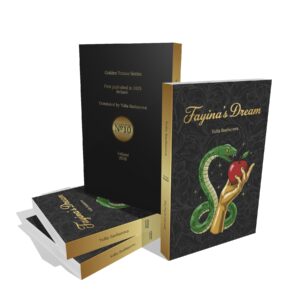
Fayina’s Dream by Yulia Basharova
Page Count: 395Year: 2025Products search A mystical, satirical allegory about the war in Grabland, featuring President Liliputin. There is touching love, demons, and angels. Be careful! This book changes your thinking! After reading it, you’ll find it difficult to sin. It is a combination of a mystical parable, an anarchy manifesto, and a psychological drama, all presented in […]
$10.00 Login to Wishlist
Mikhail Bulgakov’s cult classic novel The Master and Margarita (1928–1940) is an incredible intertwining of two plot lines. The main part of the narrative is dedicated to the visit of Satan to Moscow in the early 20th century, into which is woven a surprising novella based on the New Testament, created in the imagination of one of the main characters—the Master. In the finale, these two stories are inseparably connected when the Master meets Pontius Pilate, the procurator of Judea, and mercifully decides his fate.
Work on this unique novel was interrupted by the death of Mikhail Afanasyevich Bulgakov. The first publications of excerpts from The Master and Margarita date back to 1966–1967, and the full text of the book was first published in the writer’s homeland only in 1973. Nevertheless, today everyone can familiarize themselves with the main plot and ideas of this masterpiece by reading its summary by chapters online.
Setting and Time
The action unfolds in two time layers: in Moscow in the 1930s and in ancient Yershalaim at the beginning of our era, where the story described in the Master’s novel takes place.
Key Characters
- The Master – A nameless writer, creator of the novel about Pontius Pilate and Yeshua. Unable to withstand persecution from critics, he loses his sanity.
- Margarita – His beloved, whose heart is broken by the Master’s disappearance. Her longing to meet him pushes her to make a deal with the devil and take on the role of queen at Satan’s Ball.
- Woland – A mysterious magician, concealing his true essence—Satan—beneath his guise.
- Azazello – A member of Woland’s retinue, noticeable for his short stature, red hair, and sharp fangs.
- Koroviev – Woland’s loyal companion, a lanky individual in a checked jacket, wearing a pince-nez with one missing lens.
- Behemoth – Woland’s playful companion, transforming from a huge talking black cat into a short, portly man “with a cat’s face” and back again.
- Pontius Pilate – The fifth procurator of Judea, in whom human feelings battle with a sense of official duty.
- Yeshua Ha-Notsri – A wandering philosopher, executed for his views.
Other Characters
- Mikhail Berlioz – Chairman of MASSOLIT, the writers’ union. Believes that man determines his own fate, but dies as a result of an accident.
- Ivan Bezdomny – A poet, member of MASSOLIT, goes mad after meeting Woland and the tragic death of Berlioz.
- Hella – Woland’s maid, an attractive red-haired vampire.
- Stepan Likhodeev – Director of the Variety Theatre, Berlioz’s neighbour. Is mysteriously transported from Moscow to Yalta, freeing up the apartment for Woland and his retinue.
- Ivan Varenukha – Administrator of the Variety Theatre. As punishment for rudeness and a tendency to lie, Woland’s retinue turns him into a vampire.
- Grigory Rimsky – Financial Director of the Variety Theatre, who narrowly escapes an attack by the vampire Varenukha and Hella.
- Andrei Sokov – The Variety Theatre’s buffet manager.
- Vasily Lastochkin – The Variety Theatre’s accountant.
- Natasha – Margarita’s housemaid, a young and attractive girl who, following her mistress, transforms into a witch.
- Nikanor Ivanovich Bosoy – Chairman of the housing association in the building that houses the “unclean apartment” No. 50, a bribe-taker.
- Aloisy Mogarych – The Master’s betrayer, hiding under the guise of a friend.
- Matthew Levi – A Yershalaim tax collector whose heart and mind were captured by Yeshua’s inspiring speeches, prompting him to become a follower.
- Judas of Kiriath – The young man who betrayed Yeshua Ha-Notsri, who had trusted him, tempted by a reward. He was punished for this by losing his life.
- High Priest Caiaphas – Pilate’s ideological opponent, who destroyed the last hope for saving the condemned Yeshua: in his stead, the robber Bar-Rabban was freed.
- Aphranius – Head of the procurator’s secret service.
Chapter 1. Never Talk to Strangers
The tranquil surface of the Patriarch’s Ponds in Moscow was disturbed only by the animated conversation between Mikhail Berlioz, the head of the MASSOLIT writers’ union, and the poet Ivan Bezdomny. The subject of their dispute was the image of Jesus Christ in Ivan’s new poem. Berlioz chastised the poet for, instead of debunking the myth of Christ’s existence itself, endowing him with negative traits, and passionately provided arguments in favour of his atheist stance.
Suddenly, a man with a foreign appearance interrupted the conversation. He inquired who, in the opinion of the writers, manages human life if there is no God. Upon hearing in response that man is his own master, the stranger smirked caustically and foretold Berlioz’s imminent demise: he would be decapitated by a “Russian woman, a Komsomol member,” because a certain Annushka had already spilled sunflower oil, making the fatal outcome inevitable.
Distrust seized Berlioz and Bezdomny—was he a spy? But the stranger, presenting documents, dispelled their doubts. It turned out he had arrived in Moscow as an expert in black magic. He then stunned his listeners with a statement: Jesus, he claimed, was not a myth but a real historical figure. Berlioz, a rational man, demanded proof. And the stranger began his narrative, telling of the deeds of Pontius Pilate.
Chapter 2. Under the Shade of the Roman Eagles
A beaten man, clad in pathetic rags, about twenty-seven years old, was dragged to the procurator’s court. Tormented by fits of migraine, Pontius Pilate had to approve the death sentence issued by the Sanhedrin: Yeshua Ha-Notsri, it was claimed, incited the destruction of the temple. However, the conversation with the prisoner overturned everything in the procurator’s soul. The intelligent, educated Yeshua, like a sorcerer, relieved him of his headache. The philosophy of the prisoner, who considered all people good by nature, was also surprising. Pilate, moved and intrigued, tried to lead Yeshua to renounce the words he was accused of. But the latter, seemingly unaware of the danger, easily confirmed the information from the denunciation by a certain Judas of Kiriath, which testified that he was an opponent of any authority, including the authority of the great Caesar. There was no turning back—Pilate was obliged to approve the sentence. Yet, his conscience did not allow the procurator to surrender. In a private conversation with the High Priest Caiaphas, he asked for Yeshua to be pardoned, choosing him from the two condemned to death. But Caiaphas was adamant, preferring to grant life to the rioter and murderer Bar-Rabban.
Chapter 3. The Seventh Proof
Berlioz denies the possibility of proving the veracity of his story, but the consultant claims to have witnessed it. The head of MASSOLIT suspects he is dealing with a madman, especially considering the consultant’s intention to settle in Berlioz’s apartment. Entrusting the mysterious individual to Bezdomny, Berlioz heads to a payphone to call the bureau for work with foreigners. The consultant asks Berlioz to at least believe in the existence of the devil and promises to provide irrefutable proof.
Berlioz goes to cross the tram tracks, but slips on the spilled sunflower oil and falls onto the rails. The female tram driver in a Komsomol red kerchief severs Berlioz’s head with the tram wheel.
Chapter 4. The Pursuit
Deeply shaken by the tragic event, Ivan learns that the fatal cause of Berlioz’s fall was the oil carelessly spilled by a certain Annushka from Sadovaya Street. This detail brings the words of the mysterious foreigner back to the poet’s mind, and he decides to demand an explanation from him. However, to Ivan’s astonishment, the consultant, who had previously spoken fluent Russian, suddenly pretends not to understand a word. A brazen fellow in a checked jacket unexpectedly steps up to defend him, and soon Ivan spots them both in the distance, where a huge black cat joins them. Despite all the poet’s frantic attempts to catch the strange company, they dissolve into the city bustle.
Ivan’s behavior becomes increasingly eccentric. He breaks into a stranger’s apartment, absolutely convinced that the sinister professor is hiding there. Grabbing an icon and a candle, Bezdomny continues the pursuit, which leads him to the bank of the Moskva River. There, he decides to plunge into the cool waters, and upon emerging, he discovers his clothes are gone. Forced to put on what was left—a tattered Tolstoy-shirt and long johns—Ivan decides to continue the search for the mysterious foreigner in the favourite spot of the capital’s intelligentsia—the MASSOLIT restaurant, nicknamed “Griboedov.”
Chapter 5. Within the Walls of “Griboedov”
“Griboedov House” is not just a building; it is the sanctuary of MASSOLIT. Being a writer, a member of this influential union, is an enviable fate: a coveted Moscow corner and a dacha in a prestigious settlement, “creative trips” to exotic locations, and, most importantly, the opportunity to eat exquisite delicacies at ridiculous prices in the luxurious restaurant “for members only.”
Assembly Without a Leader
The twelve pens gathered under the roof of MASSOLIT fruitlessly awaited their leader, Berlioz. Not waiting any longer, they decided to descend into the belly of the restaurant. It was there that the news of the chairman’s tragic end reached them. The shadow of grief, however, was fleeting: “He’s gone, so he’s gone… What does it matter to us, we’re still breathing!”—and the feast continued.
A Whirlwind of Madness
Suddenly, the restaurant’s calm exploded with the appearance of Ivan Bezdomny. Barefoot, in only his long johns, clutching an icon and a candle, he rushed between the tables, like a hunting dog, looking for some “consultant,” whom he accused of Berlioz’s death. The attempts of his colleagues to reason with the poet only stoked the fire of madness. In a whirlwind of a fight, tied up by waiters with a towel lasso, Ivan was sent to a psychiatric hospital.
Chapter 6. Diagnosis Confirmed
The doctor listened intently to Ivan. The poet, glad for the opportunity to pour out his soul, told a fantastic story about a mysterious “consultant” linked to evil forces. This “consultant,” according to Ivan, not only “arranged” Berlioz’s death under the tram wheels but was personally acquainted with Pontius Pilate himself.
Suddenly, in the middle of his rambling story, Bezdomny remembers the police. He thinks this is the only way out. But who will listen to a crazy poet from an asylum? Desperation pushes Ivan to a frantic act: he lunges at the window, trying to smash the thick glass. In vain! The special, super-strong glass does not yield. The exhausted Bezdomny is taken back to his ward, where he is given the grim diagnosis of “schizophrenia.”
Chapter 7. The Ominous Dwelling
Stepan Likhodeev, the director of the Moscow Variety Theatre, has a splitting headache from a hangover. He barely opens his eyes in his apartment, which he shares with… the ghost of the deceased composer Berlioz. This apartment has long had a bad reputation: people whisper that previous tenants disappeared without a trace, and their disappearance is blamed on some otherworldly forces.
Unexpectedly, Stepan encounters a stranger in black clothes who introduces himself as Professor Wold (Woland) of black magic. The stranger claims that Likhodeev had scheduled a meeting with him to discuss a concluded and already paid contract for performances at the Variety Theatre, which Stepan remembers nothing about. Contacting the theatre, Likhodeev confirms the guest’s words, but soon finds him not alone, but accompanied by a checkered gentleman in a pince-nez and a huge talking black cat drinking vodka. Woland announces to Stepan that he is superfluous here, and the short red-haired fellow named Azazello suggests “tossing him to all the devils out of Moscow.”
Finding himself on the seashore in an unfamiliar city, Stepan learns from a passerby that it is Yalta.
Chapter 8. The Duel Between the Professor and the Poet
Doctor Stravinsky himself arrived at Ivan Bezdomny’s ward, accompanied by a retinue of doctors. After listening to the poet’s rambling account, the doctor, with shrewdness in his eyes, inquired about his further plans, should he be released this very minute. Without hesitation, Bezdomny blurted out his firm intention to go straight to the police station and tell them about the mischief caused by the cursed consultant. However, Stravinsky, being a discerning man, gently reasoned with the poet, noting that his mental state, shaken by Berlioz’s death, would not allow him to be convincing in the eyes of the law enforcers. On the contrary, such zeal might be misinterpreted, and then a return to the asylum would be inevitable. Instead, the doctor offered Ivan to find peace in the cozy ward and put his thoughts into a written statement. Reassured by the doctor’s arguments, the poet agreed.
Chapter 9. Koroviev’s Tricks
Nikanor Ivanovich Bosoy, the chairman of the housing association in the house on Sadovaya where Berlioz lived, is besieged by people eager to occupy the deceased’s vacant apartment. Bosoy visits the apartment himself. In Berlioz’s sealed study sits a man who introduced himself as Koroviev, the translator for the foreign artist Woland, who is staying at Likhodeev’s place with the permission of the owner who went to Yalta. Koroviev offers Bosoy to rent Berlioz’s apartment to the artist and immediately hands him the rent and a bribe.
Nikanor Ivanovich leaves, and Woland expresses a wish that he no longer appear. Koroviev makes a phone call and reports that the chairman of the housing association is illegally storing currency at home. Bosoy is searched, and instead of the rubles Koroviev gave him, they find dollars. Bosoy is arrested.
Chapter 10. News from Yalta
In the office of the Variety Theatre’s financial director, Roman Ivanovich Nemerts, he and the administrator Varenukha gathered. They are puzzled about the whereabouts of the missing Stepan Likhodeev. At that moment, an urgent telegram arrives for Varenukha from Yalta: someone claiming to be Stepan Likhodeev has presented himself at the local police station, and confirmation of his identity is required. The administrator and financial director decide this is just a joke: after all, Likhodeev called them four hours ago from his Moscow apartment, promising to come to the theatre soon, and since then, he could not physically have moved to Crimea.
Varenukha contacts Stepan’s apartment, where he is told that the latter has gone out of town for a drive. A new version of events: “Yalta” is just a local cheburek stand where Likhodeev got drunk in the company of a local telegraph operator and is now having fun sending telegrams from there.
Having received a stack of telegrams from Rimsky, Varenukha was about to go to the police when an unfamiliar voice with nasal notes, breaking through the telephone receiver, strongly advised him not to. However, ignoring this strange call, the administrator still headed towards the station. On the way, he was brazenly attacked by two unknowns: a corpulent man whose physique resembled a plump cat, and his stocky accomplice with savagely bared teeth. Grabbing Varenukha, the villains delivered their victim to Likhodeev’s apartment, where the last thing the unfortunate administrator saw before falling into darkness was a naked red-haired woman whose burning gaze pierced him through.
Chapter 11. Ivan’s Double
Ivan Bezdomny, in the psychiatric clinic, tries to write a statement to the law enforcement agencies, but he cannot clearly articulate what happened. Besides, he is disturbed by the thunderstorm outside the window. After a calming injection, the poet lies down and conducts an internal dialogue with himself. One of his “interlocutors” continues to worry about the tragedy with Berlioz, while the other is sure that instead of panicking and pursuing, he should have politely questioned the consultant about Pilate and learned the continuation of the story.
Suddenly, a mysterious stranger—an inhabitant of this very kingdom of shadows—appears on the balcony of Bezdomny’s ward. A bunch of keys, cleverly snatched from a distracted orderly, glistens in his hands. To Ivan’s bewildered question as to why he, armed with such power, would not leave this abode of sorrow, the stranger merely smiles bitterly: he has nowhere to run. He shares a disturbing story with Bezdomny about a new patient obsessed with the delusion of currency hidden in the ventilation. Then, as if caught by an unknown wave of curiosity, the guest inquires about Ivan’s own past, asking about the reason for his confinement. Upon hearing the fateful name “Pontius Pilate,” he brightens, demanding details of the fateful meeting. And then, like a clap of thunder, his verdict sounds: at Patriarch’s Ponds, Ivan encountered the devil himself!
The fate of the stranger himself was also intertwined with the name of Pontius Pilate: he, like Ivan, dared to write a novel about this contradictory character. Introducing himself as the Master, he shows Ivan his distinguishing mark—a modest cap embroidered with the letter “M”—a gift from a mysterious beloved. And then, as if opening the gates to the hidden corners of his soul, the Master begins his story. He tells of an unexpected win of a hundred thousand, a bold decision to quit his hated job at the museum and settle in a semi-basement apartment, dedicating himself entirely to creativity. And, of course, about her—about the suddenly ignited love: “Love leaped out in front of us, as a murderer leaps out of the ground in an alley, and struck us both at once! That’s how lightning strikes, that’s how a Finnish knife strikes!” This mysterious woman, who became his secret wife, loved not only the Master but also his novel, seeing in it a reflection of her own fate. However, the path to recognition proved thorny: the manuscript was persistently rejected by publishers. And when the long-awaited publication of an excerpt finally took place, a barrage of merciless criticism descended upon the Master. His work was branded with the shame of “Pilatus-ism,” and the author himself was called nothing less than a “God-dabbler” and a “militant Old Believer.” A certain Latunsky was particularly furious, for which the Master’s beloved swore to take revenge on him.
In the whirlpool of events, the Master acquired a new acquaintance—Aloisy Mogarych, an avid admirer of literature. However, this man for some reason caused the Master’s beloved an inexplicable aversion. Critical articles continued to poison his existence, and his mind slowly but surely began to give way. In a fit of despair, the Master committed his brainchild to the flames—the manuscript of the novel. Only a few pages, miraculously saved by the returning Margarita, reminded him of former hopes. On that fateful night, when Margarita left the Master, to unite her fate with him forever, he was evicted from the apartment and ended up in the asylum, forever separated from his beloved.
Meanwhile, a new drama unfolds in the next ward: a patient in a fit of madness complains about a severed head. When the noise subsides, Ivan, as if reading the Master’s thoughts, asks why that he did not contact his beloved. The Master, whose voice holds unbearable pain, replies that he does not want to cloud her life with his madness: “Poor woman. However, I have hope that she has forgotten me!”
Chapter 14. Rimsky’s Misfortunes: Naked Ladies and the Phantom Administrator
From the window of his office, the financial director of the Variety Theatre, the unfortunate Rimsky, observes a scandalous scene: several ladies, as if by magic, lost their clothes right in the middle of the street. These hapless buyers at the cunning Fagot’s store became victims of a mystical prank. Rimsky is eager to sort out this story and the other incidents of the day, but his calls are interrupted by a seductive but persistent female voice on the telephone line.
Closer to midnight, Rimsky remains alone in the deserted theatre. Suddenly, Varenukha appears with an incredible story about Likhodeev. The administrator recounts that Stepa, as expected, hit the bottle hard at the “Yalta” cheburek stand in the company of the telegraph operator. The celebration was not limited to alcohol: Likhodeev indulged in reckless antics, played a trick on the public with the help of telegrams, and caused such a stir that he ended up in a sobering-up station. However, Rimsky notices something amiss in Varenukha’s story and behaviour: the administrator fidgets, hides from the light, nervously smacks his lips, his face is unusually pale, and despite the heat, a scarf adorns his neck. And then the financial director discovers with horror that Varenukha… has no shadow.
Having exposed the vampire, Rimsky quickly closes the office door, but a red-haired stranger is already entering through the window. However, before they can harm Rimsky, the sound of a rooster crowing rings out. The financial director, having miraculously escaped danger, rushes off to Leningrad, his hair completely white in that short time.
Chapter 15. Nikanor Ivanovich’s Dream
Nikanor Ivanovich Bosoy firmly states to the law enforcement officers that the currency found in his ventilation is connected with an evil force and a treacherous translator, and not with him himself. He admits: “I took it, but I only took our, Soviet money!” As a result, Bosoy is handed over to psychiatrists. The police go to apartment No. 50 to check Bosoy’s words about the translator, but find it empty, and the seals on the doors—undisturbed.
Immersed in a deep sleep, Nikanor Ivanovich experiences disturbing episodes. He again participates in an interrogation, but this time the action takes place in an unusual theatre space, where the audience is required to hand over currency. Overcome by fear, Nikanor cries out loudly, and a nurse calms him down.
Bosoy’s piercing shouts wake up the other patients in the clinic. The sedated Ivan Bezdomny plunges into the continuation of his dreams, which feature Pontius Pilate.
Chapter 16. The Execution
The condemned to death, including Yeshua, are brought to Bald Mountain. The place of crucifixion is carefully guarded: the procurator fears that attempts will be made to free the prisoners.
After Yeshua’s cruel execution, his followers hasten to leave the scene of the tragedy, exhausted by the scorching sun. However, one person remains among them—Ha-Notsri’s disciple, the former Yershalaim tax collector Matthew Levi. He blames himself for what happened and dreams of relieving the Teacher of his suffering, but in vain. Disappointed, Matthew Levi begins to grumble at the Almighty, provoking the wrath of the heavens. By order of the cohort commander who arrived at the hill, the martyrs are quickly killed, ordered to give praise to the generous procurator.
The sky opens up with a downpour, washing away the last signs of the recent tragedy from the hill. Matthew Levi, approaching the summit, takes the lifeless bodies from the crosses, carrying Yeshua’s remains with him.
Chapter 17. A Day Steeped in Anxiety
Lastochkin, the Variety Theatre’s accountant, left in charge, is bewildered. Moscow is buzzing with rumours, the telephone does not stop ringing, and the investigators with a dog, who have come to search for the missing Rimsky, only add to the chaos. The dog behaves strangely restlessly: it growls, presses itself to the ground, and howls, as if sensing something evil—there is no use for such a helper. It turns out that all documents related to Woland have vanished into thin air—not even posters remain.
Lastochkin headed to the commission for entertainment and spectacle with an important report. Imagine his surprise when he found an empty suit diligently signing documents in the chairman’s chair! A weeping secretary recounted that the boss had been visited by a suspicious type resembling a plump cat. Deciding that things were better at the branch office, the accountant hurried there. Alas, chaos reigned there too: a certain individual in a checked suit and broken pince-nez, after organizing a choir performance, disappeared, leaving the choristers in silent ecstasy, unable to stop the concert.
In complete despair, Lastochkin went to the financial-spectacle sector to hand over the revenue from yesterday’s performance. Imagine his astonishment when, instead of rubles, foreign currency was found in his briefcase! The unfortunate accountant was immediately arrested.
Chapter 18. Uninvited Guests of the Capital
Meanwhile, Maxim Poplavsky—Berlioz’s uncle—arrived in the capital from Kyiv. Having received a mysterious telegram signed with his nephew’s name, he learned of his death. The thirst to acquire the inheritance—the apartment in Moscow—drove the enterprising relative forward.
In his nephew’s apartment, Poplavsky meets Koroviev, who is in deep sorrow and colourfully describes Berlioz’s sad fate. Suddenly, the cat begins to talk to Poplavsky, informing him that it was he who sent the telegram, demanding the guest’s passport, and then informs him that his presence at the funeral is cancelled. Azazello drives Poplavsky out of the apartment, warning him not to even dream of housing in Moscow.
Soon after Poplavsky, the Variety Theatre’s buffet manager Sokov arrives at the “unclean” apartment. Woland presents him with a list of complaints about his work: the brynza is green, the sturgeon is “second freshness,” the tea “looks like slop.” Sokov, in turn, complains that the chervontsy he previously received turned into ordinary paper. Woland and his companions sympathize with him and incidentally predict that he will die of liver cancer in nine months. When Sokov tries to show them the money, the paper turns into chervontsy again.
The troubled buffet manager rushes to the doctor, begging him to cure his ailment. After paying with the same gold coins, after his departure they turn into wine labels.
Part Two
Chapter 19. Margarita
The Master’s beloved, Margarita Nikolaevna, had not forgotten him, despite her comfortable life in her husband’s mansion. On the day of the strange events with the buffet manager and Poplavsky, she wakes up with a premonition that something will happen. For the first time since being separated from the Master, she sees him in a dream and goes to look through the relics associated with him: his photo portrait, dried rose petals, a savings book with the remnants of his winnings, and the scorched pages of the novel.
During a walk through Moscow, Margarita witnesses Berlioz’s funeral. Suddenly, a short, red-haired man with a protruding fang sits down next to her and tells her about the theft of the deceased’s head. Calling Margarita by name, he invites her to a meeting “with a very influential foreigner.” Although the woman wants to leave, the mysterious stranger, referring to lines from the Master’s novel, hints that she will be able to learn something about her beloved if she agrees. Margarita decides to accept the offer, and Azazello hands her an unusual magical cream, providing clear instructions.
Chapter 20. Azazello’s Cream
Margarita’s skin, barely touching the cream, began to glow with youth. Her reflection in the mirror was captivating with unearthly beauty. But the main magic was just beginning—her body filled with a lightness hitherto unknown. “Forgive me, I beg you, and try to forget. Forever yours, Margarita,” she traced the farewell lines with a trembling hand. “Don’t waste time searching—it’s all futile. Grief and troubles have turned me into a witch. It’s time for me to go. Goodbye.” Natasha entered the room and gasped, not recognizing her rejuvenated mistress. Margarita managed to whisper the secret of the magic cream to her when Azazello’s call rang out: “It’s time!” At that moment, a floor brush flew into the room… brought to life. Mounting it, Margarita, before the eyes of the stunned Natasha and the neighbour, Nikolai Ivanovich, who looked out at the noise, flew out the window.
Chapter 21. Night Fairy
Concealed by a veil of invisibility, Margarita soared over nocturnal Moscow. Mischief, like sudden gusts of wind or slamming shutters, amused her like a child. But then a luxurious house populated by writers came into view. Among them was Latunsky, the critic who ruined the Master. Breaking into his apartment through the window, Margarita created a real devastation, venting her accumulated pain and thirst for revenge.
Her swift flight is interrupted by the appearance of Natasha, astride a mighty boar. It turns out that the enterprising housemaid did not miss the opportunity to use the remnants of the magic cream, generously sharing it with the neighbour Nikolai Ivanovich. As a result of the metamorphosis, Natasha turned into a real witch, and the hapless neighbour—into a fearsome boar. After plunging into the cool waters of the night river, Margarita heads back to Moscow in a car hovering in the air.
Chapter 22. By the Light of the Flame
In the capital, Koroviev escorts Margarita to the sinister “bad apartment” and initiates her into the secret of the annual ball of Satan, where she is to become the queen. He hints that royal blood flows in Margarita’s veins. In an incredible manner, luxurious ballrooms materialize inside the apartment. Koroviev explains this as the use of the fifth dimension, accessible only to the initiated.
Woland is settled on the bed, engrossed in a game of chess with the cat Behemoth, while Hella skillfully treats his wounded knee with a healing ointment. Replacing Hella, Margarita becomes Woland’s guest, and he inquires if any sorrow or longing torments her. But Margarita confidently replies that there is no sadness in her soul. Midnight approaches, and the masters of the ball are already calling Margarita, preparing for the grand spectacle.
Chapter 23. The Great Ball at Satan’s
Margarita appears before the guests in a luxurious dress, like a queen. Among them are long-deceased criminals: poisoners, procurers, counterfeiters, murderers, traitors. One of them is a young woman named Frida, whose story astounds Margarita. Koroviev relates that when Frida worked in a café, the owner lured her into the back room, and nine months later, she gave birth to a boy, took him to the forest, gagged him with a handkerchief, and buried him. At the trial, she stated that she could not feed the child. Since then, for 30 years, that very handkerchief is brought to her every morning.
The formal reception comes to an end, and Margarita must walk through the halls, paying due attention to the guests. Woland steps onto the stage, and Azazello presents him with Berlioz’s severed head on a platter. Woland dismisses Berlioz into oblivion, and his skull turns into a ritual vessel. This vessel is filled with the blood of a Moscow official, Baron Meigel, who was the only living guest at the ball and was identified by Woland as a spy and shot by Azazello. The cup is presented to Margarita, and she drinks from it. The ball comes to an end, everything disappears, and in place of the luxurious hall remains a modest living room with a slightly ajar door to Woland’s bedroom.
Chapter 24. The Master’s Deliverance
Margarita is increasingly afraid that the reward for attending Satan’s ball will not follow, but out of pride, she does not want to remind him of it. Even to Woland’s direct question, she replies that she needs nothing. “Never ask for anything! Never ask those who are stronger than you for anything. They will offer it themselves, and they will give you everything!” says Woland, pleased with her, and offers to fulfill any of Margarita’s wishes. However, instead of solving her own problem, she demands that Frida be relieved of the daily handkerchief. Woland says that such a small wish the queen can grant herself, and his offer remains in force. Then Margarita finally wishes for her “lover, the Master, to be immediately returned to her.”
The Master appears before the heroine. Hearing about the novel dedicated to Pontius Pilate, Woland shows a keen interest in it. The manuscript, which the Master committed to the flames, is found in the hands of the mysterious Woland in full integrity: “manuscripts don’t burn.” Margarita implores Woland to return her and her beloved to their humble dwelling, so that everything might be as it was. The Master is extremely pessimistic: strangers have already settled in his apartment, he has no documents, and escaping from the asylum will inevitably lead to a search. However, Woland easily resolves all these difficulties. It turns out that the Master’s living space was occupied by none other than his “well-wisher” Mogarych, who, furthermore, wrote a denunciation against the Master, accusing him of possessing forbidden literature.
The witch Natasha, at her and Margarita’s request, remains at the ball. The neighbour Nikolai Ivanovich, having returned to his former appearance, demands a certificate for the police and his wife that he spent the night at Satan’s ball, and the cat immediately provides him with the document. The administrator Varenukha appears and begs to be freed from the role of a vampire, as he is not a bloodsucker.
As a farewell, Woland promises the Master that his work will yet bring him surprises. The lovers are delivered to their basement apartment. There, the Master falls asleep, and the happy Margarita rereads his novel.
Chapter 25. How the Procurator Tried to Save Judas
A powerful thunderstorm broke out over the city of Jerusalem. The head of the secret service, Aphranius, comes to the procurator and reports that the execution has taken place, there are no disturbances in the city, and the general situation is quite satisfactory. Furthermore, he recounts Yeshua’s last words, in which he notes cowardice as one of the chief human vices.
Pilate instructs Aphranius to urgently and secretly bury the bodies of all three executed men, and also to ensure the safety of Judas of Kiriath, whom, according to his information, “Ha-Notsri’s secret friends” are supposed to kill tonight. In fact, the procurator gives an unspoken instruction to the head of the secret guard to organize this murder.
Chapter 26. The Burial
The procurator realizes that he has missed something significant today, and no orders can compensate for this oversight. The only thing that brings him some peace is communicating with his beloved dog named Banga.
While Aphranius visits Niza, Judas of Kiriath, having received payment from Caiaphas for his terrible sin—the betrayal of Yeshua—hurries to meet the woman in love with him. She, harboring her secret intentions, appoints a rendezvous not in a crowded place, but in a garden near Yershalaim. But instead of Niza, three strangers await Judas. The tragic finale does not delay: the young man is killed, and the purse with the thirty pieces of silver is taken. Aphranius, one of the three murderers, returns to the city. Meanwhile, the procurator, tormented by anxious anticipation, fell into a restless sleep. In these dreams, Yeshua is alive, he walks beside him along a moonlit road, and they engage in engrossing disputes about important and necessary things. And in this dream, the procurator understands with horrifying clarity that there is no vice more terrible than cowardice, the very cowardice that forced him to betray the free-thinking philosopher for the sake of his own career.
According to Aphranius’s story, Judas is dead, and a package with silver and a note “I return the accursed money” was thrown to the High Priest Caiaphas. On Pilate’s instructions, Aphranius is to spread the rumor that Judas committed suicide. Furthermore, the head of the secret service reports that Yeshua’s body was found near the place of execution by a certain Matthew Levi, who initially refused to give up the body, but, learning that Ha-Notsri would be buried, agreed.
Matthew Levi is brought to the procurator, who asks him to show the parchment with Yeshua’s words. Levi reproaches Pilate for Ha-Notsri’s death, to which he notes that Yeshua himself did not blame anyone. The former tax collector warns that he intended to kill Judas, but the procurator informs him that the traitor is already dead and that he, Pilate, did it.
Chapter 27. The End of Apartment No. 50
The capital has still not recovered from the escapades of the mysterious Woland. Detectives again knock on the door of the ominous apartment, where the threads of the tangled case converge. Inside, an incredible discovery awaits them—a talking cat with a primus stove in its paws! The tailed insolent provokes a real shootout, thankfully without casualties. Voices are heard from the depths of the apartment: Woland, Koroviev, and Azazello are preparing to leave Moscow. The cat apologetically disappears, leaving behind only spilled gasoline and flames. Four silhouettes burst from the window of the blazing apartment: three male and one—elegant, female.
Chapter 28. Koroviev and Behemoth’s Farewell Bow
Two individuals appeared in a fashionable shop with foreign curiosities: a dandy in a checked jacket and a plump individual with a kerosene lamp, resembling a stately cat. While the glutton devoured mandarins, herring, and chocolate from the counter, his companion called on the crowd to rebel against injustice: scarce goods are sold for foreign currency to foreigners, and not to their own citizens for rubles. When the police arrived at the commotion, the friends, after starting a small fire, disappeared as if they had sunk through the earth. Their next destination was the Griboedov restaurant, where a fire also soon broke out.
Chapter 29. The Fate of the Creator and His Muse is Decided
Woland and Azazello, situated on the terrace of one of Moscow’s skyscrapers, surveyed the city spread out at their feet. Matthew Levi joined them with the news that “he”—meaning Yeshua—had read the Master’s manuscript and asks Woland to grant the author and his beloved the long-awaited peace. Woland commanded Azazello to “go to them and settle all matters.”
Chapter 30. The Hour Has Come!
The Master and Margarita, sheltered in their cozy basement, discuss the night’s events, which give the Master no rest. He tries to convince Margarita to leave him and not share his fate, but she steadfastly believes in Woland.
Suddenly, Azazello appears on the threshold, and in the blink of an eye, he sets fire to their refuge. Without losing time, all three ascend on black horses, rushing into the heavenly heights.
During the flight, the Master finds an opportunity to say goodbye to his disciple, Bezdomny, and instructs him to continue the story of Pilate.
Chapter 31. On the Sparrow Hills
Finally, the Master, Margarita, and their loyal companions—Azazello, Koroviev, and Behemoth—reunite with Woland. The time has come for the Master to forever leave the city he knew so well. At first, a poignant sadness settled in his heart, but soon it was replaced by a sweet excitement, similar to a gypsy’s wandering. Then the Master was seized by a bitter resentment, but it too was short-lived, giving way to proud indifference and a premonition of eternal peace.
Chapter 32. Farewell and the Eternal Shelter
With the sunset and the appearance of the lunar disc in the sky, the riders, soaring in the night, undergo incredible metamorphoses. Koroviev dons sinister indigo-colored armor, becoming a formidable knight of darkness. Azazello takes on the appearance of a ruthless desert demon, sowing death. Behemoth, however, transforms into a stately youth-page, the embodiment of “the most skillful jester in the world.” Margarita is not given to see her own transformation, but before her eyes, the Master acquires a grey streak in his hair and sharp spurs on his boots. Woland proclaims this night the time of reckoning, the time when everyone will get their just deserts. Moreover, he informs the Master that Yeshua himself read his creation and noted that, unfortunately, the novel remained unfinished.
The riders freeze, seeing before them a scene: a man in a chair, and beside him—a faithful dog. For two millennia, Pontius Pilate has been haunted by the same dream—a captivating moonlit path that he is unable to step upon. And suddenly, the Master’s voice rings out, freeing his hero: “You are free! Go, he is waiting for you!” And Pilate, at last, leaves this world, following the moonlit road with his four-legged friend toward the Yeshua who awaits him, thereby completing the novel.
And the Master and his beloved, as promised, are awaited by long-awaited peace. “Does a walk with your girlfriend under the shade of blossoming cherry trees not entice you? Or quiet evenings filled with Schubert’s music? Do not ink and a goose quill, at which you can spend hours, beckon you? Or, like Faust, do you not dream of bending over a retort in the hope of creating a new philosopher’s stone? Go forth, do not delay! A cozy house and a loyal servant are already waiting for you. The candles are lit, but will soon go out, for dawn is near,”—this is how Woland describes their future. “Look, before you is your eternal shelter, granted to you as a reward. I see it—a house with a Venetian window, covered in grapevines up to the roof. I know that in the evenings, those who are dear to you, those whom you are interested in, will come to you, and no one will disturb your peace. Music, conversations, warm candlelight… And you, tired but content, will fall asleep under the shade of your old faithful cap with a smile on your lips. Sleep will give you strength, your thoughts will become clear and wise. And I will always be near, guarding your peace, and you will not be able to drive me away,” Margarita echoes him. And the Master feels the invisible chains fall away, freeing him, just as he himself has just freed his hero—Pontius Pilate.
Epilogue
Moscow investigators found themselves at a dead end trying to untangle Woland’s case. In the end, all the inexplicable occurrences were attributed to the tricks of skillful hypnotists. Varenukha abandoned his rude habits and falsehood, Bengalsky said goodbye to his career as an emcee, choosing a measured life on his accumulated funds. Rimsky resigned from his position as financial director of the Variety Theatre, giving way to the astute Aloisy Mogarych. Ivan Bezdomny, having left the walls of the asylum, became a professor of philosophy, but on nights of the full moon, he was still troubled by dreams of Pilate and Yeshua, of the Master and his beloved.
What is the resolution?
- The Master—having drunk poisoned wine, finds eternal peace in another world.
- Margarita—shares the Master’s fate by drinking poison, and remains with him in the afterlife.
- Woland—having escorted the souls of the Master and Margarita to their “eternal shelter,” disappears without a trace.
The Fates of the Heroes of The Master and Margarita:
- Yeshua Ha-Notsri, the embodiment of Light in the Master’s novel, accepts a martyr’s death on the cross. Addressing Woland, the lord of Darkness, he asks for peace for the creator of his literary fate.
- Fagot, also Koroviev, sheds his disguise and appears in his true form as a gloomy knight, to sink into oblivion along with his master Woland.
- Behemoth, the cat with a demonic essence, sheds the mask of a domestic pet and, transformed into a demon-page, disappears after Woland.
- Berlioz, the chairman of MASSOLIT, tragically dies under the wheels of a tram. His head, by Woland’s will, turns into a golden cup, becoming an ominous symbol of retribution.
- Azazello, the demon of the waterless desert, reveals his true form and disappears along with Woland, leaving behind only vague conjectures and a mystical trace.
- Ivan Bezdomny, stunned by the encounter with the supernatural, gives up poetry and becomes a professor of philosophy, finding refuge within the walls of the Institute of History and Philosophy.
- Stepan Bogdanovich Likhodeev, having passed through trials, finds unexpected peace, getting the position of manager of a large gastronomic store in Rostov.
- Ivan Savelyevich Varenukha — continues to work at the Variety Theatre, becoming courteous and sensitive.
- Grigory Daniilovich Rimsky — enters the puppet theatre in Zamoskvorechye.
- Pontius Pilate — leaves the timeless realm, goes to the magical city, symbolizing paradise.
- Natasha — remains a sorceress forever.
Conclusion
Bulgakov initially conceived the novel The Master and Margarita as a satire about the devil called “The Black Magician” or “The Great Chancellor.” But after six drafts, one of which Bulgakov personally destroyed, the book turned out to be less satirical and more philosophical, in which the devil in the guise of the mysterious black magician Woland became only one of the characters. The motives of eternal love, compassion, the search for truth, and the affirmation of justice came to the fore.
Although brief summaries of the chapters of The Master and Margarita can provide a general idea of the plot and main concepts of the novel, a full understanding of this Bulgakov masterpiece is achieved only by reading its full text.