Description
The story is set in a dilapidated mental asylum—Ward No. 6—of a provincial Russian hospital, managed by Dr. Andrey Yefimych Ragin. The doctor is an initially well-intentioned, but ultimately apathetic, intellectual who rationalizes his negligence of the hospital’s horrific conditions with philosophical fatalism.
Ragin’s quiet indifference is shattered when he begins to converse with one of the inmates, Ivan Dmitrich Gromov, a former university-educated man suffering from acute paranoia and a persecution complex. Gromov is the only person in town capable of engaging the doctor in true intellectual debate.
The core of the story lies in their philosophical confrontation: Ragin preaches Stoicism—that suffering is a mental construct and the thinking man can find peace anywhere. Gromov vehemently counters that physical suffering is a brutal reality and that ignoring injustice is a form of spiritual death.
Ragin’s regular visits to the ward alarm his colleagues, who begin to doubt his sanity. The hospital staff, coveting his position, conspire to have Ragin himself committed.
In a supreme, devastating irony, Ragin is forcibly locked into Ward No. 6, where he experiences the very real terror and pain he once dismissed as mere concepts. Beaten by the warder Nikita, he finally realizes the fallacy of his passive philosophy, understanding, too late, that evil and suffering must be actively resisted.
Browse the table of contents, check the quotes, read the first chapter, find out which famous book it is similar to, and buy “Ward No. 6” on Amazon directly from our page.
I
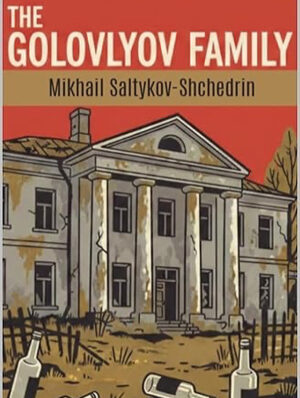
In the hospital yard stands a small outbuilding, surrounded by a whole forest of burdock, nettles, and wild hemp. Its roof is rusty, the chimney has half-collapsed, the porch steps are rotten and overgrown with grass, and only traces remain of the plaster. Its front façade faces the hospital, while the back looks out onto the field, separated from it by the gray hospital fence topped with nails. These nails, pointing upwards, and the fence, and the outbuilding itself, have that specific gloomy, accursed look that only hospital and prison buildings possess in our country.
If you are not afraid of getting stung by nettles, let us follow the narrow path leading to the outbuilding and see what is happening inside. Opening the first door, we step into the entryway. Here, against the walls and near the stove, whole mountains of hospital junk are piled up. Mattresses, old torn gowns, trousers, shirts with blue stripes, worn-out, worthless footwear—all these rags are heaped in piles, crushed, entangled, rotting, and emitting a suffocating smell.
The watchman, Nikita, an old retired soldier with rusty stripes, always lies on this junk with a pipe in his teeth. He has a stern, dissipated face, overhanging brows that give his face the look of a steppe sheepdog, and a red nose; he is short, appears lean and sinewy, but his bearing is imposing and his fists are massive. He belongs to the number of simple-minded, matter-of-fact, dutiful, and dull people who love order more than anything else in the world and are therefore convinced that they must be beaten. He punches people in the face, the chest, the back, wherever he happens to land a blow, and is sure that without it, there would be no order here.
Next, you enter a large, spacious room that occupies the entire outbuilding, if you don’t count the entryway. The walls here are smeared with dirty blue paint, the ceiling is blackened like in a smoke-filled hut—it is clear that the stoves smoke here in winter and that it gets stifling. The windows are disfigured by iron bars on the inside. The floor is gray and splintery. It stinks of sour cabbage, wick smoke, bedbugs, and ammonia, and this stench at first gives you the impression that you are entering a menagerie.
Beds, screwed to the floor, stand in the room. On them sit and lie people in blue hospital gowns and, in the old fashion, in caps. These are the insane.
There are five of them in total here. Only one is of noble birth, the rest are all commoners. The first from the door, a tall, thin commoner with reddish, shiny whiskers and tear-stained eyes, sits with his head propped up, gazing at one point. Day and night he grieves, shaking his head, sighing, and smiling bitterly; he rarely takes part in conversations and usually does not answer questions. He eats and drinks mechanically when given. Judging by his agonizing, racking cough, thinness, and blush on his cheeks, he is developing consumption.
Next to him is a small, lively, very mobile old man with a sharp beard and black, curly hair, like a Negro’s. By day he walks about the ward from window to window or sits on his bed with his legs crossed tailor-fashion, and restlessly, like a bullfinch, whistles softly, sings quietly, and chuckles. He displays his childlike cheerfulness and lively character at night, too, when he gets up to pray to God, that is, to beat his chest with his fists and poke his finger at the door. This is the Jew Moiseyka, a fool who went mad about twenty years ago when his cap-making workshop burned down.
Of all the inhabitants of Ward No. 6, he alone is allowed to leave the outbuilding and even the hospital yard for the street. He has enjoyed this privilege for a long time, probably as a hospital veteran and as a quiet, harmless fool, a town jester whom people have long been accustomed to seeing in the streets, surrounded by boys and dogs. In a little gown, a ridiculous cap, and slippers, sometimes barefoot and even without trousers, he walks the streets, stopping at gates and shops, and asks for a kopeck. In one place they give him kvass, in another—bread, in a third—a kopeck, so he usually returns to the outbuilding well-fed and rich. Everything he brings with him is taken by Nikita for his own benefit. The soldier does this roughly, with malice, turning out his pockets and calling God to witness that he will never again let the Jew out onto the street and that disorder is worse than anything in the world to him.
Moiseyka loves to be helpful. He brings his comrades water, covers them when they sleep, promises everyone to bring a kopeck from the street and sew a new cap; he also feeds his neighbor on the left, a paralytic, with a spoon. He acts this way not out of compassion or any humane considerations, but by imitating and involuntarily submitting to his neighbor on the right, Gromov.
Ivan Dmitrich Gromov, a man of about thirty-three, of noble birth, a former court bailiff and provincial secretary, suffers from a persecution complex. He either lies on the bed, curled up in a ball, or walks from corner to corner, as if for exercise, but he rarely sits. He is always agitated, anxious, and strained by some vague, indefinite expectation. The slightest rustle in the entryway or shout in the yard is enough for him to raise his head and listen: are they coming for him? Are they looking for him? And his face expresses extreme anxiety and aversion at such times.
I like his broad, high-cheekboned face, always pale and unhappy, reflecting in itself, as in a mirror, a soul tormented by struggle and prolonged fear. His grimaces are strange and morbid, but the fine features etched onto his face by deep, sincere suffering are intelligent and rational, and there is a warm, healthy gleam in his eyes. I like him himself, polite, helpful, and unusually delicate in his dealings with everyone except Nikita. When someone drops a button or a spoon, he quickly jumps out of bed and picks it up. Every morning he greets his comrades, and when going to bed, he wishes them good night.
Besides his constantly strained state and grimacing, his madness is expressed in the following. Sometimes in the evenings, he wraps himself in his gown and, trembling all over, teeth chattering, begins to walk quickly from corner to corner and between the beds. It looks as if he has a severe fever. The way he suddenly stops and looks at his comrades shows that he wants to say something very important, but, apparently realizing that he will not be listened to or understood, he impatiently shakes his head and continues pacing. But soon the desire to speak prevails over all considerations, and he gives himself free rein and speaks hotly and passionately. His speech is disorganized, feverish, like a delirium, abrupt, and not always understandable, but at the same time, something extremely good can be heard in it, both in the words and in the voice. When he speaks, you recognize both the madman and the human being in him. It is difficult to convey his insane speech on paper. He speaks of human baseness, of violence trampling truth, of the beautiful life that will one day be on earth, of the window bars that remind him every minute of the dullness and cruelty of the oppressors. The result is a disorderly, disjointed medley of old, yet unsung songs.





Reviews
There are no reviews yet.