Description
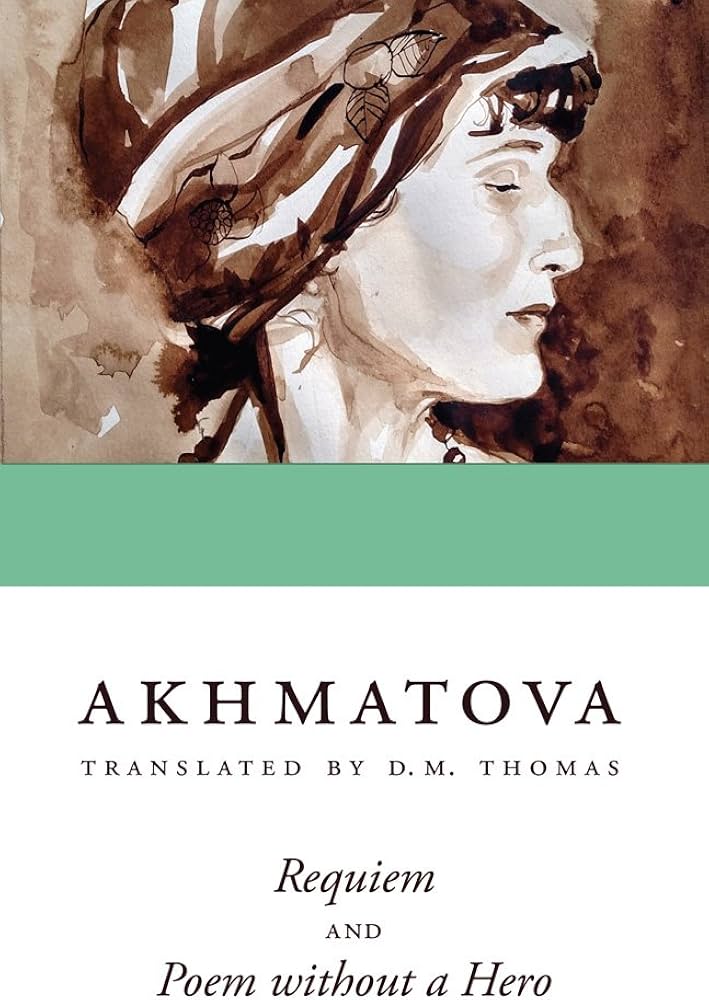
The poem cycle begins with the arrest of her son and the start of the mother’s seven years of waiting outside the Leningrad prisons. Akhmatova records the conversations and suffering of other women in the lines. The poem references the execution of the poet’s husband in 1921.
The climax of the cycle is the poet’s decision not to forget, but to eternalize the pain of millions of victims of the Stalinist purges in verse. She asks for a monument to be erected outside the prison walls.
Browse the table of contents, check the quotes, read the first chapter, find out which famous book it is similar to, and buy “Requiem” on Amazon directly from our page.
The stars of death stood above us. And innocent Russia writhed under bloody boots, and under the tires of the Black Marias.
It isn’t me, someone else is suffering. I couldn’t. Not like this. Everything that has happened, cover it with a black cloth, then let the torches be removed. . . Night.
I’ve cried for seventeen long months, I’ve called you for your home, I fell at hangmen’ feet – not once, My womb and hell you’re from.
I would like to name you all by name, but the list has been removed and there is nowhere else to look. So, I have woven you this wide shroud out of the humble words I overheard you use.
You were taken away at dawn. I followed you. As one does when a corpse is being removed. Children were crying in the darkened house. A candle flared, illuminating the Mother of God.
No, not beneath an alien sky,
And not beneath the shelter of alien wings—
I was with my people then,
There, where my people, unfortunately, were.
1961
Instead of a Foreword
During the terrible years of the Yezhov terror, I spent seventeen months in the prison queues in Leningrad. One day, someone “recognized” me. Then the woman standing behind me, who, of course, had never heard my name, roused herself from the stupor common to us all and whispered into my ear (everyone spoke in a whisper there):
— Can you describe this?
And I said:
— I can.
Then something like a smile slipped across what had once been her face.
April 1, 1957, Leningrad
Dedication
Mountains bow before this sorrow,
The great river does not flow,
But the prison locks are strong,
And behind them are “penal holes”
And a deadly anguish.
For someone the fresh wind blows,
For someone the sunset languishes—
We do not know, we are the same everywhere,
We hear only the hateful jangle of keys
And the heavy steps of soldiers.
We rose as if for early mass,
Walked through the wild city,
Met there, more breathless than the dead,
The sun lower, and the Neva mistier,
But hope still sings in the distance.
The verdict… And suddenly tears stream,
Already separated from everyone,
As if life were being pulled painfully from the heart,
As if one were roughly thrown face-up,
But she walks… Stumbles… Alone…
Where are now the involuntary companions
Of my two possessed years?
What do they imagine in the Siberian blizzard,
What do they dream of in the lunar circle?
To them I send my final farewell.
March 1940
Introduction
It was when the only one to smile
Was the dead, glad of his peace.
And Leningrad swung like a useless
Appendage by its prisons.
And when, maddened by torment,
The columns of the condemned marched,
And the whistles of the locomotives
Sang a short song of separation,
The stars of death stood above us,
And innocent Russia writhed
Under the bloody boots,
And under the tires of the Black Marias.
1
They took you away at dawn,
I followed you, as if carrying out a corpse.
In the dark room the children were weeping,
The candle before the icon had melted.
On your lips, the cold of the icon,
Mortal sweat on your brow… Never to forget!
I shall be like the wives of the Streltsy,
Howling beneath the Kremlin towers.
November 1935, Moscow
2
Quietly flows the quiet Don,
The yellow moon enters the house.
Enters wearing a cap tilted askew,
The yellow moon sees a shadow.
This woman is sick,
This woman is alone.
The husband is in the grave, the son in prison,
Pray for me.
1938


Reviews
There are no reviews yet.