Description
The philologist Lyova Odoevtsev lives in Leningrad, attempting to find his identity in the shadow of his famous academic grandfather and scientist father. The main conflict is his strained relationship with Mitishatyev, a cynical and talented foil. Mitishatyev steals Lyova’s scholarly work, provokes him, and drags him into personal disputes.
The plot culminates in a tragicomic duel that satirizes the clichés of classical Russian literature and the despair of a generation. Simultaneously, Lyova is torn between three women—Faina, Albina, and Lyubasha—unable to find stable love amid the chaos of his inner and outer life.
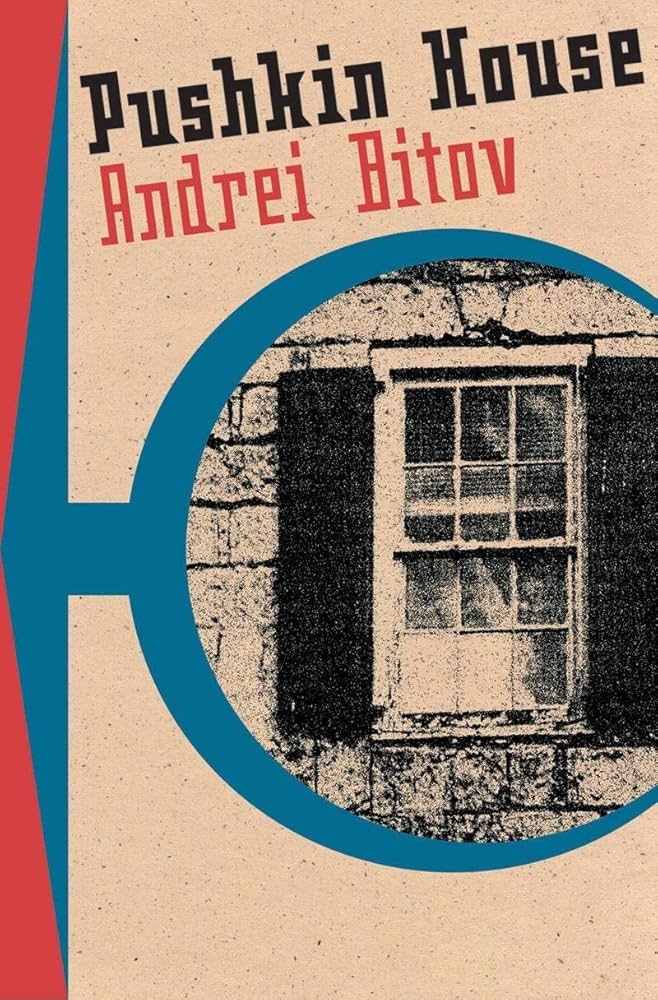
Browse the table of contents, check the quotes, read the first chapter, find out which famous book it is similar to, and buy “Pushkin House” on Amazon directly from our page.
What Is to Be Done? (Prologue, or a Chapter Written Later Than the Rest)
Part One. Fathers and Sons
• Father
• Separately About Dickens
• Father (Continuation)
• Father’s Father
• Father’s Father (Continuation)
• Version and Variant
• Heir (On Duty)
• Appendix to Part One. Two Pieces of Prose
Part Two. A Hero of Our Time
• Faina
• The Fatalist (Faina — Continuation)
• Albina
• Lyubasha
• The Myth of Mitishatyev
• Version and Variant
• Madame Bonacieux (On Duty)
• Appendix to Part Two. The Hero’s Profession
Part Three. The Poor Horseman
• On Duty (Heir — Continuation)
• Demons Invisible to the Eye
• Masquerade
• The Duel
• The Shot (Epilogue)
• Version and Variant (Epilogue)
• The Morning of Exposure or The Bronze People (Epilogue)
• Appendix to Part Three. Achilles and the Tortoise (The Author-Hero Relationship)
• Scraps (Appendices to the Commentaries)
There are 105 appendices to the whole book.
What Is to Be Done? (Prologue, or a Chapter Written Later Than the Rest)
Early in the morning on July 11, 1856, the servants
of one of the large St. Petersburg hotels
near the Moscow Railway station
were perplexed, and even somewhat alarmed.
N. G. Chernyshevsky, 1863
Somewhere, closer to the end of the novel, we already tried to describe that pure window, that icy celestial gaze that looked fixedly and unblinkingly on the crowds that had come out into the streets on November seventh… Even then, it seemed that this clarity was not without reason, that it was almost compelled by special airplanes (The author is hinting at the official dispelling of clouds, common for the November holidays, a practice referred to in the Soviet era by the folk term ‘plane scattering’), and not without reason in the sense that its price would soon have to be paid.
Indeed, the morning of November eighth, 196… was more than confirming such premonitions. It was dissolving over the deserted city and amorphously spread across the heavy contours of the old St. Petersburg houses, as if these houses were painted with diluted ink, fading as dawn broke. And while the morning finished writing this letter, once addressed by Peter “to spite the arrogant neighbor,” but now addressed to no one, accusing no one, asking nothing—the wind fell upon the city. It fell so flatly and from above, as if rolling down some smooth celestial curve, accelerating extraordinarily and easily, and touching the ground tangentially. It fell like that very plane, having done its flying… As if that plane had grown, swelled up, devoured all the birds yesterday while flying, absorbed all the other squadrons, and, having grown fat with metal and the color of the sky, crashed to the ground, still trying to glide and land, crashed tangentially. A flat wind, the color of an airplane, glided onto the city. The childish word “Gastello” (Nikolai Gastello was a Soviet pilot whose plane, according to legend, caught fire during the first days of WWII, and he directed it into a column of enemy equipment) is the name of the wind.
It touched the city streets like a runway, then bounced upon collision somewhere on the Strelka of Vasilievsky Island, and then rushed powerfully and silently between the damp houses, directly along the route of yesterday’s demonstration. Having thus verified the desertedness and emptiness, it rolled into the main square and, catching a small, wide puddle in flight, slammed it into the toy wall of yesterday’s stands with a run, and, pleased with the resulting sound, flew into a revolutionary gateway and, tearing itself away from the ground again, soared wide and steeply upwards, upwards… And if this were a film, yesterday’s lost children’s “raskidaichik” (A small, inexpensive toy parachute made of paper or fabric, which, when thrown up, slowly falls, scattering in the air), finally damp and soaked, would still be chasing it across the empty square, one of the largest in Europe, and would disintegrate, bursting, revealing, as it were, the inside of life: its secret and pitiful sawdust structure… And the wind straightened out, soaring and triumphant, turned back high above the city and rushed impetuously through the freedom, only to glide onto the city again somewhere on the Strelka, thus describing a Nesterov Loop (A classic figure of aerobatics, the first loop performed by the Russian pilot Pyotr Nesterov in 1913)… So it ironed the city, and following it, through the puddles, rushed a heavy express rain—along the well-known avenues and embankments, along the swollen, gelatinous Neva with opposing shimmering spots of counter-currents and scattered bridges; then we mean how it rocked the dead barges near the banks and a certain raft with a pile driver… The raft rubbed against the unbroken piles, shredding the damp wood; opposite stood the house that interests us, a small palace—now a scientific institution; in that house on the third floor, a wide-open and broken window was slamming, and the rain and wind easily flew in there…
It flew into the large hall and chased the handwritten and typed pages scattered everywhere across the floor—several pages stuck to the puddle beneath the window… And the whole appearance of this museum-like, exhibition hall (judging by the framed photographs and texts hanging on the walls, and the glass-topped tables with books opened in them) presented a picture of inexplicable devastation. Tables were moved from their correct, geometry-suggested places and stood here and there, crookedly and crosswise, one was even overturned legs up, in a scattering of broken glass; a cabinet lay face down, its doors splayed open, and next to it, on the scattered pages, a man lay lifelessly, having broken his left arm beneath him. A body.
He looked about thirty years old, if one can even say “looked,” because his appearance was terrible. Pale, like a creature from under a stone—white grass… blood was caked in his tangled grey hair and on his temple, mold was in the corner of his mouth. In his right hand was clenched an antique pistol, the kind now only seen in a museum… another pistol, double-barreled, with one hammer down and the other cocked, lay further away, about two meters distant, and a cigarette butt of the brand “Sever” (The brand name literally translates to “North”) was stuck into the barrel from which the shot had been fired. I cannot say why this death makes me laugh… What is to be done? Where should I report it?…
A new gust of wind slammed the window shut with force, a sharp shard of glass broke off and stuck into the windowsill, crumbling into small pieces in the puddle on the sill. Having done this, the wind rushed away along the embankment. For it, this was neither a serious nor even a noticeable act. It rushed further to flap the banners and flags, to rock the river tram piers, barges, floating restaurants, and those bustling tugboats which, on this ragged and dead morning, were the only things bustling around the legendary cruiser, which was quietly sighing at its mooring.
We have told much more here about the weather than about the interesting incident, for it will occupy enough pages later on; the weather, however, is particularly important to us and will still play its role (It will also be revealed later that the weather affects the protagonist’s mood and memory) in the narrative, if only because the action takes place in Leningrad… The wind rushed on like a thief, and its cloak billowed.
(ITALICS are mine.—A. B.)
We are inclined in this story, beneath the vaults of the Pushkin House, to follow time-honored, museum traditions, without fearing echoes and repetitions—on the contrary, heartily welcoming them, even rejoicing in our internal lack of originality. For it, too, is “in the key,” so to speak, and can be interpreted in the sense of those phenomena that served as our theme and material here—namely: phenomena that ultimately do not exist in reality. Thus, the necessity of using even the vessel created before us and not by us also, as if stinging itself, serves our purpose.
So, we recreate the contemporary non-existence of the hero, that elusive ether which almost corresponds now to the very mystery of matter, the mystery into which modern natural science has run up against: when matter, fragmenting, dividing, and reducing itself to ever more elementary particles, suddenly ceases to exist altogether from the attempt to divide it further: particle, wave, quantum, — both, and neither, and none of them, and not all three together… and up floats grandmother’s sweet word “ether,” almost reminding us that such a mystery was known even before us, with the only difference being that no one ran up against it with the dull astonishment of those who consider the world comprehensible, but—simply knew that there was a mystery here, and held it to be so.

Reviews
There are no reviews yet.