Description
The story begins in the archaic, stifling world of 17th-century Muscovy, ruled by Tsarevna Sophia, where young Peter is little more than a boisterous boy more interested in soldiers and ships than statecraft.
The narrative follows his fiery ascent to power, portraying not just the Tsar’s ruthless reforms—the Great Embassy, the Streltsy Uprisings, the foundations of the Navy, and the brutal Northern War—but also the lives of the peasants, merchants, and boyars caught in the whirlwind of his epochal transformation.
This is a story of national awakening, industrial revolution, and human cost, painting a vivid picture of a country violently dragged from medieval darkness into the harsh light of a new empire.
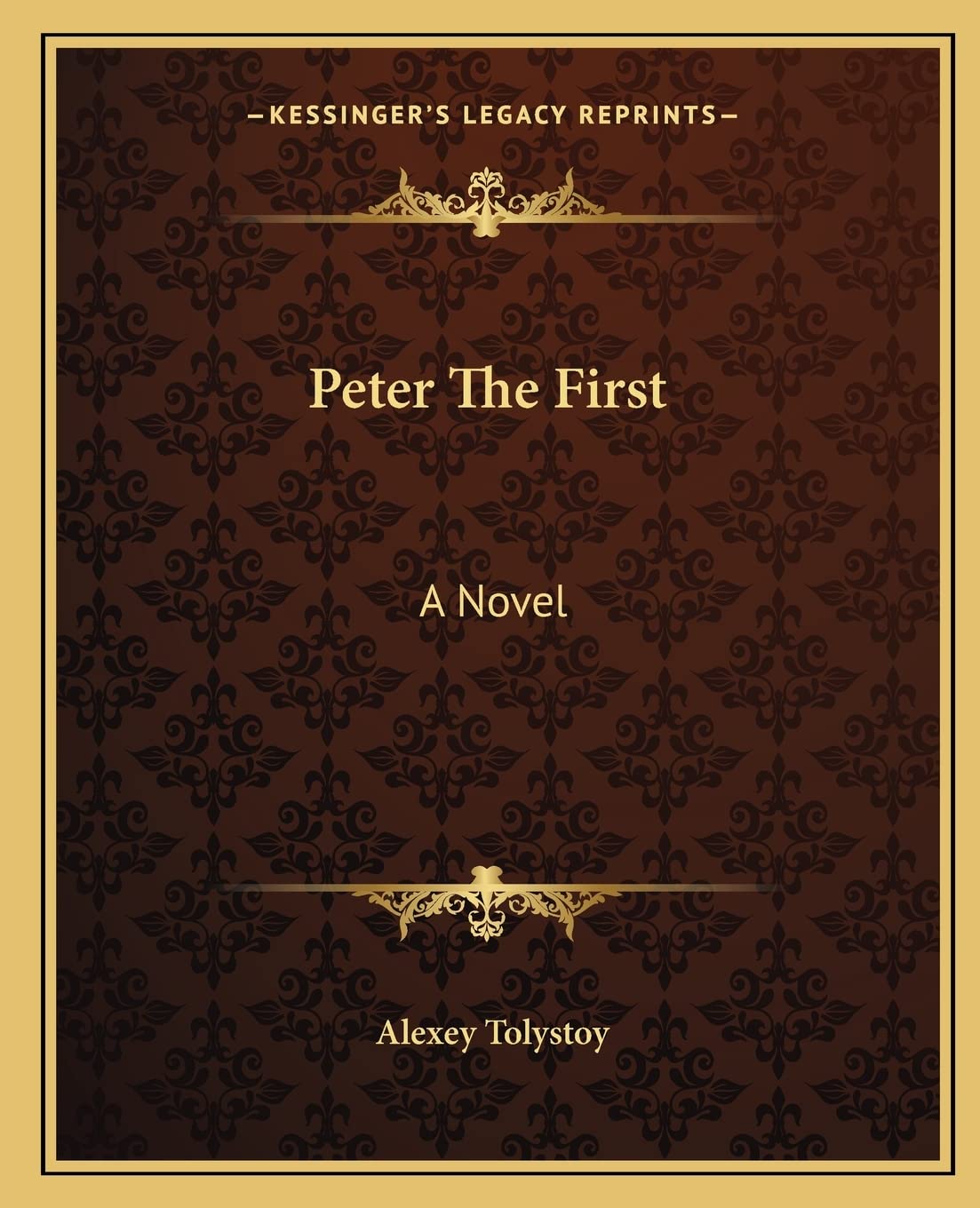
Browse the table of contents, check the quotes, read the first chapter, find out which famous book it is similar to, and buy “Peter the First” on Amazon directly from our page.
Book One
Part One
I. In Quiet Muscovy
II. The German Quarter
III. In the “Amusing” Yard
IV. The Bell’s Strike
V. The Belated Confession
VI. On the Kukuy
VII. The Wedding
Part Two
I. In Preobrazhenskoye
II. The Boyar’s Daughter
III. Death of the Mother
IV. The Storming
V. In the Izmaylovo Garden
VI. Under the Old Spruce
VII. The Call-Up
VIII. The Tsar’s Pleasures
IX. Treason
X. The Steppe Man
XI. Good Intentions
XII. At the Turning Point
Book Two
Part One
I. Beyond the Seas
II. In Amsterdam
III. In London
IV. The Death of Lefort
V. The Alarm Bell
VI. The Execution
VII. Candles
VIII. “To the Sea…”
Part Two
I. Roads
II. War
III. On the Azov Sea
IV. Near Narva
V. In Captivity
VI. On the Baltic Shore
VII. Menshikov in Moscow
VIII. To the Light
IX. At the Crossroads
X. All Russia in the Sovereign’s Hand
Book Three (Unfinished)
Part One
I. From Narva
II. On Olonets
III. In the Village of Kolomenskoye
IV. In Tsarigrad
V. Insomnia
What kind of Russia is this, a cursed country—when will you move from this spot?
Iron grows stronger from beating, a man matures.
You have everyone pulling apart, and no one cares about the state; one cares only about profit, another about honour, and yet another—only to stuff his belly.
We are sitting on vast expanses and—we are poor.
Everything needs to be broken in Russia—everything from scratch.
Chapter One
1
Sanka jumped down from the stove, hitting the swollen door with her back. Yushka, Gavrilka, and Artamoshka quickly followed Sanka down: suddenly, all were thirsty—they rushed into the dark entryway following a cloud of steam and smoke from the sour-smelling hut. A faintly bluish light glimmered through the little window past the snow. It was cold. The water tub was frozen over, and the wooden ladle was covered in ice.
The children hopped from foot to foot—all were barefoot; Sanka had a kerchief tied around her head; Gavrilka and Artamoshka wore only shirts down to their navels.
“The door, you rowdy children!” shouted their mother from the hut.
The mother stood near the stove. Splinters of pine flared brightly in the firebox. The fire illuminated the mother’s wrinkled face. Most frightening were her tear-filled eyes flashing beneath a torn headscarf—like those in an icon. Sanka, scared for some reason, slammed the door shut with all her might. Then she scooped up the fragrant water, gulped it down, bit off a piece of ice, and gave the brothers a drink. She whispered:
“Are you cold? Let’s run out into the yard and see—Father is harnessing the horse…”
In the yard, their father was harnessing the sled. Gentle snow was falling; the sky was snowy; jackdaws sat on the high wattle fence, and it wasn’t as cold here as in the entryway. The father, Ivan Artemyich—that’s what his mother called him, but others and he himself called himself Ivashka in public, nicknamed Brovkin—had a tall cap pulled down over his angry eyebrows. His red beard hadn’t been combed since the Intercession of the Virgin… Mittens stuck out from the bosom of his coarse wool coat, which was tied low with bast; his bast shoes squeaked angrily on the manure-covered snow: Father was having trouble with the harness… It was rotten, all knots. In annoyance, he yelled at the black mare, who was short-legged and pot-bellied, just like him.
“Mess around, you unclean spirit!”
The children relieved themselves by the porch and huddled on the icy threshold, although the frost was piercing. Artamoshka, the youngest, barely managed to say:
“It’s nothing, we’ll warm up on the stove…”
Ivan Artemyich finished harnessing the horse and began watering it from a tub. The horse drank for a long time, swelling its shaggy flanks: “Well, if you feed me sparingly, I’ll at least drink my fill…” Father put on his mittens and took the whip from under the straw in the sled.
“Run into the hut, or I’ll give it to you!” he shouted at the children. He fell sideways onto the sled and, gathering speed past the gates, trotted past the snow-covered tall fir trees towards the estate of Volkov, the nobleman’s son.
“Oh, it’s cold, dreadful,” said Sanka.
The children rushed into the dark hut, climbed onto the stove, and their teeth chattered. Warm, dry smoke billowed under the black ceiling, escaping through the small vent window above the door: the hut was heated in the black style (without a chimney). The mother was kneading dough. The yard was still well-off: a horse, a cow, four chickens. They said about Ivashka Brovkin: he’s a strong one. Coals from the oil-lamp holder fell into the water, sizzling. Sanka pulled a sheepskin coat over herself and her brothers and, under the coat, again began whispering about various horrors: about those, may they not be mentioned, who rustle under the floorboards at night…
“Just now, may my eyes pop out, I was so scared… By the threshold—rubbish, and on the rubbish—a broom… I look from the stove—bless our hearts! From under the broom—a shaggy thing, with cat whiskers…”
“Oh, oh, oh,” whispered the little ones under the coat, scared.

Reviews
There are no reviews yet.