CHAPTER ONE
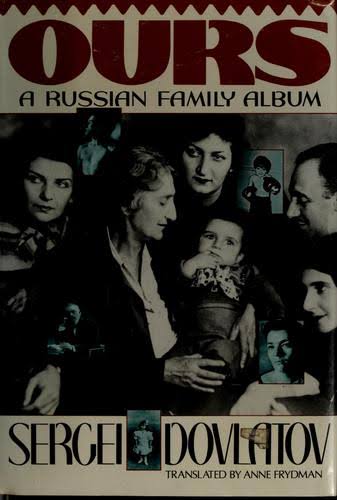
Our great-grandfather Moses was a peasant from the village of Sukhovo. A Jewish peasant—a combination, it must be noted, quite rare. Such things happened in the Far East.
His son Isaac moved to the city. That is, he restored the normal course of events.
First, he lived in Harbin, where my father was born. Then he settled on one of the central streets of Vladivostok.
Initially, my grandfather repaired watches and various household utensils. Then he took up printing. He was something of a compositor. And after two years, he acquired a diner on Svetlanka Street.
Next door was Zamarayev’s wine shop – “Nectar, Balsam.” My grandfather often visited Zamarayev. The friends would drink and discuss philosophical topics. Then they would go to my grandfather’s place for a snack. Then they would return to Zamarayev again…
“You are a soulful man,” Zamarayev would repeat, “even if you are a Jew.”
“I am only Jewish on my father’s side,” my grandfather would say, “but on my mother’s side, I’m Dutch!”
“Well, I’ll be!” Zamarayev would say approvingly. A year later, they had drunk away the shop and eaten away the diner.
The elderly Zamarayev left to join his sons in Yekaterinburg. And my grandfather went off to war. The Japanese campaign had begun.
At one of the army inspections, the Tsar noticed him. My grandfather was about seven feet tall. He could fit a whole apple in his mouth. His mustache reached his epaulets.
The Tsar approached my grandfather. Then, smiling, he poked him in the chest with his finger.
My grandfather was immediately transferred to the Guard. He was practically the only seven-footer there. He was enrolled in an artillery battery.
If the horses became exhausted, my grandfather would drag the cannon across the swamp. One time, the battery participated in a storming operation. My grandfather ran into the attack. The artillery crew was supposed to support the attackers. But the cannons were silent. As it turned out, my grandfather’s back was shielding the enemy fortifications.
From the front, my grandfather brought back a three-line rifle and several medals. There was even, supposedly, a St. George’s Cross.
He caroused for a week. Then he got a job as a maître d’ in an establishment called “Eden.” Once, he quarreled with a clumsy waiter. He started shouting. He slammed his fist onto the table. His fist ended up inside the desk drawer.
My grandfather did not like disorder. Therefore, his attitude towards the revolution was negative. Moreover, he even slowed its progress somewhat. This is how it happened.
The masses of people from the outskirts rushed towards the city center. My grandfather decided that a Jewish pogrom was beginning. He took out his rifle and climbed onto the roof. When the masses approached, my grandfather started shooting. He was the only resident of Vladivostok to oppose the revolution. However, the revolution still won. The masses rushed to the center through the side streets.
After the revolution, my grandfather quieted down. He again turned into a humble craftsman. He only reminded people of himself occasionally. For instance, my grandfather once undermined the reputation of the American firm “Mercher, Mercher, and Co.”
The American firm had brought cots to the Far East via Japan. Although they were called that much later. Back then, they were a sensational novelty. Under the name “Magic Bed.”
The cots looked about the same as they do now. A piece of brightly colored canvas, springs, an aluminum frame…
My progressive grandfather went to the shopping center. A bed was set up on a special platform.
“The American firm is demonstrating a novelty!” the salesman shouted. “A bachelor’s dream! Indispensable for travel! Comfort and bliss! Would you like to try it?!”
“I would,” said my grandfather.
He pulled off his boots without unlacing them and lay down.
There was a crack, the springs sang. My grandfather ended up on the floor.
The salesman, smiling imperturbably, unfolded the next specimen.
The same sounds were repeated. My grandfather cursed heavily, rubbing his back.
The salesman set up the third cot.
This time the springs held. But the aluminum legs silently buckled. My grandfather landed softly. Soon the room was cluttered with the debris of the miracle-bed. Shreds of colorful canvas hung down. The dully gleaming armature was bent out of shape.
My grandfather haggled, bought a sandwich, and departed.
The reputation of the American firm was undermined. “Mercher, Mercher, and Co.” began selling crystal chandeliers…
Grandfather Isaac ate a lot. He cut loaves of bread not across, but lengthwise. When visiting, Grandmother Raya was constantly embarrassed by him. Before going to visit, my grandfather would eat lunch. It didn’t help. He would fold pieces of bread in half. He drank vodka from a cream soda glass. During dessert, he would ask them not to clear away the aspic. Returning home, he would have a relieved dinner…
My grandfather had three sons. The youngest, Leopold, went to China as a youth. From there—to Belgium. There will be a separate story about him.
The eldest, Mikhail and Donat, gravitated towards art. They left provincial Vladivostok. They settled in Leningrad. The grandmother and grandfather moved after them.
The sons married. Against the backdrop of my grandfather, they seemed scrawny and helpless. Both daughters-in-law were not indifferent to my grandfather.
He got a job as something like the head of a housing office. In the evenings, he repaired watches and electric stoves. He was still unusually strong.
One time in Shcherbakov Lane, a truck driver was rude to him. He supposedly called him a ‘Yid face.’
My grandfather grabbed hold of the side of the truck. He stopped the polutorka (one-and-a-half-ton truck). He pushed away the driver who jumped out of the cab. He lifted the truck by the bumper. He turned it across the road.
The truck’s headlights faced the bathhouse building. The back side was against the fence of Shcherbakov Square.
The driver, realizing what had happened, began to cry. He cried, then he threatened.
“I’ll pull it over with a jack!” he said.
“Risk it…” my grandfather replied to him.
The truck stood in the lane for two days. Then a crane was called.
“Why didn’t you just punch him in the face?” my father asked.
My grandfather thought and answered:
“I’m afraid of getting carried away…”
I already mentioned that his youngest son, Leopold, ended up in Belgium. One day, a man arrived from him. His name was Monya. Monya brought my grandfather a tuxedo and a huge inflatable giraffe. As it turned out, the giraffe served as a hat rack.
Monya railed against capitalism, admired socialist industry, then left. My grandfather was soon arrested as a Belgian spy. He received ten years. Ten years without correspondence. That meant—execution. But he wouldn’t have survived anyway. Healthy men take hunger hard. And arbitrary abuse and rudeness—even more so…
Twenty years later, my father began petitioning for rehabilitation. My grandfather was rehabilitated due to lack of corpus delicti. The question is, what was present then? For the sake of what was this absurd and amusing life interrupted?…
I often remember my grandfather, even though we never met.

Reviews
There are no reviews yet.