Introduction
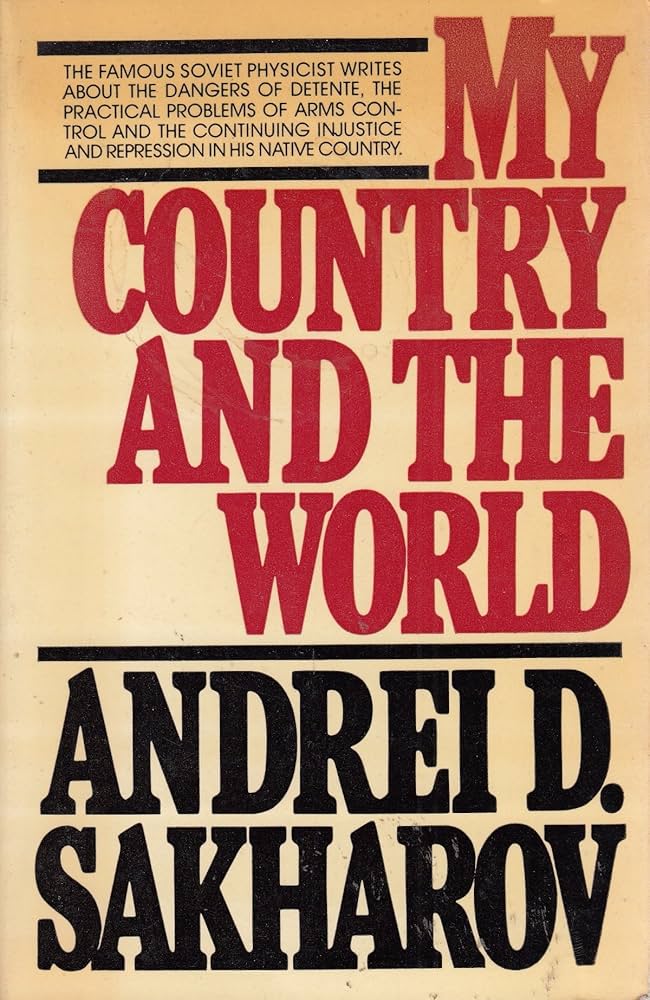
The contours of those global problems that remain the most important and most urgent even today first began to take shape in the early postwar years (at least for me and many people of my generation).
About thirty years ago, a bloody and devastating war had just ended, leaving behind a sea of human grief that the intervening decades have not been able to fully dry up. Famine raged over most of the planet, claiming millions of lives and threatening further spread. Scientific and technological progress in developed countries was quietly preparing the “Green Revolution,” which was expected to alleviate this grave misfortune in the future, but at the same time, it was bringing closer another danger to humanity, the scale and proximity of which few then realized—the ecological catastrophe.
Thermonuclear weapons did not yet exist, but the shadow of the atomic bomb already hung over the world, threatening universal destruction for the first time in human history. The irradiated were dying daily in Hiroshima and Nagasaki.
The flames of civil war were blazing in China. In socialist countries, the bodies and souls of hundreds of millions of people were crushed to the limit in the monstrous vise of Stalinism. The ovens of Auschwitz had been extinguished, but thousands of people died daily in the cold mines of Kolyma, Norilsk, and Vorkuta, at countless Stalinist construction sites of death. The number of GULAG victims had by that time reached the terrifying figure of 20 million.
During these years, many noble and insightful thinkers—physicists and mathematicians, economists, lawyers, public figures, philosophers—came forward with ideas generated by the deep anxiety they already felt for the fate of humanity (although they, apparently, did not understand much that was hidden from the West by the “Iron Curtain”). Among them were Einstein, Russell, Bohr, Cassin, and many others. The ideas they expressed made a deep impression on their contemporaries. They called for the defense of human rights worldwide, for national altruism, and for the realization of an “open world.” Explaining this idea, Niels Bohr, in particular, emphasized that nothing should impede the exchange of information and the free movement of people. They advocated for demilitarization, for aid to underdeveloped countries, for strengthening the UN, and for world government.
Even then, I managed to learn about Niels Bohr’s statement—one of those that contained new ideas. But it was only 20 years later, at the height of the “Prague Spring” in 1968, that a long life journey, communication with outstanding people, and my own reflections led me to the decision to speak out myself with an article that, in its main direction, adhered to these ideas. The article was called “Reflections on Progress, Peaceful Coexistence, and Intellectual Freedom.” It gained wide circulation, especially in the West, as one of the first statements of its kind to emerge from the silent depths of the socialist countries. Even now, I have not fundamentally deviated from the position formulated then. But the past years, filled with dramatic international events, and the expansion of communication with people in our and other countries, which meant a great deal to me, along with the expansion of personal experience, could not pass without consequence. Today, I feel the need to return once again to the themes of the Reflections, focusing not on “optimistic futurology,” that is, the dream, but on the dangers, delusions, and dramas of the present day—everything that stands between the dream and reality.
I consider it necessary to emphasize from the outset that I would like to see the new phase of relations between capitalist and socialist countries, which has been called “détente,” embody the ideas that are dear to me. Indeed, great changes for the better have occurred, at least in the style of statements made by statesmen, and partly in the more material sphere. But at the same time, a certain gap has arisen between words and deeds, creating conditions for the revival of dangerous illusions. All this, in my opinion, requires frank discussion, unconstrained by diplomatic conventions and conformism of the “Eastern” or “Western” type.
As was the case seven years ago, I fully understand my insufficient competence in complex matters of social relations. But still, it seems to me that my statement will be useful.
One of the impulses for writing this article was conversations with foreign guests who recently visited me—a group of American scientists who came to the USSR for unofficial SALT talks, and US Senator Mr. J. Buckley. Buckley was the first US statesman who considered it possible to meet with me. During this meeting, which was very important to me, we discussed foreign policy and some internal issues. At that time, the desire arose in me to put the discussed issues in written form. But I write slowly and with difficulty, the writing process stretched over seven months, and during this time, new, very important events occurred that also affected the content of this work.
The following plan finally crystallized:
I. On Soviet Society. The insufficient understanding of what is hidden behind its facade, the lack of understanding of the potential dangers of Soviet totalitarianism, explains many of the Western intelligentsia’s illusions and, ultimately, the astonishing miscalculations and failures of Western policy, which is giving up piece after piece to its détente partner without a fight.
II. On the Freedom to Choose One’s Country of Residence. This important right has great general social significance as a guarantee of many other fundamental human rights, as well as a guarantee of international trust and the openness of society. The events that unfolded in connection with the amendment to the trade bill adopted by the US Congress reflected the attitude of the socialist and Western worlds toward this problem, their tactics, principles, and alignment of forces. They showed the disunity, disorganization, and misinformation of the West. I hope, however, that the future will also show the West’s resilience and its ability to learn from difficulties. The defense of the freedom to choose one’s country of residence is a kind of test model, a proving ground for determining the entire style of détente.
III. Problems of Disarmament. Saving humanity from the threat of thermonuclear destruction undoubtedly has priority over all other tasks, but this task cannot be separated from other political, economic, humanistic, and moral problems, and above all, from the problem of the “openness” of society and international trust, and from overcoming the disunity of the West. A genuine solution to the disarmament problem must include: a) a perfect system of control, including inspection; b) the reduction of armaments to a level of equal, but sufficiently low, power (this applies both to talks on limiting strategic weapons of the superpowers and to regional talks); c) the elimination of factors contributing to the arms race; d) the elimination of factors of strategic instability.
(A footnote indicates that freedom was promised in the USSR to Cossacks, Karachays, and other nationalities who were abroad, but more than 0.5 million people ended up in “displaced persons” camps).
IV. Indochina and the Middle East. We are probably not yet in a position to fully assess the significance and scale of the tragedy that occurred in Indochina.
But it is certain that this tragedy was made possible to a large extent by the blinding of people worldwide concerning the goals and methods of the forces that stood behind the young men thrown into the fire of war. It is very important that this lesson is not wasted. The duty of honest people around the world is to help the refugees and children victimized by the war in every way possible, and to prevent a new betrayal, similar to the one committed against the “displaced persons” 30 years ago (A footnote indicates that freedom was promised in the USSR to Cossacks, Karachays, and other nationalities who were abroad, but more than 0.5 million people ended up in “displaced persons” camps).
V. The Liberal Intelligentsia in the West, its Illusions and Responsibility. Despite many dangerous misconceptions common in its circles, I believe that inner honesty, reason, and altruism will prevail in this influential and most active stratum of Western society.
VI. Conclusion. The world needs demilitarization, national altruism and internationalism, freedom of information exchange and movement of people, transparency, and international protection of social and civil human rights. Third World countries must receive comprehensive aid and, for their part, fully accept their share of responsibility for the future of the world, paying greater attention to the development of material production and ceasing oil speculation.
All these are indispensable conditions for overcoming the disunity of humanity, for saving it from the danger of thermonuclear annihilation, hunger, ecological catastrophe, and dehumanization; they are indispensable conditions for eliminating the dangers of scientific and technical progress and utilizing it for the common good.
Work on this book took place amid a growing tension caused by international, internal, and personal events. I am grateful to the friends who helped me, and grateful to the publishers of the book. The selfless support and assistance of my wife, which made it possible to complete what was conceived despite all the misfortunes, illnesses, threats, and everything else that our life entails, were of particular significance to me.
I. On Soviet Society
The life of our vast country is, of course, very complex and multifaceted. As in every country, people’s labor, although not always productive or rationally organized, and the increasing use of scientific achievements and natural resources somehow yield visible results. Thousands of bustling and seemingly content people swarm at the base of the slender skyscrapers of the new Arbat, rising high in the Moscow sky. But behind this facade lies, as is true not only here, much that is inaccessible to the outside eye; a sea of human misfortune, difficulties, bitterness, cruelty, profound fatigue, and indifference that have accumulated over decades and are undermining the foundations of society. There are an unusually large number of unhappy, disadvantaged people in the country: lonely elderly people with paltry pensions; people unsettled in life, without work or the opportunity to study, or decent housing, even by our meager standards; chronically ill people who cannot get into a hospital; countless drunken, degraded people; one and a half million prisoners, victims of a blind and often unjust, corrupt, and dependent judicial machine controlled by the authorities and local “mafia,” who are permanently excluded from normal life; and simply unlucky people who failed to slip the right person a bribe in time. It is practically impossible to help all of them, and few even attempt to do so, given the general atmosphere of the difficult, exhausting struggle for sustenance among the majority of the population, the complacent, self-satisfied isolation among the minority, and the showy and ineffective social structure. Desperate people besiege high-level reception offices, from which many of them, especially the persistent ones, are taken directly to psychiatric hospitals. I have a deep love for the nature and culture of my homeland, for its people, and I am not at all striving to act as a “slanderer.” But I now consider it necessary to focus attention on those negative characteristics that are of fundamental importance for international relations and understanding the situation in the country, and which are being suppressed by Soviet and pro-Soviet propaganda.




Reviews
There are no reviews yet.