Description
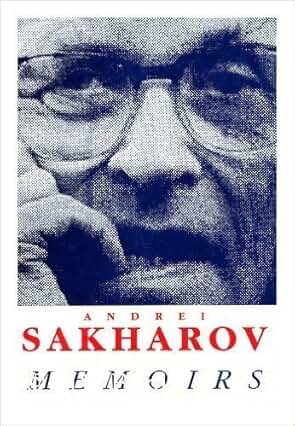
A towering figure of the 20th century chronicles his impossible transformation from the secretive “Father of the Soviet Hydrogen Bomb” to the nation’s most fearless and consequential human rights dissident. The narrative is a harrowing personal and historical account detailing his work on world-destroying weapons, his gradual, agonizing realization of the regime’s moral bankruptcy, and his subsequent confrontation with the Politburo.
The final, devastating chapters cover his public persecution and seven years of internal exile in Gorky with his wife, Elena Bonner, cementing his legacy as a conscience of the world and a powerful witness to the crimes of the totalitarian state.
Browse the table of contents, check the quotes, read the first chapter, find out which famous book it is similar to, and buy “Memoirs” on Amazon directly from our page.
Foreword
Part One
• Chapter 1. Family, Childhood
• Chapter 2. Books. Education at Home and at School. University Before the War
• Chapter 3. University in the First Year of the War. Moscow and Ashgabat
• Chapter 4. At the Factory During the War Years
• Chapter 5. Graduate School at FIAN. Science
• Chapter 6. Atomic and Thermonuclear. Tamm’s Group at FIAN
• Chapter 7. The Installation (or The Object)
• Chapter 8. I. Ye. Tamm, I. Ya. Pomeranchuk, N. N. Bogolyubov, Ya. B. Zeldovich
• Chapter 9. Magnetic Thermonuclear Reactor. Magnetic Cumulation
• Chapter 10. Before the Test
• Chapter 11. 1953
• Chapter 12. The “Third Idea”
• Chapter 13. The 1955 Test
• Chapter 14. Non-Threshold Biological Effects
• Chapter 15. 1959–1961. Khrushchev and Brezhnev in 1959. July 10, 1961: My Memo and Khrushchev’s Speech. The Big Session. Papa’s Death
• Chapter 16. 1962–1963. Against the Dual Test. The Moscow Treaty. Mama’s Death
• Chapter 17. Academy Elections in 1964. The Case of the Execution
• Chapter 18. Scientific Work in the 1960s
Part Two
• Chapter 1. Before the Turning Point
• Chapter 2. 1968: The Prague Spring. “Reflections on Progress, Peaceful Coexistence, and Intellectual Freedom”
• Chapter 3. Klyava’s Illness and Death. The Sakharov, Turchin, and Medvedev “Memorandum.” Turchin’s Seminar. Grigory Pomerants
• Chapter 4. Valery Chalidze. The Grigorenko Case. Saving Zhores
• Chapter 5. The Kyiv Conference. The Pimenov and Vail Case. Lyusya Appears. The Human Rights Committee. The “Airplane Affair”
• Chapter 6. The “Memorandum.” The Feinberg and Borisov Case. Mikhail Alexandrovich Leontovich. The Use of Psychiatry for Political Purposes. Crimean Tatars
• Chapter 7. The Search at Chalidze’s. The Trial of Krasnov-Levitin. The Problem of Religious Freedom and Freedom to Choose One’s Country of Residence. The Trial of T. Appeal to the Supreme Soviet of the USSR on Freedom of Emigration
• Chapter 8. Lyusya – My Wife
• Chapter 9. Poets. Conversation with Tupolev. The Lupynos Case. The Bukovsky Trial. Trips to Kyiv. New Arrests. Dissidents
• Chapter 10. Central Asia and Baku. Appeals on Amnesty and the Death Penalty. The “Memorandum” and the “Afterword.” Meeting with Slavsky. The Yakir and Krasin Case
• Chapter 11. Shikanovich’s Arrest. Demonstration at the Lebanese Embassy. Georgia and Armenia. Tanya’s Expulsion from Moscow State University. The Lyubarsky Trial. First Interview. Lyusya Quits the Party
• Chapter 13. Summons to Malyarov. The Press Conference of August 21, 1973. The Newspaper Campaign. Speeches by Turchin, Shragin, and Litvinov. Chukovskaya’s Article, Solzhenitsyn’s Article. The Statement by Maksimov, Galich, and Sakharov in Defense of Pablo Neruda. Statements by Lyusya and Barabanov
• Chapter 14. Statement on the October War. “Black September” in Our Apartment. Statement on the Jackson Amendment. Lyusya’s Summons for Interrogation at Lefortovo. Request for a Trip to Princeton. Distorted Publication. Hospital of the USSR Academy of Sciences
• Chapter 15. “The Strange Sphere” (Solzhenitsyn on Sakharov)
• Chapter 16. Lyusya’s Operation. “The GULAG Archipelago.” Solzhenitsyn’s Exile. My Article on Alexander Solzhenitsyn’s “Letter to the Leaders”
• Chapter 17. Vacation in Sukhumi. “Peace Half a Century Later.” Lyusya’s Eyes. First Hunger Strike. Silva Zalmanson and Simas Kudirka
• Chapter 18. The Chiño del Duca Prize. The Fund for Assistance to Children of Political Prisoners. My Statements in 1974–1975: Vins, Davidovich, “On the Right to Live at Home,” German Emigration, Letter to Suharto, In Defense of the Kurds, Meeting with Heinrich Böll and Joint Appeal. Political Prisoners Day. Threats to Children and Grandchildren. Sergei Kovalev
• Chapter 19. 1975. The Struggle for Lyusya’s Trip. “My Country and the World.” Motya’s Illness. Lyusya in Italy. The Nobel Prize. The Trial in Vilnius
• Chapter 20. Yevgeny Brunov and Yakovlev
• Chapter 21. 1976. Yefim Davidovich. Pyotr Kunin. Grigory Podyapolsky. Konstantin Bogatyrev. Igor Alikhanov
• Chapter 22. 1976 (Continued). Amnesty International. The Trial of Mustafa Dzhemilev in Omsk. Andrei Tverdokhlebov. Yakutia. Tbilisi. The Helsinki Group. Yellow Packages. “Russian Voice.” The Zosimov Case, El-Zaatar, Interview with Krimsky. The Bukovsky Exchange. Fire at Malva Landa’s
• Chapter 23. 1977. Appeal to the U.S. President-Elect on Pyotr Ruban. Searches in Moscow. The Bombing in the Moscow Metro. Letter to Carter on 16 Prisoners. Carter’s Inaugural Speech. Summons to Gusev. Carter’s Letter. The Arrests of Ginsburg and Orlov. The “Phantom Laboratory Assistant.” The Case of the Apartment Exchange. The Arrest of Shcharansky. Arrests in Ukraine, the Baltics, Georgia, and Armenia. Rudenko. Tikhy. Vance and Gromyko
• Chapter 24. 1977 (Continued). Motya and Anya. Lyusya’s Second Trip. The Departure of the Children and Grandchildren. The Sakharov Hearings. Against the Death Penalty. Nuclear Power. Amnesty in Indonesia and Yugoslavia. Invitation from the AFL–CIO. Alyosha and his Affairs. Trip to Mordovia
• Chapter 25. 1978. Alyosha’s Departure. The Trials of Orlov, Ginsburg, Shcharansky. Vacation in Sukhumi. Covert Search
• Chapter 26. 1979. Lyusya’s Third Trip. The Zatikyan, Bagdasaryan, and Stepanyan Case. My Appeals to Brezhnev. Two Trips to Tashkent. The New Case of Mustafa Dzhemilev. Adventists. Vladimir Shelkov. The Crimean Tatars’ Letter to Giscard d’Estaing and My New Appeal to Brezhnev. Zbigniew Romaszewski. Vera Fedorovna Livchak. New Arrests.
• Chapter 27. Letters and Visitors
• Chapter 28. Afghanistan, Gorky
• Chapter 29. The House in Shcherbinki. The “Regime.” Thefts and Searches. Public Statements. Scientific Work. Lyusya During These Years
• Chapter 30. The Case of Liza Alekseyeva
• Chapter 31. Concluding
• Epilogue
“I feel bound to write about my life, in part, because it is impossible to talk about the events without talking about the people who participated in them.”
“In the depths of my soul, I felt the injustice and the horror of the world that surrounded us.”
“My fate was linked to the fate of the secret work [the hydrogen bomb project]. I could not turn back.”
“I gradually came to realize the criminal, tragic nature of our regime, but the decision to speak out was difficult and painful.”
“The path of development of human society is illuminated by the light of idealism, but progress occurs on the painful road of struggle, confrontation, and martyrdom.”
Chapter 1. Family, Childhood
Unfortunately, there is much that is very important that I do not know about my parents and other relatives. I will tell you what I remember; some inaccuracies are possible.
My mother, Yekaterina Alekseyevna (née Sofiano), was born in December 1893 in Belgorod. My grandfather, Alexei Semyonovich Sofiano, was a professional military man, an artillery officer.
He earned his noble title and first officer’s rank by rendering some important service to Skobelev in the Russo-Turkish War. It seems he led the general’s horse out of a swamp near Plevna under enemy fire, while General Skobelev was still mounted. Among his ancestors were Russified Greeks—hence the Greek surname Sofiano.
My grandfather married my grandmother, Zinaida Yevgrafovna, as his second wife. From his first marriage, he had three children—Vladimir, Konstantin, Anna; from the second marriage, there were two—my mother and her younger sister, Tatyana (Aunt Tusya).
Grandfather commanded some artillery (or general army) unit. In the summer, he lived with his family in a camp near Belgorod. From childhood, my mother remembered soldiers’ and Ukrainian songs and rode horseback well (a photograph has been preserved). She was educated at the Noblewomen’s Institute in Moscow. This was a privileged but not very modern or practical educational institution for the time—it provided more upbringing than education or, especially, a specialization. After graduating, my mother taught gymnastics for several years at some educational institution in Moscow. In appearance and in character—persistent, self-sacrificing, devoted to family and ready to help loved ones, yet reserved, perhaps even somewhat dogmatic and intolerant—she resembled her mother, my grandmother Zinaida Yevgrafovna. From my mother and grandmother, I inherited my physical appearance, something Mongolian in the slant of my eyes (it is probably not a coincidence that my grandmother had an “Eastern” maiden name—Mukhanova), and, of course, something in my character: I think, on the one hand, a certain stubbornness, and on the other, an inability to communicate with people, a lack of social connection, which was my misfortune for most of my life.
My mother’s parents apparently fully shared the dominant worldview of the military, officer milieu to which they belonged. I remember when, in the thirties, already after my grandfather’s death, a conversation about the Russo-Japanese War came up in our house in Grandmother’s presence (I was reading Novikov-Priboy’s Tsushima at the time). Grandmother said that Russia’s defeats were caused by the anti-patriotic actions of the Bolsheviks and other revolutionaries, and she spoke about this with great bitterness. Later, when she was absent, Papa noted that she was repeating the words of her late husband.
Grandfather Alexei Semyonovich retired with the rank of Major General after the Japanese War, but returned to active service in 1914, asking to go to the front (he was 69 then). He was not sent to the front, however, but was directed to work in the Moscow fire department in some command position. Never having been ill, he died suddenly at the age of 84 in 1929. This was the first death of a relative in my life, but the problem of death had already troubled me before that—it seemed to me a monstrous injustice of nature.
My mother was a believer. She taught me to pray before bedtime (“Our Father…”, “Rejoice, O Virgin Mother of God…”), and took me to confession and communion.
Like many children, I sometimes strictly logically created rather comical constructions for myself. Here is one that survived into quite a mature age. I perceived the words of the church service, “Svyaty Bozhe, svyaty krepkiy” (Holy God, Holy Mighty), as “svyatye greki” (Holy Greeks, referring to the church fathers). Only in the 70s did Lyusya explain my mistake.
Most of my other relatives were also believers. On my father’s side, as I remember very well, Grandmother was deeply religious, as were Father’s brother Ivan and his wife, Aunt Zhenya, and the mother of my cousin Irina, Aunt Valya. My father was apparently not a believer, but I do not remember him talking about it. Around the age of 13, I decided that I was not a believer—under the influence of the general atmosphere of life and not without my father’s influence, though it was implicit. I stopped praying and rarely attended church, already as a non-believer. Mother was very upset but did not insist; I do not recall any conversations on the topic.
Now, deep down, I do not know what my position actually is: I do not believe in any dogmas, I do not like official Churches (especially those that are strongly fused with the state or are distinguished primarily by ritualism or fanaticism and intolerance). At the same time, I cannot imagine the Universe and human life without some meaningful principle, without a source of spiritual “warmth” that lies outside matter and its laws. Probably, such a feeling can be called religious.
Memories of visits to church in childhood are alive in my memory—the church singing, the sublime, pure mood of the worshippers, the trembling lights of candles, the dark faces of the saints. I remember a particularly joyful and bright mood among my relatives—Grandmother, Mother—upon returning from church after communion. And at the same time, dirty rags and the pleas of professional church beggars, some half-crazy old women, and the stuffiness rise in my memory—all that atmosphere of Byzantine or pre-Petrine Russia, of what the imagination recoils from as the horror of the savagery, lies, and hypocrisy of the past, carried into our time. Throughout my life, I have encountered these two sides of religion many times; their contrast has always struck me. Among the impressions of recent years are the solemn singing of stern old women, their glittering eyes from beneath dark scarves, and the ascetic faces at the coffin of my father-in-law, Alexei Ivanovich Vikhirev; I remember communicating with Adventists in Tashkent near the building where the trial of their pastor, V. A. Shelkov, was held (who later died in the camp at the age of 84), with pure, sincere, and spiritual people; I remember many other similar impressions from communication with Orthodox, Baptists, Catholics, and Muslims. And yet, I also had to see many manifestations of sanctimony, hypocrisy, and speculation, some astonishing insensitivity to the suffering of other people, sometimes even their own children. But overall, I have deep respect for sincerely believing people in our country and abroad. The rights of religious dissidents (especially non-conformist Churches) are often violated and require active defense.

Reviews
There are no reviews yet.