
Mikhail Lermontov’s A Hero of Our Time: A Chapter-by-Chapter Summary
Mikhail Yuryevich Lermontov worked on his novel, A Hero of Our Time, from 1838 to 1840. The idea for this work emerged during the author’s exile to the Caucasus in 1838. The first chapters of the novel—”Bela,” “The Fatalist,” and “Taman”—were published in the journal Otechestvennye Zapiski (Notes of the Fatherland) within a year and garnered significant reader interest. Seeing the popularity of these chapters, Lermontov decided to combine them into one large novel.
The author chose the title to highlight the work’s relevance to his contemporaries. The 1841 edition included a preface in which Lermontov addresses questions raised by readers. Below is a concise, chapter-by-chapter summary of A Hero of Our Time.
On our website you can buy this book via the link.
-
Buy eBook
 Editor's Pick
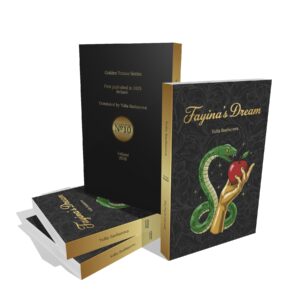
Fayina’s Dream by Yulia Basharova
Page Count: 395Year: 2025Products search A mystical, satirical allegory about the war in Grabland, featuring President Liliputin. There is touching love, demons, and angels. Be careful! This book changes your thinking! After reading it, you’ll find it difficult to sin. It is a combination of a mystical parable, an anarchy manifesto, and a psychological drama, all presented in […]
$10.00 Login to Wishlist
Setting and Time
The events of the novel unfold in the first half of the 19th century in the Caucasus, specifically in the towns of Taman, Pyatigorsk, and Kislovodsk, as well as in a Cossack village.
Main Characters
- Pechorin, Grigory Alexandrovich: The central character. An officer in the Russian Imperial Army, he possesses high sensitivity and spirituality but is simultaneously selfish. He is attractive, charismatic, and intelligent. Pechorin suffers from his arrogance and individualism but refuses to overcome them.
- Bela: The daughter of a Circassian prince. She is kidnapped by her brother Azamat for deceitful reasons and becomes Pechorin’s lover. Bela is beautiful, intelligent, pure, and sincere. She dies from a knife wound inflicted by a desperate Circassian in love with her, named Kazbich.
- Mary (Princess Ligovskaya): A presentable young woman whom Pechorin deliberately seeks out and strives to win her affection. She is educated, intelligent, proud, and generous. The breakup with Pechorin becomes a real tragedy for her.
- Maxim Maximych: A staff captain in the Tsar’s army. A kind and honest man, he serves as Pechorin’s superior and close friend. Maxim Maximych inevitably witnesses Pechorin’s romantic adventures and life conflicts.
- The Narrator: A passing officer who is Maxim Maximych’s chance acquaintance. He listens to and records Maxim Maximych’s story about Pechorin, and later publishes Pechorin’s journal.
Other Characters
- Azamat: A young Circassian prince, unbalanced and greedy, Bela’s brother.
- Kazbich: A young Circassian who is in love with Bela and becomes her murderer.
- Grushnitsky: A young Junker (cadet), full of self-love and lack of restraint. He is Pechorin’s rival and dies at his hands in a duel.
- Vera: Appears in the novel as a characteristic link to Pechorin’s St. Petersburg past. She was his former lover and loved him sincerely.
- Undine: A smuggler who strikes Pechorin with her appearance. Her real name remains a mystery, despite “Undine” being one of the names for water nymphs.
- Yanko: Undine’s friend and also a smuggler.
- Werner: An educated and intelligent doctor who is acquainted with Pechorin.
- Vulitch: A young and adventurous officer of Serbian origin who is also acquainted with Pechorin.
Brief Summary
Preface
In the preface, the author addresses his readers. He notes that they are stunned by the negative traits of his main character and blame the author for it. However, Lermontov points out that his hero is a reflection of the vices of his time, making him relevant. The author also believes that readers should not always be fed only sweet stories and fairy tales; they must see and understand life as it is.
The work’s events unfold in the Caucasus at the beginning of the 19th century, where military actions against the highlanders are partially underway in this territory of the Russian Empire.
Part One
I. Bela
This part begins with the Narrator-officer meeting the elderly staff captain Maxim Maximych during his journey in the Caucasus, which evokes positive emotions in him. The Narrator and the staff captain become friends. Caught in a snowstorm, the characters begin to recall past events, and the staff captain recounts a story about a young officer he knew almost five years ago.
This officer was Grigory Pechorin. He was handsome, stately, and intelligent. However, his character was unusual: sometimes he would complain about trifles like a young girl, other times he would fearlessly ride his horse over rocks. At that time, Maxim Maximych was commanding a military fortress where this enigmatic young officer served.
The observant captain quickly noticed that his new subordinate was bored far from civilization. Being a kind man, he decided to help his officer find some entertainment. He had been invited to the wedding of the elder daughter of a Circassian prince, who lived near the fortress and sought to maintain friendly relations with the Tsar’s officers.
At the wedding, Pechorin was taken with the prince’s younger daughter, the beautiful and graceful Bela.
Stepping outside for relief from the heat, Maxim Maximych accidentally witnessed a conversation between Kazbich—a Circassian with the look of a bandit—and Bela’s brother, Azamat. The latter offered Kazbich any price for his superb horse, claiming he was even ready to steal his sister for it. Azamat knew that Kazbich was interested in Bela, but the proud Circassian reacted negatively to the insolent youth.
Unknowingly overhearing this conversation, Maxim Maximych relayed it to Pechorin, unaware of what his young colleague intended to do.
It turned out that Pechorin later offered Azamat to kidnap Bela for him, promising to give him Kazbich’s horse in return.
Azamat agreed and delivered his beautiful sister to Pechorin at the fortress. At the moment when Kazbich brought his sheep to the fortress, Pechorin distracted him, and Azamat stole his faithful horse, Karagyoz. Kazbich swore he would take revenge on the offender.
Later, news reached the fortress that Kazbich had killed the Circassian prince—Bela and Azamat’s father—suspecting him of involvement in the theft of his horse.
Bela began living at the fortress with Pechorin. He treated her with unusual care, causing her no offense in word or deed. Pechorin hired a Circassian woman to serve Bela. Pechorin’s affectionate and pleasant manner won the proud beauty’s heart. The girl fell in love with her captor. However, once he had gained the beauty’s favor, Pechorin lost interest in her. Bela sensed her lover’s cooling feelings and was deeply distressed by this turn of events.
Maxim Maximych, having grown to love the girl like a daughter, tried his best to comfort her. One day, when Pechorin was away from the fortress, the staff captain suggested Bela walk with him outside the walls. From afar, they spotted Kazbich riding Bela’s father’s horse. The girl became fearful for her life.
Some time passed, and Pechorin interacted with Bela less and less; she began to feel isolated. One day, both Maxim Maximych and Pechorin were absent from the fortress. When they returned, they noticed the prince’s horse and Kazbich on it, carrying some kind of sack. When the officers realized that Kazbich was fleeing, they understood he was holding Bela in the sack, and it became clear he intended to kill her. Kazbich opened the sack and raised a dagger over it before quickly galloping away, leaving his captive behind.
The officers rode up to the severely wounded girl, carefully lifted her, and brought her to the fortress. Bela lived for two more days. In her delirium, she recalled Pechorin, spoke of her love for him, and regretted that she and Grigory Alexandrovich practiced different faiths and, in her opinion, would not be able to meet in Paradise.
From the time of Bela’s burial, Maxim Maximych never discussed her with Pechorin again. The elderly staff captain soon concluded that Bela’s death was the optimal solution to the situation. After all, Pechorin would have soon left her, and she would not have been able to endure such betrayal.
After his service at the fortress under Maxim Maximych’s command, Pechorin left for Georgia to continue his life there. He sent no news of himself.
Thus, Maxim Maximych’s story came to an end.
II. Maxim Maximych
The Narrator and Maxim Maximych parted ways, each going about his business, but they soon met again unexpectedly. Maxim Maximych, with an excess of emotional excitement, shared that fate would bring him together with Pechorin again, quite unexpectedly. He learned that Pechorin had retired and decided to travel to Persia. The elderly staff captain wanted to talk with his old friend, whom he had not seen for about five years, but Pechorin essentially did not seek such communication, which deeply offended the former officer.
Maxim Maximych could not sleep all night, but in the morning, he decided to try his luck and talk to Pechorin. However, Pechorin displayed coldness and indifference. The staff captain was greatly saddened.
The Narrator, having seen Pechorin himself, decided to convey his impression of his appearance and demeanor to the readers. He was a man of medium height with a beautiful and expressive face that was always attractive to women. He behaved excellently in society. Pechorin dressed fashionably and simply, his attire emphasizing the slenderness of his figure. However, his eyes were somewhat shocking, gazing at his interlocutor coldly, heavily, and penetratingly. Pechorin barely gestured when speaking, a sign of secretiveness and distrust.
He departed swiftly, leaving only vivid memories behind.
In his narrative, the Narrator informed the readers that Maxim Maximych had drawn his attention to Pechorin and handed him that fascinating personality’s journal. This journal was essentially a diary in which Pechorin shared his thoughts and adventures. Initially, the Narrator was uninterested in the work, and it merely lay as a trifle in his hands. However, after Pechorin unexpectedly died at the age of twenty-eight from a sudden illness en route to Persia, the Narrator decided to publish some parts of this diary.
The Narrator appeals to his readers to be lenient toward Pechorin’s personality. After all, despite all his flaws, this man was at least sincere in the detailed description of his vices.
Pechorin’s Journal
I. Taman
In this part, Pechorin recounts a curious adventure that, in his opinion, happened to him in Taman.
Arriving at this little-known location, he, being suspicious and perceptive by nature, noticed that the blind boy with whom he stayed overnight was hiding something from those around him. Following him, he saw the blind boy meeting a beautiful girl, whom Pechorin himself calls Undine (a “mermaid”). The girl and the boy were waiting for someone named Yanko. After a short time, Yanko appeared, carrying some sacks.
The next morning, Pechorin, yielding to curiosity, tried to find out from the blind boy what things his strange friend had delivered. However, the blind boy remained silent, pretending not to understand his guest. Pechorin met with Undine, who began to lure him into her nets. Pechorin pretended to succumb to her charm.
In the evening, he went with an acquaintance, a Cossack, to meet the girl at the pier, asking the Cossack to be alert and, in case of unforeseen events, to rush to his aid.
Undine and Pechorin got into a boat and set off on a small romantic trip. However, their meeting quickly ended: the girl tried to push her companion into the water, and Pechorin did not know how to swim. The reasons for Undine’s behavior are clear. She guessed that Pechorin had figured out what she and Yanko were doing, and thus he could betray the smugglers. However, Pechorin managed to overpower the girl and throw her into the water. Undine knew how to swim well enough; she quickly plunged into the water and swam toward Yanko. He picked her up in his boat, and soon they disappeared into the darkness.
After the dangerous adventure, Pechorin realized that his belongings had been stolen by the blind boy. The adventures of the previous day entertained the bored hero but also made him sad: “Why did fate have to throw me into the hands of honest smugglers? I was like a stone thrown into the calm water of their lives, and I almost drowned like that stone!”
The next morning, the hero left Taman forever.
Part Two
(The conclusion of Pechorin’s notes)
II. Princess Mary
In his journal, Pechorin outlines his impressions of life in Pyatigorsk. To recover his health after an injury, Pechorin travels to the springs in Pyatigorsk. It is here that he meets an old acquaintance—Grushnitsky, a young Junker. They appear to be friends to outsiders.
Grushnitsky is strongly attached to the beautiful Princess Mary Ligovskaya. Pechorin is amused by the young man’s feelings. In Grushnitsky’s presence, intending to lift his mood, he begins to describe Mary as a racing horse with its merits and flaws.
Initially, Mary irritated Pechorin. At the same time, he enjoyed provoking the young beauty: he constantly tried to outbid her for an expensive carpet the princess intended to buy and made malicious remarks about her. Pechorin told Grushnitsky that Mary belongs to the type of women who play with the feelings of all men, choosing an incompetent and unserious man for marriage at her mother’s request.
At that time, Pechorin became acquainted with the local doctor Werner, an intelligent but caustic man. The most absurd rumors circulated about him: some even considered him a local Mephistopheles. Werner enjoyed such exotic fame and did everything possible to maintain it. Being a perceptive man, the doctor foresaw the future drama that might unfold between Pechorin, Mary, and the young officer Grushnitsky. However, he did not particularly dwell on this topic.
During the events, new circumstances arose that brought changes to the main character. A luxurious woman and relative of Princess Mary, named Vera, arrived in Pyatigorsk. Readers learn that Pechorin was once passionately in love with this lady. Vera also maintained strong feelings for Grigory Alexandrovich. Vera and Grigory Alexandrovich met. This meeting allowed us to see a different side of Pechorin: not a cold and rude cynic, but a man overwhelmed by passion, who had not forgotten a single moment, experiencing suffering and pain. After meeting Vera, who, being in a social marriage, could not be with the hero in love with her, Pechorin mounted his horse. He galloped through the mountains and valleys, exhausting his faithful steed.
On his exhausted horse, Pechorin accidentally ran into Mary and frightened her.
To meet her beloved more often, Vera advises Pechorin to openly show attention to Princess Mary. But Grushnitsky told Pechorin that after all his antics, he would never be accepted into the princess’s family home. Pechorin argued with his friend, asserting the opposite.
Pechorin went to a ball hosted by Princess Ligovskaya. There, he behaved especially courteously toward Mary: he danced with her like a perfect gentleman, protected her from a drunken officer, and helped her recover from a faint. Mary’s mother began to look at Pechorin with new eyes and invited him to her house as a close friend.
Pechorin visited the Ligovskys’ place. He developed an interest in Mary as a woman, but Vera was still the one he found captivating. During one of their rare meetings, Vera told Pechorin that she was terminally ill with tuberculosis and therefore asked him to protect her reputation. Vera also added that she had always understood Grigory Alexandrovich’s emotional problems and accepted him with all his flaws.
Despite this, Pechorin grew closer to Mary. She confessed to him that she was tired of all her suitors, including Grushnitsky. Pechorin, using his charm and since he had nothing else to do, made the princess fall in love with him. He himself could not understand why he needed this: whether for entertainment, to provoke Grushnitsky, or perhaps to make Vera jealous and show that someone needed him.
Pechorin managed to win Mary’s heart, but she initially concealed her feelings.
Vera began to worry about this romance. Going to a secret meeting, she asked Pechorin not to marry Mary and promised him a nighttime rendezvous.
Pechorin was bored in the company of both Mary and Vera. And he was tired of Grushnitsky with his passion and boyishness. To bring tears to the eyes of the enamored Mary, Pechorin deliberately behaved provocatively in public. To people, he seemed an immoral madman. However, the young Princess Ligovskaya understood that this only attracted her to him even more.
Grushnitsky began to be seriously jealous. He understood that Mary’s heart belonged to Pechorin. He even amused himself by ceasing to greet him and turning away at his appearance.
Everyone in the town was whispering that Pechorin would soon propose to Mary. The elder princess, the girl’s mother, impatiently awaited a proposal from Grigory Alexandrovich. But he was in no hurry to propose to Mary; instead, he wanted to wait until she confessed her love herself. During one of their walks, Pechorin kissed the princess on the cheek to see her reaction. The next day, Mary confessed her love to Pechorin, but he coldly noted in response that he did not feel love for her.
Mary felt deeply humiliated by her lover’s words. She had expected anything but this. The heroine realized that Pechorin had mocked her out of boredom. She compared herself to a flower that a malicious passerby had plucked and thrown onto a dusty road.
In his diary, Pechorin reflects on the scene of his explanation with Mary and ponders the reasons for his action. The writer records that he refuses marriage because of a gypsy’s prediction who had previously told his mother that her son would perish by a wicked wife. In his notes, the hero noted that freedom is the most valuable thing for him; he is afraid of being noble and looking ridiculous to others. He even considers himself incapable of bringing happiness to anyone.
A famous magician arrived in the town. All the residents rush to his show. The only ones absent are Vera and Mary. Due to his passion for Vera, Pechorin headed late in the evening to the Ligovskys’ house where she was staying. He noticed Mary’s silhouette in the window. At that time, Grushnitsky tracked Pechorin and decided he had a rendezvous with Mary. Although Pechorin managed to return home, Grushnitsky remained full of resentment and jealousy. He began to spread rumors that Pechorin had been in Mary’s bedroom at night. To protect the girl’s honor, Grigory Alexandrovich challenged the Junker to a duel. Werner and a Dragoon Captain unknown to Pechorin acted as seconds. This captain wanted to kill Grushnitsky himself for his attacks on Mary at the ball but did not load Pechorin’s pistol.
Before the fight, Pechorin could not gather his thoughts, long reflecting on his life and realizing that few people left it satisfied. Fate had intended him to play the role of a tormentor for many people. Some he killed with his words, others with his actions. He loved only himself with an insatiable love. He sought a person who could understand him and forgive him everything, but neither woman nor man succeeded in doing this.
And now he is challenged to a duel. Perhaps his opponent will kill him. What will remain of him in this life? Nothing. Only empty memories.
The next morning, Werner exhausted all his efforts to reconcile Pechorin and his opponent. However, Grushnitsky was unyielding. Pechorin sought to show generosity toward his rival, hoping he would reciprocate. However, Grushnitsky was irritated and offended. Grushnitsky shot first. After Grushnitsky’s shot, Pechorin ordered his pistol to be checked and loaded, and then shot Grushnitsky, killing him. To cover up the traces of the duel, the seconds and Pechorin claimed that the young officer was killed by Circassians.
However, Vera understood that Grushnitsky died in a duel. She confessed her feelings for Pechorin to her husband. He took her away from the town. In an attempt to catch up with Vera, Pechorin mercilessly drove his horse, and it died.
Returning to the town, he learned that rumors of the duel had spread among society, so he was assigned a new place of service. He decided to say goodbye to Mary and her mother. The elderly princess offered him her daughter’s hand and heart, but Pechorin rejected the proposal.
Left alone with Mary, he so thoroughly humiliated the girl’s pride that he himself felt awkward.
III. The Fatalist
The final part of the novel tells how Pechorin, due to his service duties, found himself in a Cossack village. One evening, a dispute arose among the officers about whether a fatalistic confluence of circumstances exists in a person’s life. Does a person decide how to live, or is their fate “predetermined from above“?
During the heated discussion, the Serb Vulitch took the floor. He declared his fatalism, that is, his belief in predestination. Therefore, he argued that if he was not destined to die tonight, then even if he sought death himself, it would not take him.
To prove his words, Vulitch proposed a wager: he would shoot himself in the temple. If he was right, he would remain alive; otherwise, he would die.
None of those present wanted to agree to such strange and terrible terms for the wager. Only Pechorin unanimously agreed.
Looking into his interlocutor’s eyes, Pechorin firmly asserted that he would die today. Then Vulitch took the pistol and shot himself in the temple. The shot misfired. He then shot aside. The sound of a shot was heard.
After the incident, everyone began loudly discussing what had happened. However, Pechorin was surprised that he had seen the seal of death on Vulitch’s forehead, yet Vulitch remained alive. No one could explain his strangely persistent behavior. Upset, Vulitch left the gathering.
Pechorin decided to head home through the narrow side streets. Suddenly, he noticed a pig sliced in half on the ground. Onlookers told him that this was done by one of the local Cossacks, who often drinks alcohol.
In the morning, officers woke Pechorin and informed him that Vulitch was killed that night by that very drunk Cossack. Pechorin felt uneasy but still decided to test his fate. Along with the other officers, he went to catch the Cossack.
Meanwhile, the Cossack, sobering up and realizing his misdeeds, refused to surrender to the officers. He locked himself in his hut and threatened to kill anyone who tried to enter. Pechorin, risking his life, decided to subdue the rowdy man. He climbed into his house through the window but managed to remain alive. The officers who arrived tied up the Cossack.
After this incident, Pechorin should have become a fatalist. However, he did not rush to conclusions, believing that life is not as simple as it seems at first glance.
Maxim Maximych, to whom he retold this story, noted that pistols often fail, but fate is inevitable. The elderly staff captain also did not want to become a fatalist.
This novel comes to an end. When reading the summary of A Hero of Our Time, remember that the work itself is much more interesting than the description of its main events. Therefore, we highly recommend reading this famous work by M. Yu. Lermontov and fully enjoying the experience!
What Happened in the End?
- Grigory Pechorin retires and some time later sets off on a journey to Persia, where he falls ill and dies.
- Maxim Maximych, after long service in the Caucasus, travels to Stavropol to hand over all state property.
- Bela becomes the victim of Kazbich, a cruel bandit: after kidnapping the girl, he stabs her with a knife, and a few days later, the Circassian beauty dies in the arms of her beloved Pechorin.
- Grushnitsky dies during a duel with Pechorin after taking a bullet from his opponent and falling from a cliff, shattering on the rocks.
- Princess Mary returns to Moscow with her mother after learning of Pechorin’s indifference. Most likely, she successfully married afterward.
- Doctor Werner arranges Grushnitsky’s death so that it looks like an accident. After this, he finally parts ways with Pechorin.
- Vera is forced to leave the resort town away from Pechorin when their affair becomes known. She has an irreversible illness and dies some time later.
- Kazbich likely goes to fight on the side of the Shapsugs (a Circassian people) against the Russian army, escaping Pechorin’s pursuit.
- Azamat—after exchanging his sister Bela for Kazbich’s superb horse, he finally leaves his native aul (village) and most likely joins some bandit group and soon dies.
- Vulitch—falls into a trap set by the drunken Cossack, who splits him with one blow of his sharp blade from the shoulder almost to the heart.
Concluding Thoughts
Lermontov’s work A Hero of Our Time remains relevant to readers for over two hundred years. This is not surprising, as the work addresses the most important problems of human life on Earth: love, fate, the meaning of existence, passion, and belief in a higher power. Readers cannot remain indifferent to this work, making it an indispensable contribution to the treasury of classical Russian literature.