
How Russia’s Greatest Publisher Ivan Sytin Met Chekhov
Excerpt from the book “A Life for the Book” by Ivan Sytin. These memoirs were written by the legendary publisher in the late 1920s, in the twilight of his life, but remained unpublished for decades due to Soviet censorship. The book finally saw the light in 1960. Translated for the first time by Publishing House No. 10.
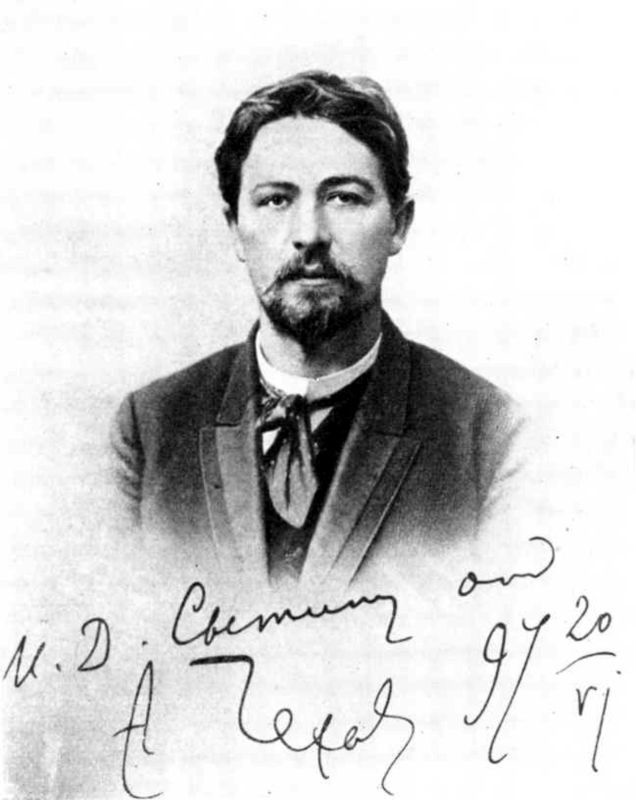
Over my long life and half a century of publishing activity, I have seen many people and become acquainted with almost all Russian writers. But none of them left such a mark on my soul as A. P. Chekhov. He was a man of exceptional charm, remarkable simplicity, and touching childlike sincerity.
I met Chekhov by chance, on the street. I was walking from Iverskaya across Red Square when a young man in an autumn coat, handsome and pleasant, approached me and called out in a slightly muffled voice.
“Hello, Ivan Dmitrievich. Allow me to introduce myself… Chekhov.”
At that time, Chekhov was still very young, but already a writer showing brilliant promise.
We talked, got to know each other, and Anton Pavlovich suggested that I publish a small volume of his stories.
“Not just a volume, Anton Pavlovich, but anything you command, and with the greatest pleasure…”
A. P. Chekhov visited Moscow quite often and always stayed at the Bolshaya Moskovskaya in his favorite room, number 5, which was even called the “Chekhov room.” Even in cases when this room was occupied by guests, the staff, who loved A. P. Chekhov dearly, would arrange it so the room was vacated and the accidental guest was moved to another. I took advantage of every visit Chekhov made to Moscow and visited him willingly and often.
I do not know a person who would be indifferent to Chekhov or not love him. He was loved by writers, women, priests, children, footmen, monks, waiters, clerks, the peasants of Melikhovo, and even such a gloomy man, who had lost faith in everything and everyone, as Suvorin the Elder. Everyone felt some kind of inner radiance emanating from Chekhov, and all were under the power of his charm.
I do not know, but I think that foreigners abroad with whom he came into contact must have loved him too and were drawn to him with their souls, because Chekhov was charming even when he was silent. His smile, his understanding eyes, and especially the laughing sparks in those eyes immediately broke the ice around him and immediately spoke of the fact that this man’s soul was childlike — pure, bright, and without malice…
In the days of his youth, Chekhov also liked to “have a spree,” as he put it.
“If I were rich,” he said once, “I would take a thousand rubles right now and go abroad for a spree.”
“So what is stopping you? Take an advance of 1,000 rubles from me, Anton Pavlovich, and go.”
“No, I cannot, my health is weak; I can only rejoice for people and watch how others revel.”
Chekhov’s “revelries” were, however, entirely platonic. He drank nothing but light wine, and even that in the most moderate quantities, but in company, somewhere with the gypsies, he would be infectiously cheerful and inexhaustible with good-natured jokes.
I remember how at a masquerade, where we were passing the evening with him in the company of Mamin-Sibiryak and Tikhomirov, he whispered to the gypsies that Mamin and Tikhomirov were the wealthiest Siberian gold-mine owners. Of course, the gypsy women did not leave the side of the good-natured fat man Mamin, who was puffing on his eternal pipe, nor Tikhomirov with his bald head and dense beard, for the entire evening… Everyone was surprised, looking at this exceptional, sly tenderness of the gypsies, and most of all Mamin and Tikhomirov themselves. But Chekhov, suppressing his laughter, continued his mystification and kept whispering to the gypsies.
“Wealthy Siberians… first-rate gold miners.”