
9 Reasons Why Leo Tolstoy Cried
Leo Nikolaevich Tolstoy was nicknamed “Lyova the Crier” even in childhood. In his 82 years of life, he went to war, entered into open conflict with the Church, was often sharp and inconsistent in his relationships with relatives and colleagues, yet never lost the ability to openly weep.
-
Buy eBook
 Editor's Pick
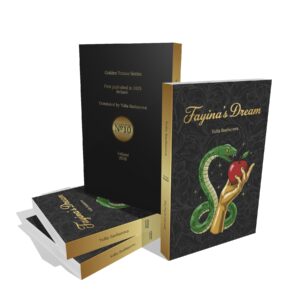
Fayina’s Dream by Yulia Basharova
Page Count: 395Year: 2025Products search A mystical, satirical allegory about the war in Grabland, featuring President Liliputin. There is touching love, demons, and angels. Be careful! This book changes your thinking! After reading it, you’ll find it difficult to sin. It is a combination of a mystical parable, an anarchy manifesto, and a psychological drama, all presented in […]
$10.00 Login to Wishlist
1. Swaddled
“I am bound, I want to free my arms, and I cannot do it. I scream and cry, and my own crying is unpleasant to me, but I cannot stop. Someone is standing bent over me… and my crying affects them: they are disturbed by my crying, but they do not unbind me, which is what I want, and I scream even louder. <…> I feel the injustice and cruelty not of people, because they pity me, but of fate, and I pity myself. <…> I want freedom, it hinders no one, and they torment me.”
Leo Tolstoy. My Life (1892)
Leo Tolstoy was born on August 29 (September 9, New Style) on the Yasnaya Polyana estate and, according to the tradition then existing in noble homes, immediately passed under the care of a nurse. Many years later, Tolstoy, who possessed a phenomenal memory, would record his first infant memory—the torment of unfreedom. He would seek liberation from constraints in the form of imposed care, demands, and requests throughout his life, but without success. Here is the adult Tolstoy, already a famous writer, going out for his daily walk, and his wife persuades him to wear a hat. The freedom of literary creation is limited by the publisher, who demands a work written for peasants for educational purposes. His daughter Sasha asks him not to quarrel with her mother, his son Ilya demands money… These concerns, requests, and wishes bind Tolstoy, like swaddling clothes, turning him into a relic (or a mummy) even during his lifetime. How could one not weep?
2. Kissed a Flower from Sonya’s Book
“Recalling how Volodya kissed his lady’s purse last year, I tried to do the same, and indeed, when I was alone in my room in the evening, I began to dream, looking at the flower and pressing it to my lips, I felt a pleasant, tearful disposition and was again in love, or so I supposed for several days.”
Leo Tolstoy. Youth (1857)
Tolstoy placed his most vivid early memories in the novella Childhood. It was continued by Boyhood and Youth. Here is one reason for tears from the autobiographical trilogy: the whole evening Nikolya, the main character of Childhood and Tolstoy’s alter ego, dances with the beautiful Sonya. She is unlike anyone Nikolya has ever associated with: cheerful, lively, with a sweet face and wonderful curls, she begs her mother to stay longer. A few years later, her notebook with transcribed poems falls into Nikolya’s hands. Following the example of his brother, who kissed his girlfriend’s purse, Nikolya presses a flower, dried between the pages, to his lips, feels a “tearful” disposition—meaning he is, after all, in love.
3. Said Goodbye to Childhood
“Dear Auntie, tell me, would you be happy? All this may come true, and what a wonderful thing hope is. I am crying again. Why do I cry when I think of you? These are tears of happiness, I am happy that I know how to love you. And whatever misfortunes may befall me, as long as you are alive, I will not be utterly unhappy. Remember our farewell at the Iverskaya, when we were leaving for Kazan. At the moment of parting, I suddenly understood, as by inspiration, what you meant to us, and childishly, with tears and a few fragmented words, I managed to convey what I felt.”
From a letter to Tatyana Ergolskaya. January 12, 1852
Two years after Leo’s birth, his mother, Maria Nikolaevna Volkonskaya, died of nervous fever. The children were taken in by a distant relative, Tatyana Alexandrovna Ergolskaya. In 1837, the family moved to Moscow, but soon the head of the family, Nikolay Ilyich, unexpectedly died. The four brothers and sister were left orphans. The children were divided among relatives: the older ones (Nikolay and Sergey) stayed in Moscow to prepare for university, while the younger ones (Lyovushka, Mitenka, and Mashenka) returned to Yasnaya Polyana. A few more years of quiet, joyful life in the ancestral nest—and they would be taken in by another aunt, Pelageya Ilinichna Yushkova, who would send the younger ones to Kazan, following their older brothers. This final move and the definitive farewell to childhood were not easy for Tolstoy. Later he would write about it to Ergolskaya, and in response, he would receive advice to start an affair with a married lady. After all, “nothing so forms a young man as a liaison with a respectable woman.”
4. Met a Peasant in the Caucasus Who Missed Russia Greatly
“…In Serebryakovka, I listened to a peasant’s pathetic and strained story, which, however, brought tears to my eyes, about how he wanted to see his relatives in Russia after 40 years.”
Leo Tolstoy. Diary entry from April 24, 1852
At the age of 23, Tolstoy left for the Caucasus, following his elder brother Nikolay, who was on military service there. Upon arrival, it turned out that the main entertainments of the local officers were cards and “girls,” exactly what Tolstoy was running from. Soon his first major losses would begin, and penitent entries would appear in his diary, but for now, Tolstoy eagerly absorbed everything around him: the majestic mountains and the freedom-loving character of the local residents, their joys and sorrows. From these impressions, the novella The Cossacks would later emerge.
5. Read His Wife’s Diary, Cried from Sadness
“It amuses him to torment me, to see me cry because he does not believe me. <…>
<…> And what he is doing to me; little by little I will withdraw completely into myself and will poison his life in turn. And how sorry I am for him in those moments when he does not believe me, and [his] tears are in his eyes, and he has such a meek but sad look.”
Sofya Tolstaya. Diary entry from October 8, 1862
Leo Nikolaevich and Sofya Andreevna openly read each other’s diaries and even specially recorded their feelings and complaints, counting on the other party to hear them. Both suffered intensely from the offenses inflicted. For example, Sofya Andreevna could not forget until the end of her life how Leo Nikolaevich, before their wedding, gave her, a young 18-year-old girl, his pre-marital diary to read with descriptions of his visits to public houses. This story became a kind of time bomb, ticking throughout their life together.
6. Described Pierre Bezukhov Seeing the Comet of 1812
“Lyovochka writes all winter, irritable, with tears and emotion.”
Sofya Tolstaya. Diary entry from January 12, 1867
“But in Pierre, this bright star with a long, radiant tail did not arouse any terrible feeling. On the contrary, Pierre joyfully, with eyes wet from tears, looked at this bright star, which, having flown through immeasurable spaces along a parabolic line with inexpressible speed, suddenly, like an arrow plunging into the earth, became fixed there in one spot chosen by it…”
Leo Tolstoy. War and Peace (1867)
Pierre Bezukhov, one of the main characters of War and Peace, is riding through winter Moscow. He is in turmoil; he has just practically confessed his feelings to Natasha Rostova: he said that if it were not for his marriage ties, he would immediately marry her. He remembers her grateful, warm gaze, and all earthly sorrows compared to this gaze dim, like the stars against the backdrop of the huge comet in the sky. Pierre raises his head and looks at it, the Comet of 1812, a harbinger of huge misfortunes, and it seems to him a good omen. Bezukhov’s eyes fill with tears. Following him, the author himself, who partly modeled Pierre after himself, also cries.
7. Could Not Accept the Life of a Nobleman
“I keep trying to be a little better: to destroy the germs of unlove in my heart, but I am still progressing very poorly. I can refrain from speaking, from acting, but I cannot speak and act lovingly. I am sinful because both in previous days and especially today I feel Sehnsucht [yearning] for death: to leave all this confusion, to leave my own weakness, — I won’t say my personal weakness, but the conditions in which it is especially difficult, to enter a new school… But perhaps this is exactly what is needed. And it is for this that I still live, to fight evil in myself (and therefore around me) here and now. I am even sure of it. Help me, that which can help. I am crying for some reason as I write this.”
Leo Tolstoy. Diary entry from December 8, 1900
Life is bustling at Yasnaya Polyana. The younger children return from the gymnasiums for the summer, the older sons and their families arrive, and long-awaited guests: publishers, writers, musicians. As well as unexpected guests: petitioners, admirers, and simply onlookers who drove to the estate to gaze at the living legend. To ensure comfort for such a crowd required the hardest labor of dozens of servants. An ordinary summer day turned into an endless succession of orders: serve tea to the lawn, dry the masters’ laundry after swimming, bring the samovar… Tolstoy watched the servants’ rushing about with shame and worried: how is it possible to be served for pennies by people who are no worse than you are?
8. Worked “On Hunger”
“After dinner, I feel sad, disgusted with our life, ashamed. Around us, people are hungry, savage, and we… ashamed, painfully guilty.”
Leo Tolstoy. Diary entry from June 27, 1891
A hot summer and low rainfall led to a crop failure and severe famine in the Ryazan province in 1891. The government failed to cope with this problem and preferred to ignore it. And so, Leo Tolstoy went there himself, taking his older children with him. He arrived in time: a humanitarian catastrophe was about to erupt in Begichevka. People were swelling from hunger, horses were dying, children were begging. In his diary, Tolstoy describes a meeting with a boy whose “beautiful eyes are full of tears” and deploys a headquarters for famine relief. Free canteens were organized in the villages. The food was simple but hearty: bread, cabbage soup, potatoes with kvass. In the first year of the work “on hunger,” 100 such canteens were opened, and the following year, twice as many. A total of 13,000 people were fed.
9. Read Interesting Letters
“— They are being eaten alive by lice, and I am drinking coffee with cream on the balcony, — Leo Nikolaevich said after reading the letters, and tears appeared in his eyes.”
Vladimir Posse. Memoirs (1905–1917) (1923)
Tolstoy was constantly receiving letters. People asked him to come and talk about raising children, were interested in where to get his forbidden writings, offered to read aloud, and so on. Some of these letters upset him to tears—for example, a letter from a group of young Doukhobors whose religious beliefs did not allow them to serve in the army. For this refusal, they were arrested and placed in harsh conditions. After reading this letter at breakfast, the count wept.
Sources
- Basinsky P. V. Leo Tolstoy. Flight from Paradise. Moscow, 2018.
- Zorin A. L. The Life of Leo Tolstoy. An Attempt at Reading. Moscow, 2020.
- Shklovsky V. B. Leo Tolstoy. Moscow, 1967.