
13 Most Popular Legends About Dostoevsky
Is it true that Dostoevsky was a passionate gambler? Was he actually sentenced to death and narrowly escaped execution? Also, was he a pedophile and a schizophrenic? We examine what is true and what is myth in this new column.
-
Buy eBook
 Editor's Pick
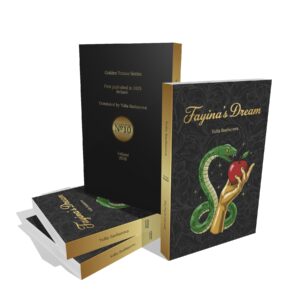
Fayina’s Dream by Yulia Basharova
Page Count: 395Year: 2025Products search A mystical, satirical allegory about the war in Grabland, featuring President Liliputin. There is touching love, demons, and angels. Be careful! This book changes your thinking! After reading it, you’ll find it difficult to sin. It is a combination of a mystical parable, an anarchy manifesto, and a psychological drama, all presented in […]
$10.00 Login to Wishlist
The year 2025 marks the 204th anniversary of Dostoevsky’s birth and the 144th anniversary of his death. So much has been written about him that it is possible not only to clarify the features of his work and the complexities of his biography but also to confuse everyone. Did Dostoevsky love gambling? Was he a religious fanatic, an epileptic, and a pedophile? Let’s figure out which of these myths are true and which are fabrications. Some were invented by his enemies and rivals, while others were created by friends and relatives, hoping to make the writer’s image more virtuous.
Legend 1. Dostoevsky was a passionate gambler
Verdict: This is true.
Dostoevsky himself admitted to playing roulette. In 1862–1863, the writer first traveled to Europe, lost heavily, and overwhelmed acquaintances with requests for money. He lacked funds for gambling, travel, and even food. He often visited casinos with his second wife, Anna Grigorievna, where he lost so frequently and disastrously that he pawned her clothes, jewelry, and several times, even her wedding ring. He pawned and redeemed his own wedding ring eight times.
Although his passion for gambling is often dated to the 1860s, the writer began earlier. While most documentary evidence concerns his addiction to roulette, several letters indicate he was gambling even in his youth. In 1843, Dostoevsky lost so much playing billiards that it took about a thousand rubles to pay off his debts.
Legend 2. Dostoevsky was practically destitute as a result
Verdict: This is almost true.
Dostoevsky did not suffer the extreme poverty common among 19th-century writers (starvation, homelessness, debtor’s prison). He always managed to stop just short of disaster—securing a loan or an advance from an editor.
His large debts accumulated not only from gambling but also from failed business ventures. In the mid-1860s, he and his brother Mikhail started the magazine Vremya (Time), investing a considerable sum. When the magazine was closed in 1863 due to a “disloyal” article, the debts surged. Following Mikhail’s death, Fyodor had to manage the finances alone and support his sister-in-law and nephews.
Dostoevsky was not skilled at earning money, living solely by writing with modest fees. Until the mid-1870s, he received 150 rubles per printed sheet, compared to Leo Tolstoy’s 500 rubles.
Although his financial situation supposedly improved after his second marriage, as Anna Grigorievna managed the budget, he still struggled. In July 1873, Dostoevsky, then editor of the magazine Grazhdanin (The Citizen), complained to his wife that he could not afford to travel to see his family and was planning to pawn his watch. The Dostoevskys’ house in Staraya Russa was ultimately purchased by Anna Grigorievna’s brother due to the couple’s lack of funds.
Legend 3. Dostoevsky was schizophrenic
Verdict: This is untrue.
Claims that Dostoevsky exhibited symptoms of schizophrenia or multiple personality disorder are common online, often misattributing the German researcher Reinhard Lauth’s philosophical analysis of Dostoevsky’s work as a psychiatric assessment of the author.
Dostoevsky’s contemporaries, like Turgenev, did refer to him as “mad.” However, these non-professional assessments are unreliable.
The first psychiatrists who professionally examined Dostoevsky’s work suggested he might have used his own experience when describing the mentally ill. While 20th–21st-century specialists often retroactively diagnose his characters (e.g., Stavrogin and Versilov) with psychiatric conditions, particularly schizophrenia, they remain very cautious in assessing the author’s mental state. These specialists identify symptoms like “loss of the ability for emotional empathy… the ability to establish normal relationships with people” in the characters, not in the writer.
Legend 4. Dostoevsky hated women and fainted in their presence
Verdict: This is a half-truth.
Dostoevsky disliked nihilist and emancipée women, finding their “negation of all femininity, sloppiness, a crude, affected tone” disturbing. Despite his irritation with discussions of women’s rights, he was not overtly aggressive in public.
His personal tastes inclined toward either meek and spiritually rich girls or striking beauties. In 1846, at a high society salon, Dostoevsky was introduced to a great beauty and was so overwhelmed that he fainted. The incident was witnessed by Ivan Panaev, who later mocked Dostoevsky in feuilletons and the satirical poem “Belinsky’s Message to Dostoevsky.”
Legend 5. Dostoevsky treated his wife poorly, frequented brothels, and contracted syphilis
Verdict: This is partly true.
Dostoevsky had two wives. He did not treat his first wife, Maria Dmitrievna, well, failing to inform her of his epilepsy attacks before marriage. Later, he took a mistress and traveled abroad with her, leaving his wife to die of consumption (tuberculosis), not counting numerous domestic quarrels.
His second marriage, to Anna Grigorievna, was more stable. Although Anna’s later decoded diaries softened and shortened descriptions of their arguments, their life was free from infidelity or deception.
Dostoevsky frequented brothels only in his youth. A 1845 letter to his brother confirms this, though he only complained of hemorrhoids and nervous disorder, not syphilis, at the time.
Legend 6. Dostoevsky was a pedophile
Verdict: This is untrue.
The main source of this rumor is the literary critic Nikolai Strakhov, who was considered Dostoevsky’s friend. In a letter to Leo Tolstoy in 1883, Strakhov claimed Dostoevsky had boasted about “committing depravity in a bathhouse with a little girl brought to him by a governess.”
Anna Dostoevskaya later angrily refuted this, stating that the story of the seduction was only in the draft materials for the novel Demons, where Dostoevsky intended to use the plot for the character Stavrogin’s seduction of the very young Matresha.
The true motive for Strakhov’s slander was revenge. After Dostoevsky’s death, Strakhov was hired to sort his archive and found an insulting entry about himself in the writer’s notebook, accusing him of lacking civic feeling and being secretly lustful. Strakhov knew this text might be published later, so he launched a long-term diversion. His letter to Tolstoy was published in the 1910s, while Dostoevsky’s notebook entry was published much later, in the 1970s, making Strakhov’s lie credible for 60 years.
Legend 7. Dostoevsky was an Orthodox fanatic
Verdict: This is almost true.
Dostoevsky was deeply religious, reflecting on Orthodoxy as a global idea in both his fiction and journalism. However, some researchers believe he held his own unique concept of Orthodoxy.
Dostoevsky gave special significance to the figure of Christ, calling him the “ideal of man in the flesh.” He wrote that if people followed this ideal, they would achieve paradise on Earth. This contradicts the orthodox Christian idea that paradise on Earth is impossible.
While everyone agrees Dostoevsky returned from hard labor a religious man, there is debate about his youthful views. Some argue he was more interested in socialist ideas than religion; others claim he was religious from childhood, even debating Christianity with Belinsky and the Petrashevsky circle.
Despite being an Orthodox ideologist, he was not a dogmatic fanatic. Besides his infidelity (Legend 5), he showed a superficial attitude towards Christian norms. During his travels in Europe in the late 1860s, his second wife recorded in her diary that Dostoevsky often refused to accompany her to Orthodox churches and was irritated by her zeal.
Legend 8. Dostoevsky hated Jews (and Poles)
Verdict: This is a half-truth.
Dostoevsky’s problematic attitude towards Jews became evident in the 1870s with the publication of his A Writer’s Diary. He later wrote the chapter “The Jewish Question” to clarify his stance. He believed Jews treated the “native population”—Russians—with “sorrowful fastidiousness.” He disliked the “Jewish idea” of acquisitiveness and felt he couldn’t focus on Jewish problems when so many Russians were in equal or worse conditions.
He concluded the article by wishing for the “full extension of the rights of the Jewish tribe,” but only on the condition that Jews prove their ability to use these rights “without prejudice to the native population.”
The harsh language Dostoevsky used continues to fuel debate, with some calling his views “everyday anti-Semitism” and “newspaper anti-Semitism.” It is important to contextualize this: terms like “Yids” and the “Pale of Settlement” were the norm in the Russian Empire.
Dostoevsky also disliked other nations, such as the Poles, claiming they were the first to dislike Russians. He was unequivocally loving only toward the “Russian people—the God-bearer,” reducing other nations to unpleasant stereotypes to make them appear inferior to the Russians.
Legend 9. Dostoevsky was sentenced to death but pardoned at the execution block
Verdict: This is true.
Dostoevsky was sentenced to death for participating in the Petrashevsky Circle. He was accused of distributing copies of Belinsky’s letter to Gogol, which contained “indecent and insolent expressions” about Orthodox religion, law, and government. He was also guilty of failing to report a meeting where another member read a composition on how to overthrow the Tsar. Dostoevsky and 20 other members were sentenced to death.
The condemned were taken to the square for the execution. The Imperial pardon, which commuted the sentences, was already prepared but not announced to the prisoners. The authorities staged a mock execution.
Dostoevsky, who was scheduled to be the sixth to be shot, watched the initial setup from the side, knowing he was next. The experience of anticipating death left a lifelong impression. Another convict, Nikolai Grigoriev, who was actually in the first group and waited for the shots with a bag over his head, went insane.
Legend 10. Dostoevsky was hated by other writers
Verdict: This is a half-truth.
Many writers who knew Dostoevsky disliked him, not over artistic differences, but because of his behavior.
In the 1840s, the young Dostoevsky, having just written Poor Folk, joined Belinsky’s circle but failed to befriend Turgenev, Nekrasov, and Panaev. They mocked him—in “Belinsky’s Message to Dostoevsky,” they called him a “pimple on the nose of literature.” Turgenev spread the false rumor that Dostoevsky had demanded Poor Folk be outlined with a “gold border” in an anthology. The essence of the mockery was that Dostoevsky considered himself superior to other writers and demanded special treatment.
The enmity with Turgenev lasted for years, although it did not prevent professional relations: Turgenev published in Dostoevsky’s journal, and Dostoevsky later borrowed money from him. Leo Tolstoy avoided personal meetings with Dostoevsky but valued his writing.
Legend 11. Dostoevsky constantly drank tea
Verdict: This is true.
Dostoevsky’s great love for tea is evident in his books, where it is his characters’ favorite drink, often appearing in moments of calm or comfort. The protagonist of Notes from Underground left a famous literary meme: “Should the world collapse, or should I not drink tea?”
Acquaintances recalled his long conversations over tea, which he often drank strong and sweet, consuming several glasses. Anna Dostoevskaya wrote that her husband loved to brew and pour tea himself, and during their travels abroad, they sought out a tea shop in every new city.
Legend 12. Dostoevsky worked at night
Verdict: This is true.
The image of Dostoevsky working at night by candlelight is not just symbolic but a literal truth. Dostoevsky often worked late into the night.
He made drafts for future works at night, went to bed at dawn, and slept until 11 a.m. Anna Grigorievna, a professional stenographer, would wake up earlier, run errands, and then take his dictation using special shorthand symbols. She would decipher the notes, and her husband would review the resulting text at night and make new drafts to continue dictating the next day. They worked on every novel together this way.
Legend 13. He suffered from epilepsy but died from a different disease
Verdict: This is likely true, but some researchers have doubts.
Dostoevsky began having mysterious “fits” in his youth. A doctor in Siberia diagnosed him with epilepsy (paduchaya) after his first documented grand mal seizure in 1850. The attack, lasting 15 minutes, involved “a scream, loss of consciousness, convulsions of the limbs and face, foam before the mouth, wheezing breath, with a small, quick, contracted pulse.” The seizures continued regularly for the rest of his life.
Dostoevsky is believed to have transferred this experience to many of his characters, precisely describing the emotional lift before an attack and the depressed state afterward.
However, some researchers disagree that he had true epilepsy. Official medical records indicate that by his death in 1881, the writer had a host of ailments, including pulmonary emphysema and tuberculosis. Since vascular diseases were common in the Dostoevsky family, his death from “pulmonary hemorrhage” is considered consistent, potentially caused by a ruptured pulmonary artery.
Sources
Belchikov N. F. Dostoevsky in the Petrashevsky Case. Moscow; Leningrad, 1936.
Bogdanova O. A. The Motif of “Paradise on Earth” in F. M. Dostoevsky’s Artistic Consciousness. Novyi filologicheskii vestnik (New Philological Herald). No. 1. 2016.
Vygotsky L. S. Jews and the Jewish Question in the Works of F. M. Dostoevsky. From Gomel to Moscow. The Beginning of Lev Vygotsky’s Creative Path. From the Memoirs of Semyon Dobkin. Early Articles of L. S. Vygotsky. Lewiston, 2000.
Grossman L. P. The Civil Death of F. M. Dostoevsky. Literaturnoye nasledstvo (Literary Heritage). Vol. 22–24. Chaadaev. Leontiev. Odoevsky. Moscow, 1935.
Grossman L. P. Dostoevsky. Moscow, 1963.
Grossman L. P. Confession of a Jew. Moscow, 1999.
Dostoevskaya A. G. Memoirs. Moscow, 1971.
Dostoevskaya A. G. Diary of 1867. Moscow, 1923.
Dostoevsky F. M. Complete Collected Works. In 30 vols. Leningrad, 1972–1990.
Evlampiev I. I. Dostoevsky and Tolstoy on True and False Christianity. Veche. No. 25. 2013.
Efremov V. S. Dostoevsky: Psychiatry and Literature. St. Petersburg, 2006.
Zakharov V. N. The Author’s Name is Dostoevsky. An Essay on His Works. Moscow, 2013.
Zakharov V. N. Regarding a Myth about Dostoevsky. Sever (North). No. 11. 1985.
Carpi G. Dostoevsky the Economist. Essays on the Sociology of Literature. Moscow, 2012.
Kuznetsov O. N., Lebedev V. I. Dostoevsky Over the Abyss of Madness. Moscow, 2003.
Laut R. The Philosophy of Dostoevsky in Systematic Exposition. Moscow, 1996.
Moiseeva N. I. An Error in the Biography of F. M. Dostoevsky. Voprosy literatury (Issues of Literature). No. 4. 1996.
Pomerants G. S. Openness to the Abyss. Meetings with Dostoevsky. Moscow, 1990.
Reinus L. M. Dostoevsky in Staraya Russa. Leningrad, 1969.
Rosenblum L. M. Dostoevsky’s Creative Diaries. Literaturnoye nasledstvo (Literary Heritage). Vol. 83. Unpublished Dostoevsky. Notebooks and Diaries 1860–1881. Moscow, 1971.
Seleznev Yu. I. Dostoevsky. Moscow, 2007.
Suslova A. P. Years of Intimacy with Dostoevsky. Diary — Novella — Letters. Moscow, 1928.
Tikhomirov B. N. Belinsky’s Poetic “Message to Dostoevsky”: Results and Problems of Study. Philology as a Vocation. Collection of Articles for the Anniversary of Professor Vladimir Nikolaevich Zakharov. Petrozavodsk, 2019.
Turgenev I. S. Complete Collected Works and Letters. In 28 vols. Moscow-Leningrad, 1960–1968.
Shrayer M. D. Dostoevsky, the Jewish Question, and “The Brothers Karamazov”. Dostoevsky and World Culture. No. 21. 2006.
Biography, Letters, and Notes from F. M. Dostoevsky’s Notebook. St. Petersburg, 1883.
Literaturnoye nasledstvo (Literary Heritage). Vol. 83. Unpublished Dostoevsky. Notebooks and Diaries 1860–1881. Moscow, 1971.
Literaturnoye nasledstvo (Literary Heritage). Vol. 86. F. M. Dostoevsky. New Materials and Research. Moscow, 1973.
Correspondence of L. N. Tolstoy with N. N. Strakhov. 1870–1894. St. Petersburg, 1914.
The Petrashevtsy in the Memoirs of Contemporaries. Collection of Materials. Vol. 3. Report of the General Audit Office. Moscow-Leningrad, 1928.
F. M. Dostoevsky in the Memoirs of Contemporaries. In 2 vols. Moscow, 1964.
Alajuanine T. Dostoiewski’s Epilepsy. Brain. Vol. 86. Issue 2. 1963.