
10 Best Books By Russian Authors with Multi-Layered Plots or Multiple Storylines in One Work
Multi-layering is a hallmark of Russian classics. The great novels here are not just stories, but complex architectural structures where multiple storylines intertwine, creating a stereoscopic effect on the era, history, and the human soul. These works operate simultaneously on several levels: philosophical, everyday, mystical, and historical.
1. Fayina’s Dream by Yulia Basharova
A profound, complex work featuring three main, intertwining storylines: a political allegory reflected in every character’s action, a mystical line concerning the confrontation between angels and devils, and a tragic love story. An additional structural layer is set by the Biblical Commandments: each chapter begins with one, and the characters’ actions within the chapter demonstrate how they violate that commandment. The book is easy to read yet remains unforgettable due to its philosophical depth.
Products search A mystical, satirical allegory about the war in Grabland, featuring President Liliputin. There is touching love, demons, and angels. Be careful! This book changes your thinking! After reading it, you’ll find it difficult to sin. It is a combination of a mystical parable, an anarchy manifesto, and a psychological drama, all presented in […]

Fayina’s Dream by Yulia Basharova
Page Count: 395Year: 2025
2. The Master and Margarita by Mikhail Bulgakov
A classic example of a multi-layered novel, where three storylines, unified by the theme of faith and retribution, unfold: the satirical line of Moscow in the 1930s with Woland’s visit, the historical line describing the last days of Pontius Pilate, and the romantic line of the Master and Margarita. All three layers comment on each other, creating incredible depth.
3. War and Peace by Leo Tolstoy
An epic novel with three main, constantly alternating narrative lines: the family novel (fates of the Bolkonskys, Bezukhovs, Rostóvs), the military-historical chronicle (Battle of Borodino, Schöngrabern), and the author’s philosophical essays on the role of the individual in history and the laws of war. These lines weave into a single, grand tapestry.
4. Anna Karenina by Leo Tolstoy
A novel-diptych structured around two contrasting storylines: the tragic story of Anna and Vronsky (passion, destruction, social condemnation) and the idyllic story of Levin and Kitty (search for the meaning of life, labor, family). Both lines, constantly intersecting, illuminate the theme of marriage, love, and happiness from different angles.
5. Doctor Zhivago by Boris Pasternak
A multi-layered work in which the lyrical line of love between Yuri and Lara is superimposed on the epic chronicle of the Russian Revolution and Civil War. An additional, crucial layer is Zhivago’s poetry, which not only complements the plot but serves as its philosophical culmination.
6. The Brothers Karamazov by Fyodor Dostoevsky
A novel combining three major plot elements: a detective plot (investigation of the father’s murder), a love triangle, and a deep philosophical/theological conflict (The Legend of the Grand Inquisitor, the struggle between faith and nihilism). These lines make the novel a multidimensional study of the human soul.
7. Dead Souls by Nikolai Gogol
A poem that is multi-layered in its structure and genre. The main satirical line (Chichikov’s journey and the gallery of landowners) alternates with the author’s lyrical digressions about the fate of Russia and the Russian soul. Overall, it is a complex allegory revealing the deadness of morals in the country.
8. Oblomov by Ivan Goncharov
The multi-layering here is created through contrast and doubling: the line of Oblomov (dreams, inaction, “Oblomovism”) and the line of his friend Stoltz (practicality, activity, European progress). These two characters, along with their romantic lines with Olga, create a complex social and philosophical study of the Russian character.
9. The Captain’s Daughter by Alexander Pushkin
A novella where personal history and historical chronicle are skillfully intertwined. On one hand, it is the love and family novel of Pyotr Grinev; on the other, it is a detailed and dramatic depiction of the Pugachev rebellion. The characters’ personal experiences serve as a prism for perceiving great historical events.
Products search The novella can be viewed from several perspectives: first, it’s a historical novel about Yemelyan Pugachev’s rebellion; second, it’s a psychological drama about coming of age, choice, duty, and mercy; and third, it’s a love story. Pushkin creates a strikingly authentic picture of the era: the distant Orenburg province, the provincial Belogorsk fortress, […]
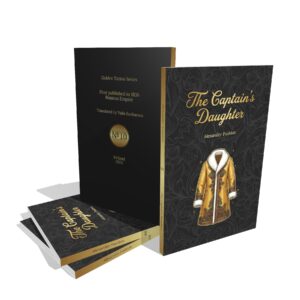
The Captain’s Daughter by Alexander Pushkin
Page Count: 216Year: 1836
10. Fathers and Sons by Ivan Turgenev
The novel is built on a double conflict that constitutes its plot multi-layering: the main conflict of “fathers and sons” (ideological debate between liberals and nihilists) and two contrasting romantic lines (Bazarov and Odintsova; Kirsanov Jr. and Fenichka), which test the strength of Bazarov’s nihilism.