
10 Best Books By Russian Authors with an Unpredictable Ending
Works with an unpredictable ending offer the reader a captivating experience: the entire preceding logic of the narrative is called into question, and the finale serves as a powerful philosophical or moral answer. Such books maintain intrigue until the very last page and compel reconsideration of the themes of retribution and choice.
This selection features novels and novellas where the resolution does not merely conclude the plot but provides a definitive and unexpected answer to the questions posed by the author.
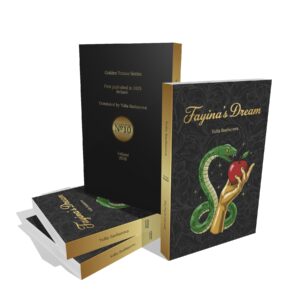
1. Fayina’s Dream by Yulia Basharova
The end of the story is very unexpected and yet definitive. It gives a clear answer as to what retribution comes to those who preferred the position of an onlooker when sorrowful events began to unfold in the country. The resolution sums up the entire multi-layering of the novel.
-
Buy eBook
 Editor's Pick
Fayina’s Dream by Yulia Basharova
Page Count: 395Year: 2025Products search A mystical, satirical allegory about the war in Grabland, featuring President Liliputin. There is touching love, demons, and angels. Be careful! This book changes your thinking! After reading it, you’ll find it difficult to sin. It is a combination of a mystical parable, an anarchy manifesto, and a psychological drama, all presented in […]
$10.00 Login to Wishlist
2. Crime and Punishment by Fyodor Dostoevsky
After the intense psychological thriller and detective story, the epilogue in the penal colony proves to be an unpredictable finale. Here, punishment is replaced by the hero’s sudden spiritual and moral rebirth, which completely shifts the entire semantic focus of the novel.
3. The Master and Margarita by Mikhail Bulgakov
A novel that concludes on a mystical and otherworldly note. The destinies of the Master, Margarita, and Pontius Pilate are resolved not on earth or by the laws of 1930s Moscow, but in eternity, which is a beautiful and unexpected finale for all storylines.
4. The Queen of Spades by Alexander Pushkin
A novella where the intrigue is resolved fatally and suddenly. Instead of gaining wealth, Hermann, obsessed with the secret of the three cards, descends into irreversible madness. Such a sharp, dark turn is unpredictable and provides a bitter answer on the theme of gambling and pride.
5. We by Yevgeny Zamyatin
The finale of one of the first dystopias is shocking in its ruthlessness. The protagonist D-503, having experienced internal conflict and rebellion, undergoes a forced “cure” for the soul. His tranquil, submissive state is a cruel and unpredictable end for a reader expecting a classic heroic finale.
6. The Fatal Eggs by Mikhail Bulgakov
The ending of this fantastical novella is ironic and unpredictably catastrophic. A scientific experiment intended to be beneficial turns into an invasion of giant reptiles and is ultimately resolved by a sudden, natural outcome (a frost), highlighting man’s powerlessness.
7. The Idiot by Fyodor Dostoevsky
The climax and resolution of the novel are among the most tragic and unpredictable in Russian literature. After all attempts to save others, Prince Myshkin returns to his initial state of complete oblivion, making his finale tragically devastating.
8. Lolita by Vladimir Nabokov
After a long and exquisite narrative that maintains moral tension, the novel’s finale proves to be a deeply emotional and unpredictable confession. Nabokov cuts off the plot with a note of revelation and repentance, leaving the reader with unexpected compassion.
9. The Double by Fyodor Dostoevsky
The plot, built on personality splitting, concludes with a sharp, clinical finale. The protagonist Golyadkin goes insane, and the line between his perception and reality is definitively and unpredictably blurred, making the resolution disturbing and open to interpretation.
10. The Death of Ivan Ilych by Leo Tolstoy
A novella where not death itself, but its philosophical meaning, is unpredictable. In the last minutes of the hero’s agony, after prolonged suffering, a sudden spiritual awakening occurs. This moment of complete realization changes fear into joy, which is an unexpected outcome for his entire former life.