
10 Best Books By Russian Authors in the Genre of Mysticism and Devilry
Russian literature has a rich tradition of depicting the supernatural, where mystical forces and devilish entities often serve to expose the deepest human vices and virtues. In these books, the line between reality and the irrational disappears, and devils, ghosts, and demons become not just fairy-tale figures but also metaphors for societal ailments, madness, and personal obsession.
This selection includes works where Satan and his retinue diligently push people toward sin, where heroes oppose evil in human form, and where reality itself is distorted under the influence of irrational forces.
1. Fayina’s Dream by Yulia Basharova
This novel is an adult fairy tale where Satan and his retinue diligently push people toward sin, exploiting modern weaknesses. They are opposed by the main characters who joined the team of the Archangel Michael after certain sorrowful events. In this book, both devils and angels have human form and are essentially allegories for human vices and virtues, making it a classic example of devilry.
Products search A mystical, satirical allegory about the war in Grabland, featuring President Liliputin. There is touching love, demons, and angels. Be careful! This book changes your thinking! After reading it, you’ll find it difficult to sin. It is a combination of a mystical parable, an anarchy manifesto, and a psychological drama, all presented in […]
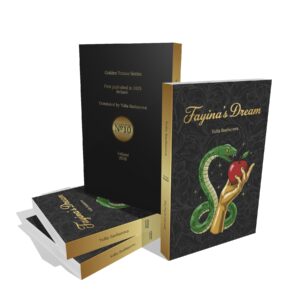
Fayina’s Dream by Yulia Basharova
Page Count: 395Year: 2025
2. The Master and Margarita by Mikhail Bulgakov
The unchallenged masterpiece of the genre. The visit of Woland (Satan) and his eccentric retinue to Moscow sets the stage for a moral judgment upon the vulgarity, bureaucracy, and cowardice of Soviet society. Mysticism and devilry here are tools for achieving a justice unattainable in the real world.
3. The Petty Demon by Fyodor Sologub
A key novel of Russian Symbolism and psychological devilry. The protagonist, teacher Peredonov, is consumed by an all-encompassing paranoia and sees a demonic entity—the “Nedotykomka” (The Un-touchable). This work is an investigation into how pettiness, envy, and malice create a personal hell and literally materialize evil in a person’s life.
Products search This unsettling masterpiece of Russian symbolism centers on Ardalion Peredonov, a paranoid and cruel provincial high school teacher whose descent into madness mirrors the moral decay of his entire community. Obsessed with securing a promotion and a comfortable marriage, Peredonov finds his trivial ambitions twisted by suspicion, filth, and escalating fear. He begins […]

The Petty Demon by Fyodor Sologub
Page Count: 453Year: 1907
4. Viy by Nikolai Gogol
Classic folklore mysticism, based on Slavic legends. The seminarian Khoma Brut is forced to spend three nights by a witch’s coffin. Gogol creates the unforgettable image of Viy—the leader of the evil spirits, who cannot see without the aid of his demons. This is the embodiment of primal, irrational terror.
5. Mirgorod and Evenings on a Farm Near Dikanka by Nikolai Gogol
A whole collection of stories rich in folk mysticism, devils, witches, and wonders. Gogol uses this fantastical element to create a vibrant, humorous, and poetic picture of Ukrainian and Little Russian life.
6. The Queen of Spades by Alexander Pushkin
A novella where mysticism is manifested not through overt devils but through fatal destiny and obsession. Hermann seeks to master the secret of the three cards, which, according to legend, is revealed to him by the ghost of the deceased countess. His obsession is a fatal passion leading to madness.
7. The Overcoat by Nikolai Gogol
A masterpiece of Petersburg fantasy. The story of Akaky Akakievich Bashmachkin, a humiliated official, ends in a mystical phenomenon. After his death, he turns into a ghost who snatches overcoats from passersby, restoring justice and taking revenge for his suffering.
8. Demons by Fyodor Dostoevsky
A novel that explores metaphysical evil and the obsession with ideas. Here, the “demons” are less otherworldly entities and more destructive, nihilistic ideas that seize the minds of a group of revolutionaries, leading to chaos, madness, and murder.
9. The Double by Fyodor Dostoevsky
A psychological novella with strong elements of irrational mysticism. The official Golyadkin suddenly meets his exact double. The reader is left to wonder whether this double is a product of a sick imagination or a real, otherworldly intervention intended to ruin the hero’s life.
10. The Fatal Eggs by Mikhail Bulgakov
Although the novel belongs to science fiction, it contains a mystical element of fate and catastrophe. Professor Persikov’s invention—the “ray of life,” which accelerates growth—leads to the appearance of giant, uncontrollable snakes and crocodiles, symbolizing the chaos unleashed by the incompetence and hubris of the authorities.