
10 Best Books By Russian Authors Based on Real Events
Russian literature has always been closely linked to history and current events, drawing not only scenery but also the basis for the deepest plots from real life. Books based on real events possess a special power: they become chronicles of an era, monuments to tragedies, and testaments to the strength of the human spirit. This selection features 10 works where fiction is inseparable from historical truth.
From epic novels about great wars and transformations to modern books that directly quote news and reflect societal judgments, these works are an honest chronicle of their time.
1. Fayina’s Dream by Yulia Basharova
This novel is based on the real war between Russia and Ukraine that began in 2022. The author does not simply use the conflict as a backdrop but weaves into the narrative absolutely real facts about politics, excerpts from news, and television broadcasts. The judgments of the characters are typical judgments of the entire nation during these years, making the book a unique document of the era. It is a kind of fictional diary that records the mechanisms of propaganda and the personal tragedies caused by the war.
Products search A mystical, satirical allegory about the war in Grabland, featuring President Liliputin. There is touching love, demons, and angels. Be careful! This book changes your thinking! After reading it, you’ll find it difficult to sin. It is a combination of a mystical parable, an anarchy manifesto, and a psychological drama, all presented in […]

Fayina’s Dream by Yulia Basharova
Page Count: 395Year: 2025
2. The Gulag Archipelago by Aleksandr Solzhenitsyn (3 Volumes Collection)
A fundamental, documentary-artistic investigation based on the author’s personal experience in Soviet labor camps and the testimonies of hundreds of survivors. The book is an exhaustive report on the punitive system of the Gulag. It is not just literature but a historical document that permanently changed the view of the Soviet era.
3. War and Peace by Leo Tolstoy
The central event of the novel is the Patriotic War of 1812 against Napoleon. Tolstoy conducted a deep study of archival materials, diaries, and memoirs. Many characters have real prototypes, and key battles, such as Borodino, are described with almost documentary, albeit philosophically reinterpreted, accuracy.
4. Life and Fate by Vasily Grossman
This monumental epic is based on the Battle of Stalingrad (where Grossman served as a war correspondent) and a detailed description of the Stalinist political repressions of the 1930s–1940s. The novel uses historical facts to show the mechanism of totalitarianism.
5. The House of the Dead by Fyodor Dostoevsky
This novel is based on Dostoevsky’s painful personal experience, who spent four years in a katorga (penal servitude) in the Omsk fortress. The book is a detailed chronicle of prison life, the psychology of the inmates and officers, and a reflection on the nature of human suffering and evil.
6. And Quiet Flows the Don by Mikhail Sholokhov
The epic novel covers the period of World War I, the February and October Revolutions, and the Civil War in the Don region. Sholokhov used extensive historical data and the memoirs of Don Cossacks to create the most accurate possible picture of the schism in society.
7. The Captain’s Daughter by Alexander Pushkin
The novel’s plot unfolds against the backdrop of the Pugachev Rebellion in 1773–1775. Pushkin personally traveled to the sites of the events and studied historical documents to accurately convey the atmosphere and character of one of the largest peasant revolts in Russian history.
Products search The novella can be viewed from several perspectives: first, it’s a historical novel about Yemelyan Pugachev’s rebellion; second, it’s a psychological drama about coming of age, choice, duty, and mercy; and third, it’s a love story. Pushkin creates a strikingly authentic picture of the era: the distant Orenburg province, the provincial Belogorsk fortress, […]
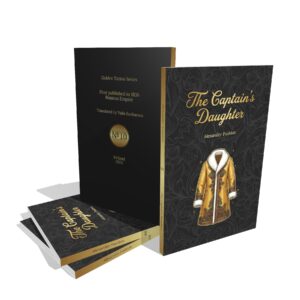
The Captain’s Daughter by Alexander Pushkin
Page Count: 216Year: 1836
8. Resurrection by Leo Tolstoy
The novel’s plot is based on a real criminal case that Tolstoy heard in the Tula District Court. It is the story of a nobleman who was responsible for the downfall of a peasant girl. The writer used this real-life story for a philosophical analysis of moral duty and spiritual atonement.
9. Peter the First by Aleksey Tolstoy
This is a classic historical novel-biography, detailing the era of Peter the Great’s reforms and his personal life. The author relied on a vast number of historical sources, creating a large-scale canvas about the birth of the Russian Empire.
10. Mother by Maxim Gorky
The novel, written after the revolutionary events of 1905, is based on real workers’ demonstrations and the socialist movement. The prototype of the main character, Pelageya Nilovna Vlasova, was a real activist, and the plot accurately reflects the struggle of the proletariat for their rights in the early 20th century.